

Car Insurance Discounts You Might Qualify For
Owning a vehicle is one of the largest recurring expenses for Americans. Unfortunately, many people place a disproportionate focus on upfront expenses, such as the car's sticker price, while discounting the ongoing costs. The United States Bureau of Transportation Statistics reports that the average household spends about $13,174 per year on transportation costs.
Unfortunately, many of these routine expenses can fall by the wayside when budgeting, causing consumers to pay more for their cars than they planned to initially. According to Bankrate, these hidden costs total $6,894 annually for drivers, and nearly 40% of that figure is made up of insurance premiums.
From January 2020 to December 2025, the Bureau of Labor Statistics reports the national average auto insurance premium increased by almost 36%. Meanwhile, The Zebra reports that car insurance premiums grew by 3% between 2024 and 2025 alone. These price hikes aren't concentrated among a particular vehicle type, state, or even insurance provider. A Consumer Reports survey found that 60% of U.S. adults saw their premiums increase in 2025. Luckily, there are plenty of discounts out there that could considerably reduce this financial burden.
Safe driving
Car insurance companies determine their policy prices based on calculated risk. Some factors in this equation, such as statewide accident data, are completely out of an individual driver's control. However, these companies look closely at driving records to determine premium amounts, and even a single traffic violation or accident can result in a significant price increase. For instance, Forbes suggests the average provider bumps rates by 26% for a speeding ticket. The financial penalty is even more egregious for accidents: The Baldwin Group estimates the average driver could see a spike of 20% or 30% in their monthly payments following a moderate accident.
That's not to say your driving record solely works against you. When calculating your insurance premium, providers also look at what you've done correctly, not just what you've done wrong. Many insurance companies offer discounts or perks for applicants with a good driving history. The Zebra reports that safe drivers may be able to slash their premiums in half for their responsible driving, when optimized with other reductions. Although traditional safe driver discounts focused on driving records, providers have increasingly embraced telematics or usage-based insurance. This strategy tracks specific driving behavior, such as speed, mileage, and time on the road via a phone application or a plug-in device to gauge an individual driver's behavior behind the wheel. Analyzing data from Quadrant Information Services and S&P Global, The Zebra found these systems can help drivers attain between 25% and 40% savings on their premiums.
Defensive driving course
Completing a defensive driving course is an effective way to maximize your discounts on car insurance. Unlike standard driver's education classes, which are required to obtain a license, defensive driving is a supplementary course focused on enhancing a driver's safety. As with other vehicle insurance discounts, this reduction is offered by companies to help reduce their risk coverage. The specific amount you save varies significantly based on the state where you're registered and the company you're insured with, but Policygenius puts the average savings at 5% on the low end and 20% on the upper end.
Some of the most common insurance providers, including AAA, Farmers, Geico, and Nationwide, offer some form of defensive driving course discount, although the specific rates may vary between jurisdictions and some are only offered to older drivers. These courses are conducted in person and online depending on the provider, and can be completed within a day depending on specific requirements. Bear in mind that not all defensive driving courses qualify, so it's best to check with your policy provider before enrolling.
Low mileage
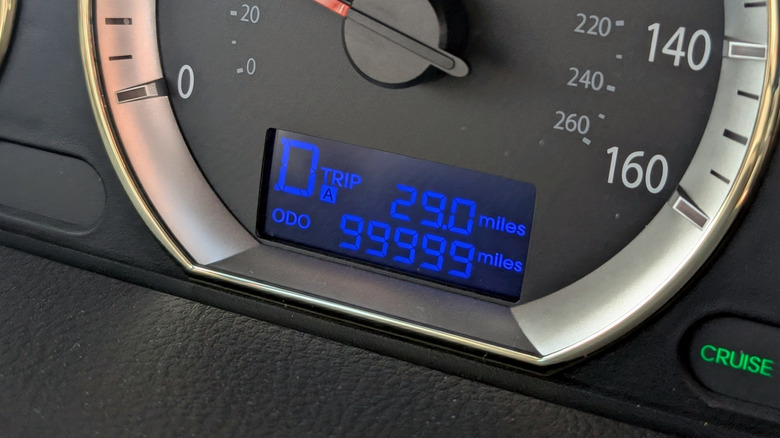
If taking a class doesn't sound too appealing, low-mileage discounts are one of the ways you can save on your car insurance by doing less, not more. Insurance providers face greater financial risks the more time a driver spends on the road, because the chance of an accident or traffic violation increases. Thus, companies are incentivized to encourage policyholders who don't need to drive often to be on the road even less. People who live in the city, work from home, or study at school are usually good candidates for this vehicle insurance discount. Though it depends on the provider, many companies reward those who drive less than 7,500 miles per year — and that limit can be even higher in some cases.
For perspective, the U.S. Department of Transportation's Federal Highway Administration records the average annual mileage for Americans at 13,476. Young drivers between 16 and 19 and older drivers 65 and older clock the lowest miles, at around 7,600 each. Thus, these cohorts are usually a perfect match for this perk. MoneyGeek estimates that drivers qualifying for the low-mileage discount can cut their rates by $86 per year on average.
Paperless communication

There are many sneaky reasons why property insurance rates go up, and the same is true for your car insurance. While you can get an itemized bill for your monthly premium, there may be further expenses hidden behind those labels. For instance, physical communications like coverage terms, monthly bills, and other recurring information are a serious cost for providers when sent through the mail. To help avoid these expenses, providers often allow policyholders to opt out of physical communication by switching to electronic means.
Paperless communication can reduce premiums by somewhere between 2% and 5% on average, according to Ocho. That may not seem like a lot at first, especially when measured on a monthly basis, but these savings add up over time. For perspective, Experian's estimate of the average annual car coverage in the U.S. is $2,312. A 2% discount would save drivers over $46 per year, while a 5% reduction could equate to more than $115 in savings. This paperless option might not always be advertised as actively as other car insurance discounts, so be sure to ask about it.
Occupational

In addition to racking up discounts via your driving habits or account settings, there are also potential avenues for saving on car insurance that arguably have little to do with actually driving: Some providers offer occupation-specific rewards as a sign of goodwill to people in positions deemed socially beneficial. For instance, MoneyGeek reports that nurses might obtain a 3% to 15% reduction in their vehicle coverage simply for their job. Percentage discounts are common, but some providers opt for a flat dollar-figure decrease. Nurses can find these job-related discounts from some of the country's most popular insurers, including Farmers and AAA.
Teachers are also common beneficiaries of these occupational discounts, as are various types of first responders, scientists, doctors, and engineers. However, it's worth noting there are jobs that might actually wind up increasing your rates instead of reducing them: Those who drive a lot — such as delivery and rideshare drivers — and workers who need to commute late at night could ultimately face higher premiums due to the increased risk for the provider.
Good student

Younger drivers tend to pay higher premiums on their car insurance, with CarInsurance.com reporting a 16-year-old driver could pay upwards of triple the amount a 25-year-old would pay for the same coverage. With each passing year, this age-related penalty diminishes, primarily due to the policyholder's prolonged driving experience. While policy providers levy these higher rates to cover the statistical risk represented by younger drivers, some make an effort to offer special discounts. Commonly, these teen-focused rewards are associated with academic performance.
Bankrate suggests that qualifying drivers can cut their insurance premiums by between 10% and 25%. Generally, drivers are only eligible if they can maintain a certain grade point average, usually 3.0 or higher, and remain enrolled full-time. There are certain age restrictions — this potential discount tends to go away for drivers once they reach their mid-20s — but the fact that simply getting good grades can save you cash could be as much of an incentive to work hard in school as the payoff that can come from certain college degrees.
Home and auto bundle
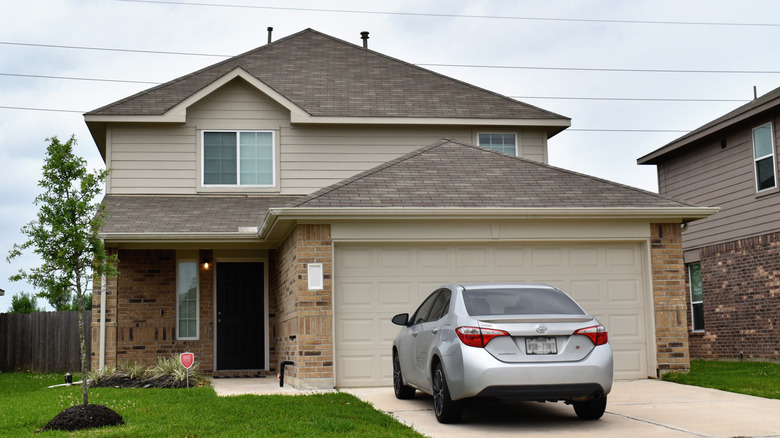
Despite the growing list of things insurance companies don't want to cover anymore, many providers still offer discounts for policyholders who bundle multiple forms of coverage together. One of the most common forms of these package discounts is the combination of house and vehicle policies. Similar to other incentives, insurance companies offer this reward to encourage people to sign up for more than one insurance policy within their umbrella of coverage options. Beyond saving money every month, policyholders benefit from a home and auto bundle by minimizing their insurance paperwork, tracking, and payments.
Forbes conducted an in-depth, marketwide examination of these package discounts and found that policyholders can save an average of $466 annually and see their policy costs reduced by around 14%. Of course, this discount tends only to apply to those who own a home. However, other companies offer the opportunity to bundle your auto policy with services like renters insurance and life insurance as well.
Military

Believe it or not, the best places to use your military discount aren't limited to stores where you'll make a one-time purchase. Many car insurance providers honor service members by applying military discounts to their policies, providing both active duty personnel and veterans an effective way to save on their monthly transportation costs. You'll find that several mainstream insurance companies are willing to remove a certain percentage of military members' premiums, often in the range of 10% or 15%.
For instance, USAA reports its members save an average of $840 on annual coverage via the company's military discount, and offers 15% discounts for military personnel housing an insured vehicle within a military site. Meanwhile, actively deployed members can see up to 60% off in most states. For its part, Geico applies a flat 15% discount across various offerings and policies for most military members, while those actively deployed may unlock even further savings.
Some military discounts may be determined by insurance providers, but they are legally required in certain locations as well: Louisiana providers, for example, need to offer a 25% discount to active-duty military personnel specifically for liability coverage.
Senior

One of the best ways retirees can save money on car insurance is by choosing a provider with age-specific discounts. This may not be true for everyone, but coverage can actually get cheaper as you enter your golden years — possibly with the help of a senior discount. Mature motorists who have few to no traffic violations and a limited accident history are generally considered less of a hazard to insurance companies, resulting in lower premiums.
Many drivers become eligible for senior discounts around the ages of 50 or 55, and they could continue receiving discounts for years to follow if their driving record remains unchanged. More than 30 states and Washington, D.C., require insurance providers to offer age-related discounts for older drivers, typically in the range of 5% to 15%. However, many of these places also require the driver to take a class to be eligible for the premium reduction.
Beyond those government-sanctioned offerings, many providers continue to reward seniors for the same practices as younger drivers. So, elderly drivers looking to optimize their savings may have the opportunity to double down on many of the other discounts on this list in addition to their senior discount.
Anti-theft and safety systems
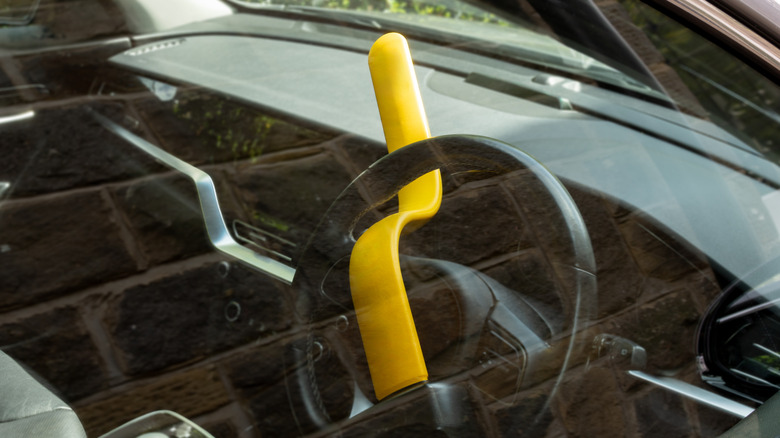
We've discussed a lot of things drivers can do to reduce their premiums, but some car insurance discounts actually pertain to a policyholder's vehicle, rather than their driving habits. Insurance providers are interested in limiting their chances of having to cover a claim as much as possible, so when it comes to vehicle-related crime, providers often offer discounts to encourage policyholders to implement anti-theft systems.
Specifics vary by insurance company, but some common examples include GPS tracking, VIN etching, smart keys, and steering wheel locks. Generally, built-in anti-theft features come with greater discounts than those drivers have installed after purchasing their vehicle. AutoInsurance.com estimates that using these systems can help decrease premiums by between 5% and 25%, though these savings vary by policy, state, and company.
For similar reasons, providers may also apply discounts to drivers with stock safety features in their cars. Many of these — such as certain airbags, anti-locking brakes, cameras, lane assist, and motion-sensing alerts — actually come standard in common vehicle models, so you may already qualify for a safety-related discount. Freeway Insurance reports that drivers can cut down on their vehicle insurance costs by up to 30% simply by having these safety features. Often, the size of the discount increases based on the complexity and quality of the safety system.
Multiple vehicles
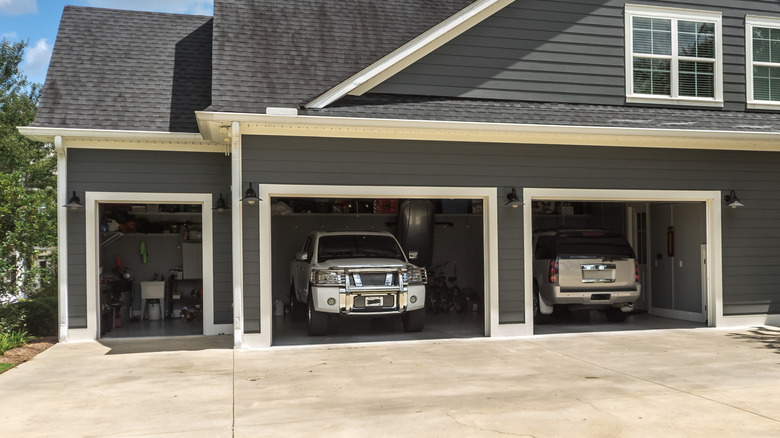
With a lackluster nationwide transportation network, the U.S. is notorious for its dependence on vehicles. As a result, it's not uncommon for American drivers and families to have more than a single automobile. According to the Census Bureau, 36.3% of U.S. households own two vehicles, and another 22% have three or more. Owning even one vehicle can be pretty expensive, but if you're part of the over 77 million households that own at least two cars, you may have an insurance discount waiting to be unlocked.
Many car insurance companies offer discounts for policyholders who use the same provider for multiple vehicles. Similar to home and auto bundles, these providers offer special discounts to generate more business from clients. However, you don't have to own a home to capitalize on these types of offers, which could make these deals more widely accessible to certain portions of the population. Insure On The Spot estimates that these multi-vehicle discounts can slash monthly premiums by anywhere between 20% and 25%.
Green vehicles
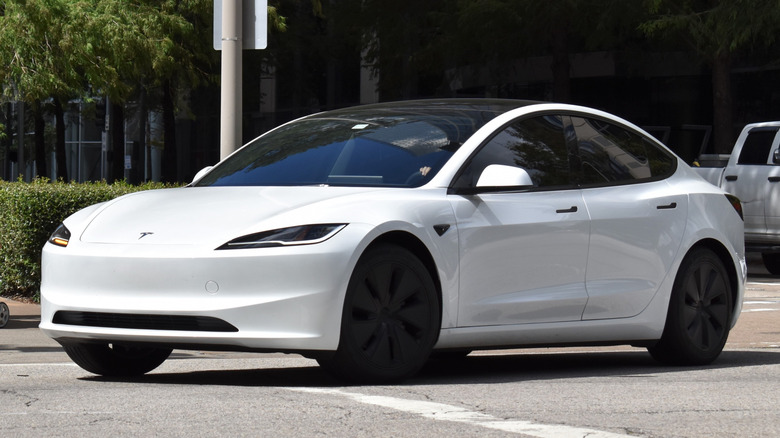
If you've ever wondered if an electric vehicle (EV) can really save you money in the long run, you might want to include insurance discounts in your calculations. After all, EVs tend to cost more on average than their fossil fuel counterparts. Edmunds reports that the average EV's price tag was around 42% higher than those on cars powered by combustion engines in early 2024, and that gap extended all the way to 58% in the SUV sector.
Due in part to their higher average sales prices and complicated parts, EVs are also more expensive to insure. Bankrate estimates that EV owners pay up to $2,800 more in annual insurance coverage than the norm. However, many insurance providers offer EV discounts to help counter these higher-than-average premiums and give environmentally conscious owners a break. Some companies even offer discounts for hybrid models. Even if these discounts only help to offset the elevated EV insurance costs, you'll still be saving on fuel.
Full payment and early quotes

Like many other monthly expenses you're forgetting to put in your budget, it's pretty easy to miss a routine car insurance payment as you go about your day-to-day life. Luckily, there are ways to avoid this error and any associated fees — and they usually come with a discount on your premium. The next time you enroll in an insurance policy or prepare to make a payment, ask your provider about upfront payment options. While consumers may think it's more financially viable to pay their premium in monthly installments, it's not uncommon for providers to offer a significant discount for those who pay the premium for a policy's full term all at once.
Another way to combat the staggering rise in auto insurance rates is to shop around for quotes. Sure, comparing various premium costs can ensure you find the most appropriate and affordable option, but some providers actually offer specific discounts for early quotes. Companies understand how convenient it is for policyholders to simply renew with their current providers instead of seeking out a new plan. So, some companies offer to knock off some of their costs for those who get a quote before their current coverage ends. While the specific timeline is different for every company, Forbes estimates the ideal window is to reach out to potential new providers a week or two before your coverage expires.