

Chicago's 5 Safest Suburbs And How Much They Cost
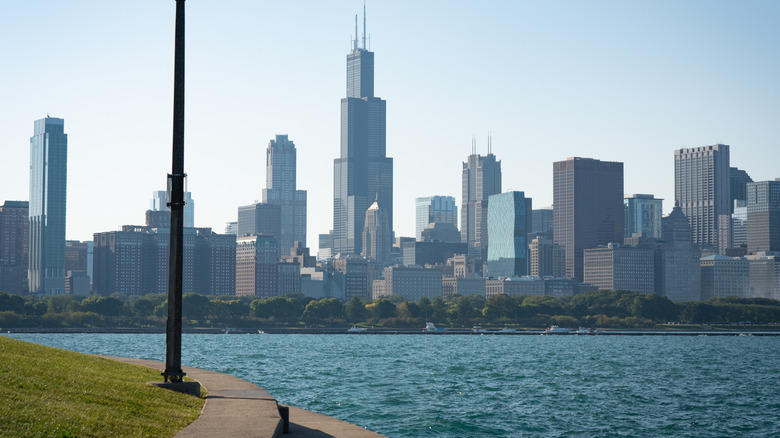
Chicago's high crime rate was one of the stated reasons why multibillionaire Kenneth Griffin decided to move the headquarters of his Citadel and Citadel Securities financial companies from Chicago to Miami in 2022. A few years later, Chicago's crime rate is still higher than Miami's. However, recent statistics reveal that Chicago's murder rate fell to its lowest level in 60 years, while robberies and carjackings plummeted by 50% in the last couple of years, Block Club Chicago reported.
Meanwhile, the richest suburbs of Chicago have some of the lowest crime rates in the United States, according to an analysis by personal finance website GOBankingRates. In fact, 12 suburban communities in Illinois were in the top 50 wealthiest and safest places to live, with the Chicago suburb of Western Springs being the safest wealthy city in the United States. Along with Western Springs, Kenilworth, Hinsdale, Winnetka, and Wilmette are some of Windy City's safest suburbs.
Western Springs
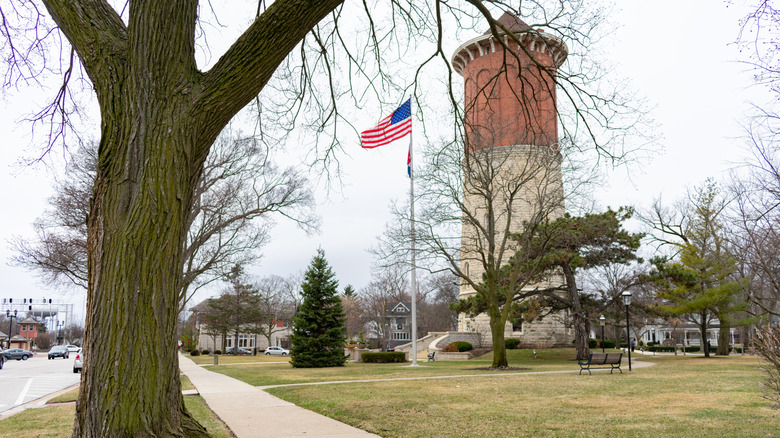
A community of just over 13,500 people, Western Springs is about 18 miles away from Chicago's downtown and around 16 miles from Chicago O'Hare International Airport. As of 2025, the violent crime rate in this city was 0.076 per 1,000 residents, while its property crime rate was 2.657 per 1,000 residents. Per AreaVibes, this amounts to a crime rate that is 86% lower than the statewide average and 87% lower than the national average.
To live in this low-crime realm, you would have to afford rent that averaged $4,150 a month as of early 2026, per Zillow Rentals. That rate is 108% higher than the national average of $1,995 a month. Meanwhile, the average home value in Western Springs was $820,623, according to Zillow. That is more than $220,000 higher than the average value of a home in the most expensive zip code in Chicago (zip code 60622 where, as of December 2025, the average value was $593,435 per Zillow.) Including housing, AreaVibes estimates that the cost of living in this Chicago suburb is 68% higher than the statewide average and 61% higher than the national average.
But in a place where the median household income is nearly $219,000 and the poverty rate is just 2%, per recent U.S. Census Bureau statistics, these costs are not insurmountable. In comparison, the Illinois median household income was about $82,000 as of 2023.
Kenilworth village
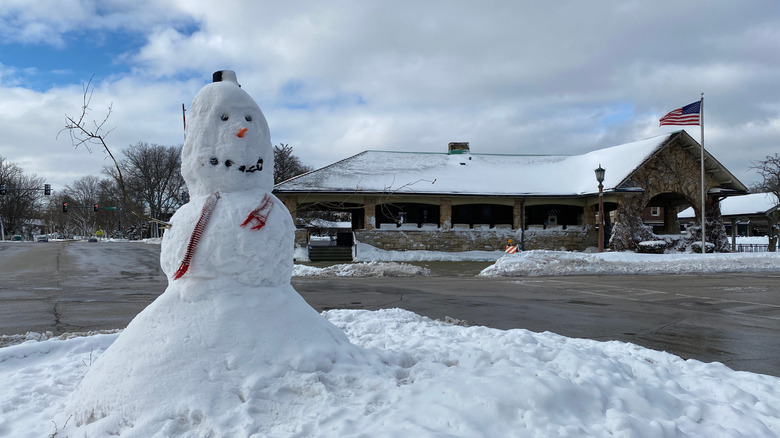
Located 6.5 miles north of Chicago's West Ridge neighborhood, Kenilworth village is home to 2,500 people, and the property crime rate there is 4.189 per 1,000 inhabitants. The violent crime rate is zero. Overall, Kenilworth's crime rate is 81% lower than the statewide average and 82% lower than the national average, according to AreaVibes.
The suburb is also wealthy. Per the U.S. Census Bureau, more than 71% of the households here made over $200,000 a year in 2023, and the mean household income is $460,411. You'd certainly need to make (or have made) lots of money to live comfortably in Kenilworth village. The cost of living here is 149% higher than the state average and 140% higher than the national average, according to AreaVibes. And the average price of a Kenilworth home is over $1.9 million as of late 2025, according to Zillow. That is nearly $1.6 million more than the average value of a home nationwide: $357,275.
If you prefer to rent as opposed to owning, this suburb is not for you. There aren't any rentals listed within Kenilworth village. In fact, most of the 0.6-square-mile community by Lake Michigan is zoned for single-family residential homes.
Hinsdale
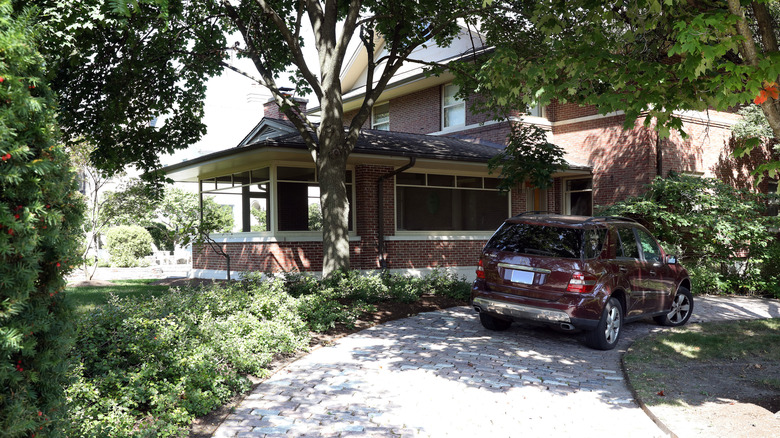
Situated about 22 miles from downtown Chicago and 17 miles from Chicago O'Hare International Airport, Hinsdale is home to nearly 17,400 people. This suburb has a property crime rate of 3.554 per 1,000 residents and a violent crime rate of 0.117 per 1,000. According to AreaVibes, Hinsdale's crime rate is 73% lower than the statewide average and 75% lower than the national average.
But the apparent security Hinsdale offers comes at a price. Per AreaVibes, the cost of living in Hinsdale is 98% higher than the Illinois average and 90% higher than the national average. And the typical home value for a home in Hinsdale was just under $1.2 million as of the end of 2025, per Zillow, which is more than $840,000 above than the U.S. average. The average rental rate in Hinsdale as of early 2026 was $3,500 a month, per Zillow Rentals, which is 75% higher than the national average. Per U.S. Census Bureau figures, 59% of the households in this community make $200,000 or more a year, and the mean annual income is $376,366.
Winnetka
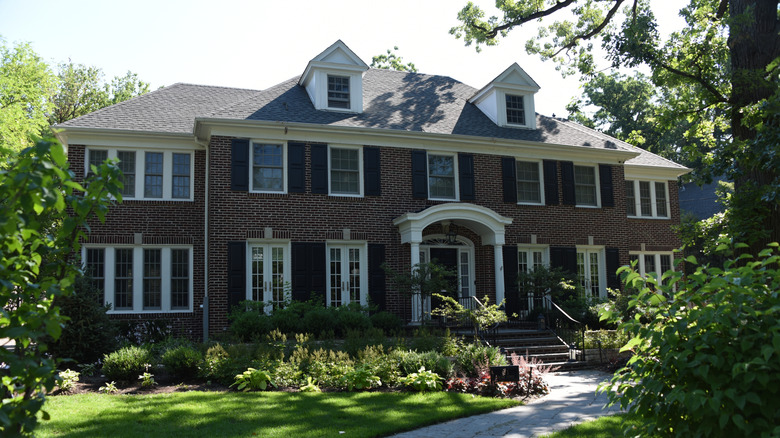
Fun fact: The house featured in the comedy "Home Alone," where a young boy played by Macaulay Culkin is accidentally left alone to protect his family's house from burglars, is located in Winnetka, a village about 8 miles north of Chicago's Rogers Park neighborhood. And this suburb of about 12,500 people does have a property crime rate of 6.144 per 1,000 people. Its violent crime rate is much lower: 0.164 per 1,000 people. Both figures amount to a rate that's 63% lower than the statewide average and 65% lower than the national average, per AreaVibes.
About 64% of Winnetka households made $200,000 or more each year as of 2023, per the U.S. Census Bureau, and the mean income was $457,404. That's probably a good thing, considering that Winnetka's cost of living is 124% higher than the statewide average and 115% higher than the national average, per AreaVibes.
Contributing to the lofty cost of living is housing — home values in Winnetka average at just over $1.7 million as of late 2025, per Zillow; that's about $1.4 million more than the national average. However, rental rates are not that high. As of early 2026, the average rent there was $2,095 a month, per Zillow Rentals, which is just 5% higher than the national average.
Wilmette
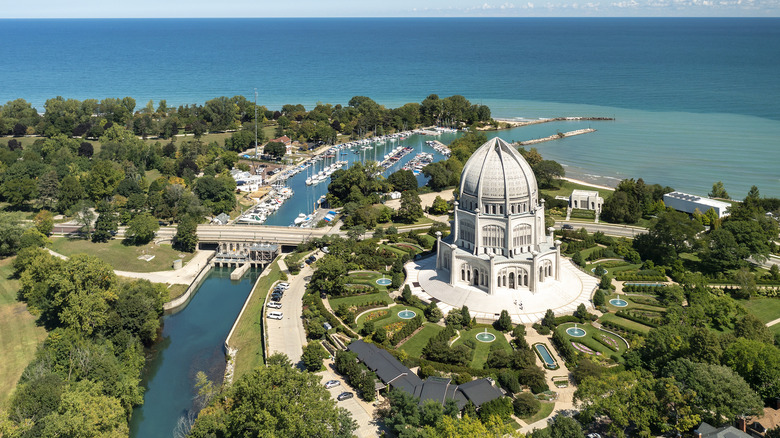
About 6 miles north of Chicago's Rogers neighborhood, and with a population of just under 27,500 people, Wilmette is yet another affluent suburb where the median household income was $192,300 as of 2023, per the U.S. Census Bureau. Notably, Wilmette has had its share of property crime, which was 11.651 per 1,000 people in 2025. Meanwhile, its violent crime rate was 0.335 per 1,000 people. Overall, that's still 40% lower than the statewide average and 43% lower than the national average, per AreaVibes.
Living in Wilmette entails spending 71% more on housing, goods, services, healthcare, and other essentials than the state average, per AreaVibes. The cost of living there is also 65% higher than the national average. However, acquiring a home in this North Shore community by Lake Michigan won't set you back as much as it would in some of Chicago's other affluent suburbs. As of late 2025, the average home value was just over $900,000, per Zillow, or roughly $550,000 more than the national average. Renting, though, can be pricey. The average rental rate in Wilmette as of early 2026 was $3,855 a month, which is 118% higher than the national rental average.