

10 US Cities With The Highest Property Tax Burdens
Housing is often cited as the single largest expense for U.S. adults. The Bureau of Labor Statistics reports that housing accounts for more than 33% of the average annual household expenditure, highlighting its disproportionate burden on Americans' finances. The U.S. Census Bureau indicates that about 60% of people have a mortgage on their property, which reveals how out of reach rising housing expenses are becoming. Although the headline number for housing expenses is usually the price of property, there are routine, hidden costs that can inflate a person's monthly real estate burden. Of these, property taxes are among the most burdensome.
While the federal government derives most of its money through income taxes, local governments rely heavily on property taxes. According to the Tax Foundation, property taxes contributed to more than 70% of the inflows to local governments across the country. Since state and local governments have alternative funding mechanisms and requirements vary greatly, the total property taxes paid by residents fluctuate dramatically. Throughout the U.S., households pay about $1,889 in property taxes on average.
Given this variability, some homebuyers simply avoid looking at the states with the absolute highest property taxes. That strategy makes sense on its face, but it fails to account for the varying household incomes in the U.S. A flat property tax percentage is insufficient to determine the full financial impact of the surcharge. Homeowners need to calculate the true cost of this tax relative to their income. That's where the concept of property tax burden comes into play. This metric examines the percentage of household income allocated to property taxes, offering a more realistic view of the fiscal strain imposed by these local levies. Reviewing the 10 U.S. cities with the highest property tax burdens can help Americans avoid unnecessary real estate costs.
1. Paterson, New Jersey
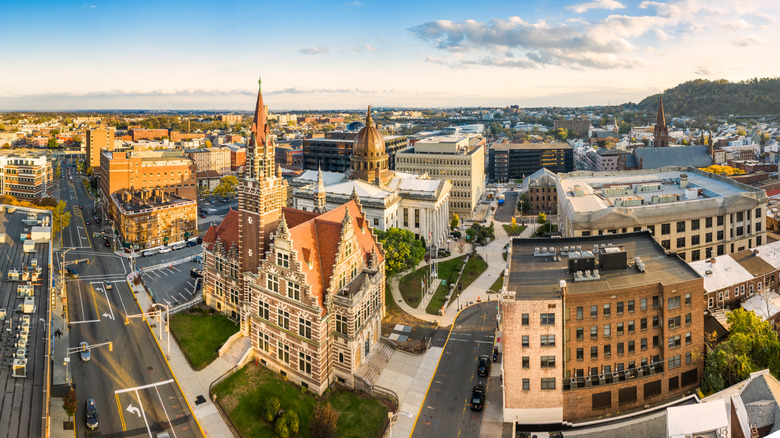
Homeowners in Peterson, New Jersey, experience the nation's most burdensome property taxes, spending roughly 9.76% of their income on these surcharges. Of those residents with a mortgage, the median income is $100,227. To be sure, New Jersey is one of the states with the absolute highest median income. Despite these relatively elevated incomes, the locality's annual tax burden is extremely high, with median annual property taxes reaching $9,779. On top of this specific levy, households in Paterson are slapped with monthly housing costs of $2,869, resulting in an annual housing cost burden of $34,428.
New Jersey is one of the most represented states on this list of cities with the highest property tax burdens. The state has structured local school and municipal government funding to derive almost entirely from taxes levied against housing. Passaic County, which is home to the City of Paterson, implements a 2.508% effective tax rate, which is on the upper side of the range for the Garden State. To make matters worse, the local government under Mayor Andre Sayegh has provided exemptions for much of the $1 billion worth of new real estate built in the city, with many of these abatements lasting two decades. This concentrated the existing burden of property taxes on normal homeowners.
2. Bridgeport, Connecticut
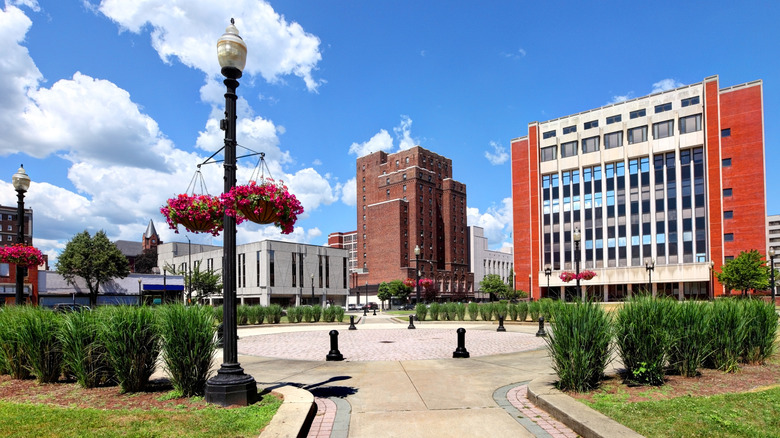
Bridgeport, Connecticut, isn't far behind, where property taxes account for 7.42% of the municipality's median income. Residents who are paying off a mortgage maintain a median income of $96,887. That might seem like a lot, but the Constitution State experiences a high cost of living. In fact, $250,000 in retirement in Connecticut would only last the average senior around six years. On an annual basis, residents of Bridgeport are hit with $7,187 in property taxes. These surcharges are only a component, albeit the largest, of housing costs that reach $2,273 monthly. On an annual basis, homeowners are paying $27,276 just to keep up with their property.
As you'll see, Connecticut is home to many cities with painfully elevated property tax burdens. Bridgeport is in the unenviable position of leading in this area, largely due to the city's rapid rise in home values. The town sets the perfect example of how tax rates can stay the same, while annual property tax payments rise dramatically. Within a recent five-year period, Bridgeport's average assessed home value surged by 68%, ballooning the amount residents were paying. Unfortunately, the value increase was more prevalent among residential homes.
3. Waterbury, Connecticut
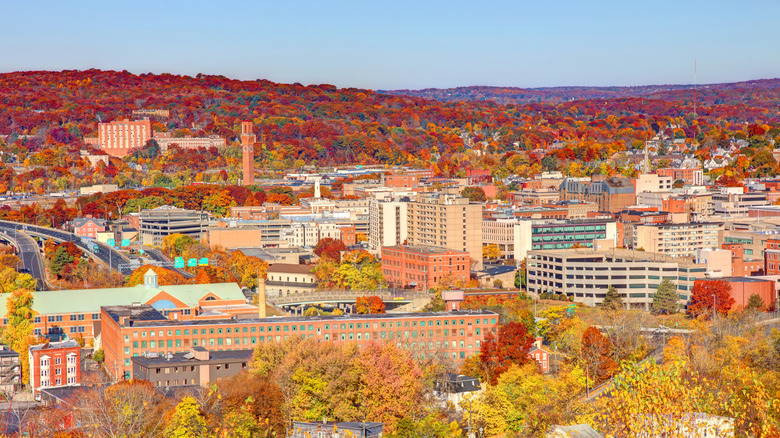
Waterbury isn't the most affordable city in Connecticut, and residents can thank exorbitant property taxes, in part, for that higher-than-average cost of living. With a median income of $74,973 for people with a mortgage, you may think the local citizenry is living comfortably. That illusion is shattered when you realize the median annual property taxes run $5,302. Put another way, 7.07% of every dollar earned in Waterbury, Connecticut, goes to paying off property taxes. Keep in mind, these only represent a portion of total housing costs, which extend to $22,500 annually or $1,875 monthly.
The City of Waterbury fell to the same assessment fate as the fellow Connecticut town of Bridgeport. In 2022, the local government conducted a five-year reexamination of the area's property values to determine how much to charge in property taxes. Again, the rate of taxation didn't budge, but the principal amount upon which they were levied — home values — soared. The average residential property in Waterbury spiked by 74%, colossally increasing the city's relative property tax burden. This problem could possibly continue further down the line without proper protections in place.
4. Newark, New Jersey
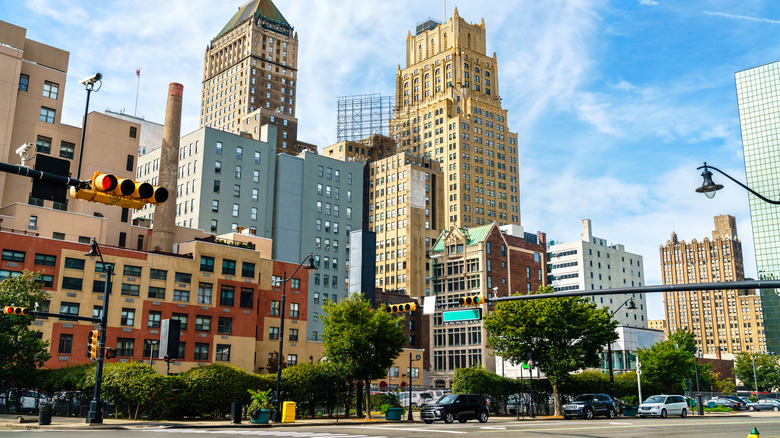
If you're looking for an affordable place to settle down in the Garden State, look for a small New Jersey suburb with low property taxes. Unfortunately, Newark — the state's most populous city — is the furthest from that scenario. Even with an enviable median income of $112,852, homeowners with a mortgage are still shouldered with a hefty property tax. Every year, 6.05% of their income is put towards these local taxes. In total, local governments receive $6,833 from every household with a mortgage. That's in addition to other housing costs, which extend to $2,447 monthly. Yearly, those routine and unavoidable expenses stretch to $29,364.
The Garden State primarily pays for municipal government operations and school districts via property taxes. For education specifically, the state covers upwards of 50% of the rising cost through these local surcharges. With state-level funding remaining largely unchanged in recent years, local taxpayers are left picking up the slack. The tax burden is particularly acute in Newark due to recent budget increases. The Newark Board of Education cleared $1.57 billion worth of spending for the next school year, an amount that rises annually. Recent legislation switched the budget approval process from a local vote to an administrative decision, putting homeowners out of the process.
5. Jersey City, New Jersey

Jersey City is the third example from New Jersey on this list of the U.S. cities with the highest property tax burdens. Unsurprisingly, it's recently become one of the states with the highest average credit card debt. Once again, you may be surprised to realize this city sees a median income far above the American average at $152,690. Still, roughly 6.02% of this income, on average, is spent on property taxes, which tend to cost $9,197 annually. Total monthly housing costs in Jersey City are $3,376, representing a staggering $40,512 in annual expenses.
Similar to other cities in the Garden State, Jersey City leans on property taxes to fund local schools and other government programs. Recently, the government uncovered a systemic underpayment of businesses in the area to provide required payroll taxes, another crucial source of local funding. Officials reported that hundreds of millions of dollars were kept from schools. The shortfall placed undue pressure on residential homeowners through property taxes to close the gap on that essential school funding.
6. Richmond, California
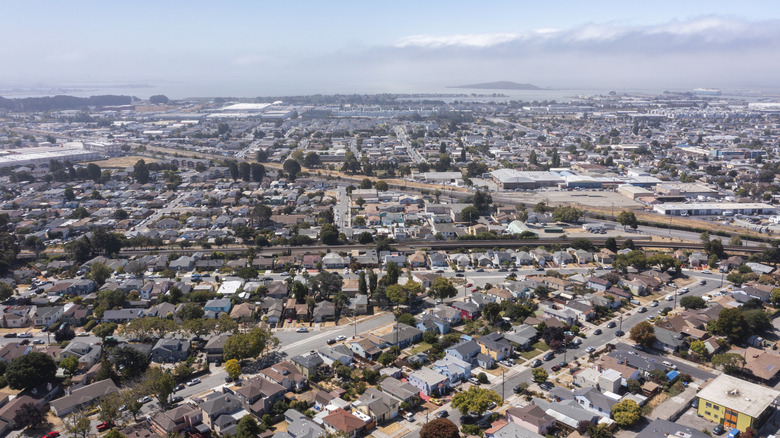
California is well-known for its increased cost of living compared to the rest of the nation. Much of the focus behind these heightened expenses has to do with the state's progressive tax structure, but property taxes shouldn't be ignored as a contributing factor. There are still affordable places to live in California, but it's all relative to the expenses throughout the Golden State. Richmond is a city that certainly fits the stereotype of above-average living costs, with median property taxes at a whopping $7,752 annually. For reference, the median income of households with a mortgage is $129,155. While far above the U.S. standard, this income still loses 6% on average due to property taxes. In total, annual housing costs are estimated at $34,716, or about $2,893 monthly.
California is another state that has low property taxes on the books. This is due in part to legislation known as Proposition 13, which constitutionally limits property tax increases. However, the Golden State's pricey real estate market results in high property taxes, since they're determined by home values. This is precisely what's driving the property tax burden higher in Richmond. Yet, the city is also reeling from other municipal taxes and so-called special assessments, which further drive up the bill.
7. Aurora, Illinois
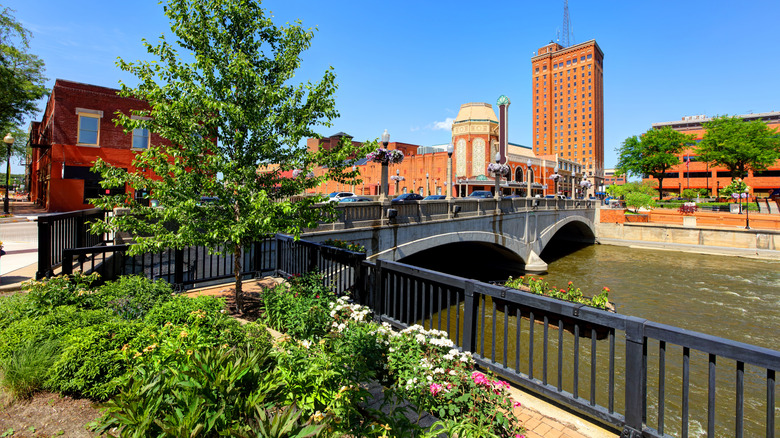
Arguably, property taxes are the real reason homeownership in Illinois is so unaffordable. The state is known for its unreasonable property tax rates. However, the specific weight of those taxes varies by location, and Aurora is among the hardest hit. Residents in the city earn a respectable median income of $109,738. While this looks fantastic on paper, the $6,399 of median annual property taxes immediately takes a 5.83% chunk out of the income. When you factor in the total housing costs of $1,996 per month or $23,952 per year, it's clear how expensive it is to maintain a home in Aurora.
Illinois has long been derided as a state with runaway property taxes, and the costs are outpacing wage growth. According to the Illinois Policy Institute, property taxes on residential real estate has outran the rise of household incomes by 330%. Tellingly, Illinois has the most property tax districts in the entire country, reaching nearly 7,000 divisions. For reference, Texas has slightly over 5,000 local governments despite having double the population. This unnecessarily complex and overlapping network of tax-making entities inevitably leads to more property taxes, since it's their primary means of funding. The Illinois Policy Institute underscores school-focused property taxes as the fastest-growing and most punitive subset of the local surcharge. Around 63% of total property tax revenues are put to fund local schools, and these focused surcharges have risen 25% faster than inflation since 2013. In the midst of the clear financial consequences of high property taxes, city authorities have recently attempted to raise these surcharges due to a massive budget shortfall.
8. Allentown, Pennsylvania
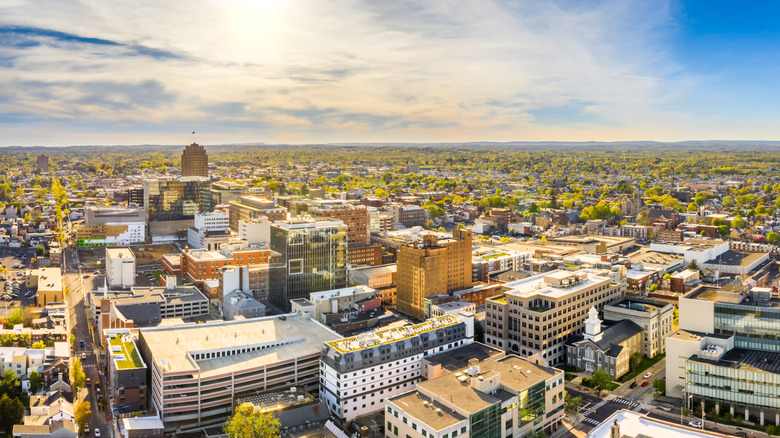
The unexpected value of $100 in Pennsylvania is actually more than $100 in terms of spending power. If you're thinking of moving to the Keystone State, you'll most likely be putting those extra dollars of purchasing power toward the state's lofty property tax burden. The city of Allentown is the most egregious case in the state. When you look at the raw property tax rates, the figures don't look too bad. However, the town's relatively low median household income of $67,132 is more vulnerable than that of other states on this list. Homeowners tend to pay $3,776 per year in property taxes, which comes out to 5.62% of their income. Despite the dollar amount being much lower than in other cities, the relative burden is among the highest in the country. Overall, households spend about $1,564 on their housing costs, totaling $18,768.
Similar to other states with relatively severe property tax burdens, local school systems and entire municipalities in Pennsylvania receive the majority of this government revenue. Some of the main drivers of this disproportionate and rising tax burden include the inflation of products and services related to the real estate industry, such as labor costs, utility expenses, fuel fees, and even insurance coverage. Recently, the local government in Lehigh County, where Allentown is located, decided to raise property taxes, despite already having among the most crushing rates. Although an equity protocol was put in place to help alleviate some of this unevenly placed tax burden, the county was spared much of the funding.
9. New Haven, Connecticut
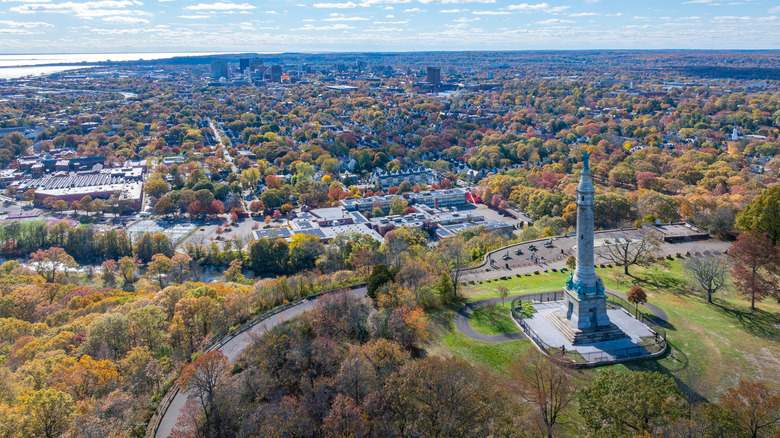
New Haven is one of the most expensive cities in the U.S. to rent apartments, but this isn't where the city's higher-than-average real estate expenses stop. Residents experience an unusually elevated property tax burden, typically putting 5.57% of their income toward this local fee. More specifically, the median annual property tax in New Haven is an eye-watering $6,745. Even with a median household income of $121,153, the normal resident is still suffering from extortionate property tax rates. Unfortunately, other house-related expenses aren't much cheaper. The median annual housing cost in the city is $25,692. That's an unavoidable monthly fee of $2,141.
As previously discussed, Connecticut is chiefly dependent upon property taxes for funding the state's public school system. While every municipality can set its own taxes, New Haven is challenged due to an unusually high concentration of tax-exempt buildings. The local government has labeled a decent chunk of the real estate market as immune to these surcharges. Not only does this limit the amount of funding for local schools, but it also concentrates the financial load onto the residential housing market, as public school funding targets remain in place.
10. Stamford, Connecticut
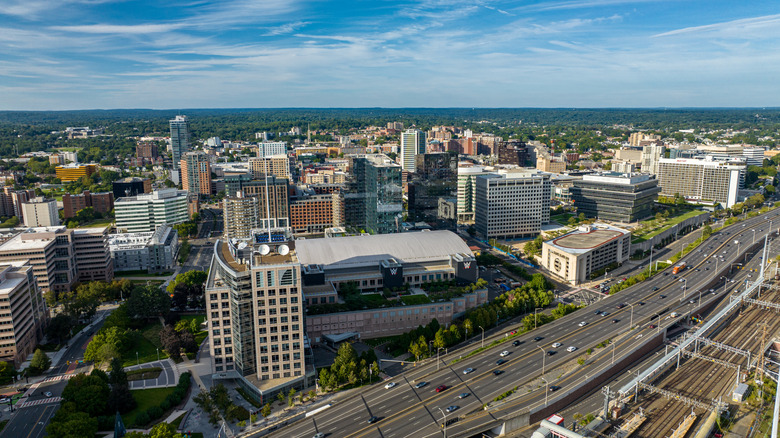
Connecticut graces the list of cities with the highest property tax burdens, once again, but in the final place. Don't be fooled, however; property taxes in Stamford are still extraordinarily high. The typical household can expect to pay a median amount of $9,951 annually due to this local surcharge alone. Now, these households enjoy an extremely high income of $180,500. Still, their property tax burden is 5.51% of their income, among the most onerous in the country. Total housing costs are $3,488 in Stamford, Connecticut, which comes out to $41,856 annually. If you live here, you should certainly check out the tax breaks you receive if you own a home.
As mentioned before, the Constitution State taps its wealthy housing stock to fund schools. While Connecticut spends an average of $21,143 per student, the town of Stamford goes a step further. It outspends the state average by $1,200, budgeting roughly $22,321 per student. While not quite as high as other cities such as Middletown, the higher-than-normal education budget works to hike up the county's property taxes. It's worth noting that Connecticut exempts many valuable pieces of property, such as places of worship, universities, and medical buildings, from property taxes, raising the burden on residential homeowners.