

Make This Money Move Sooner Rather Than Later And You Might Be Ready To Retire Early

Early retirement is often a complex goal. Aside from accumulating as much savings as possible, it can be hard to gauge how much money one will need at the age they plan to retire. For example, people in their 30s need a lot more money to retire than individuals in their 50s. But regardless of your planned retirement age and your savings goal, there are a number of money moves worth making to reach that objective. One of the most important strategies is building a 10-year financial buffer aside from your standard retirement savings. The sooner you'll start putting money aside for this buffer, the earlier you'll be ready to retire.
A 10-year buffer can have many benefits, but for early retirees in particular, it should create a line of defense against market volatility and financial stress. According to Fidelity, in bear markets, stocks decline at least 20%, and this trend occurs roughly every six years. While stocks are likely to recover, selling them during a downturn eliminates any chance of a full recovery. Because early retirees will likely experience some bear markets and downturns, keeping a savings buffer reduces the need to sell their investments at a loss to cover their day-to-day expenses. Having a well-padded buffer can also come in handy to cover things like medical emergencies, since early retirees are likely to not have insurance through an employer and cannot qualify for Medicare until 65.
How to build a 10-year savings buffer the right way
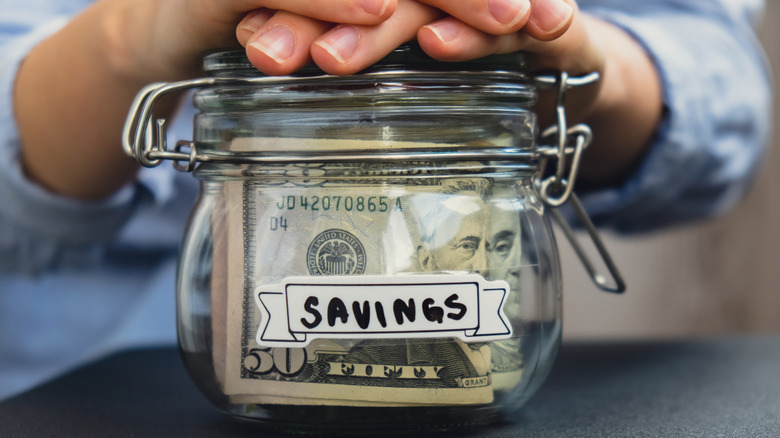
If you've decided to build a savings buffer, it may be tempting to pull from existing savings or retirement accounts to quickly build up your reserves. However, a buffer for early retirement should exist independently of other retirement accounts. Aside from possibly triggering early withdrawal penalties if you take funds from 401(k)s or other IRAs, pulling stocks out of the market can hinder your ability to retire early. Instead, individuals planning on retiring early should save the amount they'll need for retirement — which should be around 70% to 80% of pre-retirement income — and create a separate, 10-year buffer based on similar calculations.
After establishing how much you need to save for a 10-year buffer, individuals can steadily set money aside to reach that goal while also leveraging a few accounts to make the process easier. Because a buffer acts as a safeguard for volatility, it can be a good idea to park these additional savings in highly liquid accounts. For example, high-yield savings accounts (HYSA) can provide instant access to your funds and still grow by accruing interest. Opening an account is simple, but make sure you understand how these accounts work, so you don't lose money in a HYSA. Certificates of Deposits (CD) can also help your buffer grow, but they are less liquid due to their maturity periods.