

The US Dollar Just Fell And The Reason Is Clear
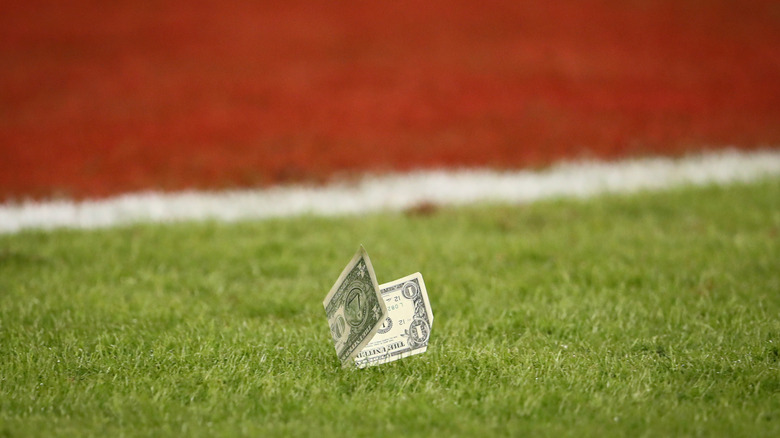
On January 20, 2026, after President Donald Trump announced he would hit eight European countries with new tariffs for not going along with his plans to annex Denmark's autonomous territory of Greenland, the stock market plummeted along with the value of the U.S. dollar. Both recovered after Trump backed away from his tariff threats and finally clarified that he would not send in troops to occupy the land of another NATO country.
But the bounceback didn't last long for the U.S. dollar. Days after Trump backed down at Davos, the dollar's value still trended downward. That's because while there was some relief that Trump won't ramp up tariffs or order a military invasion, there's still uncertainty about the future of U.S. policy under the Trump administration. And the decline of the U.S. dollar is not new — the trend was a hallmark of most of 2025. "Heightened U.S. policy uncertainty under the Trump administration relating to foreign policy, trade policy and interference with [the] Fed's independence has contributed to a weaker U.S. dollar over the past year," reported Lee Hardman, senior currency economist at Tokyo-headquartered global bank MUFG (via FXStreet).
Trump's tariffs and bid to undermine Fed independence have hurt the U.S. dollar
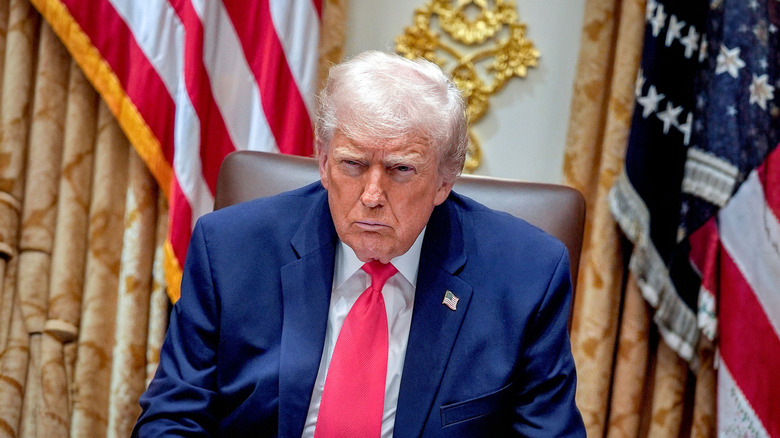
The U.S. dollar is still one of the strongest currencies in the world, but it lost 9% of its value against other widely used currencies in 2025. The unease over Trump's moves to undermine the independence of the Federal Reserve is one of the top reasons investors are heading for other leading global currencies, like the Swedish krona, Mexican peso, and Swiss franc, which are outpacing the U.S. dollar. That said, the dollar's decline has also been fueled by economic factors, such as stagnant job growth and tariffs on imports that have inflated prices for essential household goods and other consumer items.
Notably, Trump's tariffs had two goals. One of them was to raise enough revenue to pay for income tax cuts that may bring bigger refunds in 2026. The other was to promote the growth of America's manufacturing base. Since U.S. exports tend to get cheaper when the dollar weakens, the currency's decline helps this aspect of the administration's trade agenda. Unfortunately, that price edge can be blunted if other countries, in response to Trump's tariffs or threats to conquer Greenland, slap their own tariffs on U.S.-made products.
Europe's trade bazooka and 'Sell America' could blast the U.S. economy
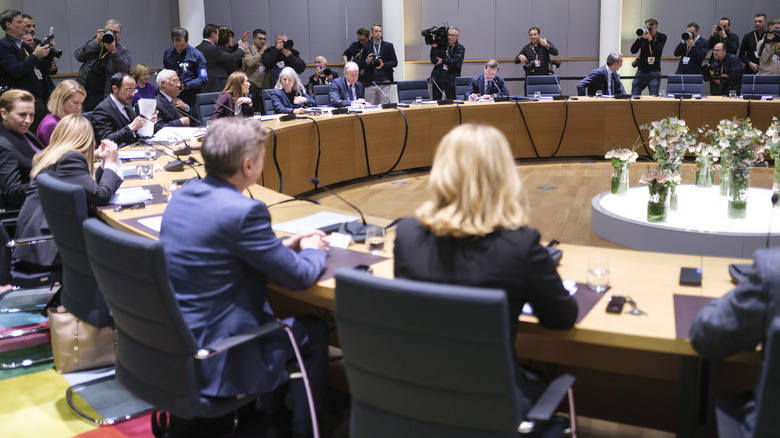
Aside from tariffs, Europeans have contemplated actions that could further weaken the U.S. dollar and undermine the nation's ability to pay off its $38 trillion debt. That includes the Anti-Coercion Instrument, also known as the "trade bazooka," through which the EU can severely limit trade and investment to nations that try to coerce member countries and companies.
And while Trump yearned for Greenland, speculation intensified on what would happen if Europeans decided to really "sell America," as in selling off large amounts of U.S dollars and other assets like government bonds. George Saravelos, head of FX research at Deutsche Bank, said such an action would leave Americans, and their dollars, in a world of hurt. "European countries own $8 trillion of U.S. bonds and equities, almost twice as much as the rest of the world combined," Saravelos said (via Fortune), adding that "With USD exposure still very elevated across Europe, developments over the last few days have potential to further encourage dollar rebalancing."
Meanwhile, investors are selling American dollars and products right now, but it's not over Greenland. It's because they see opportunities elsewhere. And, so far, there is hardly any appetite for divesting completely from the largest economy in the world. "No professional investor is going to take America to zero," Marko Papic, chief strategist at BCA Research, told Axios.