

5 Signs You're Wealthier Than The Average Baby Boomer

Those born between 1946 and 1964 — a generation known as baby boomers — make up the wealthiest cohort living today, and it's not even close. According to U.S. Federal Reserve data showing generational wealth from 1989 through 2025, baby boomers have held the bulk of the nation's wealth since surpassing the Silent Generation (born prior to 1946) in the second quarter of 2005. As of the end of 2025, boomers collectively hold over $88 trillion in wealth, compared to the Silent Generation's $20.8 trillion, Generation X's $45.4 trillion, and millennials' and younger cohorts' $18.25 trillion.
But while these numbers comprise the overall wealth held by each generation, it's safe to say there are always outliers. In fact, you might actually be wealthier than your average baby boomer. If your net worth exceeds $1.5 million, you've saved over $250,000 for retirement, you own a second home, you spend freely on vacations, or your debt is below $10,300, your wealth likely exceeds that of the average individual in the boomer cohort.
Your net worth is over $1.5 million

Obviously, individual net worths vary wildly, and there are extremes on both ends within each generation. Nevertheless, Federal Reserve data from 2022 shows the average net worth as $1.56 million for people ages 55 to 64, the younger range of the baby boomer generation. For those between 65 and 74, the average net worth is $1.78 million. Meanwhile, folks aged 75 and above (a cohort that comprises the oldest boomers and those born earlier) have an average net worth of $1.62 million. With these numbers in mind, we can estimate that the total average net worth of baby boomers is about $1.66 million.
If your own wealth is above $1.66 million, then you're definitely richer than the average boomer. But even if your net worth is around $1.5 million or above, then not only are you already better off than many baby boomers, but you are also probably on track to be wealthier than the average individual in that cohort by the time you hit retirement age.
You already have $250,000 saved up for retirement

Saving up for retirement is a key financial goal for many people, and it's become increasingly important over the years as proposed cuts and changes to Social Security remain a hot topic. If you've tried to get ahead of these changes by setting up an IRA or a 401(k) fund early in your career and contributing to it regularly, you may be in good shape for your future non-working years. And, considering the average Baby Boomer has over $249,000 in their 401(k) or about $257,000 in an IRA, you also may be richer if you've got that figure beat. Even if you just have close to $250,000, you may still be able to consider yourself in better financial shape. After all, if you're in any of the younger generations, you've still got more years of active work and income ahead of you to build up your retirement account further.
Haven't yet set up a retirement account? There's no better time than now to get one opened. In case you need some help with knowing what to aim for, Fidelity analysis suggests setting aside 15% of your income each year as well as setting a goal of having 10 times your annual income saved up by the age of 67.
You own a second home
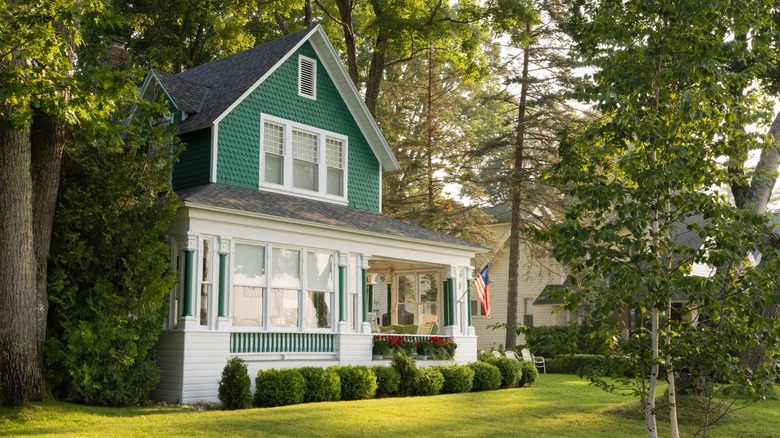
Baby boomers made up the majority of home buyers in 2025, or 42%, while millennials made up 29%, and Generation X accounted for 24%, according to figures from a 2025 National Association of Realtors report. A review by Realtor.com likewise shows that this generation holds an impressive $18 to $19 trillion in real estate — the largest piece of the pie out of all living generations. However, a Gitnux report on generational wealth statistics states that just one in five baby boomers own a second home, which amounts to just 20%. This means that if you happen to own more than one property, you may very well be able to consider yourself wealthier than a full 80% of baby boomers — at least when it comes to real estate.
If you don't currently own any property, changing that could be a worthwhile goal. In addition to being more predictable overall than rent prices in the long term, home values and owning real estate in general play a surprisingly large role in building upper-class net worth.
You spend well over $6,000 while on vacation

Baby boomers are often perceived as having more disposable income. There's a lack of definitive up-to-date analysis that would confirm this belief (though a decade-old U.S. News & World Report study from 2015 claimed that baby boomers hold 70% of the nation's disposable income at the time). Nevertheless, one area where disposable income does come into play is on vacation. According to a November 2025 traveler trends study from Phocuswright (via TravelPulse), almost a quarter of baby boomers spend $6,000 or more on their vacations. And that's while they are actually at the destination, so the number does not include transportation costs.
In stark contrast, only 17% of millennials and 16% of Generation X individuals were reported to spend that much while traveling. So, if you're among the younger generations and are spending well over $6,000 on each of your trips, you may be wealthier than your baby boomer counterparts. On the other hand, if you keep finding yourself going over your budget while traveling, you can start saving more money by learning which unnecessary travel purchases to avoid.
You owe less than $10,300 in non-mortgage debt

Owing debt is incredibly common for Americans. While specific amounts vary quite a bit between individuals — and are often the result of various personal choices and life circumstances — a 2025 analysis by Lending Tree shows that baby boomers owe an average of $10,272. This number does not include mortgage debt, which would heavily skew the data. Personal debt can stem from many situations, from personal loans to auto debt to student loans (yes, some baby boomers still carry student loans).
So, if you owe less than roughly $10,300 overall on your accounts — again, not counting mortgages — you can be proud about being in better financial shape when it comes to debt than your boomer counterparts. Chances are, you're wealthier than most, too. On the other hand, if you owe a lot or just want to get your finances under better control, take a look at these genius tips for getting it all paid off.