

Why Washington Homeowners Are Suing Big Oil Companies
Homeownership in the U.S. is infamously expensive, even beyond the initial purchase and mortgage setup. A 2025 Bankrate analysis says homeowners spend over $20,000 a year on non-mortgage expenses, while a Lending Tree report from the same year shows home insurance premiums alone have skyrocketed 40.4% across the country since 2019. But now, some homeowners in Washington state — where insurance rates surpassed the national average, rising by 51% in the same time period — are taking an unprecedented approach to battling these increases. In a class action lawsuit filed on November 25, 2025 on behalf of the homeowners, Seattle-based firm Hagens Berman accuses big oil companies of a racketeering conspiracy that attempted to conceal their role in ongoing climate change, the effects of which are largely to blame for the bloated home insurance premiums. A total of 14 defendants are named in the lawsuit, and most of them are oil companies and their subsidiaries. The big names include Shell USA, Inc., Chevron Corporation, BP America, Inc., ExxonMobil Corporation, ConocoPhillips, and The American Petroleum Institute.
Although the premise may feel like a bit of a stretch, Hagens Berman is no small potatoes when it comes to class action. The firm lists multiple billion- and multi-million-dollar lawsuits against automakers and pharma companies among its victories. Lead attorney Steve W. Berman also helped secure a $206 billion settlement against the nation's leading tobacco companies in 1998, which remains the biggest settlement in history as of January 2026. For comparison, Amazon made headlines in September 2025 when it was ordered to pay out $2.5 billion to customers — a relative drop in the bucket.
How oil companies have allegedly contributed to rising home insurance rates in Washington
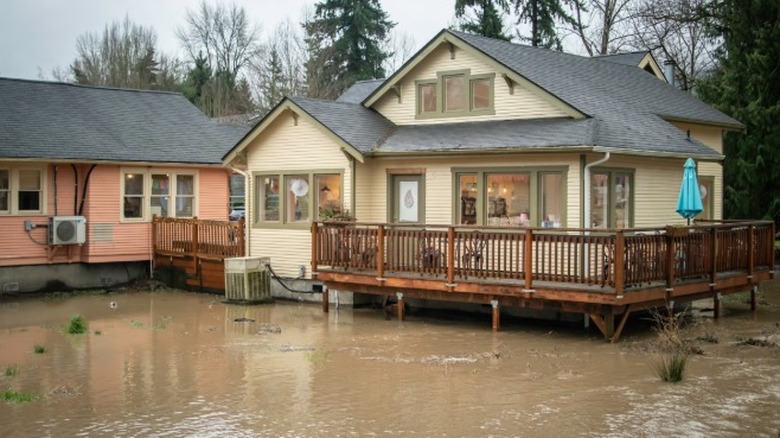
There are multiple, often sneaky reasons why home insurance rates go up, but two of the main factors in the late 2010s and 2020s have been climate-related. A 2025 report from The U.S. Department of the Treasury shows that insurer costs are highest in areas with the biggest climate disaster risks. Unsurprisingly, these environmental hazards increase the likelihood of insurance rates rising or policies getting dropped altogether. The report also shows that between 2018 and 2022, homeowners living in zip codes deemed to be at high risk of climate disasters paid 82% more in adjusted rates than those in low-risk zip codes.
So, what does Big Oil have to do with any of this? While the inflated insurance rates seem like an unfortunate — albeit normal — risk of living in an area prone to climate disasters, the Washington homeowners' lawsuit alleges that America's largest oil companies have knowingly played a significant role in contributing to the growing amount of climate disasters. According to the filed complaint, Big Oil companies have known since the 1950s, thanks to their internal scientific evaluations, "that their products caused climate change, and that the unabated sale of their fossil fuels would have severe environmental and social consequences." Hagens Berman also alleges that these companies then engaged in heavy marketing campaigns over the next several decades in an attempt to conceal that connection. The attorneys also claim that the defendants violated the Racketeer Influenced and Corrupt Organizations (RICO) Act.
Who is eligible to join the class action suit
If you live in Washington and have experienced a significant property insurance increase, it may be possible to join the class action suit against Big Oil. Hagens Berman has a form open for homeowners who believe they have been affected by rising insurance premiums due to climate change. However, the criteria specifically state that it is open to Washington state homeowners who have purchased a policy to insure their home in 2017 or after. The reason for the 2017 limit appears to be that both plaintiffs currently listed in the complaint, who are homeowners in Washington, have purchased their policies in 2017 and seen major premium increases since. The first homeowner, who lives in Normandy Park, Washington, saw his rate rise by a whopping 113% between 2017 and 2025. Meanwhile, the second homeowner, who lives in Carson, saw hers double.
Home insurance is not legally required in Washington. However, having a home insurance policy with enough coverage for your property value has long been viewed as a necessity for protecting against situations like natural disasters. It's also required by most mortgage lenders.