

10 Subtle Signs Someone Is Wealthier Than They Look

The signs of wealth come in many forms. Some people with lots of cash in their bank accounts choose to spend it like they think it's going to disappear. These are the personalities in luxurious sports cars, the people sitting in premium seats at sporting events, and restaurant patrons who only dine at the fanciest establishments. Many big earners have the capital to afford lifestyles like this — the minimum salary for MLB players in 2026 is set at $780,000, for instance, and some of America's wealthiest CEOs make over $100 million in total compensation. Yet, spending huge money on life's finer things isn't generally the approach that wealthy people looking to preserve their fortunes take. There's a reason why big salaries in professional sports leagues frequently create 20-somethings with lots of cash to blow and 30-somethings struggling to make ends meet.
Instead of flashing their cash, people with subtly potent bank accounts tend to downplay their financial success. People seeking to maintain and grow their net worth, nest egg, and financial stability often live far beneath their means. Furthermore, you're not likely to see secretly wealthy individuals invest in expensive clothing, buy luxury vehicles or homes, or even splurge on things like first-class airline upgrades. It might be hard to spot someone who is silently wealthier than they appear, but the telltale signs are there if you know where to look.
They don't talk in hypotheticals about the future

People with subtle wealth standing behind their pursuits move and speak in different ways than the consumer landscape's rank and file. These people experience life somewhat differently, even if their day-to-day lives follow the same basic blueprint. Of course, regardless of their income, most people will still spend most of their adult years working, starting families, and striving to learn and grow both professionally and personally. Wealthy individuals will look to retire at some point in the future just like everyone else. All of these desires and strategies for how to live a fulfilling life involve plans for the future. Some of these might be short-term lines of thinking, while others span decades. What sets subtly wealthy people apart from others is how they talk about these plans.
According to data from MMGY Travel Intelligence, 80% of American workers intended to travel in 2025 (via CoStar). But as travel costs have continued to rise in recent years, those in tighter financial situations might need to find ways to cut corners or finance their trips while upper-class consumers can fund big expenses like that with cash. Similarly, the amount of money required to live out retirement comfortably often fluctuates, and those in more uncertain financial positions may feel less confident about what retirement will look like. Meanwhile, people who are wealthier than they appear will talk about these kinds of dollar-driven events in terms of "when" rather than "if," because they likely have robust plans already in place to support whatever expenditures they'll need to make to achieve their goals.
They spend money to buy time, not unnecessary luxury

Wealthy people who don't flaunt their status don't tend to invest in flashy upgrades. They usually won't buy first-class airline tickets and might be happier sitting in the nosebleed seats while watching their favorite team play. Upgraded experiences provide luxuries that can make the journey more comfortable or stylish, but it isn't always worth it to a person possessing the kind of silent wealth that quietly builds in the background. Enhancements that do move the needle for these kinds of consumers tend to be meaningful time savers. A cost-effective upgrade in the mind of a quietly wealthy shopper might not include business-class seats, but it will frequently encompass direct flights or a faster train route that costs more than less efficient alternatives.
The same can be said for entry tickets. A frugal, quietly wealthy spender might choose to visit a theme park with their family during an off-peak season or day to save on the price of entry, but they often won't hesitate to buy the fast passes that cut out much of the time spent waiting in lines. Buying back time is a classic hallmark of those with plenty of wealth to leverage. Holding back on enhancements that are simply nice to have provides consumers the freedom to more effectively chase upgrades that allow them to enjoy the experiences they seek out for longer periods.
They tend to feel mentally well, even when struggling

Living through lean financial times can create a state of constant exhaustion, pertaining both to your mental and physical wellbeing. Living paycheck to paycheck is a possibility even for high earners, but it's particularly damaging to those who aren't on the upper end of the economic spectrum. Even if someone in the upper class is struggling financially, they're likely to have a greater selection of expenses to cut down on than those in middle or lower classes.
Financial stress can creep into a person's life in unexpected ways. People often feel like they don't have time to rest or relax when shouldering this burden, and they may also feel that even more affordable entertainment options are still out of reach because they take up precious space in the budget that could be more efficiently used elsewhere. People with subtle wealth might dress the same as an average Joe or live in a modest neighborhood, but they don't tend to struggle with this same level of mental anguish that comes from constantly agonizing over even the simplest financial decisions. The result is a person that looks outwardly well, and they often feel that way too. They have the ability to slow things down, relax, and focus on their personal needs in ways that others don't.
They exhibit deep financial literacy and spend accordingly

Among a slate of shocking financial statistics is the reality that most Americans don't have much in the way of formal financial education. Coursework in this vein is almost completely nonexistent in the American K-12 system. There are many factors in assessing generational wealth, and leaving money to loved ones is certainly a key aspect of this picture. However, financial illiteracy is an equally powerful counterweight for someone with lots of cash in their account and a penchant for indiscriminate spending. Wealthy individuals know how easy it is to see a fortune crumble, so they often prioritize teaching their children the fundamentals of good financial stewardship. This isn't to say that only wealthy people will or can learn how to manage their money. However, people with existing wealth do start at an advantage in both regards because they already have a leg up in terms of resources and may have already been taught how to protect that wealth moving forward.
People with silent wealth frequently choose not to flaunt their level of comfort with things like preparing an in-depth budget or comparing repayment terms on competing loan options. They also frequently prioritize low-effort investment opportunities, so their portfolios can easily be littered with unexciting companies that drive solid growth over the long term even if they don't make for flashy talking points. Individuals in this boat know that smart financial management can help them achieve their goals sooner than later, and protect their assets in the process.
They might not need or want to finance mid-tier purchases

Wealthy people from all walks of life do utilize lending products on occasion. Many go out of their way to avoid buying things with the help of financing tools, but this doesn't mean they won't leverage something like a zero-interest monthly payment for a short period of time instead of parting with the entire sum upfront. However, these kinds of opportunities are few and far between, and many people wielding subtle wealth would prefer to own the things they purchase outright instead of dealing with a monthly repayment obligation. Even if the bill doesn't involve a large interest addition or substantial repayment figures, buying something and then never having to worry about it again is a powerful tool that subtle wealth can deliver on a regular basis.
Most buyers might not apply this principle to huge purchases like real estate, but someone with quiet wealth might opt to pay cash for something like a car. Cars are a depreciating asset, so many wealthy individuals almost never spend money on expensive, brand new vehicles. Coupling that approach with the practice of regularly setting money aside to save for their next vehicle purchase while still driving their current car will ensure they have all the cash they require to make an uncomplicated swap when the time is right. Other mid-tier purchases like furniture, phones, and other tech devices might also fall into this category.
They live below their means and prioritize saving

Savings are a key factor in quietly wealthy individuals' budgets. They frequently understand that the more they save in the present, the less struggle they'll experience when trying to reach their goals later. As a result, many people who reach some degree of wealth early into their working journey know to start saving for retirement in their 20s, if not even earlier.
When trying to achieve a heightened volume of savings, living beneath your means can be extremely helpful. In its simplest format, this means spending more conservatively than the amount you make might realistically allow. But anyone can fall victim to the allure of lifestyle creep. For instance, getting a sizable raise at work comes with a choice: You can either utilize the bulk of this new money to enhance your lifestyle in the present, or set it aside to save more for the future. Plenty of newly minted high earners try to strike a balance somewhere in the middle, but the temptation to eat at fancier restaurants, buy a more expensive car, or update your wardrobe is always looming. Quietly wealthy individuals often pour money into their savings accounts while wearing the same jeans as their neighbors and driving basic but functional cars. They understand that, while fortunes may have blown their way in the present, things could turn around in the future. Allowing lifestyle creep to enter into their budgetary math can leave them out on a limb if things change for the worse.
They might not flaunt it, but they usually 'know a guy'

Networking is a built-in component of establishing and growing wealth. It can seem like a dirty word, but networking isn't just about bumping elbows with powerful people. Sometimes, it just means talking with new and interesting people as you encounter them. Sure, one of those people might help you find work, but the edification that comes from chatting with someone about a topic completely outside your wheelhouse can be just as valuable. In much the same way that people go to college to broaden their horizons, networking creates the chance to interact with uniquely valuable people and personalities that can enrich your life in surprising and unforeseen ways.
The opportunity to mingle with new people does frequently result in a ballooning phonebook, allowing you a wider net when a unique scenario creeps into your life. For instance, quietly wealthy individuals who spend ample time networking may know a handful of people working in their field who might act as a potential resource or avenue for opportunity if they get laid off or a plan goes awry. These individuals also frequently interact with people in the trades or experts in other fields that could give them advice on everything from health scares to technical issues at home. One of the many professional strategies made famous by Warren Buffett is to constantly read and learn in order to make smarter investment decisions. Similarly, speaking to people with interests and expertise disparate from your own can open you up to new pathways that you might not see otherwise.
Their furniture doesn't always come from a catalog

Regardless of a person's economic class, everyone needs furniture to make their living space comfortable and functional. The wealthy certainly aren't exempt from this reality, but the way they go about buying new furniture differs from the masses. We've already touched on the fact that a quietly wealthy buyer might not need to finance something like a couch or a bed to the degree that someone living on a lower income might, but there's another important distinction that's easily overlooked: the nature of the furniture they're buying.
You might not see the difference with the naked eye, but different pieces of furniture are fabricated with different intentions. Factories across the world churn out countless duplicates of a season's catalog, and most buyers select one of these items and have it delivered to their home a few days or weeks later. Those with silent wealth floating around in their pockets opt for bespoke pieces that better fit the unique contours of their homes. This might mean upgraded cushioning or a slight alteration to the dimensions. No matter the change, a customized piece of furniture can take much longer to arrive than a mass-produced alternative. If someone's waiting on an order for an extended period of time, they've likely invested in a much more expensive selection.
They don't overthink emergency expenses when they arise

Ideally, everyone should have three to six months' worth of regular expenses set aside for an emergency fund. If you aren't someone who enjoys significant wealth, you'll still often cringe at the thought of replacing a fridge or calling an exterminator because you've spotted the telltale signs of rodent visitors. Many people in the middle class will reach for a credit card or seek out a personal loan of some variety to handle surprise expenditures, even if they have the cash to float the cost. Those who aren't wealthy won't want to part with this emergency reserve if doing so leaves them vulnerable for the next surprise expense.
On the other hand, those who are quietly wealthy often won't bat an eyelash if they need to go to the emergency room after sustaining an unexpected injury. If their boiler breaks down or the fridge stops working, they don't tend to worry about how to cover the cost of repair or replacement. People with plenty of wealth underpinning their financial circumstances don't need to worry about these kinds of intermittent emergencies because they have financial resources to deal with the problem. More importantly, they might even have plans for how to expand their safety net consistently, even when obstacles are placed in their path.
They generate income from multiple avenues at once
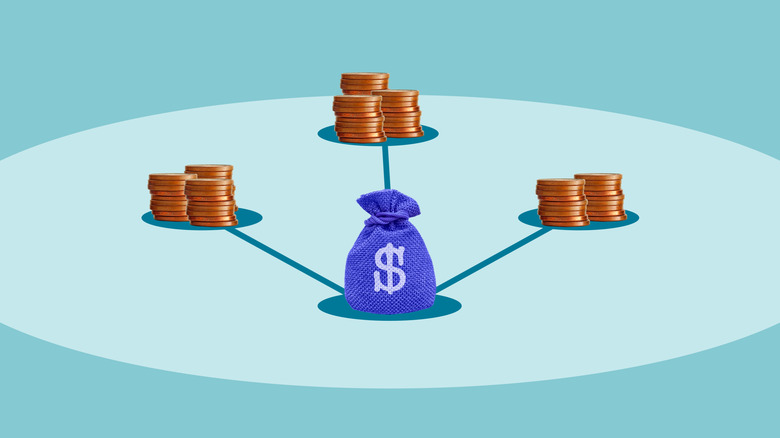
Most consumers work one job, and might add a side gig into the mix for a bit of extra income. There are numerous pathways to developing an online side gig to generate some extra money, and doing so can be extremely beneficial to your financial picture. Individuals with lots of additional income outside of their day job are often those with the greatest levels of wealth. And while one or two income streams might be the norm, millionaires average around seven. This extra cash can come from rental properties and dividend payments, though many members of the upper crust also receive passive income through accrued interest or the sale of existing intellectual property like eBooks or digital artwork.
It takes a lot of time and effort to develop varying income streams, but it's very possible that you could start earning from them continually with little to no maintenance once they're active. Of course, some streams will be significantly weaker than others: You can't expect your dividend payments to match your primary salary checks. However, the willingness to establish and bolster these added financial tools tends to characterize those with greater wealth. People with subtle wealth might do consulting work on the side or take on freelance projects beyond their typical working environment, pumping those earnings into investments to grow a third flow of capital. Even one additional source of income like this signals a combination of motivation and follow-through that doesn't always come together for others.