

Retirees Who Regret Moving Say These 5 States Aren't Worth The Hype

For many people, retirement marks the reward after a work-filled life, offering an opportunity to relocate, start fresh, and approach retirement planning with long-term health in mind. The decision about where to retire is often influenced by reputation, sunshine, low taxes, and appealing lifestyle branding. After moving, many retirees discover that the financial and sometimes environmental reality is very different from what they expected.
What looks like a tax oasis on paper can quickly become costly once you factor in increasing home insurance premiums, overwhelmed healthcare networks, and, of course, tax laws. A state that saves money on income tax may cost far more through air conditioning, home insurance, or out-of-state travel for basic healthcare. These five U.S. states frequently attract retirees, but they can often lead to regret once the real costs and access issues become clear.
These states were selected using a cost-first approach that prioritizes what matters most to retirees on fixed incomes. These range from housing costs (including home values, rent, and insurance premiums), taxes (covering property, sales, and income taxes), healthcare access and affordability, and everyday expenses like groceries and utilities. Climate risks were also factored in because of extreme weather, high insurance rates, and struggling infrastructure that can turn the reality of a seemingly perfect state into a costly and inconvenient one.
Florida

The state of Florida has always been a go-to for retirees primarily because of its warm climate, lack of state income tax, and its strong branding as a retirement paradise. What many people overlook is that Florida offsets its lack of income tax with high insurance premiums and sales taxes.
The average Florida homeowner pays around $14,000 in annual insurance premiums, nearly four times the national average. These premiums are affected by hurricane and flood coverage requirements that make property insurance both expensive and unstable in a way that strains a fixed income. What's even more concerning is that many insurers have stopped offering coverage because of weather risks, leaving fewer options and less competition. Insurify projects that the average homeowner will pay as much as $15,460 annually, with costs expected to keep rising in 2026 as climate risks get worse.
When you also factor in the 6% state tax plus local surcharges that push it to 7.5 to 8.5%, the "tax-free" dream of retirees starts to crack. The healthcare situation makes it worse since Florida often ranks near the bottom nationally for healthcare access and availability. This is partly due to a shortage of home health aides, with only 1 per 56 seniors, the worst ratio in the country. During snowbird season, demand surges and wait times stretch even longer, adding to the already existing strain.
Texas

Texas attracts retirees in part because it has no state income tax, meaning withdrawals from 401(k)s, pensions, and IRAs are not taxed. Fox 26 Houston reports that a single adult needs about $96,506 per year to live comfortably in Texas, compared to the nationwide average of $106,745.
But the pitch on no income tax still has its catch. First, Texas has the seventh-highest property tax rate (1.6%) in the United States, which comes to roughly $3,870 annually on a median-priced home. For a home valued at $400,000 and above, the tax paid can easily stretch to the $6,000 to $9,000 range. Unlike income tax, property taxes do not decrease in retirement because they are tied to home value. Add in a state and local sales tax, which averages about 8%, and the cost of living really starts to climb. For retirees who no longer earn high salaries but spend a lot on housing and goods, the shift from income tax to property and sales tax can increase their overall tax burden.
Despite Texas's reputation for having low taxes, Bankrate's 2025 study places it at 42nd for affordability, 50th for healthcare access, and 47th for weather. Texas' power grid handled recent heat waves, but forecasts warn that rising demand could strain supply in the coming years. For retirees, summer means dealing with electric bills that can easily hit $300 per month because of AC use, more than twice the national average of $140.
Nevada

With no state income tax, low property taxes of about 0.49%, plenty of sunshine, and lots of outdoor activities, Nevada appeals to many retirees. The Reno Gazette-Journal even ranks it among the top 10 most affordable states to retire. Entertainment spots like Las Vegas, Henderson, and Lake Tahoe add to the appeal, but visiting them regularly as a retiree could take a lot out of your fixed retirement budget.
Despite healthcare costs running below the national average, Nevada consistently ranks near the bottom for physician availability. The state ranks 48th in primary care physicians per capita, and all its 17 counties have been designated as having primary care shortages. Since retirees have to wait a long time just to get an appointment, many are forced to travel to Arizona or California for care, adding thousands of dollars in yearly expenses.
Transportation costs even make matters worse because Nevada charges a Governmental Services Tax on vehicle registration. Its calculation is based on 35% of the car's original MSRP, which can reach $600 to $700 annually for a modest two-year-old car; some residents even report paying almost $900. By comparison, many Midwest and Southern states like Tennessee and Ohio would charge under $100. When insurance is factored in, Nevada ranks among the most expensive states for car ownership. Everyday expenses aren't excluded either. It has the fourth-highest average weekly grocery bill at $294.76, compared to $235.12 in Nebraska, a 22.5% difference that will add up quickly. Sales tax also averages around 8% higher than states like New Jersey (6.63%), Maryland (6%), and Delaware (0%).
Arizona
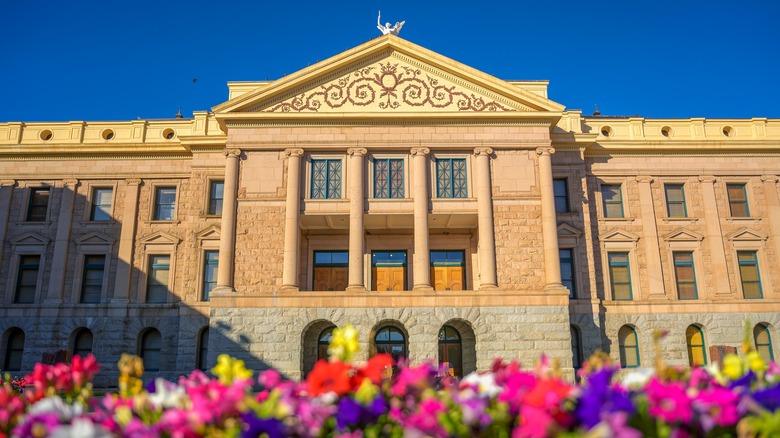
Arizona has positioned itself as a good retiree alternative when compared to California, offering warmer winters and strong healthcare services for seniors. Numbers-wise, Arizona's overall medical expenses are about 4% lower than the national average, and it is well known for its advanced geriatric care. In terms of tax, the state has a flat income tax rate of 2.5%, one of the lowest in the nation, compared to California's 13.3%. Social Security benefits are generally not taxed, pensions and 401(k) withdrawals are taxed at the same 2.5% rate, making it sound perfect for retirees.
While Arizona is cheaper than California or New York, it is not necessarily affordable for retirees. According to RentCafe, Arizona's cost of living sits 8% higher than the national average, meaning a retiree who spends $4,000 a month elsewhere would need about $4,320 to maintain the same lifestyle in Arizona. Also, the cost of housing is even higher at 22% above average, turning a typical $3,000 monthly housing cost into roughly $3,660.
One common surprise for newcomers is the cost of air conditioning. Arizona's warm climate can quickly turn into extreme heat during summer, with temperatures that climb up to 90 to 100 degrees between June and September. As a result, months of continuous air conditioning can push electricity bills to around $300, compared to the national average of $140. For a 2,000 square-foot home in Phoenix, you can expect peak summer bills to hit around $400 to $450.
Delaware

When it comes to finances, Delaware looks like a golden state for retirees. The state has low property taxes at 0.43%, no Social Security tax, no sales tax, and no tax on pensions and 401(k) income up to $12,500 for people aged 60 or older. For individuals under 60, that amount shrinks to $2,000. Some retirees say Delaware might not be the state to move to for those seeking diverse neighborhoods, museums, and theater options. Delaware's beaches are beautiful, but during peak season, traffic jams make getting to them go from a short beach run to a lengthy and slow crawl.
Access to healthcare is also an issue. Delaware's reputation as a tax-friendly state has contributed to an influx of retirees. Unfortunately, this puts pressure on the state's already limited number of doctors, creating shortages. With about 25% of residents aged 60, and a 92% increase in residents aged 65 and older since 2002, Delaware's healthcare system is under serious strain. Retirees report that this strained healthcare system has led to long wait times, making care difficult to access even in urgent situations.
Housing costs are also on the rise. According to Zillow, the average home value in Delaware is $399,061, an 11% increase compared to the national average of $359,241. Some of this pressure is also linked to a reported increase in the state's homeless population.