

4 Home Upgrades A Retiree Should Pay For Before Retiring

Moving from a steady paycheck to a fixed retirement income is one of the biggest financial changes you may ever experience. While most retirees focus on their 401(k) balances or Social Security benefits timing, they often fail to answer an important question: Is my home ready for retirement?
Modernizing your home with upgrades is the key to low-cost living because costly systems, like your HVAC, roof, and foundation operate on cycles that do not respect your retirement date. They fail on their own terms, and when they do, the cost can hit any person's retirement income hard. A roof replacement that felt manageable on an $80,000 salary becomes a crisis when you're living on $3,000 a month. What's worse is how hard it is to secure financing for these repairs once you're no longer earning W-2 income; many retirees are forced into high-interest loans or expensive IRA withdrawals that can come with tax penalties. The best way to avoid such a situation is to deal with those major upgrades while you still have a steady income and borrowing power. That way, you can protect your financial stability in retirement and avoid having to deal with a home emergency when it's much harder to.
The top upgrades to take care of before retirement aren't just the most expensive ones, but the ones that present the highest priority. To determine what those are, costs, durability of the materials, and safety are top of mind. The impact of ignoring these upgrades on home comfort and resale value is of equal importance. Generally, you should prioritize improvement such as HVAC system replacement, foundation repairs, roofing upgrades, and electrical system updates.
HVAC system replacement
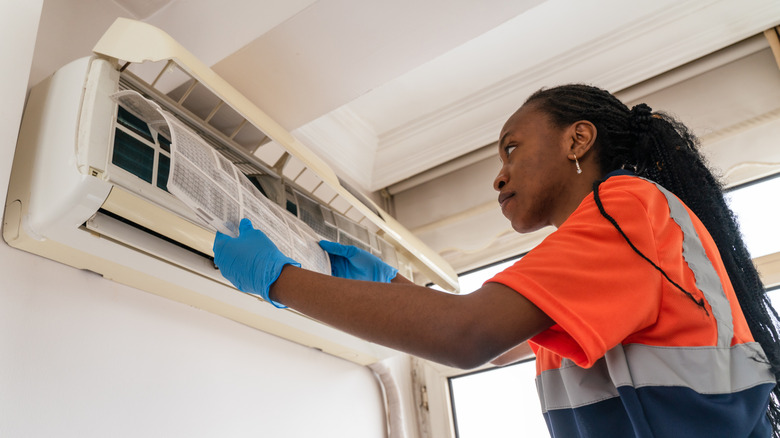
Your HVAC system, which includes heating, ventilation, and air conditioning, serves as the lungs of your home. Unfortunately, it has a lifespan. With adequate maintenance, most furnaces and air conditioning units last between 15 and 20 years. With that timeline, a replacement or upgrade after the 15-year mark, pre-retirement, is one of the smartest moves you can make to save yourself money down the road. A new HVAC system is also an investment in your home's resale value, and the IRS treats this replacement as a capital improvement. This lowers the capital gains tax you owe if you sell, allowing you to keep more of your home equity for retirement.
The price tag on a complete HVAC system ranges between $5,000 and $12,000, according to Airmaxx, with premium-efficiency equipment for larger houses potentially exceeding $15,000. These prices are affected by timing because of regulatory changes. In 2025, the EPA started phasing out R-410A refrigerants. The new, A2L refrigerants are cost more to manufacture, and these extra costs translate to a 10%-to-15% price increase for modern HVAC systems. The good news is that the newer systems are a better deal in the long run. High-efficiency models, like those with a SEER2 18 rating, cut annual cooling bills by $300 to $900 — that's a reduction of 10% to 30% considering a typical yearly cost of $3,000. For more long-term savings, HVAC system replacements should be done alongside simple fixes like sealing leaky ductwork, an upgrade that helps reduce energy waste by 20% in older homes, according to Energy Star.
Foundation repairs

Foundation issues are easy to miss until they're not — cracks that widen and spread across walls, floors that feel uneven, and doors that stick are the more obvious signs. Once they reveal themselves, foundation problems demand repair costs that often reach tens of thousands — a heavy burden for those living on retirement income. If you're planning to sell your house and downgrade in retirement, these problems can also affect the value of your home or even end a deal altogether. Not only will a home inspection reveal the flaws and make the property less appealing to buyers, but homes with unresolved structural problems may fail to meet lending requirements, preventing interested buyers from getting a mortgage.
Now, minor problems like hairline cracks may require nothing more than epoxy or polyurethane injections, which range from $500 to $1,000. On the other hand, major structural deficiencies stemming from foundation problems, like bowing exterior walls, can cost as much as $20,000 to rectify. According to This Old House, foundation repairs cost around $5,000 on average but can range from $2,000 to just over $8,000. Structural issues, including foundation deficiencies, tend to worsen over time, but once you start proactively identifying and correcting them, you draw a line of defence against extreme costs.
Roofing upgrades
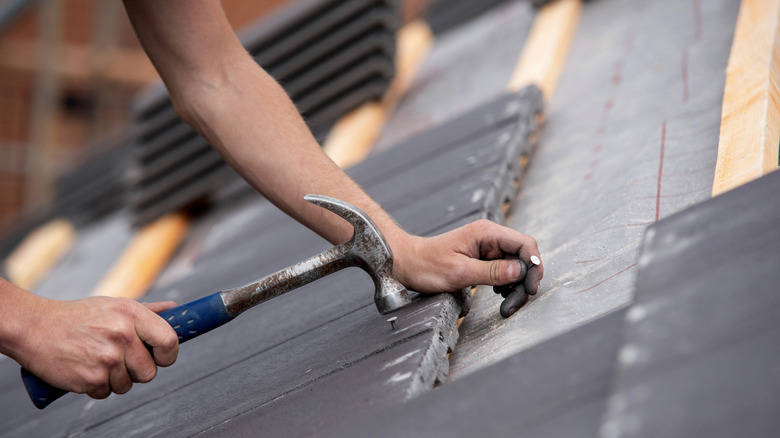
Few home upgrades are as expensive or disruptive as replacing a roof, which is why handling it before retirement makes financial sense. As of 2025, replacing asphalt-shingle roofs (which last 20 to 50 years) costs $31,000 on average, according to The Journal of Light Construction. That means, if you retire at 65 with a 10-year-old roof, you'll likely need a replacement by the time you're in your 70s or 80s.
Beyond these upfront costs, an older roof creates insurance problems that add up in retirement. Bankrate notes that once roofs are 15 to 20 years old, most insurance companies refuse to renew policies regardless of their state of repair. When this happens, some insurers switch from Replacement Cost Value (RCV) to Actual Cash Value (ACV) coverage. The difference is significant, because RCV pays out without deducting depreciation, while ACV will compensate you for the depreciated cost. The stakes are even higher in some states. Florida, for example, allows insurers to refuse coverage entirely on roofs that are older than 15 years unless an inspection proves that the roof has at least five remaining years of useful service life.
If the scenarios above sound unsettling, replacing your roof before retirement will give you much-needed peace of mind. Metal roofing in particular is worth considering. With an average cost of over $50,000, it costs more upfront but comes with a 50-to-75-year lifespan, meaning you'll probably never have to worry about repairs. If you complete these upgrades before retirement (regardless of the roofing material), you'll lock in full insurance protection and potentially lower your premiums by 5% to 35%, according to Angi.
Electrical system updates
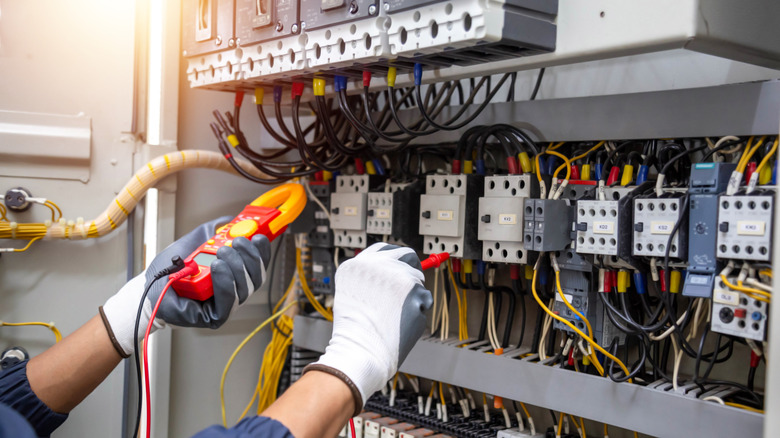
Modern retirement can necessitate medical devices that require a reliable electrical system to fulfill their functions properly. These include breathing support systems, mobility aids, and home dialysis machines. Outdated electrical wiring often deteriorates with time, and this wear makes the circuit unreliable. At times, an aging electrical system may not have the amperage to support modern equipment. Worst of all, old wiring is unsafe. If you are retiring in an older home, it's best to tackle the cost of an electrical upgrade before you quit the workforce and your budget tightens.
This Old House notes that upgrading an outdated electrical panel from a 100-amp service to a 200-amp service costs between $1,300 to $3,000 on average. For homes with knob-and-tube wiring — common in dwellings built before 1950 — it's more of a total rewiring job that costs $24,000 on average, per Angi. Despite the high cost, upgrading an outdated electrical system is a non-negotiable safety measure.
This type of upgrade also gives you an opportunity to lower insurance premiums. U.S. News & World Report notes that fire and lightning damage make up about 21% of home insurance claims, with losses that average around $88,000. Meanwhile, the National Fire Protection Association (NFPA) states that electrical system faults were the third leading cause of house fires between 2014 and 2018. So, it's not surprising that many insurance companies don't want to cover houses with knob-and-tube wiring. If they do, the coverage comes with higher premiums. Updating these systems before retirement reduces fire risk and helps you qualify for the most competitive insurance rates.