

The 12 Best Cities For Retirement If You Don't Own A Car
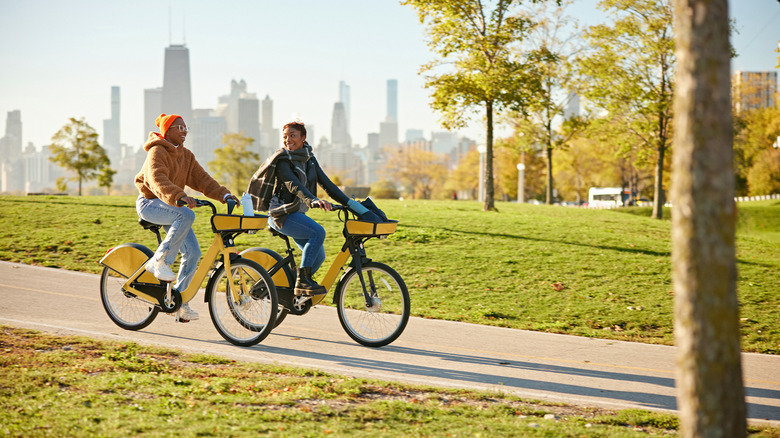
While many associate retirement with a life of ease and leisure, retirees still need to travel from place to place. This isn't always easy, especially in large, sprawling cities designed for vehicles. As people age, it may be more challenging to drive places due to poor health or worsening eyesight. Likewise, some retirees may simply prefer the hassle-free convenience of not owning a car and the associated costs. It might also be that some retirees prefer walking or biking, as these modes of travel offer additional health benefits. For instance, the British Journal of Sports Medicine released a study that found older individuals who take at least 4,000 steps daily can significantly reduce their mortality rates and occurrences of cardiovascular disease. Whether for health or convenience, it makes perfect sense for retirees to move to areas where cars are optional, if not unnecessary.
As it turns out, more Americans are embracing car-free lifestyles and more pedestrian-friendly locations. According to the National Association of Realtors, 85% of survey respondents consider sidewalks and walkable neighborhoods to be crucial considerations when selecting community attributes for a potential new home. Some American cities have embraced these preferences by developing public transportation infrastructure to the point that it's easy to rely on buses and trains to get from place to place. With this in mind, these are the best cities to live if you're a retiree who doesn't own a car.
Providence, Rhode Island
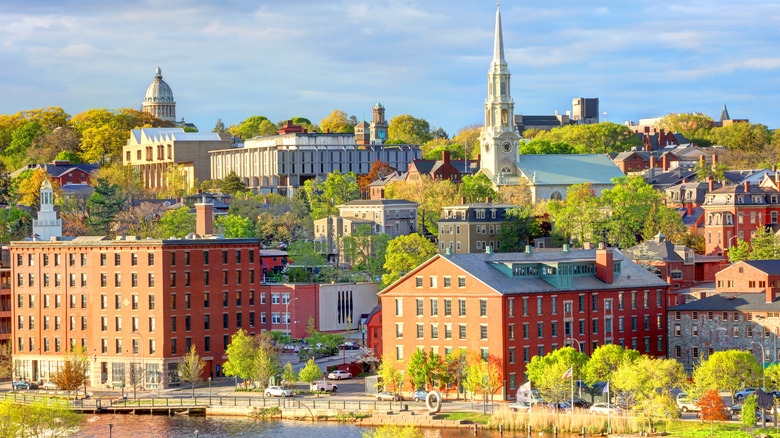
Providence is both the capital of Rhode Island and the state's largest city, with a population of nearly 190,000. It's also one of the oldest continuously settled cities in the United States, having been founded in 1636. Having been established long before the invention of the automobile, it makes sense that parts of Providence would remain highly walkable for locals. Even so, the city continued to develop, making it highly appealing to retirees looking to move to a place that doesn't require a car to get around.
According to Walk Score, Providence is very pedestrian-friendly, earning the "Walker's Paradise" distinction with a score of 99 out of 100. Moreover, Providence earns an 87 out of 100 for bike travel. The quality of transit travel earned the city its lowest Walk Score, 78 out of 100. Even so, Providence has a well-developed public transportation system through the Rhode Island Public Transit Authority (RIPTA), which provides bus service throughout the state; fares are as low as $2. Local train travel is also an option.
If you are looking for the most walkable or bikeable Providence neighborhoods to settle down in, some recommendations include Fox Point, Wayland Square, and Smith Hill.
New York City, New York

New York City holds the distinction of being not only one of the best cities in the U.S. for living without a vehicle, but also one of the best options in the world. Retirement in this city offers the ability to get practically anywhere in town on foot, by subway, or by bike. In fact, the city's traffic could prove incredibly frustrating to a retiree trying to navigate the Big Apple by car. A study by the Scientific American suggests that, depending on the time of day, you might actually reach your destination faster by walking than traveling in an automobile.
Per Walk Score, New York City earns a walk score of 89 and a public transit score of 88 out of 100; bike travel is a little lower at 69, but still a positive result overall for non-car lifestyles. For retirees thinking about a move to New York City, Manhattan is highly recommended, especially if healthcare access is a priority, as various services are very close. If you are an active senior that enjoys hiking and bike rides, East Village, Greenwich Village, and parts of Brooklyn are top suggestions. If ever you do find that you need a vehicle for travel, then taxis are famously available, as are Uber and Lyft, though the traditional yellow taxis are usually more affordable.
Seattle, Washington

Retirees who don't own a car should consider living in Seattle. This Washington city earned a perfect rating on Walk Score for its public transit system, which actually combines bus services provided by King County Metro and the Sound Transit system that manages a network of local rails and commuter trains. Locals also have access to water taxis and Metro Flex, which offers rides on demand for fares similar to area buses.
Aside from Seattle's stellar public transit system, Walk Score also gives the city very high marks for walkability, awarding a score of 99 out of 100. Though Walk Score gave Seattle a lower rating for bikeability, at 63 out of 100, the score suggests a decent enough infrastructure for retirees who prefer to travel around by bike. When these options are combined, it makes perfect sense why Seattle locals no longer see cars as a necessity and more see them as optional, with some ultimately foregoing car ownership altogether.
As is the case with many cities, even those friendly to non-car owners, some parts of Seattle will be better than others for retirees who don't own a car. The downtown area, for instance, is a walkable section of the city that's home to over 800 restaurants and numerous artistic and cultural institutions. Retirees who still wish to take in a diverse and lively cultural scene will have much to enjoy, and without needing to go from place to place by car. Other highly recommended areas of Seattle for non-car travel are Belltown, South Lake Union, and Capitol Hill.
Glendale, California
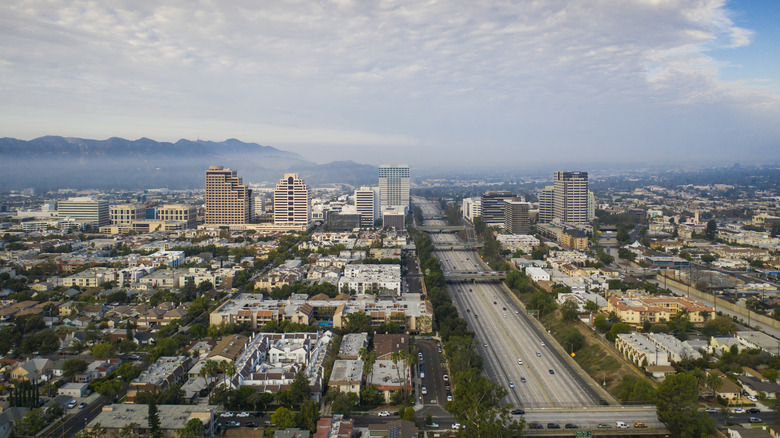
There are a few reasons why retirees will get the most out of a move to Glendale, California. First is the weather: the city's mean temperature is about 63.7 degrees, so not as extremely hot or cold as other places. Because the area doesn't get too cold, retirees who don't own a car will likely feel more comfortable being out and about throughout the year than they would be in regions with more frigid temperatures.
Weather aside, Glendale residents who choose to walk everywhere can feel at ease doing so thanks to a series of mobility plans that focus on healthier modes of transportation; the area is also home to multiple walking trails. Therefore, it isn't too surprising that Walk Score awarded Glendale a walkability rating of 98 out of 100. Although biking and public transit options don't score quite as high for non-car travel here, with ratings of 65 out of 100, they are still high enough to suggest a decent infrastructure.
It's likely that your ability to get around Glendale without a vehicle will vary based on where in the city you choose to live. Retirees without a car will likely prefer to live close to the city center, Citrus Grove, and Mariposa. If you're an active senior that wants to live close to bike trails, consider the Verdugo Mountains.
Pittsburgh, Pennsylvania
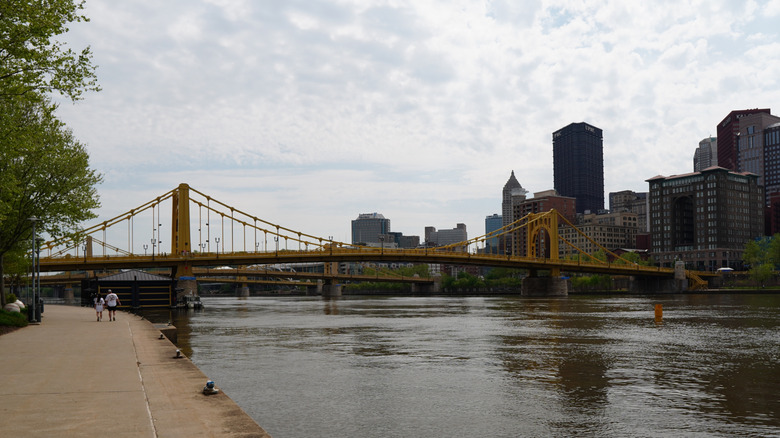
Although the Pittsburgh metropolitan area can sometimes be overshadowed by Philadelphia, retirees would do well to look to this western Pennsylvania city as a worthwhile option for no-car living. Walk Score gave Pittsburgh a 99 out of 100 for its walkability. Likewise, Pittsburgh also earned a very high rating, 92 out of 100, for its public transit system. Pittsburgh's transportation system includes a light rail network affectionately called the "T" by locals that extends over 26.2 miles. The city also scored a 78 out of 100 for biking, thanks in large part to Pittsburgh Mayor Bill Peduto, who reportedly took deliberate steps to build up the town's bike-related infrastructure.
Because Pittsburgh has such a solid non-car transportation infrastructure, retirees will find themselves saving a lot of money by moving here that they would otherwise have spent on gas or car repairs. Instead, they'll be able to enjoy the Riverview Park, which offers everything from walking trails to picnic pavilions. If you want to move to a specific area of Pittsburgh that is extremely walkable or bike-friendly, then Redfin recommends Pittsburgh's downtown area or moving to neighborhoods like Friendship, Bloomfield, Central Oakland, or Shadyside.
Tempe, Arizona
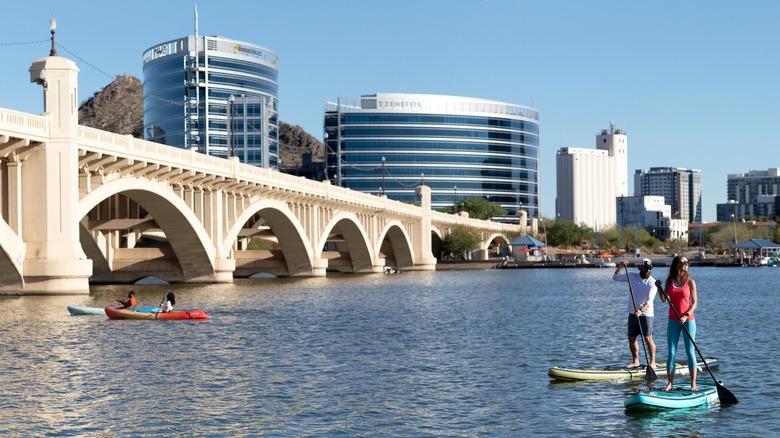
Though Tempe, Arizona, is somewhat of a college town, it also has strong potential for American retirees wanting to move to a region where cars aren't necessary. There are already guides available to area college students who don't own a car; this information can likewise be useful for retired Americans who lack a vehicle and still need to get around town. Thanks to prioritizing alternate methods of getting around Tempe, the city earned high marks from Walk Score. Tempe has a bikeability score of 99 out of 100 and a walkability score of 89 out of 100. The public transit score is comparably lower at 68 out of 100, but still decent for the area.
Something unique to the city is Culdesac Tempe, which describes itself as America's very first car-free, truly walkable neighborhood. The name is somewhat ironic, as many Americans have come to associate the cul-de-sac neighborhood design with the practically mandatory ownership and use of cars, as many necessities are typically located far from these communities. And yet, here in Tempe, the Culdesac neighborhood project aims to set an example through ensuring everything is accessible to area residents by foot or public transit, all while making cars absolutely unnecessary.
Even beyond the Culdesac Tempe project, this Arizona city has a vibe that makes it a perfect fit for retirees wanting to settle down in a warm, sunny city that makes it easier than many places to get around without driving.
Burlington, Vermont
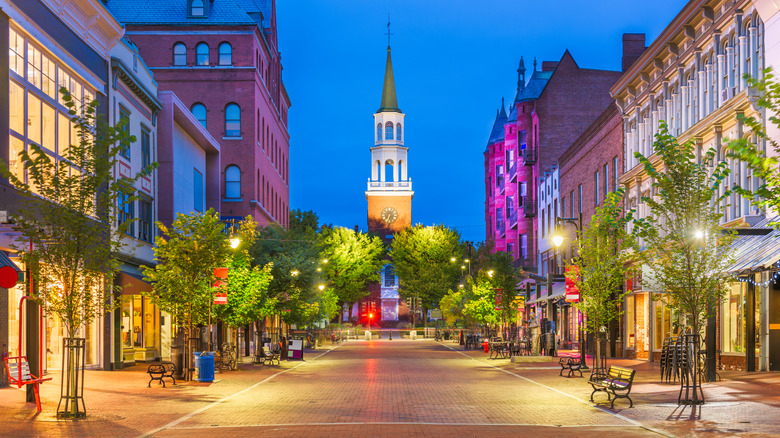
Burlington, Vermont, was previously named one of the most walkable cities in America. It might not be as well-recognized as larger cities like New York, but Burlington is quietly one of the best choices for retirees who don't own a car and want to live in a town where vehicle ownership isn't too necessary. Burlington's size makes it immediately advantageous for walking, as it is about five miles across. Because it is so small, many destinations will be nearby or accessible by bike ride. Because of this, it's not too surprising that Burlington earned a 96 out of 100 for walkability and a 92 out of 100 for bike-friendliness via Walk Score.
If you need to travel locally by means beyond walking or a bike ride, the Green Mountain Transit system buses cover much of the city.
That aside, Burlington is still an excellent city for retirees who want to get around town without a car. According to area residents, the most walkable areas include downtown Burlington and Winooski, though, because of its size, the center of town puts most things easily within walking distance or accessible via a quick bike ride.
Savannah, Georgia
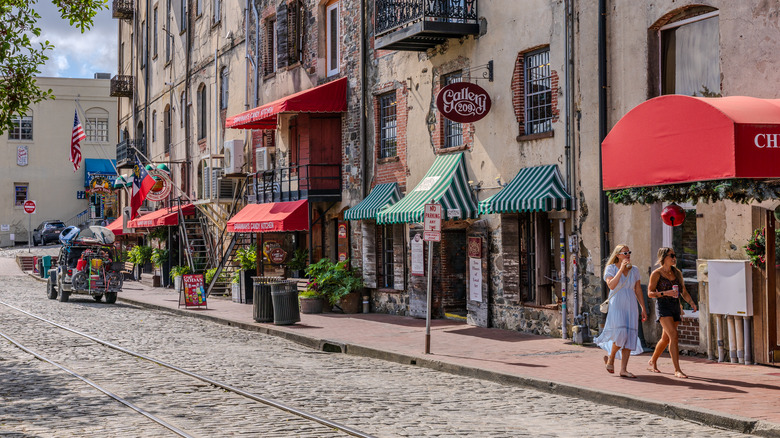
Savannah is a charming southern city where Georgian locals can easily get around without relying on car ownership. It received high marks for walkability (89 out of 100) and bike travel (80 out of 100) on Walk Score. Likewise, Savannah has a decent public transit infrastructure, thanks to its Chatham Area Transit (CAT) bus system, which provides a simple and cost-effective way to travel without vehicle ownership. While Savannah doesn't have a complex local rail infrastructure, it does have an Amtrak stop that lets you travel by train to various cities throughout the southern United States.
For retirees considering a move to Savannah, Choose Sav notes the most walkable neighborhoods are in the downtown area, including the Historic District, the Victorian District, and the Starland District, as well as Midtown Savannah's Ardsley Park-Chatham Crescent and Baldwin Park neighborhoods. These areas of town also work for biking, as does Isle of Hope.
Madison, Wisconsin
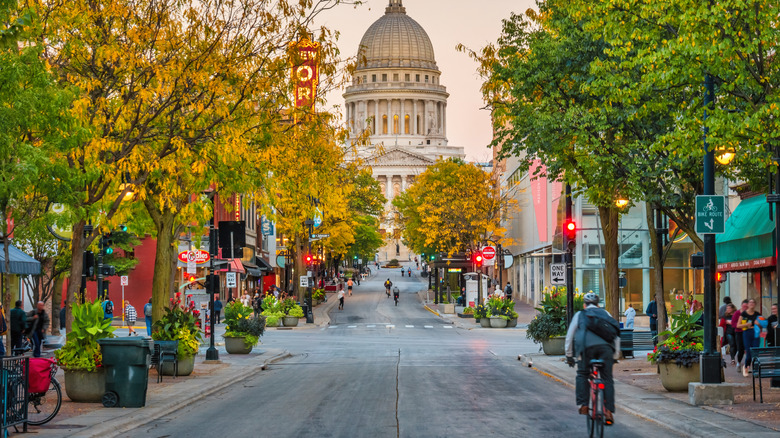
Though it's common for retirees to look to the east or west coast of the United States for a walkable destination, there are areas of the Midwest that have potential for those who wish to travel around town but don't own a car. In fact, Madison, Wisconsin, is already a promising destination for retired Americans, thanks to factors like quality of life and readily available access to healthcare.
Madison is very bike-friendly, earning a 92 out of 100 on Walk Score; its walkability rating is 82 out of 100 on the website. The city officials are well aware of Madison's reputation as a great place to navigate without a car and actively promote alternate methods of transportation on the town's official website.
For retirees wanting to move to Madison, area experts recommend looking into Monroe Street, Atwood, Williamson or "Willy" Street, and the downtown area for walking, and the area around Monona for cycling.
Chapel Hill, North Carolina
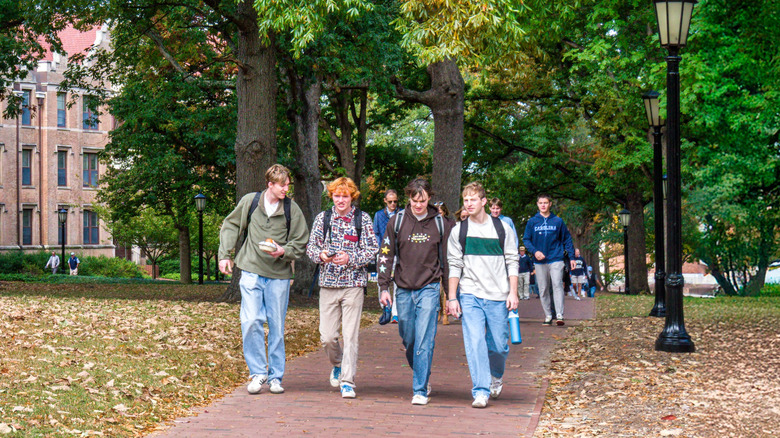
Chapel Hill, North Carolina is a charming southern U.S. town that's quietly become a car-optional city. Here in Chapel Hill, those who don't own a vehicle won't feel punished by an infrastructure that makes it challenging to travel without one. According to the Southern Environmental Law Center, Chapel Hill is transitioning to a place where residents can increasingly travel from place to place without relying on car ownership. One way of making this happen has been the creation of a free bus system, recognized as one of the largest of its kind in the entire country.
Ultimately, Walk Score awarded Chapel Hill an 83 out of 100 for bikability and an 82 out of 100 for walkability. Though the transit score was lower at 60 out of 100, the transportation system overall is notable for its convenience and affordability. Interestingly, the SELC notes the area is among the wealthier parts of North Carolina, which has allowed it the ability to fund the resources to develop a robust enough infrastructure that makes cars largely optional for locals. The most walkable neighborhoods are likely to be Southern Village, Carrboro, and the downtown area.
Portland, Oregon
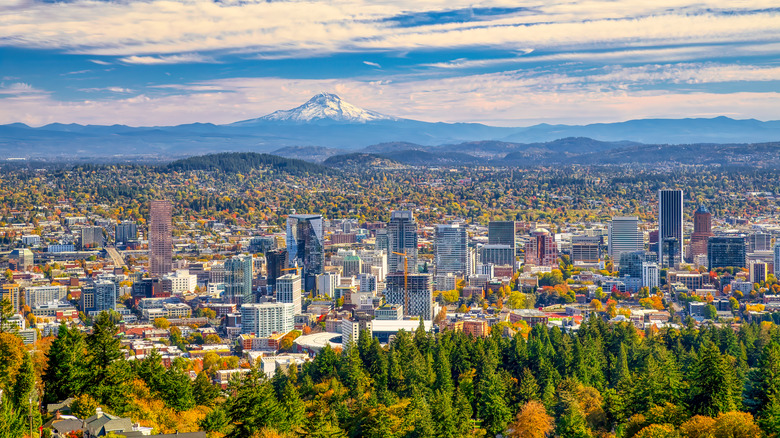
Per Walk Score, Portland, Oregon, has a 92 out of 100 rating for bikeability and an 88 out of 100 rating for walkability. Thanks to its excellent public transit infrastructure, Walk Score also awarded Portland an 85 out of 100. Through a combination of TriMet buses, the Max Light Rail, trams, streetcars, and shuttles, Portland has steadily built a strong reputation as a city where cars aren't essential to one's lifestyle needs. Overall, this is a great place for retirees who need or want to get by without needing a car. In fact, some estimate that around 30% of the Portland population simply doesn't own a car.
If you're a retired American moving to Portland and prefer to settle in a neighborhood where everything is a short walk away, the Pearl District or downtown is highly recommended. This part of the city is also ideal for biking, as are the Sellwood-Moreland and Hawthorne neighborhoods.
Miami, Florida
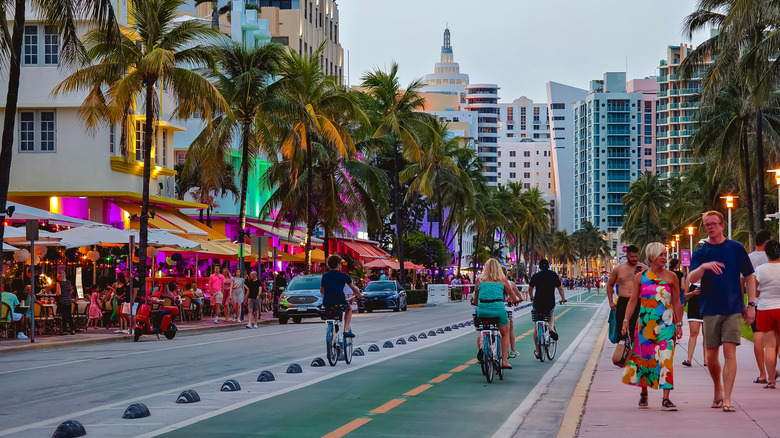
Thanks to its perpetually sunny and warm weather, Miami, Florida is already one of the top cities for retirement-aged Americans. Adding to its desirability, Miami also happens to be one of the most walkable destinations in the country. Walk Score deemed the city a "Walker's Paradise," awarding it a score of 98 out of 100. It also scored an 88 out of 100 for having an excellent public transit system. At 78 out of 100, Walk Score found Miami to be a very bikeable city.
Some locals, inspired by just how easy it is to travel around Miami by foot or bike, have offered a few helpful tips to newcomers hoping to make the most of the city and a car-free lifestyle. In her article for the Unlimited Biking Blog, writer Amanda K. referred to Miami as a city that rewards people who live outdoors, as a place where traveling the city by bike helps you feel locally connected, noting that traveling this way is fast and safe.
Overall, retirees will find that Miami will be a pleasant destination to navigate without ever having to use a car. For biking, Amanda K. recommends Coconut Grove, Brickell, and Edgewater, as they're great for traveling shorter distances. Meanwhile, others recommend the South Beach area for easy walking.