

4 Signs A Debt Collector Is Fake And Trying To Trick You
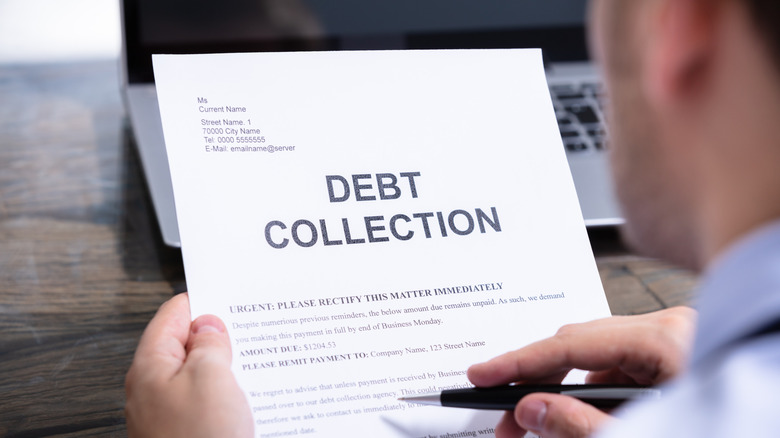
According to a November 2025 report from the Federal Reserve Bank of New York, U.S. households collectively owe nearly $18.6 trillion in student loans, mortgages, car loans, and credit card debt. Because some people have been forced to prioritize which debts to pay off, America's FICO credit score fell by three points in the span of two years.
With so much debt out there, it's unsurprising that companies and individuals are willing to skirt the law to collect it. Hand-in-hand with this rising debt come aggressive debt collectors, or people (or AI) pretending to be debt collectors. As NewsNation reported, complaints to the Federal Trade Commission (FTC) about debt collectors behaving aggressively increased by 220% between the second quarters of 2024 and 2025.
There are also outright scammers who use threats and other methods to get victims to pay off a debt that may not even exist, the U.S. Office of the Comptroller of the Currency warned. Fortunately, federal agencies have identified four signs that you are being lied to by a fake debt collector trying to steal your money or your identity. They include threats of arrest or wage garnishment, refusal to tell you more about your debt or their identities, aggressive requests for personal financial information, and harassing phone calls or messages.
Threats of arrest or wage garnishment

Debt collectors are breaking the law, particularly the Fair Debt Collection Practices Act (FDCPA), if they use the threat of arrest to compel a debt payment, according to the Consumer Financial Protection Bureau. Such threats are empty, too, since the only way someone can be arrested for unpaid debt is if they violate a judge's order to appear in court as part of a lawsuit or don't abide by the terms of a court-ordered payment plan. So, if a debt collector threatens to arrest you, it's very likely that you're dealing with a fraudster.
Wage garnishment is a bit different. For example, the IRS and the Department of Education can garnish 15% of your wages or benefits, just as the Trump administration announced it would do for defaulted student loans in 2026. Likewise, state governments can garnish wages for child support. But private creditors have to file a lawsuit and win a judgment first. Crucially, it's against the law for a debt collector to lie and threaten you with wage garnishment when this measure isn't legally available to them. Such behavior is another red flag that you're dealing with a scammer who's out to trick you.
Refusing to share information about your debt or themselves

The FDCPA requires that debt collectors provide a written validation notice that includes the name of the creditor seeking to collect the debt and the amount you owe, including interest and fees. The debt collector must also provide a date as to when a 30-day period to dispute to dispute the debt claim ends.
In addition, upon your request, debt collection agents should give you their name, along with the name and address of their company, and (in states and cities where debt collectors are licensed) a professional license number, per the CFPB. Debt collectors who are unable to confirm who they are, who they're working for, or how much you owe a particular creditor are either scammers or are acting improperly. Also, all ongoing debt collection efforts get automatically delayed until the collector complies with your request for more information.
Insisting on getting your personal financial information

Debt collectors can ask for your full name, date of birth, the last four digits of your Social Security number, and your past or current address, per the CFPB, but it's up to you if you want to share this information. If they insist on getting this info or attempt to coerce you with threats, you're probably speaking with a fake agent who is trying to defraud you.
To this end, don't share your bank account, credit card, or Social Security numbers unless you are absolutely sure you're dealing with a real debt collection company. In other words, don't give this info to an agent unless they validate the debt and their own company. If you share this sensitive information with a scammer, they'll be able to use it to write fraudulent checks, borrow money, or charge your credit cards for purchases (and these could be as outrageous as the $65,000 worth of alcohol bought with stolen credit cards). If you suspect that you're speaking with a fake debt collector, cease all communication with them and report the incident to the creditor.
Harassing phone calls and messages
Harassing behaviour is yet another red flag that the debt collector you're dealing with is fake. The FDCPA forbids debt collectors to harass, threaten violence, or abuse those they contact. Repetitive phone calls and messaging generally fall within the law's definition of harassment.
To be clear, debt collectors can call you, message you on social media, and send you letters, emails, and even text messages, according to the FTC. But by law, they must stop contacting you at your request. Nor can they contact you prior to 8 a.m. or after 9 p.m. unless you give them permission. Additionally, if you tell debt collectors you can't talk at work, they must stop calling you during your work hours as well. And they aren't supposed to call you more than seven times within a week or within seven days if you've already spoken to them about your debt. If the collectors continue to harass you, send a written demand to their company to stop contacting you, preferably by certified mail. If they don't honor your request, or if they never bothered to give you a company address, they're likely scammers and not legitimate collection agents. In this case, consider filing a complaint with the CFPB, the FTC, or the attorney general of your state.