

11 Reasons Retirees Regret Moving To Hawaii

Hawaii checks many of the boxes retirees consider when choosing a place to live in their golden years. The tropical paradise boasts year-round sunny weather and breathtaking beaches where many live life at a slower pace. Although there's plenty of youth in the Aloha State, the Hawaiian government reports the senior population grew from 14.3% in 2010 to 19% in 2020, and projects that proportion could continue to grow for several decades. Furthermore, around 37% of households are inhabited by at least one senior.
While the weather in Hawaii provides plenty of literal sunshine and rainbows, the metaphorical corollary isn't always true in daily life for retirees. The paradisical veil shrouding the island conceals a systematic affordability crisis. Taking a weeklong vacation to experience the highlights of the stunning state is much different than dealing with the on-the-ground costs for several decades of retirement. According to a report by Aloha United Way, around 44% of Hawaiian households don't earn enough to afford essentials.
Although the Federal Reserve Bank of St. Louis estimates that about 10% of the state's population falls below the federal definition of poverty, the state's higher-than-average living expenses make it so even being above the poverty line isn't enough. In 2025, the Missouri Economic Research and Information Center labeled Hawaii as the state with the highest cost of living. So, without the proper savings or retirement income plan, retiring in this state could cost you. Let's take a deeper dive into the 11 reasons retirees regret moving to Hawaii.
Groceries are costlier than on the mainland

One of the first things people notice when moving to Hawaii is that groceries are pricier. According to Zippia, Hawaiians suffer from the highest grocery expenses in the country. On average, retirees in the state can expect to spend around $556.76 per month on groceries, totalling around $6,681.12 annually — considerably more than what the average American spends on groceries. For context, seniors in Florida — arguably among the most popular places to retire — only pay about $364.25 per month, or $4,371 annually. Between these two highly sought-after retirement destinations, Hawaii would set retirees back by over $2,300 every year.
While the island sees a higher overall cost of living, its elevated grocery prices are a natural byproduct of its location. Situated in the remote Pacific Ocean about 2,400 miles from the westernmost portion of mainland U.S., Hawaii takes a lot of time, energy, and resources to reach. Anything not grown on the island must be imported, which means shipping and labor expenses. The island's unique climate and small footprint limit the amount of food that can be produced locally. With fewer available brands, the resulting lack of competition keeps prices high. These higher-than-average grocery expenses, and the complicated economic and geographical variables that hike these prices, also trickle down to grocery stores. Thus, retirees in Hawaii may find it financially burdensome to eat out.
Extraordinary housing costs
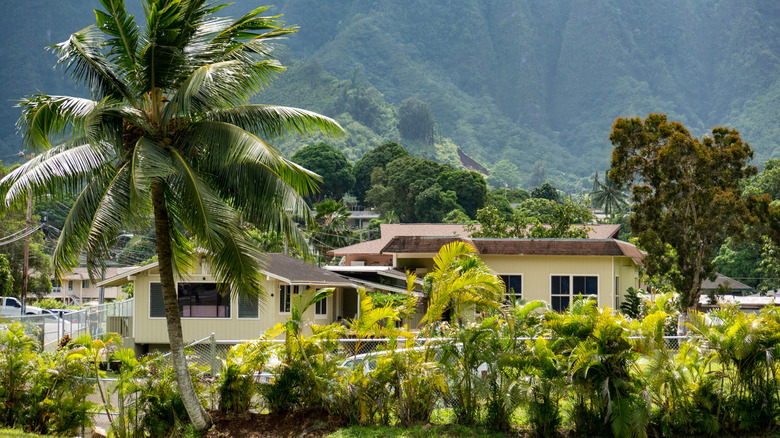
There's something undeniably attractive about retiring on a lush, quiet plot of land in Hawaii where you can connect with breathtaking nature and bask in the agreeable weather. The problem is that this dream is simply unachievable for most homebuyers given the astronomical prices associated with the state's real estate market. Zillow estimates that the average house is worth a wallet-crunching $818,553 in Hawaii — and that's a 2.5% decrease from the previous year. For reference, the average home in the U.S. lists for about $359,241.
When you crunch the numbers, Hawaii's homes cost roughly 128% more. Assuming a retiree sells their current home for around the national average, they'd still need to find a way to more than double their earnings just to afford a place in the Aloha State. It's not unusual for the islands to have much higher home prices than the mainland, but the Hawaiian real estate market has been getting progressively more expensive.
In early 2018, the average home price was about $580,000, underscoring the meteoric rise of housing costs. Seniors who are considering renting a place to skirt the punitive housing costs won't find much relief, either. Not only is there an opportunity cost suffered by paying rent instead of building equity with a mortgage, but rental prices in Hawaii still far exceed the national average: Zillow reports the Aloha State's average rent is about $3,000, over $1,000 more than the national average.
Deceptively low property taxes
Property taxes are an annual expense for seniors purchasing a home anywhere, but what throws Hawaiian homeowners off is the discrepancy between the state's property taxes and the actual charge. On paper, the Aloha State has the lowest property tax rates in the country: According to the Tax Foundation, Hawaii charges an effective tax rate of 0.32%, which means property owners owe that percentage of their home's value each year. Comparatively, Illinois, a state with some of the highest property taxes in the country, hits homeowners with an eye-watering 1.83% annual surcharge on their property value.
While that difference might make Hawaii seem like an ideal place to own a home, the inflated real estate prices spike the burden of property taxes despite their low percentages. In the end, homeowners often pay more in taxes on their property than they would in other states. Using the state's average home value of $818,553, Hawaii's average property tax would be $2,619.37. Meanwhile, Zillow pegs the average home price in Illinois at $278,351, meaning an effective property tax rate of 1.83% would result in an annual charge of $5,093.82. So, while Hawaii's property tax rate may be about six times lower than Illinois', Hawaii's average property tax payment is only half that of the Land of Lincoln.
That's not to say retirees would be better off moving to the states with the absolute highest property taxes, but it's crucial to be wary of how effective tax rates translate into annual financial burdens no matter where you move.
Expensive utilities
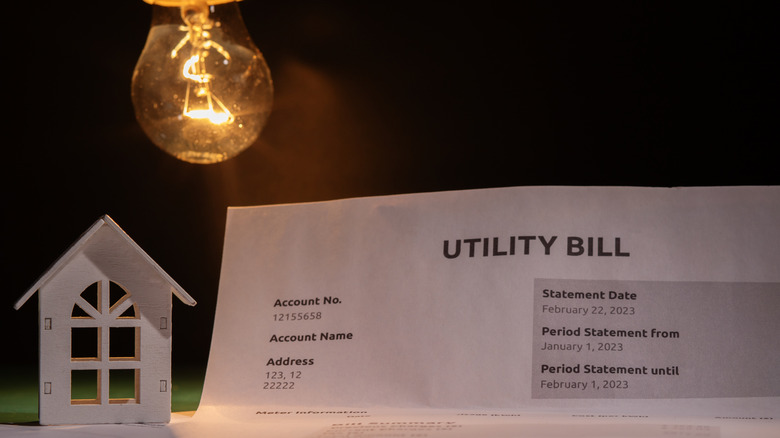
Home utilities are another hidden expense that can severely hinder a retiree's Hawaiian lifestyle. In addition to having some of the most unaffordable home prices in the country, the state has the second-highest utility bills. Forbes estimates that the average American spends $429.33 on utilities. On an annual basis, that burden stretches to $5,151.96. Alaska leads the country in utility costs, with the average resident paying $569.64 monthly. Hawaii isn't far behind, with a typical monthly utility bill of $563.53. Annually, residents pay $6,762.36. For comparison, residents of Nevada, a state with relatively inexpensive utilities, rack up around just $376.67 in monthly utility bills on average — nearly half that of the Aloha State.
A homeowner in Hawaii can expect to pay about $177.78 in energy alone, making it one of the states with the highest electricity bills in America, while natural gas is the second largest utility expense at $122 on average. The Economic Research Organization at the University of Hawaii attributes the state's excessive electricity costs to the elevated price of oil. Hawaii derives most of its electricity through the burning of oil, tying electricity costs to the oil market. Notably, homeowners tend to pay more for electricity than businesses in the area, indicating an unevenly spread financial burden for utilities.
Above-average long-term care costs

Seniors should always be on the lookout for healthcare cost surprises that can sneak up in retirement. Unfortunately, most people can't exactly predict their health's trajectory. So, even if you feel prim and proper in the process of moving, it's possible that unforeseen medical expenses could arise after you settle. Regardless of your destination, it's vital to get a sense of what healthcare spending looks like wherever you plan to retire well before you pull the trigger on a move. Seniors should be especially focused on long-term care costs, which tend to eat up a disproportionate amount of medical spending: In addition to generally not being covered by Medicare, long-term care can also be extremely labor intensive, resulting in extreme out-of-pocket costs for patients.
Unfortunately, the long-term care expenses in Hawaii are outpacing the national average, weighing heavily on retirees' medical costs. Genworth and CareScout's 2024 Cost of Care Survey reports the median cost for an at-home health aide in Hawaii is $97,240 per year. Meanwhile, seniors who want to move to an assisted living community could expect to spend in the ballpark of $135,735 yearly. Nursing homes are among the most expensive long-term care expenses, and the median price of a private room in a Hawaiian facility is $196,370 annually. Even a semi-private option isn't exactly affordable, at $181,040 per year.
Unexpected transportation costs
When seniors calculate how much money they need to retire rich, they might factor in more broadly anticipated costs like housing, healthcare, and taxes. However, transportation expenses can be a bit harder to pinpoint. The sneaky costs and sheer challenge of getting around in Hawaii are another reason people regret retiring there. Unlike most of the states in the contiguous U.S., the Aloha State consists of seven inhabited islands. While public transportation exists across Oahu and other highly concentrated areas, seniors face a shortage of options in more rural areas and between the islands. To get between the islands, residents must either take a commercial flight or a ferry. According to Hawaii.com, the average flight between the islands costs anywhere between $70 and $140 for each leg. On the other hand, ferries can cost $40 for a one-way trip.
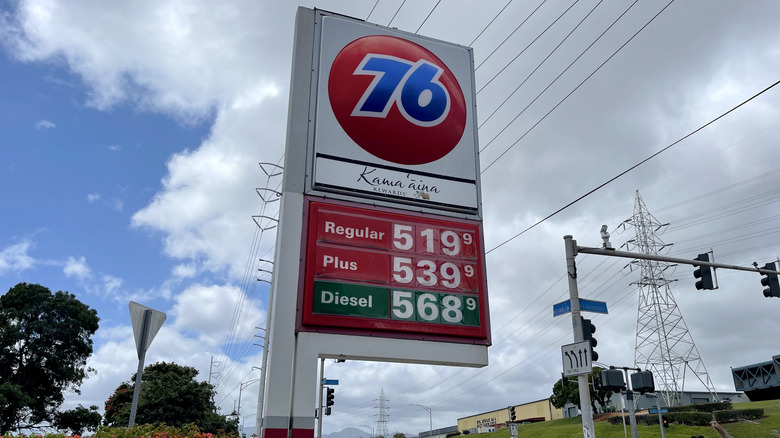
Transportation costs aren't that much better when getting around by car. According to CarEdge, the average cost of a new vehicle on the island is $52,192, exceeding the national average of $50,000. Additionally, unless you're paying cash, loan interest could potentially bring that figure much higher. The state's overpriced transportation costs don't stop after you've purchased a vehicle, either. Hawaii has some of the highest fuel costs in the country as well: AAA reports that a gallon of regular fuel costs around $4.42, while premium grade fuel goes for about $4.87 as of early January 2026. For context, the national average for standard fuel sits around $2.82 per gallon.
Complicated tax structure

Hawaii has one of the more convoluted income tax structures in the country, which can make a retiree's financial management all the more complex. What may be even more confusing for some is that Hawaii revamped its tax structure in 2024, and the current model has only been in place since early 2025. Instead of applying a flat state income tax as most states do, the Aloha State implements a progressive tax structure. Higher-income strata are faced with increasingly higher taxes. Thus, wealthier retirees will get hit the hardest. In total, Hawaii sets a dozen income brackets from which to derive income taxes.
If you're making under $9,600 annually, you'll only face a state income tax of 1.4%. On the other end of the spectrum, you could see your income taxed by 11% if you earn over $325,000. Contending with a dozen different income brackets can make it more challenging to ensure your nest egg is robust, especially as income can change throughout retirement. It's also worth noting that, other than Social Security, most forms of retirement income are subject to Hawaii's elevated taxes. Given Hawaii's excessive income taxes and rising cost of living, even seniors earning the average retirement income in the U.S. might have a hard time keeping up.
Travel expenses

Traveling for vacation or to visit with loved ones is an important focus for many retirees. With more free time and discretionary income, it makes sense for seniors to venture out more consistently. According to a survey by RBC Wealth Management, 63% of U.S. adults over 50 view travel as a central goal for their golden years. Furthermore, AARP reports that 70% of the same senior cohort actively plan to travel. While traveling is always a financial consideration, retiring in Hawaii automatically elevates those expenses due to its remote location. You can't reach another U.S. state, let alone an international destination, without hopping on a plane.
Kayak calculates the average round-trip flight from Honolulu to the mainland U.S. at $448 per person. That means a senior couple wanting to return to their home to visit family would immediately pay nearly $1,000 in transportation costs alone — and that figure can skyrocket during peak travel seasons. Tour company Daniels Hawaii estimates the cost is between $400 and $2,000, depending on the time of year. Sure, living out retirement in Hawaii may feel like a year-round vacation in its own right, but the blissful vision of life on a remote island comes with some considerable cost trade-offs if you want to maintain a connection with the outside world.
Relocation costs
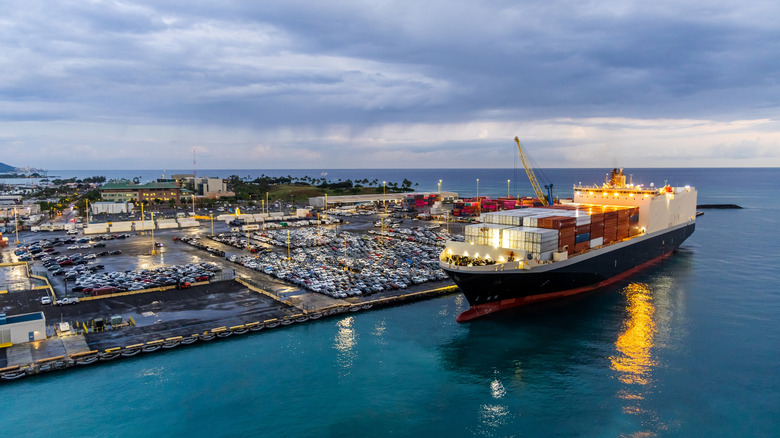
There are many common moving regrets people have in retirement, and most revolve around cost. The upfront costs of moving right after retirement can deal an unforeseen blow to your diligently prepared nest egg. Unfortunately, moving to and from Hawaii has unique logistical and geographical challenges that make the process a greater financial burden than relocating to most other states.
Angi estimates that the average move out of state costs between $2,000 and $7,000. When looking at the cost of moving to Hawaii from another state, that range spikes to upwards of $12,000 on the extreme end. The expenses only get worse if you plan on moving a car to the island as well. In that case, you can expect to pay at least $1,000 to ship it — if not considerably more: Air freight shipping can run you upwards of $40,000, at which point you might be better off selling the vehicle and buying a replacement once you get settled.
The Aloha State's remote position elevates the cost of moving, since everything needs to be shipped via container rather than driven. Some companies may even classify shipments to Hawaii as international, resulting in even higher prices. Keep in mind that you'll need to cover all these moving expenses again if you ever want to relocate to the contiguous U.S. It's always smart to get a quote from a reliable provider based on your specific moving needs to determine if it's worthwhile.
Inflation bloats expenses even more
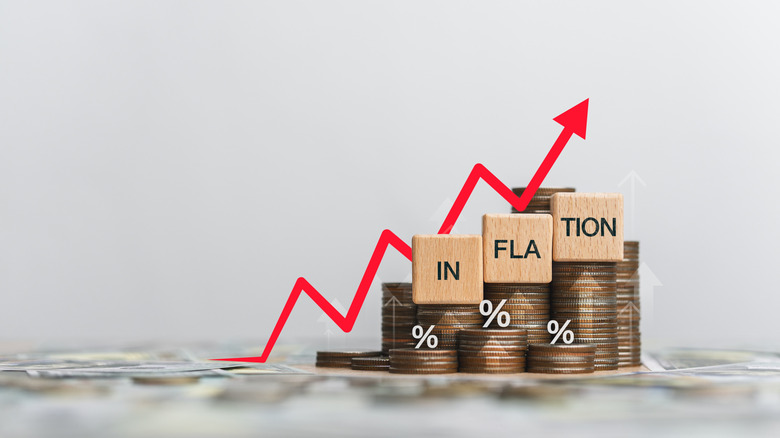
Inflation is the hidden factor that could potentially tank your retirement fund. In the Federal Reserve's ideal scenario, inflation would stay at 2% annually, which means your wealth would lose 10% of its value every five years. That's the best-case scenario, since inflation is often well above this targeted rate. Although seniors might be accounting for inflation when planning for retirement, those moving to Hawaii may have to recalculate their nest eggs. Generally, the Aloha State's higher cost of living means inflation hits harder than on the mainland. To be sure, inflation rates aren't usually higher in Hawaii than the national average, but it's the state's inflated living costs that exacerbate even standard inflation.
Much like with property taxes, even an ideal 2% rate of inflation per year applied to a $556.76 grocery bill or $563.53 utility payment translates into more dollars than the identical percentage increase applied to lower prices in other areas of the country. This is evident in the value of $100 in Hawaii, which the Tax Foundation reports only equates to around $85 of buying power (via Grassroot Institute). Payscale positions Hawaii's living costs 86% higher than the national average, highlighting just how much more vulnerable residents are to even relatively small upticks in inflation. While the erosion of buying power cannot be avoided completely no matter where you live, it has an acute impact in areas like Hawaii where the cost of day-to-day life is higher.
Rising home insurance premiums

Home insurance rates are another potential cause of regret for retirees moving to Hawaii. Similar to property taxes, insurance premiums don't seem too bad at first glance. In fact, Bankrate estimates that the average Hawaiian homeowner pays about $1,296 per year, or $108 monthly, for property insurance coverage. In terms of yearly costs, that's an impressive $1,128 below the national average. In contrast, Florida sees an average premium that's $3,414 above the national norm, ranking high on the list of reasons retirees regret moving to the Sunshine State.
These lower-than-average premiums don't quite capture the reality for Hawaiian residents, however. The estimates are based on coverage for a home valued at $300,000. While that's roughly in line with the national average home price, that's just not realistic for someone insuring a house in Hawaii. As the state's home values are much closer to $800,000 on average, the result is much higher premiums than these estimates suggest.
Premiums themselves are also rising. Insurify projects the price of home insurance in Hawaii rose 15% in 2025 alone. Climate change and the increasing frequency of natural disasters have been cited as the top causes for the increase in insurance coverage. Inclement weather and the resulting disasters have raised the state's risk profile. Since insurance companies face more potential payouts, they raise prices for the average person in Hawaii. The situation has become so dire that the Hawaiian government has been called on to intervene.