

Affordable Housing Alternatives People Are Choosing To Cut Mortgage Costs

The U.S. housing market has been a hostile place for new homebuyers for the last few years. Home prices remain overinflated, and the average monthly mortgage payment in 2025 stood at $2,329, up 21% from just two years prior, according to Rocket Mortgage. In some states, those averages have doubled in the same timeframe, with Connecticut sporting a 109% increase during this time, up to an average of $4,635. Even in states like Pennsylvania or Utah, where the average remains below $2,000 per month, homeowners still routinely make difficult financial choices to avoid missing payments and prevent potential foreclosure action by the bank. In today's market, the average worker earns $63,795 (via SoFi), meaning a typical single earner would have to spend over 40% of their paycheck to support the mortgage costs alone, placing them deep into the territory of what is considered house poor. To combat this, many people look for alternatives to the traditional mortgage and homeownership scene to support their housing needs.
Some of these affordable housing alternatives are quite creative. They include a life on the water utilizing the help of a boat slip or opting for a tiny house instead of a regular single-family home. Van life is an option that appeals to some seeking greater mobility and freedom, while life abroad beckons as an even greater adventure for others. Finally, rather than moving away from the shackles of mortgaged living, some investment-minded buyers look to embrace the tool and optimize it for their benefit.
Renting a boat slip and living on the water

No two coastal locations will be exactly the same in terms of price and climate. However, for those who already own a boat (some 100 million Americans go boating every year and roughly 12% of American households own one, according to Toy Storage Nation), a place to moor the vessel semi-permanently can afford you an alternative, affordable housing solution. People around the world have long made seaworthy vessels their primary dwelling space, and it's particularly prevalent in places like England or the Netherlands, where rivers and canals are found in abundance. Marina pricing can vary significantly, but you're likely to find at least a few options that charge by linear foot per month, with costs often ranging between $18 and $22 per foot. For a 30-foot vessel with plenty of live-aboard space beneath the deck, that works out to a monthly rent between $540 and $660. A smaller boat will cost even less. Average maintenance costs are also relatively low, around $8,000 annually, whereas traditional home maintenance costs often rise to $18,000 or above.
Instead of investing big bucks in a house that requires expensive upkeep, some people are opting to buy secondhand sailboats, which move under their own power and are often uniquely cost effective compared to powered boats of similar sizes. Vintage models (1970s model years) in the 30-foot range go for around $15,000 in good condition and can be an interesting upgrade alternative that deliver a mobile living space with potential for value growth if you treat the boat well and make your own upgrades.
Van life and converted school bus options

Van life is another option that offers a powerful change of scenery whenever you need it. Living on the road has become a full-time job for some and a dreamy mashup of holiday living and daily grind for others. Life in a mobile home of any sort comes with its own challenges, like the need to work out where you'll shower or toss your collected garbage on a revolving schedule. Yet there are huge perks, too. For starters, those who have converted a van or an old school bus into a permanent living space have the option to simply pick up and move whenever they feel the tug of adventure calling.
Vans and other large vehicles that fit this lifestyle range in price. Decent options can be found for as little as $10,000, but these typically require some upgrades, repairs, and retrofitting. At the same time, $200,000 will buy you turnkey luxury. Most used budget-friendly models that are largely ready to rock will set you back somewhere in the neighborhood of $20,000 to $40,000. Monthly expenses can vary greatly depending on your lifestyle choices, but most van life enthusiasts should expect to spend between $800 and $3,000 per month. An auto loan can help kickstart your investment into this alternative housing arrangement, and even though roughly 20% of Americans pay at least $1,000 per month for their car, that's still less than half of the mortgage average!
Buying a 'tiny home' instead of a standard dwelling
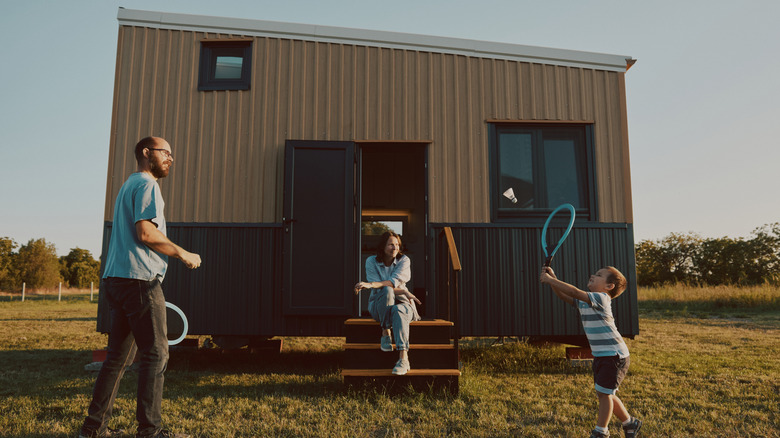
The tiny home movement is a big deal in the world of minimizing housing expenses, and the low upfront cost of a tiny house is a major reason why people are considering this alternative to the traditional model. They average $50,000 but can run up into the six figures for luxury options. Even a $100,000 unit, however, will cost you roughly $800 in monthly repayments with just 10% down, severely reducing the mortgage component of your budget. Tiny houses can be established permanently or with a mobile base; they can therefore take up residence next to a parent's or a friend's home. You can even build one on a small plot of land you've bought at a cut rate since it lacks existing structures.
Apart from cutting mortgage payments, tiny homes can help their dwellers live a leaner, more purposeful, and less wasteful life. In almost all cases, people don't actually need all the space they have in their living quarters, and a smaller floor area can still support a lifestyle focused on the things that bring true value. For example, the U.S. Public Interest Research Group reported in 2024 that Americans buy an average of 53 new pieces of clothing annually, while half of the typical consumer's wardrobe sits unworn. Similarly, 65% of clothing is thrown away within a year of its purchase date. Cutting down on the size of your home's square footage forces you to make smarter purchasing decisions up and down the consumer chain, helping quash wasteful spending and overextensions elsewhere in your budget. However, this life isn't for everyone because it's not always easy to give up the mental frameworks developed through lifelong exposure to pop culture and consumerism.
'House hacking' to shift the pressure of mortgage payments
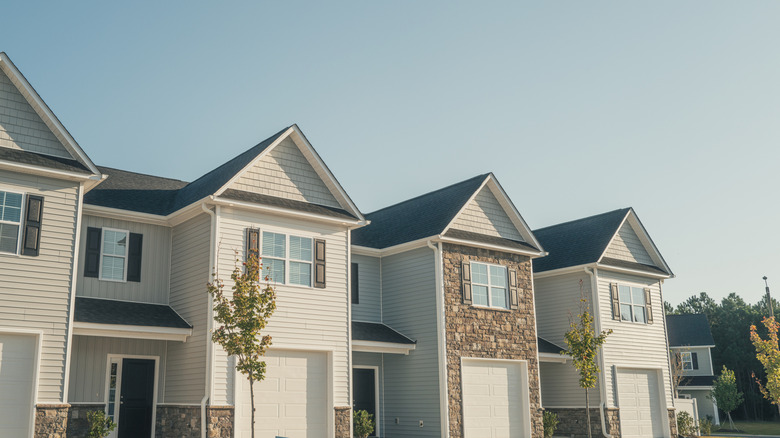
A different way to alleviate the pressure of a crushing mortgage involves leaning in a bit further. Instead of seeking to reduce the expense, some buyers have turned in the other direction, seeking larger properties that cost more, but offer the option to subdivide or otherwise rent out unused space. This doubles up the value of the property, creating both an investment tool and a housing unit for the buyer. Those looking for an apartment might decide to invest in a two- or three-bed option instead of a smaller unit so they can add roommates to minimize the mortgage.
The rent for a room in a shared home can vary greatly depending on location, but the price generally sits between $650 and $1,150, according to Coohom. At the low end, renting out a couple of rooms can virtually cut an average mortgage in half; at the top of the range, the rent payments will cover the expense entirely. This helps you utilize extra space to make ends meet today and offers the option to expand your lifestyle later on to utilize more of the space yourself if the need arises.
Another option takes this a step further. The house hacking strategy is the practice of intentionally purchasing a multi-dwelling unit — essentially a small apartment building instead of one unit within the space. Buying a larger home than you need fits into this mold, but to really amplify the value, you'll want accessory dwelling units (ADUs) or a property with firm subdivisions that makes renting the additional space easier.
Moving abroad to pair remote work salaries with a lower cost of living

Those with a particularly adventurous spirit might consider a much larger move. Instead of turning away from the U.S. housing market, they turn away from the domestic landscape altogether. Moving abroad is a real possibility in the modern, interconnected world. Roughly 22% of the U.S. workforce (nearly 33 million Americans) worked from home in 2025, according to Neat.
Choosing a location that offers a great lifestyle alongside a rock-bottom cost of living delivers an American salary paired with a massively reduced daily expense load. Some of the cheapest cosmopolitan cities around the world — places like Hanoi, Budapest, or Quito — can easily be explored in all their glory on a monthly budget of $3,000 or less, all in — rent included! That's a lot of buying power, and it only gets more compelling if you shop smart or make just one or two basic, frugal decisions each month, like cooking instead of eating out or taking public transportation instead of calling a cab. If low cost of living isn't a priority, moving abroad can still allow those with a bit of extra leeway at work to live anywhere they want. This can be an ideal situation to enable lots of travel if you want to make hub cities like London, Dubai, or Toronto your home.