

Here's How Many Retirees Actually Own Their Home (And Where You Stack Up)
In the United States Census Bureau's housing vacancy survey, completed on December 11, 2025, third-quarter homeownership rates among all regions and age cohorts fell slightly from 65.6% to 65.3%. And while there are hopes that the housing market could grow in 2026, the stagnation felt in 2025 didn't give homebuyers or sellers much confidence. Homeownership among retirees specifically has experienced a slight decline over the years as well. But how many retirees actually own their home? According to the Joint Center for Housing Studies of Harvard University (JCHSHU), people aged 65 and over had a 79.1% homeownership rate in 2022, the most recent year for which data is available; just over 40% of homeowners in this cohort had a mortgage. A year earlier in 2021, 79.5% of retirees owned their home.
Baby boomers are more likely to have certain assets, like a home, because their generation was able to take advantage of a booming economy and lower home prices when they were starting out in life. The Silent Generation fell behind millennials in home wealth in 2020, but neither cohort has nearly as much home wealth as baby boomers do. Per the Federal Reserve, baby boomers own more than 40% of the nation's home wealth as of Q1 2025. But despite the fact that around 90% of Americans from all generations say owning a home is important to them, per a Clever Offers survey, most also believe that home prices are currently too high, making this part of the American dream unattainable for many.
The pros and cons of owning a home in retirement
One of the big advantages of being a retired homeowner is the stability a home provides. A Clever survey found that 72% of retirees don't believe they could afford to buy a home today, making the one they do own something they want to hold on to. And moving in retirement can come with some big regrets. The JCHSHU reports that between 2016 and 2021, excluding data from 2020, a mere 5% of people aged 65 or older reported relocating, demonstrating how important the stability of homeownership is to this age cohort. Not having a mortgage payment and building equity are additional bonuses of owning a home, both of which give retirees more breathing room and flexibility with their budgets.
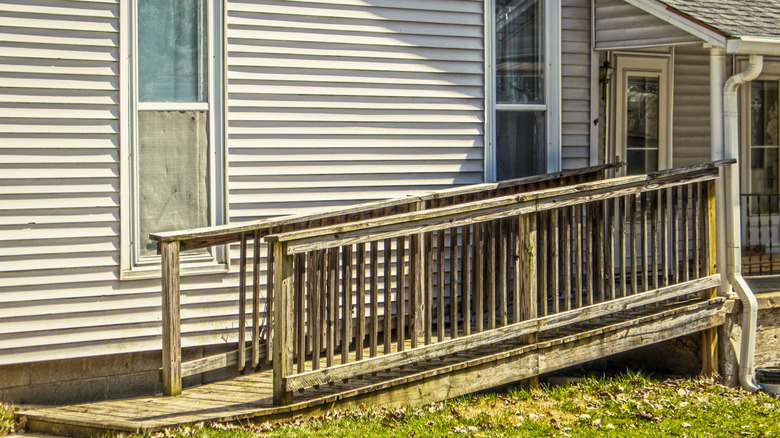
While owning a home in retirement has a lot of positives, there are a few downsides to consider, too. Staying in a large, aging house means putting more time and money toward maintenance and repairs, not to mention that utility bills and property taxes could continue increasing as years go by. Retirees who want to remain in their home may need to add features such as ramps, railings, and walk-in tubs, which can get expensive. These home modifications can detract from a home's value as well, depending on how easy they are to remove and whether the future owner needs them. So, when the time comes to sell, a home might not be worth as much as expected.