

You've Been Warned: Consumer Reports Says These 9 Electric Vehicles Are The Least Reliable
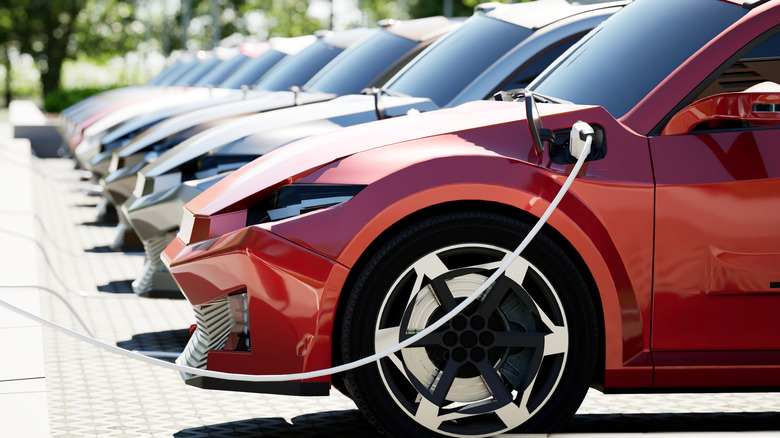
Before purchasing your next electric vehicle (EV), do your research. Not performing due diligence is one of the common mistakes people make when looking for a used car. And never make your choice based on popularity. Some of the most popular cars, trucks, and SUVs are highly unreliable. Fortunately, Consumer Reports (CR) has done much of the research for you. If you want to avoid being stuck with a lemon, take note of CR's findings.
You have to approach the process with an open mind. If you have a preconceived idea about a vehicle, it will cloud your judgment. For example, you may think well of a car simply because of its brand. However, you may be surprised to learn that the car's manufacturer has been producing substandard vehicles and a long list of unhappy customers. Some EVs have better reputations than others — which is why this list is ordered from the least reliable entry to the most — but it's still disappointing to see such a wide spread of EV options letting their drivers down. Whether they're battery-powered variations on classic designs, or some of the latest models from brands that produce EVs exclusively, not a single one of these vehicles is reknowned for its trustworthiness on the road.
2024 Kia EV9
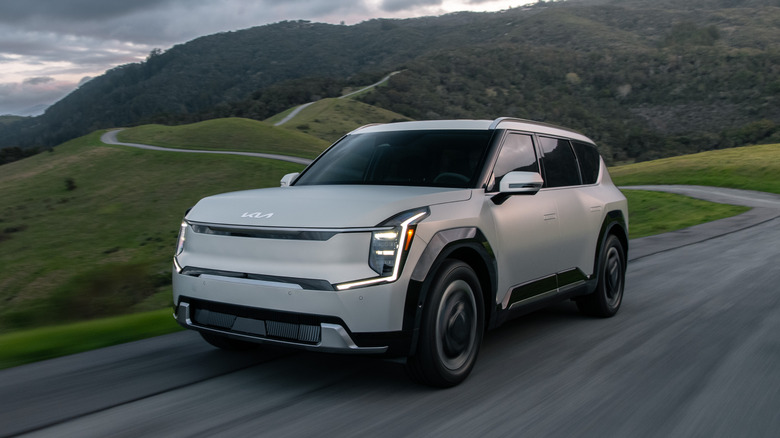
Consumer Reports had several nice things to say about the 2024 Kia EV9, which isn't surprising since the brand has produced dependable cars for budget-minded people for years. There's plenty of room with its three rows of seats, it's fast for an SUV that size, and its design makes viewing the passing landscape easy. Unfortunately, none of those features could save the EV9 from being ranked about as close to the bottom in terms of reliability as any car could be. In particular, the publication noted the vehicle's powertrain and EV battery were particular problem areas.
The EV9 was subject to six recalls, all occurring in 2024. The first, in April, involved the electrical system. Dealers were told to replace the gear drive unit. The unit's differential gear bolts were loose, creating the possibility of the differential locking or the vehicle losing drive power. Later that spring, the front passenger seatbelt assembly needed replacing due to a faulty retractor. In June, dealers began replacing headliners that were missing the protection they required to help occupants survive a rollover accident.
Then the software for the parking assist feature was buggy, miscalculating the distances that determine safe parking. In the autumn, the vehicle had another software issue. The display panel would no longer show important driver information, such as the speed the vehicle was traveling. Kia then ended the year with another seatbelt recall. This time, it was to correct the belts for second and third-row passengers, as important mounting bolts were missing.
2024 Genesis GV60
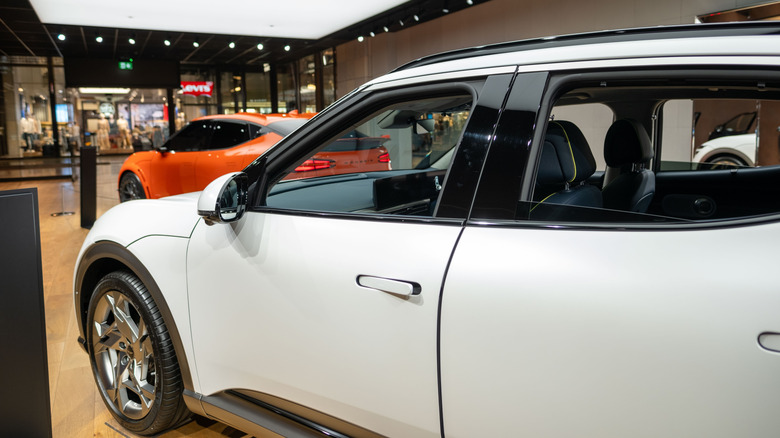
Genesis has received praise in the past for its vehicles that have challenged traditional pricey car makers like Mercedes and BMW, but the automaker has also been humbled by forgettable products like the 2024 GV60. This electric SUV is so bad, it finished at the bottom of Consumer Report's ranking of 2024 SUVs. Like the EV9, both the GV60's powertrain and battery stick out as major issues.
The GV60 has five recalls, three of which focus on the electrical system. Twice in 2024, the risk of a crash was deemed possible because of a sudden loss of power. There's an integrated charging control unit responsible for keeping the battery charged. It was possible for this unit to become damaged and stop feeding the battery. The result was a vehicle without power, which posed a danger to vehicles traveling behind it.
The other electrical problem was a bug in the software operating the driver's instrument panel display. The failure kept drivers from knowing how fast they were traveling. It also prevented them from benefiting from modern collision warnings. Similarly, there was a recall for a backup camera that failed to display. Software problems caused the camera to shut down when the driver put the SUV in reverse. The latest recall dealt with build quality. Windshield molding tended to become detached, presenting an accident risk to other drivers.
2024 Chevrolet Blazer EV
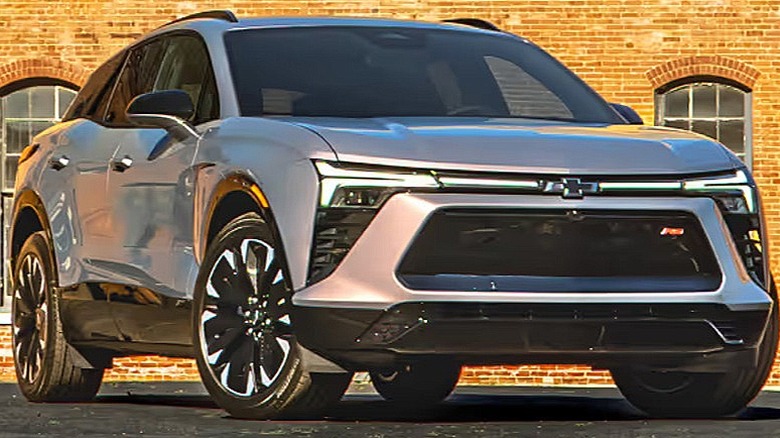
The 2024 Chevrolet Blazer EV makes a fine first impression, but can't live up to expectations. Consumer Reports liked the smooth power delivery. However, the powertrain, battery, and in-car electronics were all given bad reviews. User testimony suggests that everything from the vehicle's climate controls to its battery are subject to failure, which can put drivers in anything from inconvenient to outright dangerous positions. Given this was the Blazer EV's first year on the market, Chevrolet will likely need to make some serious design changes to save this model's reputation down the line.
Inside EVs also found the software supporting the vehicle's MyChevrolet app to be unreliable. The same journalist also reported a rattling headliner and a moonroof that refused to close consistently. Among the staff at Edmunds, one person found the regenerative braking system caused the SUV to decelerate as if preventing a forward collision when no danger was present. For another staffer, the automatic reverse braking system stopped the vehicle three times when the staffer was trying to back out of an unobstructed driveway.
The Blazer EV has undergone five recalls. The first involved replacing door strikers and bolts to keep doors from opening on their own while the car was in motion. The second replaced the rear drive unit. Poorly insulated wires made it possible for the SUV to suddenly lose power. The third recall was for a defective control arm that could break, leaving the driver helpless to control the vehicle. The final two were for a parking brake that could come on while the car was being driven and go off while the car was parked, allowing the SUV to roll away.
2025 Lucid Air
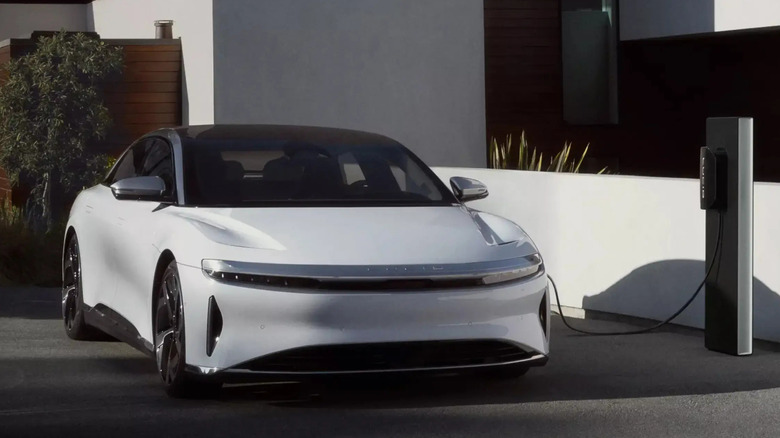
Consumer Reports liked several aspects of the 2025 Lucid Air. Reviewers noted how well the sedan, which is large enough to seat three passengers in the back seat, can still accelerate and maneuver with ease. These are two of the vehicle's features that owners also cite. The Lucid Air's driving experience received and comfort are reportedly extremely favorable. Despite its size, the car also has an impressive estimated driving range of 377 miles. Unfortunately, none of these accolades were able to save the Lucid Air from extremely subpar dependability.
There are five recalls from 2024 through 2026. They include several that could contribute to accidents by shutting off energy to the powertrain. The first required the replacement of the rear wiring harness, which was placing too much strain on the electrical cables. There was the likelihood of cutting the power to the rear drive unit and rendering the vehicle powerless. The second potential power loss involved loose rear bolts that were supposed to keep the half-shaft engaged with the drive unit. Others mandated a software update. A glitch was causing the rearview camera to either not display an image at all or to show one that was inaccurate. Owners were notified that Lucid may have violated federal law by not notifying the National Highway Transportation Safety Administration of the problem within five days of learning about it, the administration said.
2025 Chevrolet Blazer EV
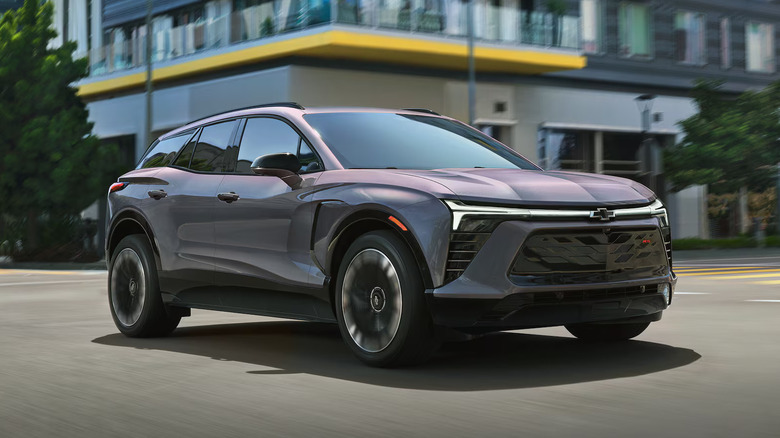
The 2025 Chevrolet Blazer EV showed marked improvement over its 2024 predecessor, but the newer model year is by no means a pillar of dependability. A rear brake issue spurred a recall. Without repair, the vehicle could disengage its brake, rolling a parked vehicle into disaster. The brake also had the tendency to engage at the wrong time, when the owner is driving. The cause was a harness that was subject to damage or corrosion.
Dealers were told to at least replace the harness. If necessary, they might find an alternate route for the harness and apply anti-abrasive tape. An owner complained to About Automobiles about experiencing the sudden application of the automatic braking. The same owner also said that his Blazer EV was letting in rain that caused the display panel to lose its image.
Besides the recall regarding the brakes, the Blazer EV also had a recall for its door strikers and their bolts. The metal wasn't properly heat treated, damaging the metal and shortening its life expectancy. All four sets needed replacing to keep doors from opening on their own while the car was in motion. In addition to the recalls, there have been numerous technical service bulletins issued to dealers to help them understand how to address various repairs. There have been two for the automatic emergency braking system and over 100 for the electrical system.
2024 Cadillac Lyriq
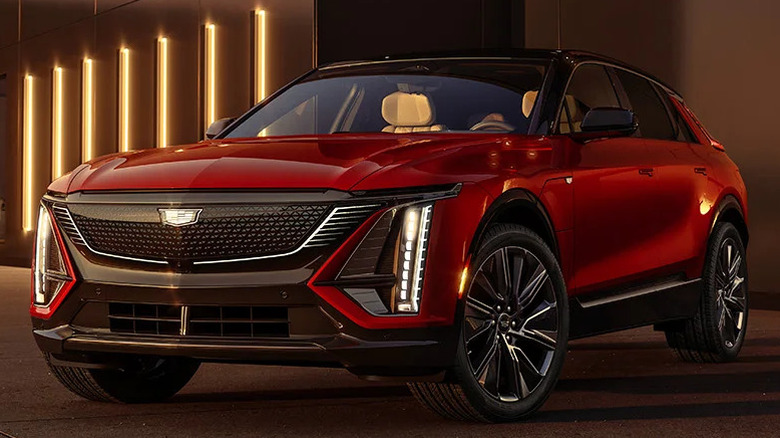
Similar to other electric vehicles, Consumer Reports found the weaknesses of the 2024 Cadillac Lyriq lie in its powertrain, the EV battery, and the in-car electronics. Its build quality, EV charging, and road noise are also problematic, all of which likely inform why this car was assessed to be so unreliable.
The 2024 Lyriq has seen six recalls from 2023 to 2026. Two recalls involved the electrical system. Dealers had to replace the rear drive units that had insufficiently insulated wires. A shortage would cause the vehicle to lose power. This is the same problem that affected the Chevrolet Blazer EV, and for good reason. The Lyriq is built on Chevrolet's electric vehicle platform using the legacy automaker's key electronic components. Another electrical system recall addressed buggy software that could cause the driver's display screen to go blank, leaving the driver without rearview cameras, warnings, or even a speedometer.
The recall for the suspension was due to loose bolts that could lead to damaging coolant lines for the EV battery or high voltage cables. The end result could be a complete shutdown. Software problems that prevented the car from braking properly triggered another recall, while a badly welded bracket that made it difficult for a seat belt to perform properly was the cause of yet another recall. Additionally, owners report problems charging both at home and on the road.
2025 Rivian R1S
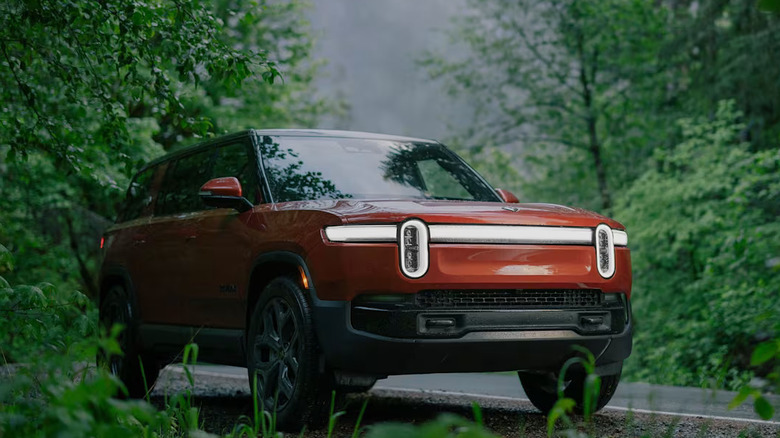
Consumer Reports applauded Rivian for improving the R1S by giving the 2025 model a better riding experience and reequipping the cabin to eliminate more noise. That helps explain why the R1S is such a customer favorite while also being one of the least reliable vehicles. But even that praise came with caveats. One CR tester still didn't find the vehicle comfortable to drive, in part due to super-sensitive steering. CR also noted that the R1S was especially challenging to control at low speeds because of its intrusive regenerative braking system. Despite receiving praise for its other aspects, such as its superior acceleration and energy efficiency, the R1S still hasn't proven its trustworthiness in the eyes of owners.
CR's two particular areas of concern were the climate system and hardware — the R1S's windows, doors, and seat belts were each cited as significant problem points. The seat belts were even recalled multiple times for not being properly anchored, which made it difficult for the belt to hold a passenger securely. However, those instances made up just two of nine recalls for the R1S. Two others involved the electrical system: The high voltage distribution box was not grounded correctly, leading to a possible loss of drive power. On another occasion, a software malfunction left the vehicle operating without all its exterior lighting. Exterior lighting was the subject of two other recalls, as well. Once the headlights failed to operate properly, and on another occasion, the turn signals didn't work.
2025 Cadillac Lyriq
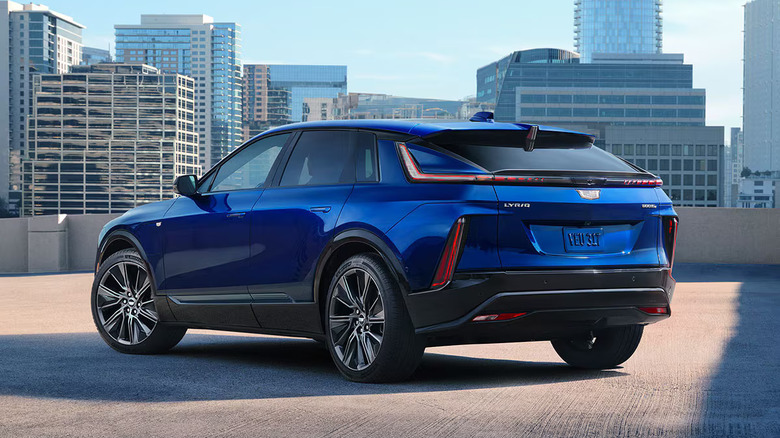
The 2025 Cadillac Lyriq is a study in contrasts. Respondents of Consumer Report's Customer Satisfaction Survey were thrilled with the driving experience and comfort of the vehicle, but when asked if they would purchase the vehicle again, only 58% said they would and only 46% considered it a good value. With such mixed driver testimony, it's unsurprising that the Lyriq proves to be a questionable daily driver.
The SUV has three recalls on record for the electrical system, suspension, and head restraints. The bolts holding the battery in place weren't tight enough, creating the possibility of a fire should the vehicle be in an accident that compromised the battery. The suspension issue was loose bolts on front stabilizer bar brackets. There was fear that the battery's coolant lines or the Lyriq's high voltage cables could be cut by an unmoored stabilizer bar or its bracket. The other recall dealt with a mistake in the owner's manual that would lead to people adjusting their head restraints in a way that wouldn't give them the proper protection.
Despite the car receiving thumbs up for its beauty, its build quality seems to be questionable. One owner complained to Edmunds that after only a week, several problems surfaced. The wireless phone charging option failed, so he plugged in the phone only for the driver's display panel to go black. Without a functional display, the vehicle had to remain parked until the system came back online the next day.
2024 Ford F-150 Lightning
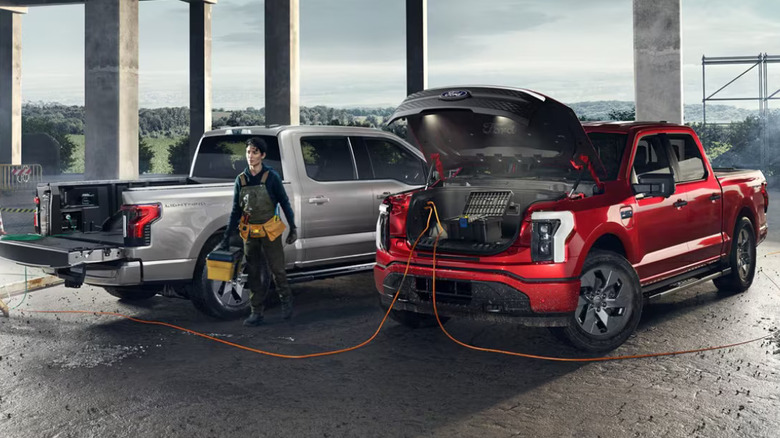
Auto manufacturers are still trying to crack the code of how to produce a highly reliable all-electric pickup truck. The 2024 Ford F-150 Lightning is an excellent example of the problems they face. Ford has long since perfected the process of turning out traditional internal combustion engine versions of the F-150, so the company had a solid basis on which to begin work on the electric version. But the technology necessary for an electric powertrain has proved just as troublesome to master for Ford as for others. Like many others on this list, CR finds the F-150 Lightning suffers from serious issues with its powertrain and its electronics. And while its time on the market thus far has earned it a better track record than any other model on this list, its reliability remains far below the industry average.
The 2024 F-150 Lightning has four recalls. The first was issued at the close of 2024 for the suspension. Drivers could lose the ability to steer and control the large truck due to a control arm becoming detached. The other three recalls were spread throughout 2025. At the beginning of that year, a recall was announced to prevent the vehicle from catching fire because of a battery short circuit. In the spring, there was another recall for the suspension. The same control arm problem needed to be re-addressed. The year ended with a powertrain recall. Vehicles were losing their ability to remain in park. Trucks were rolling away, threatening to cause accidents.