

One Of The Worst Cars For A Retiree Is Also One Of The Cheapest SUVs To Insure

Transportation costs are a large portion of the average American's monthly expenses. In fact, the Bureau of Labor Statistics reports that transportation accounted for 17% of the average household's yearly expenditures in 2024, putting it second only to the cost of housing. Much of this financial strain comes from car insurance, which sets the average American household back almost $2,000 a year. Retirees living on a fixed income may want to seriously consider looking into vehicles they can insure affordably to keep their annual costs manageable. Insurance rates vary widely depending on your age, a vehicle's price, driving history, and location. But typically, retirees get better average insurance rates than those under 50, especially if they opt to use one of the five best car insurance companies for seniors. However, not all vehicles with low insurance premiums make strong options for retirees.
For example, Mercury Insurance lists the Honda CR-V, a sporty compact SUV, as one of the most affordable cars on the market when it comes to the cost of insurance. According to Bankrate, the average cost for full coverage insurance for the Honda CR-V is $2,270 per year, with minimum coverage for the SUV costing around $779 on average. Retirees with a good driving record could see these rates go down a bit, but that's about where the potential perks of opting for this model end. Retirees should prioritize affordability, reliability, and comfort when looking for a car, and the CR-V falls short in all these categories.
Why is the Honda CR-V one of the worst cars for a retiree?
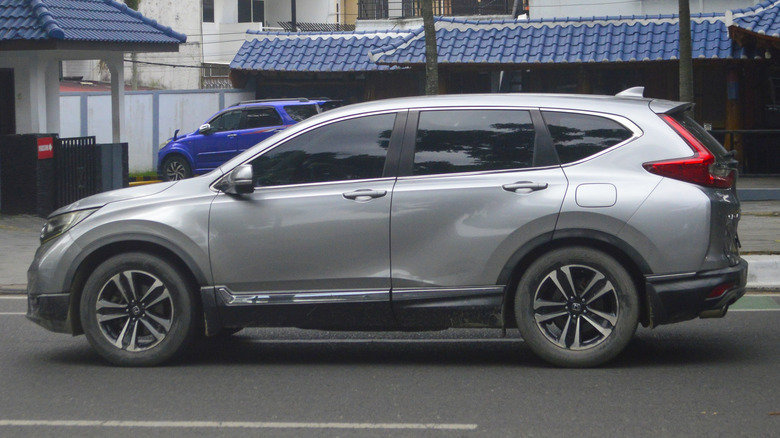
A brand-new Honda CR-V costs a minimum of $30,920. If you want upgrades like a higher trim or hybrid engine, you could be on the hook for thousands more. Higher-end features like these could also potentially raise your insurance premium, negating one of the few perks the CR-V has to offer. The CR-V's reliability is also questionable: Models dating from the late 1990s to as recently as the 2025 CR-V eFCEV have been recalled for issues including electrical failures, coolant leaks, and faulty seatbelts. Honda was also involved in the Takata airbag recall — a recent car recall that cost major manufacturers a ton of money. More general CR-V maintenance can also be a problematic expense. Year models from the early 2000s are especially susceptible to an issue known among Honda drivers as Black Death, a severe air conditioning compressor malfunction that can cause lasting damage and cost thousands to repair.
Consumer Reports rated the 2025 Honda CR-V 73 points out of 100 for its comfort and an abysmal 46 out of 100 for its overall value. Reviewers complain that its firm suspension can be unpleasant on long trips, and that drivers need to spring for higher-tier models to access safety features that come standard on competing SUVs. Retirees may be better off opting for one of the five reliable used cars you can get for under $10,000 the next time they're in the market for a new vehicle.