

The Surprising Cost Of Fare Evasions In These 5 US Cities
According to transit advocacy group Transportation for America, fares make up 13% of the budget for the average transit agency. That might not seem like much, and indeed, some activists and politicians have made arguments for fare-free ridership. It's even been tried in places such as Denver, Colorado; Boston, Massachusetts; Albuquerque, New Mexico; and Tucson, Arizona, per Transportation for America. Yet while the elimination of fares could improve ridership and make it easier for low-income riders to get around town, a report from Modeshift cautioned that would mean local communities would need to pour more money into their transit systems. Grants from the federal government might also be harder to come by with Congress pushing for a 20% cut in funding for local mass transit agencies, per the Urban Institute.
Complicating things further are the millions of American who don't pay their fares by sneaking into buses, intimidating drivers, and jumping gates that lead into train stations. Doing so is costing big bucks for transportation agencies all over America — both in lost fares and in new security measures — some of which are already having a hard time balancing their budgets as Covid-19 relief funds from the feds run out.
Below are examples of what fare evasion has cost taxpayers for five large metro areas in the U.S. and, in some cases, what it might cost people who are caught evading fares.
New York
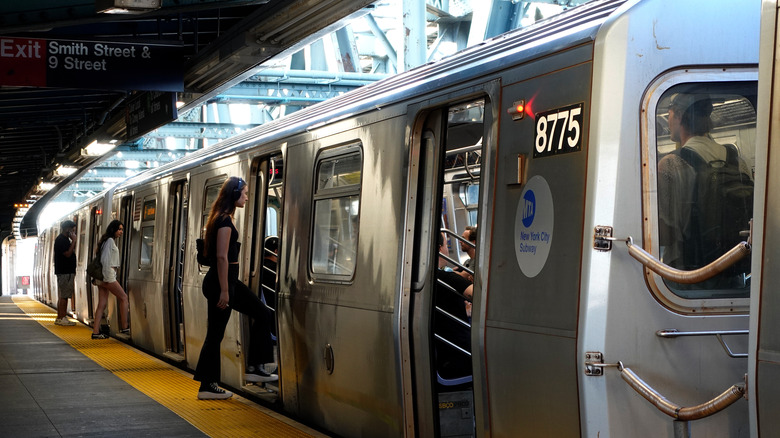
The largest transportation agency in North America, the Metropolitan Transportation Authority oversees a network of buses, subways, and trains, plus tolled roads and bridges that serves not only New York City but also Long Island and Connecticut, plus southeast New York communities such as Rye, the second richest suburb in the U.S.
Unfortunately, the MTA agency lost nearly $1 billion to fare evasion in 2024, according to a report by the Citizens Budget Commission (CBC), a New York-based fiscal watchdog organization. That figure includes unpaid bus fares ($568 million), subway fares ($350 million), road tolls ($51 million), and commuter rail tickets ($46 million). That's a major problem for a $20 billion agency with an $800 million budget gap.
To combat this trend, subways are patrolled by local law enforcement officers as well as MTA fare inspectors. For buses, the MTA sent in inspectors with EAGLE (Evasion And Graffiti Lawlessness Eradication) to bus stops to prevent people from sneaking on to buses without paying a the $2.90 fare, AM NY reported. Those caught riding for free risk being hit with a $100 fine. The extra enforcement helped reduce fare evasion in the subway from 14% to 10% and by 48% to 44% in buses between the first quarters of 2024 and 2025, the CBC noted. Nevertheless, the CBC still projected that the MTA would fail to collect $900 million from transit users and toll roads for the year 2025.
Washington, D.C.
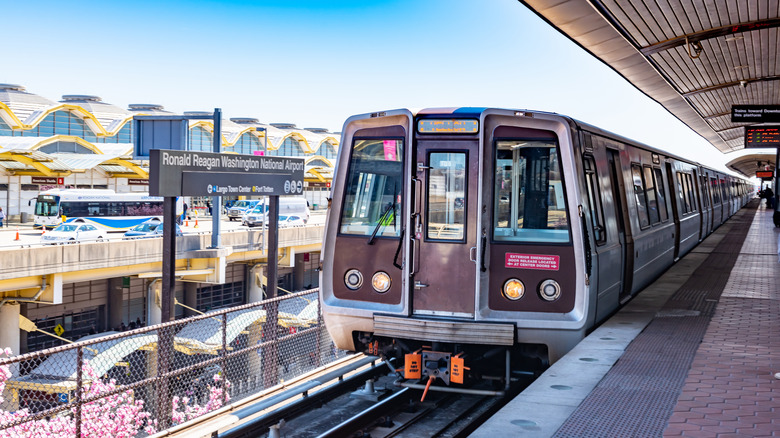
The Washington Metropolitan Area Transit Authority has 98 Metrorail stations and 50 Metro bus routes throughout Washington, D.C. as well as its suburbs in neighboring Virginia and Maryland. The WMATA have also had more than its fair share of fare jumpers. At least $50 million in revenue was lost in fiscal year 2025 due to fare evasions from both the rail and bus systems, according to WMATA. That might seem like a drop in the bucket for an agency with an operating budget of more than $2 billion, but a significant portion of that money (nearly $462 million) came from fare revenues last year.
Most fare evasions are in the Metrobus system where the WMATA estimated that 70% of bus riders don't pay for their ride. In response, the authorities in the D.C. have issued civil citations of $50 each while Maryland and Virginia have issued criminal citations of up to $100 each for riders who fail to pay regular fares of up to $6.75 for Metrorail trips and $4.80 for Metrobus trips. (There are also reduced fares for seniors, those with disabilities and individuals on Supplemental Nutrition Assistance Program benefits.)
On the rail side, fare evasion plummeted to a mere 3% after the WMATA installed new gates at stations that were more difficult to jump over, per the Washington Post.
San Francisco

Two mass transit systems serve the city of San Francisco. The Bay Area Rapid Transit System, or BART, is a heavy rail train system with 50 stations in San Francisco, Alameda, Contra Costa, San Mateo and Santa Clara. The San Francisco Municipal Transportation Agency, also known as the SFMTA or Muni, runs the buses, light rail trains, streetcars and cable cars within the city of San Francisco. And while the San Francisco Bay area has a fast-growing population of wealthy people, the transit agencies that serve it have budget deficits of up to $400 million for BART and $320 million for Muni.
Fare evasion cost BART between $5.7 million and $9.5 million in the year 2023, while fare evasion cheats Muni of about $5 million a year. As many as 20% of Muni riders didn't bother to pay fares, SFMTA reported in 2024. To combat that problem, Muni handed out $130 fines this year to people who skipped paying the $2.85 per trip fare. BART, (which started charging an average of $5.18 per trip in 2026) invested $90 million installing "Next Generation" gates at train stations that were harder to jump. While those measures have done a lot to slash fare evasion, it's done little to solve the fiscal crisis of each agency.
Philadelphia
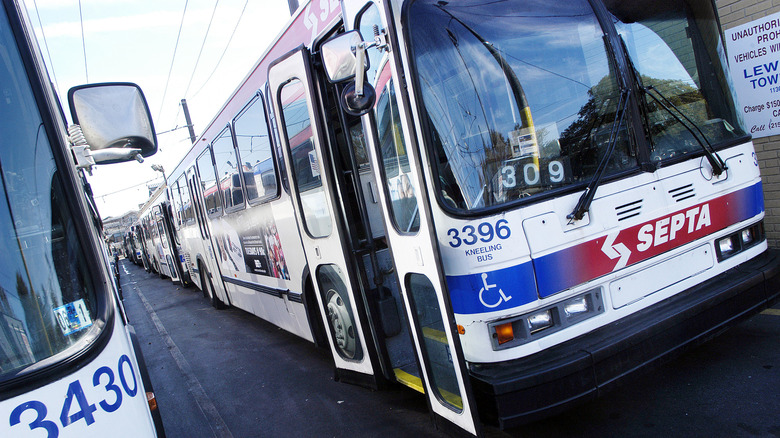
Philadelphia has minted U.S. coins since 1792, including a rare 2005 Minnesota quarter that could be worth a ton of money. But while Philadelphia literally makes money, about 18% of transit riders in the greater Philly area opted not to spend any of their own cash to ride the Southeast Pennsylvania Transportation Authority's buses, trolleys, or trains. That costs SEPTA anywhere from $30 million to $68 million a year, according to a 2024 report. That can be painful for an agency that faced a $213 million shortfall in 2025.
SEPTA responded with an enforcement blitz that included issuing 4,366 citations for fare evasion in the first half of 2025. Those tickets can be as high as $300 for evading a fare of $2.90 a trip by bus, trolley, or subway or between $5 and $11 for a regional train ride. SEPTA also spent about $7 million installing new gates at train stations to prevent people from jumping over turnstiles. Cops now ride buses to make sure riders pay their fares, CBS reported.
Los Angeles
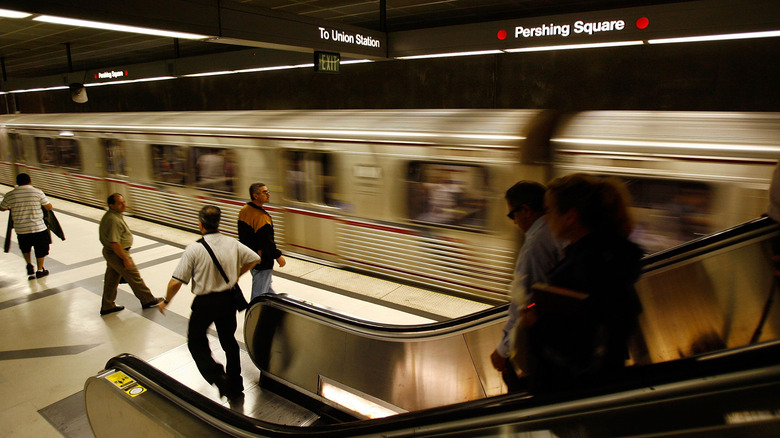
According to reports from transit activists and experts, including a column in the Los Angeles Daily News, 46% of the people who ride the LA Metro's subway trains and buses in Los Angeles County don't bother to pay the $1.75 per ride fare. Activists affiliated with A Metro Worth Paying For claim this amounts to a loss of $119 million each year for the $9.5 billion Metro system.
Metro Worth Paying For activists point out in their July 2025 report that fare evasion is part of the overall unsafe atmosphere on Metro vehicles due to a lack of law enforcement. Citing crime statistics, the report also points out that 96% of the people arrested for committing violent crimes on Metro vehicles in 2023 and 2024 did not have one of the Tap cards passengers use to access buses and trains.
To address this problem, the LA Metro's fiscal year 2026 budget has invested $419 million in new security measures, which included hiring 46 new transit officers. The LA Metro also spent $65.1 million on improvements that included installing taller fare gates at Los Angeles subway stations in 2025 as well as a tap-to-exit system. Metro also reported a 15% increase in fare collections where new technology was installed.