

9 Things Middle-Class Americans Can't Afford To Buy Anymore

The American middle class has changed a lot in recent decades. This economic marker has gone from being an inclusive classifier containing a significant majority of Americans (and earning the "middle" in its title) to a squeezed contingent of the consumer landscape. Pew Research Center found that 51% of the U.S. population fit within the "middle income" bracket in 2023. But in addition to a shrinking membership, that middle incomes were delivering less value to households than in previous generations.
As a result of consistent, decades-long negative economic pressures, being "middle class" doesn't really mean what you might think any longer. There are some important hallmarks of a middle class lifestyle that remain as vestiges of the old times. Among the signs of a middle class existence are things like homeownership and a college degree, for example. Yet, there are numerous purchases that Americans in the middle class have largely cut out of their budgets. Some of these retractions are due strictly to inability. There are certain things that remain off limits to many spenders simply because the financial math just doesn't add up. Some others have taken on a self-imposition. Middle class Americans can't afford to invest in certain expenses while carrying other financial obligations that they want or need in their lives. Unfortunately, many of the things that those in the middle class are excising from their spending patterns are actually items that once fit squarely within the economic class' wheelhouse.
Homes in pricey neighborhoods
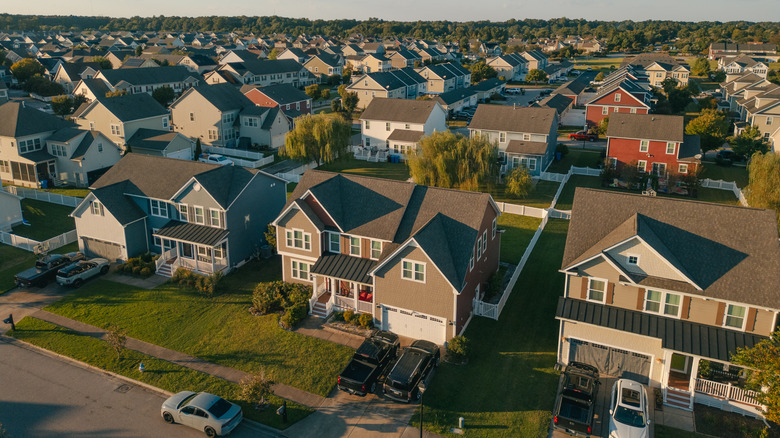
Home ownership is a common feature of a lifestyle that could be considered middle class. 74% of Americans consider owning a home a core component of the American Dream, as reported in a 2024 Ballard Brief report. This was such a prevalent theme that it's the most widely identified element of living that dream — yet funding a lifestyle compliant with the American Dream is getting more expensive. A 2025 Bankrate report found that 75% of nation's homes are financially out of reach for the typical shopper, and the most egregious examples of this price discrepancy are located in and around the country's largest metro areas. Middle class buyers are still prioritizing this decision, though, and a sizeable portion of those in the market for a place to live are forcing round pegs into square holes. Around 30% of middle class buyers in 2022 were actively choosing to become house poor, that is, they bought homes that would cost over 30% of their income on mortgage and other housing expense payments (per NBC News).
The most affordable homes in the country can be found in rural areas and other places that lack the flashy infrastructure that attracts most buyers. Those in the middle class want to live in a nice neighborhood with great schools nearby and easy access to the urban core of their community that pulses with energy and life. But 'good' neighborhoods are becoming a hallmark of upper class incomes rather than those characterized by the middle class, even though metropolitan-adjacent suburbs were literally created for them.
Gym memberships

Gym memberships today vary widely in included amenities and the price that's reflected on your bill. Generally, they'll run the typical user anywhere between $10 for the most barebones weightroom access to around $100 per month for a more expansive experience. Either way, many consumers in the middle class are opting to rethink the expense of staying in shape. Instead of purchasing exercise access as part of a subscription model, many consumers in this economic category are opting to buy a set of weights for use at home. Basic dumbbells with adjustable weight plates can be found for $100 or less as a complete set, making the total expense to start working out at home roughly equivalent to what a buyer might pay for one month of professional gym access. A simple door-hung pull up bar and a few basic weights can go a long way in the backyard or garage.
Another option that middle class consumers are trending toward involves running. Investing in a good pair of running shoes cost somewhere in the $100 neighborhood too, less if you aren't particularly brand picky and buy during a sale. Once you have a pair of running shoes, getting out for a daily jog essentially add nothing to your budgetary considerations. Cutting out the monthly expense of gym memberships and other similar costs can act as an important step toward keeping more of your money in your pocket. Beyond that, you'll also get to keep the physical manifestations of your investment, representing a positive financial trade in more ways than one.
Collegiate education at private universities

Every collegiate experience provides its own unique blend of magical moments. every college campus is different and no educational programs are the same, even when they share largely the same curriculum and nomenclature. The draws for students at every university offer their own set of benefits, but when you get down to the brass tacks basically every degree program you might enroll in offers the same bottom line. For one thing, you aren't guaranteed a job upon graduation, and in some cases going to college at all is the wrong decision for some young people and their overarching goals. Everyone's transition from their high school years into what comes next will be unique to their own desires, plans, and personal strengths. However, one thing that remains is the fact that a private school education provides virtually no advantage over its state school equivalent, aside from the prestige attached to the name. Some schools turn more heads than others, and some of these high profile institutions are private schools.
Private universities cost too much to justify the expense in most cases in the current market. Middle class students and their parents are already struggling enough to manage the funding requirements of an in-state tuition bill. The average in-state expense for a four year degree has risen to a total of roughly $100,000, according to Education Data. Going to private school doubles this figure without batting eye. Without significalt scholarship money attached to a more expensive school's offer, those in the middle class are overwhelmingly likely to limit their field to public, in-state universities.
A brand new car

Brand new cars are an expense that buyers across the board tend to have a hard time swinging. What's interesting about this commodity item is that the ultra-wealthy, i.e., people who can actually afford a brand new car without breaking a sweat, tend to avoid this purchase, too. Some big names in the investment world like Warren Buffet refuse to buy brand new cars. Buffett, in particular, doesn't see any real value added to his life through this purchasing decision. He doesn't drive often enough to get any utility out of a gaudy vehicle.
The reality is that people in the middle class are often buying cars with the help of financing products. As is the case with every other subset of the lending market, auto loans are getting more expensive, driving the total cost to purchase a new vehicle up at an increasing rate. Middle class consumers are less likely to go out and buy a new car if theirs is getting a little worse for wear. Because of the financial hoops they need to jump through, those in the middle class will often relegate new car purchases to the realm of need rather than want. They won't trade in their vehicle for something new if it starts to experience 'annoyances' but rather if it genuinely stops providing the mobility required of the transportation tool. When the time comes to buy a new car, a brand new model frequently is, and almost always should be, out of the question for middle class buyers as well as others. It's an expense that just doesn't serve its purpose.
An annual phone upgrade
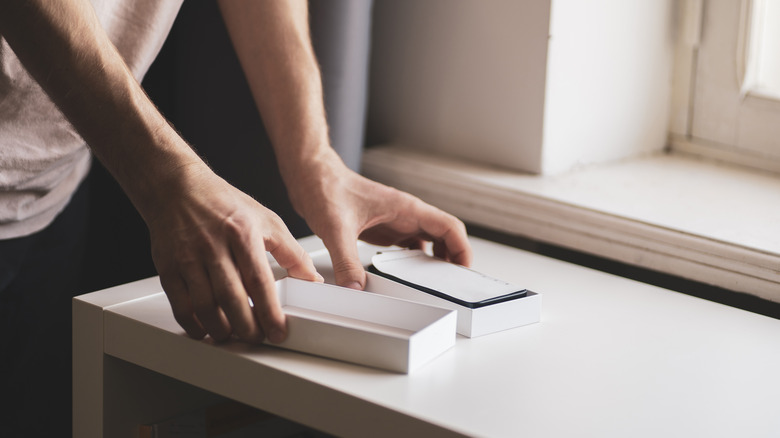
In 2022, SlashGear found in a survey that roughly 12% of consumers buy a new phone every year. A different outlet, Birchtree, pegged that number at 21% in 2024. Either way, with phones delivering roughly two to three years of average lifespan, coinciding neatly with the battery's performance drop off, Buying a new unit at a faster pace acts as luxury or splurge purchase rather than a definitive or even realistic upgrade cycle. The average smartphone costs around $800, with prices inching upward at a consistent pace with each annual release across all major manufacturers. Those in the middle class just don't have the disposable income to swing an annual outlay add this level. Moreover, with the slight performance boosts coming on a regular basis rather than major overhauls between annual releases, There's rarely a major value spike that can be achieved in making this decision.
Among larger purchasing opportunities, the new phone upgrade is one that isn't totally out of the realm of possibility at this quicker pace. However, those in the middle class will almost certainly have to sacrifice elsewhere in their budget to make the habit of annual phone upgrades feasible. The opportunity cost is just too large for such a small boost in performance to a tool that exhibits at least twice the lifespan as this replacement rate.
Cleaning services
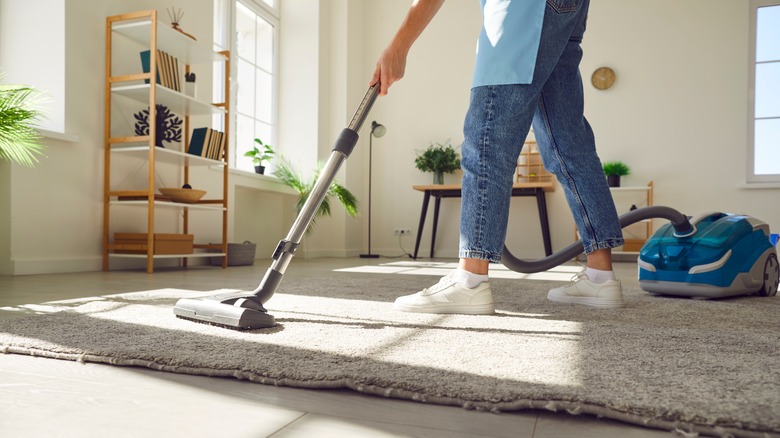
Cleaning services are significantly variable, as is the case with many other services you might pay for. Typically, consumers can expect to pay as much as $80 per hour, with a standard 2,000 square foot home coming in at a price tag of somewhere between $200 and $400 for a full clean, according to Angi. What once was semi-regular expense that allowed middle class households to buy back some of their time to spend on other pursuits has become a cost burden That prices out this group. Sadly, those in the middle segment of the workforce's age bracket, the millennials, are the generation who value their time the most. In a Ford study from 2024, the automaker found that 60% of American millennials would take a 20% pay cut in exchange for more time to focus on their own wellbeing and personal entertainment.
Paying a cleaner to handle tidying tasks around the house or a stack of dishes that continue to pile up in the kitchen can be a great way to buy back some of that free time. It's for this reason that over 900,000 people work in the U.S. household cleaning industry. Yet, people in the middle class have seen their wages stagnate for long enough that many non-essential expenses have fallen by the wayside. Hiring a cleaner once or twice each month to take a few hours of work off your plate can be a solid opportunity to spend more time with friends or family, or just as a way to recharge. Yet it's an expense that isn't strictly necessary, and so middle class Americans are letting go of this once common budget item.
A daily cup of coffee while out and about
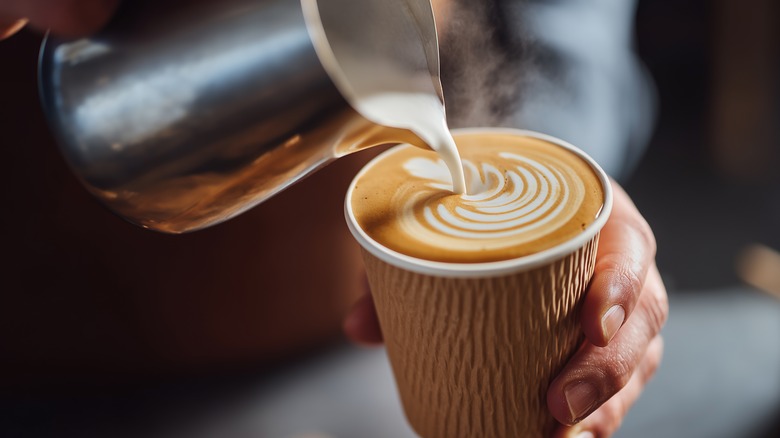
Consumers, especially younger ones, have been collectively hammered for years with the idea that a daily cup of coffee at your favorite establishment is wasteful spending. At the extreme end, talking heads have suggested that cutting back here could help fund a more robust retirement or go a long way to funding your first home purchase. More conservative voices on the matter say that the $4.90 average cup of Joe could instead spend its time in your savings or investment account to accumulate a tidy rate of growth to support moderate needs somewhere down the line.
Even though this idea has become something of a cliché, there's a trend taking hold in recent years that aligns with the advice. Middle class Americans are acting on this change, even if they aren't doing it because they've taken these words to heart. Cutting out a daily coffee doesn't have to mean cutting out coffee. Realistically, it costs an average of $0.26 per cup of home brewed coffee. The savings are truly enormous, especially when plotted out over even just one month: $98 versus $5.20 over the roughly 20 workdays in a month, or a savings of $92.80. Put another way, a month of taking coffee with you from home costs a little more than a single cup of storebought brew. Many middle class Americans have caught onto the idea that they can put a significant chunk of money back in their pocket by making this switch, allowing them to afford other things without stretching their budget or sacrificing larger desires.
Organic ingredients and premium grocery items

Grocery prices have been at the heart of affordability debates in recent years. NPR reports that in 2025, grocery prices are up 29% since February 2020. The pandemic's onset in the U.S. saw a moderate surge in costs here, and the Russian invasion of Ukraine ballooned prices; they haven't come back down since. To add to the carnage at the checkout, a significant portion of America's produce comes from Mexico and other foreign countries, making the government's tariff policy a sharp price booster as well.
In efforts to combat food insecurity and other shockwaves from rising grocery prices, Americans across the board are taking to shopping in bulk. Bulk buying provides discounted rates, even as the overall cost is higher. If you can afford to engage in this practice (and have room in the house to store your excess purchases), the decision is an easy one. Those in the middle class tend to have a bit more capital on their hands, making bulk purchasing a go-to solution to help defray the costs of everything from jeans to avocados. Some things they've given up in the grocery aisles, however, are premium items and organic selections. Own-brand canned goods, drinks, and other grocery staples are essentially the same thing as the name brand alternatives, but they cost a lot less, averaging around 40% less. Middle class Americans have left organic and premium brand purchases by the wayside, seeking instead to maintain consistency over perceived quality.
Solar panels
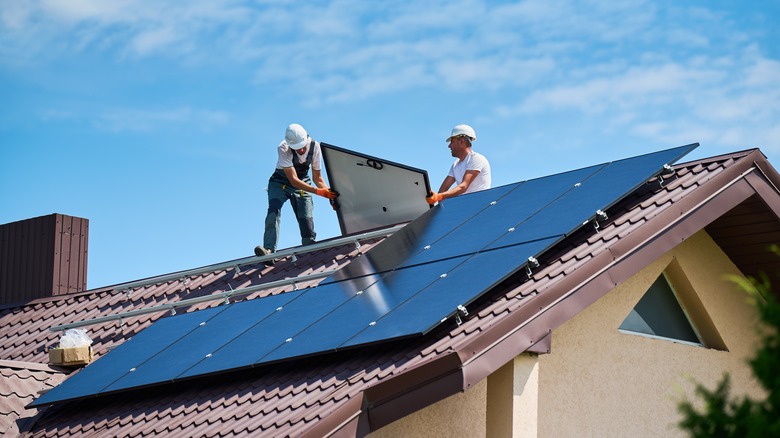
Solar panels have been a high-profile home upgrade for roughly two decades. Since 2006, Americans have been able to enjoy a robust tax credit to help offset the cost of installing solar panels on their roof. Residential solar systems alleviate the strain on local electricity grids, and in some areas, homes will produce excess electricity and send it back to the reserve pool for use elsewhere. But recovering the cost of a solar install takes some time, typically between six and 12 years. It's a large upfront cost that eventually pays dividends, but patience is critical. With the calendar flipping into 2026, the two-decade long tax credit has ended, meaning homeowners looking to install solar panels will bear the full cost of the update, lengthening the time it takes to break even and ballooning the cost of the project in the short term. The result will see solar upgrades relegated to only wealthy homes and neighborhoods while those in the middle class focus their attention elsewhere.
One problem that solar installations face, regardless of tax advantages, is the fact that money that can be used for home improvement projects is limited. Middle class households often finance their renovations, and they often seek to prioritize updates that provide an immediate aesthetic, lifestyle, or other obvious enhancement. Solar panels are a subtle change that doesn't immediately impact the day to day in a home. Add to this a substantial change in pricing and middle class Americans aren't likely to get excited about solar panels, let alone save up for them over a new kitchen.