

Consumer Reports Says These 2026 Vehicles Are Least Reliable
You've heard the saying "you get what you pay for." Considering the rising cost of automobiles, it has become more important than ever to ensure you know what you're buying. To educate shoppers regarding certain 2026 vehicles, Consumer Reports (CR) has released its annual list of the least reliable vehicles. The results of the CR survey aren't based on staff opinions; it comes from consumers who volunteered information on their real-world experiences with approximately 380,000 vehicles.
Respondents supply CR with somewhere between 200 and 300 submissions for the year of the model under analysis. CR says it only makes public the results for a model if there's enough data from its survey participants. Respondents specify the problems they've encountered with the vehicle over the last 12 months. The issues are then weighted according to the impact they're likely to have on the operation of the car and the cost of repair. For example, a transmission failure would affect a vehicle's score more than a loose windshield wiper.
It's the vehicle's recent reliability history that allows CR to confidently project the mechanical success or failure of the 2026 version. For this reason, CR only issues a projected reliability score for models that will rely primarily on the same components as previous versions. Vehicles that have undergone a major redesign for the new year are not included. A perfect (but unrealistic) score is 100 out of a possible 100.
Chrysler Pacifica Hybrid
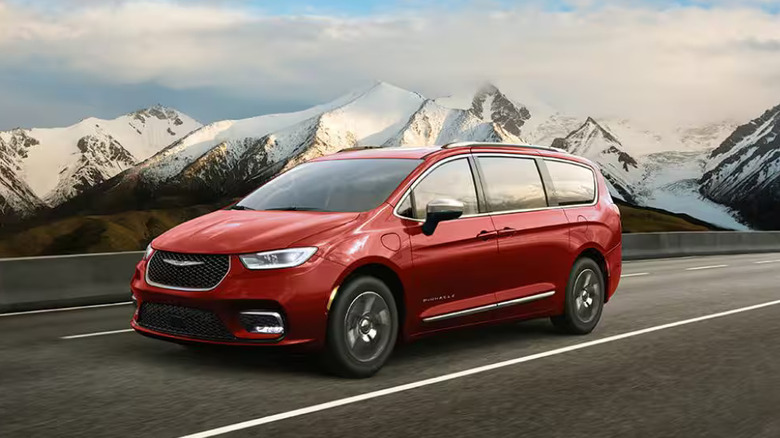
The Chrysler Pacifica Hybrid is proof that technological advancement can sometimes have a negative effect. CR lauds the minivan for pulling even in drivability with Toyota's Sienna and Honda's Odyssey. But CR gave the 2026 hybrid a disappointing predicted reliability score of only 28 out of a possible 100, which is significantly less than the Sienna's 59 and the Odyssey's 43.
The projection is based upon the performance of the Pacifica's models from previous years. On a positive note, the Pacific had received good marks in the past for its suspension and steering, which helps explain the excellent road test score of 84 out of 100 achieved by the 2026 model. Its brakes received a three out of five, and its climate control system recorded a perfect five out of five. The serious damage to its overall rating came from the powertrain and the inboard electronics. These two areas are the most technologically advanced sectors of a modern hybrid or electronic vehicle, so their reliability tends to make or break an automobile's reputation.
In 2024, Chrysler had to recall 24,000 minivans from 2017 to 2021 due to the risk of fire when recharging the battery. The company directed owners to stop charging them and avoid parking in garages and near buildings. In 2023, more than 67,000 minivans were recalled after a short circuit began shutting down engines while the vehicles were in operation, placing occupants in danger of a serious accident.
2026 Honda Prologue
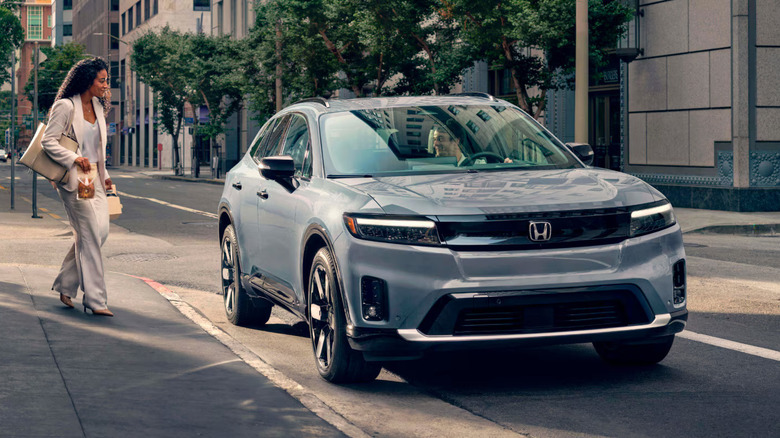
New car models can find a quicker path to the marketplace if they're built using chief components from an existing model. This is the route Honda took with the Prologue. It's built using systems found in the Chevrolet Blazer EV. However, that approach didn't eliminate bugs and system failures among the vehicle's electronics. One owner claims a new battery was needed after only 2,000 miles.
The car has a long list of driver-assist safety features, but some customers have found them more hazardous than helpful. The same owner reported to Edmonds that the emergency braking feature stopped the vehicle on occasions when it wasn't necessary, creating conditions ripe for a real collision because the system can bring the vehicle to a halt even if it's traveling at highway speed. Reportedly, owners have experienced the car's reverse automatic braking system mistakenly activating the brakes when backing up to park without the car being in any danger of striking an object.
The climate control system has all the typical features drivers like, but still scored poorly with CR. One driver discovered its bugs firsthand, according to Edmonds. The vehicle's heating system failed after 3,000 miles, preventing recharging until the dealer resolved the issue responsible for the service light. Similar issues shed light on why the CR's customer satisfaction rating is only 37 and its predicted reliability score is 25.
2026 Kia EV6
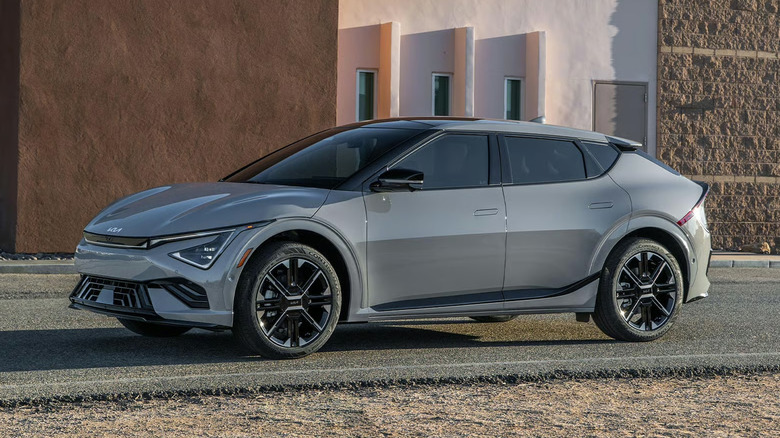
The Kia EV6 is one of those vehicles that impresses professional reviewers but also ranks poorly in reliability. CR liked the way the Kia EV6 drives and handles so much that it awarded it 91 out of 100 in the road test, but still gave the 2026 a predicted reliability score of only 25. Reviewers test drive vehicles for a relatively short time compared to the months or years the consumer may have it. Over time, issues arise that cause too many dealership visits.
Most of the issues centered around the powertrain. In 2024, there was a recall of models from 2022 to 2024 due to a problem with the smaller of the vehicle's two batteries. The battery's charging unit tended to fail, causing a potential loss to the motor, stranding the vehicle. A law firm investigated other complaints regarding the 2022 and 2023 models. Allegedly, they drew too much amperage during recharging, triggering a shutdown. Reportedly, the failures often occurred at 40 amps, even though Kia said the battery was suitable for 50-amp Level 2 charging.
CR also was not impressed by the vehicle's overall build quality. For instance, there was a recall of the 2023 model due to a possible driveshaft failure. Kia realized the driveshafts installed in the vehicle may have undergone an improper heat treatment that curtailed the life of the part. The weakened driveshaft was prone to breaking under what should have been routine pressure.
2026 Kia EV9
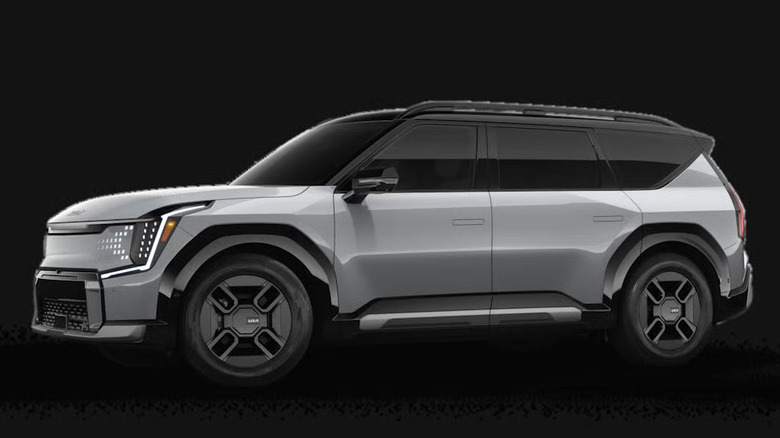
The Kia EV9 has much in its favor. It's a mid-sized SUV with three rows of seats, capable of transporting most families with room to spare. Despite its size, it's not slow, reaching 60 mph in just 5.3 seconds. The EV9 that CR tested also lasted 285 miles between charges. So what's not to like about a roomy, quick, and power-friendly vehicle? After all, there has to be a reason CR gave it a predicted reliability score of only 24.
Primarily, CR doesn't like the model's track record with powertrains and build quality. A good example is the welding mistake that led to the recall of 2024 models produced in one of Kia's U.S. facilities. The damaged motor shaft in the rear gear drive unit increased the likelihood of power loss during operation. The threat of rear collision from vehicles traveling behind the EV9 mandated a safety recall.
Electrical issues are another issue. Kia experienced a major outage in February 2025 that interrupted remote commands. A MotorTrend reviewer found the EV9 he was testing couldn't respond to the request to warm the cabin in 17°F Michigan weather. The navigation system also couldn't direct him to charging stations or provide routes to avoid traffic delays. The problem lasted several days, with customers growing more upset with both the vehicle's connectivity performance and Kia's customer service.
2026 Mazda CX-90
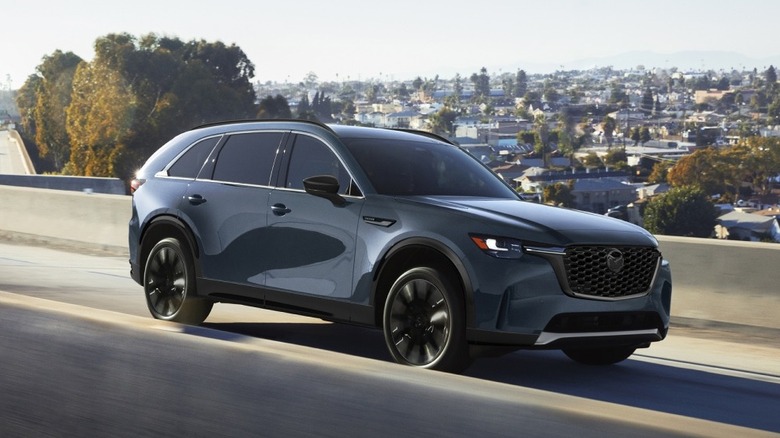
A mysterious loss of power in modern cars is not uncommon among electric vehicles and hybrids using recent technology, but it's not what you expect in an internal combustion vehicle like the Mazda CX-90. In 2024, Mazda was forced to issue a recall for tens of thousands of vehicles because of buggy software controlling the modules for the battery and powertrain. When the car was idle, the software would perform as designed by turning off the engine. This is a fuel saving feature, but the software would fail to restart the engine.
This is an in-line six cylinder turbocharged engine, which has been the powerplant of choice for the vehicle since its 2024 debut. It signaled that Mazda was going after the luxury car market held by badges like BMW and Mercedes, which both use an in-line six cylinder turbocharged engine. But Car and Driver wasn't impressed with Mazda's version of the engine. Reportedly, it operated more gruffly than rival engines.
CR gave both the turbocharged Mazda CX-90's powertrain and transmission a grade of only 1 out of 5 in the 2024 model. Issues included such major engine components as the turbocharger and the timing chain. Cylinder heads and gaskets needed replacement, and in some cases, so did entire engines. CR expects similar problems to occur in the 2026 model, which received a predicted reliability score of 22.
2026 Genesis GV60
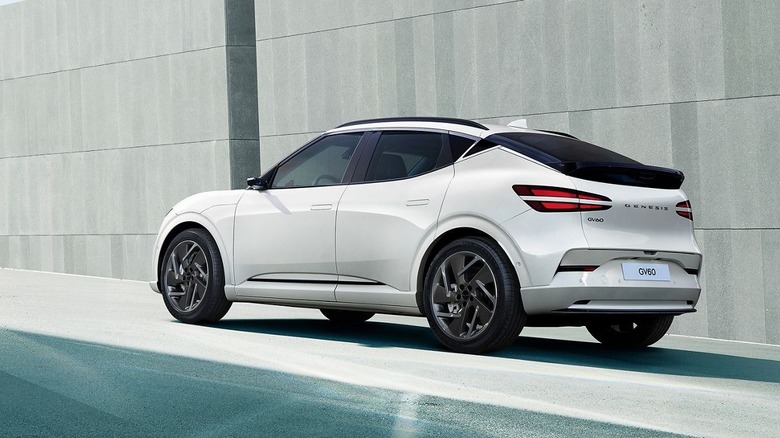
Precise handling and a smooth ride in the 2026 Genesis GV60 didn't keep CR from warning shoppers that the magazine thinks the vehicle will be less reliable than the typical car. The GV's predicted reliability grade is only 21. The lack of optimism for the vehicle springs from its record of multiple recalls from 2023 to 2025. In 2023, the rear integrated drive axle needed replacing for fear it would fracture and trigger an accident as the vehicle lost power. The next year, there was a safety recall due to a compromised rear inner driveshaft, which could also snap during operation because of incorrect heat treatment during manufacture.
Other defects also posed accident risks and prompted recalls. The integrated charging control unit could stop working, leaving the battery without power. A driver could be driving at highway speed one moment and unable to safely keep pace with traffic in the next moment. The problem was persistent, leading to two recalls in 2024. There was also a recall for the rearview camera because it tended to power off just when drivers needed it most while backing up. Other recalls involved windshield molding becoming loose and seatbelts that wouldn't allow front passengers to secure themselves. The numerous recalls, involving everything from axles to seatbelts, help explain why CR noted the vehicle's overall build quality, electronics, and powertrain had gone downhill from 2023 to 2024.
2026 Mazda CX-90 Plug-in Hybrid
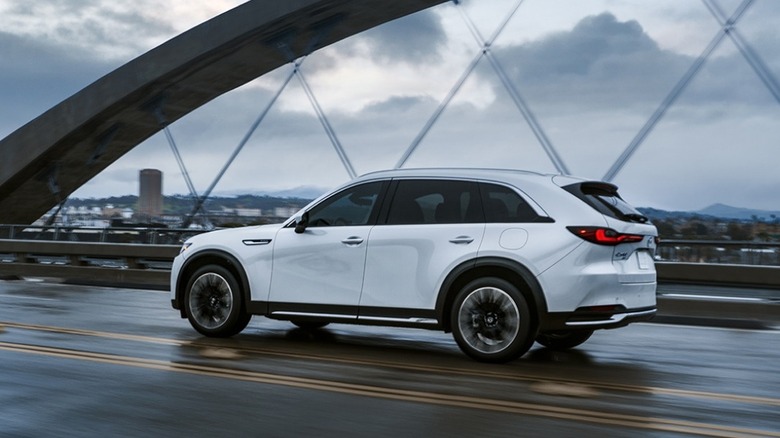
CR handed the Mazda CX-90 Plug-in Hybrid only a 20 for predicted reliability. It makes sense if you realize the internal combustion engine version of this mid-size luxury SUV received a 33. The technological complications of hybrids tend to breed recalls. From June 15, 2023, to September 2, 2025, the Mazda CX-90 was subject to 11 recalls, many of which were specific to the plug-in hybrid version. Several involved the electrical system. For example, a malfunctioning fuel gauge that gave no clue of its failure could cause drivers to run out of gas. On another occasion, the dash electrical supply unit failed, disrupting temperature maintenance of the battery and other functions.
Powertrain problems led to some of the recalls. For instance, the engine could fail to restart, or the motor could lose power while in operation, posing a serious crash risk. Once, the power steering stopped working. In another recall involving steering, bolts were missing from steering and suspension components, causing the driver to lose control of the vehicle.
An over-exuberant emergency braking system unexpectedly applied the brakes as if the vehicle were in danger of a forward collision when no threat existed, putting the vehicle in danger of a rear collision. Camera images didn't display, leaving drivers without a clear idea of rear and side clearances. Also, the pedestrian audible warning wasn't properly amplified, presenting yet another safety issue. And, according to MotorTrend, the same transmission problems plaguing the gas model haunt the hybrid.
2026 Chevrolet Blazer EV
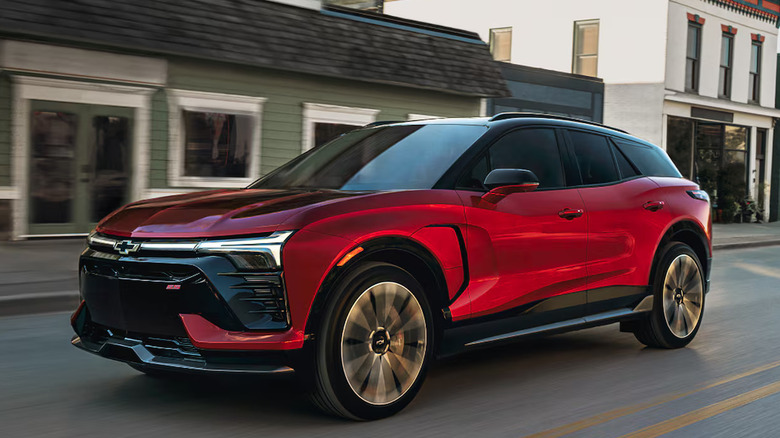
The Chevrolet Blazer EV uses the Ultium platform. The GM creation was good enough for both Cadillac and Honda to borrow it for their battery-powered vehicles. Cadillac uses it for its Lyriq while Honda uses it as the basis for the Prologue. You would think that somehow GM would maintain the better version since it's the originator of the platform, but that's not the case, apparently. The 2026 Honda Prologue received a predicted reliability score of 25, but the Chevrolet Blazer EV had to settle for 19.
Near the end of 2023, the 2024 Blazer EV impressed reviewers at MotorTrend enough to receive the MotorTrend Car of the Year honor. But the honeymoon ended quickly. Two days into the new year, GM was forced to halt sales of the award-winning vehicle until March after being inundated with customer complaints about the Blazer's software issues. It just proves that even popular SUVs can be unreliable.
Edmunds reported that its test vehicle had to spend a month at the dealer for all its problems to be addressed. There were enough issues to register 23 fault codes. The vehicle also didn't charge properly, and it even stopped charging on occasion. A reviewer at InsideEVs also had trouble. After the first 10 miles, the headliner began to rattle, and after a week, a battery warning light came on. Fortunately, nothing was wrong with the battery — the warning was a software error.
2026 Rivian R1T
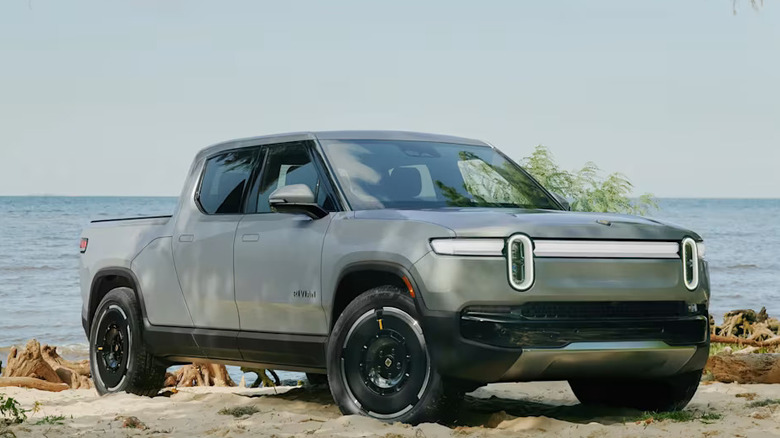
The Rivian R1T seems to impress drivers in the early days of ownership. It even fares well in professional drive tests. However, complaints tend to accumulate. CR gave the 2026 Rivian R1T a predicted reliability score of only 18, meaning the magazine thinks it will experience far more issues than the typical car. In particular, CR believes the likeliest troublemakers will be the powertrain, the climate control system, and the build quality, which includes electrical accessories. Since 2022, Rivian R1T recalls have included problems with the seat belts, steering, defroster, defogger, accelerator pedal, airbags, headlights, and exterior lighting.
A reviewer at InsideEVs wrote that his first R1T had 13 issues, many related to build quality, such as incorrectly installed seats, unconnected speakers, a tailgate that couldn't be closed, and a problem with an airbag. He also went without the vehicle for three weeks because technicians were trying to figure out why there was a problem with the tire sensor monitor. The attempted fix involved relocating the monitor so it wouldn't receive radio frequency interference from electric motors housed in the rear of the vehicle. However, it wasn't a permanent solution. The sensor still randomly issues a false signal. The owner said that immediately after purchasing it new, it needed an alignment. His 120V outlets also needed replacing after a weekend of using them for a mini fridge-type cooler. Unsurprisingly, Rivian has been called the least reliable car brand.
2026 GMC Acadia
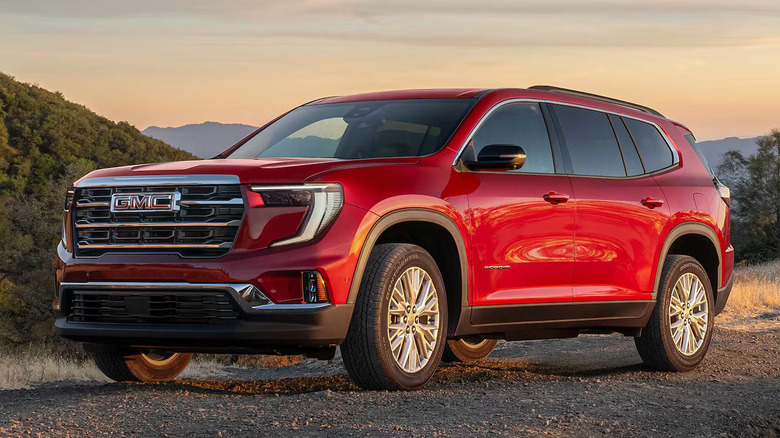
After 20 years, GMC continues to struggle to produce an Acadia with a steady reputation for dependability. It's now in its third generation, after coming to market in 2006. The first generation suffered from serious transmission issues and expensive engine repairs after premature timing chain failures. The second-generation vehicle, which started in 2017, was smaller. It was better than its predecessor but still had transmission problems and brake issues. Also, as technology advanced, the customer complaints began to include more mentions of the vehicle's electrical bugaboos.
2024 brought a second redesign and the Acadia's third generation. The model is now larger with more room for both passengers and cargo. But that comfort has come with questionable build quality and onboard electrical challenges. JD Power found last year's model only average in terms of reliability, noting customer complaints about excessive engine noise and climate control problems.
CR doesn't see the 2026 Acadia making any quantum leaps forward in reliability and separating itself from its past. Instead, it saddled the vehicle with a lowly predicted reliability score of 14. According to MotorHub, GMC has issued more than 20 recalls involving the Acadia. Dealerships have also received almost 2,000 technical service bulletins from GMC directing them on how to repair common customer complaints outside of recalls. The Acadia is the kind of vehicle anyone, especially someone on a small budget, could regret buying.