

7 Signs Your Vintage Purses And Handbags Are Worth $1,000 Or More
For some people, buying a luxury bag is purely a fashion choice, with a special emphasis on getting a brand-new handbag or purse. However, some of the best options are not only pre-owned, but also vintage. According to Vogue, the most in-demand luxury handbags often have high resale value due to factors such as scarcity, cultural relevance, and design integrity. Rebag, which was linked in the article, is a digital marketplace where aspiring fashionistas can find previously owned high-end bags or sell them. The items can go for anywhere between $300 and $44,000.
For reasons like this, it's not too surprising for some savvy shoppers to treat vintage handbags as long-term investments, buying them to hold for a while and then selling them on for a profit. Still, such an approach does have risks. It's entirely possible to get a new bag hoping that it stays popular, but because it lacks specific resale-worthy qualities, it ultimately makes for a poor long-term investment. Meanwhile, some handbags get passed down from family member to family member over decades, not only retaining their high-end value but potentially becoming worth thousands of dollars, if not more.
You can be forgiven for immediately assuming this type of demand is limited to ongoing demand for an Hermès Birkin or Louis Vuitton Speedy. However, under the right circumstances, a custom vintage bag not remotely associated with a blue-chip fashion house could still be worth a lot of money. After all, multiple factors go into determining a bag's value. Below are several details to keep in mind when purchasing a vintage handbag or purse, as they can help boost the item's value well above $1,000.
Your vintage handbag is historically significant

If you were to purchase a new Birkin, the lowest you might be able to pay is about $9,000. They're that valuable and sought after, and that's without the somewhat complex process associated with getting invited to buy one. But while factors like size, color, and condition can have these Hermès bags reselling for more than $30,000, sometimes a vintage luxury bag can see its value boosted infinitely higher thanks to its place in fashion history.
For example, the very first Birkin, which was specifically designed for British actress Jane Birkin. As the story goes, Birkin was seated on a flight next to then Hermès chief executive Jean-Louis Dumas, and asked him to create a bag that would suit her needs as a fashionable working mother. She had wanted something far more practical than what was available at the time, and after sketching her idea on the back of an airplane sick bag, Dumas agreed to create the handbag. Although Jane Birkin was ultimately gifted the legendary item for free, it would eventually go up for auction at Sotheby's, where it was successfully sold off for a record-breaking $10.1 million. The bag's sale proved that aside from materials, sometimes getting hold of an accessory that's the first of its kind or part of fashion history can mean owning something of remarkable value.
You might be lucky enough to find such a rare item while shopping at a thrift store, but vintage bags with confirmed historical significance are more likely to be found at auction. Sotheby's need not be your first stop, especially if you don't have the budget. There could be charity events or even small local auctions near you where, if you're observant enough, you could find a vintage bag that is ultimately worth thousands of dollars.
It's a limited edition or rare item
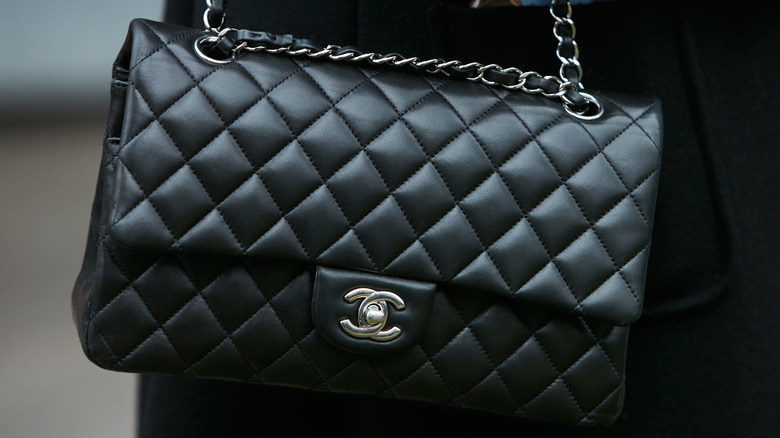
Part of what can make a vintage handbag especially valuable is how rare it is. Owning a bag that will never be re-made or re-released or is part of a limited collection from decades past means that it is highly collectable, and so going to be worth a lot of money. Sometimes, a bag accidentally becomes an instant classic, despite not being intended for sale at all.
In 2013, then creative director for Chanel Karl Lagerfeld designed the Hula Hoop bag. It was meant to be a fun remix of the Classic Flap, which is still a much sought ofter luxury handbag in its own right. The difference is that Lagerfeld's version replaced the straps with a pair of huge hula-hoops. Unlike the Classic Flap, the Hula Hoop bag was never created with the intention of introducing it to the market. These bags were specifically designed as accessories to be worn as part of a fashion show. Yet there was immediate demand for these bags, so much so that Lagerfeld relented and designed a smaller version of the Hula Hoop bag for sale. Today, it is possible to find versions of the Chanel Hula Hoop bag for sale, priced between $4,000 and $13,000, though those rare, original bags could go for as much as $100,000.
When it comes to luxury bags, especially vintage bags, the rarer, the better. These bags may cost more to own, but it's likely their resale value will only increase with time.
It was made using high-quality materials
When it comes to vintage handbags, materials matter. Leather is a popular material for handbags, not just because it looks good, but because bags made of leather tend to last a very long time. It is unlikely that genuine leather bags will ever truly go out of style, so gently used items of this nature should still command a decent resale value, even decades after they were originally made. In fact, leather is sometimes seen as a sustainable alternative to synthetic bags made from various plastics. You can resell vintage leather bags for $500 to $5,000 or more on resale sites like What Goes Around Comes Around, depending on the circumstances.
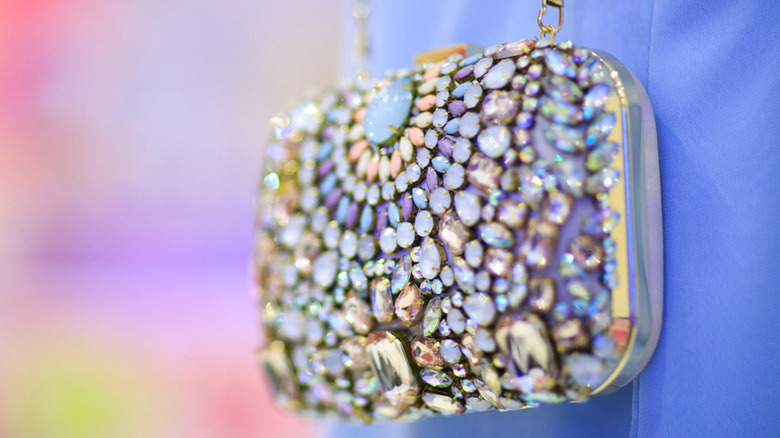
Rare gemstones will also significantly increase the value of a vintage luxury bag. A clutch, for example, made of metal and covered in genuine diamonds or other precious gems, usually retains 40% to 70% of its value compared to a regular clutch, with a resale value traditionally set between 20% and 40%. A vintage bag featuring actual gold and real diamonds will also be considered high-end almost all the time, and should maintain its high value indefinitely.
The name behind a high-end luxury bag could fall out of fashion. By prioritizing good quality materials over price, you'll be purchasing a bag that maintains most of its value over the years and decades.
The vintage handbag or purse is linked to a big name

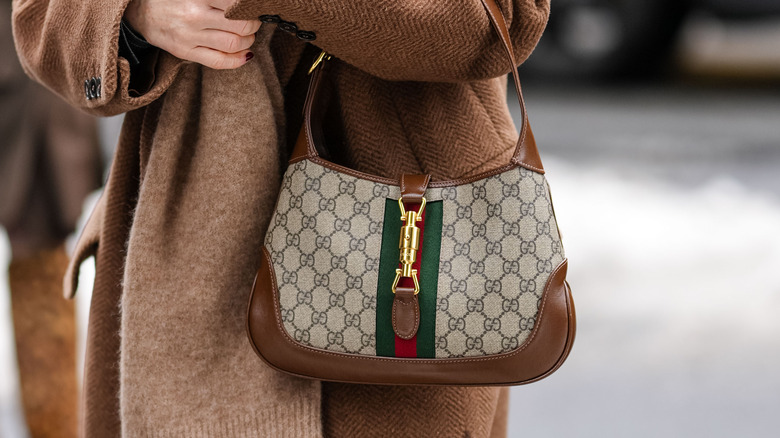
When it comes to iconic vintage bags, some are named after, or sometimes even renamed for, fashionable and famous women. This was the case for Gucci's 1950s Constance, which eventually became known as the Jackie, due to its heavy association with former first lady Jackie Kennedy-Onassis. The 1961 version is perhaps the best-known and most popular of this handbag, and if maintained in good condition, it could be sold for more than $1,000. Legendary actress Audrey Hepburn was herself a luxury bag aficionado, as Vogue has noted, and is partially responsible for the enduring popularity of the Louis Vuitton Speedy bag.
Association can make a vintage bag valuable, but direct ownership can make a bag go from worth thousands to potentially millions. Aside from Jane Birkin's prototype black Birkin bag, her Birkin Le Voyageur bag was sold for $2.9 million via Sotheby's. Because such bags are likely to be valuable, it's best, if at all possible, to go for a purse that has been confirmed as used or owned by a celebrity. Not only does this tidbit add to the unique charm of the vintage bag, but it helps it to maintain a high resale value long-term, rather than ebbing and flowing merely based on what's fashionable at the moment.
It was handcrafted in a location known for luxury items
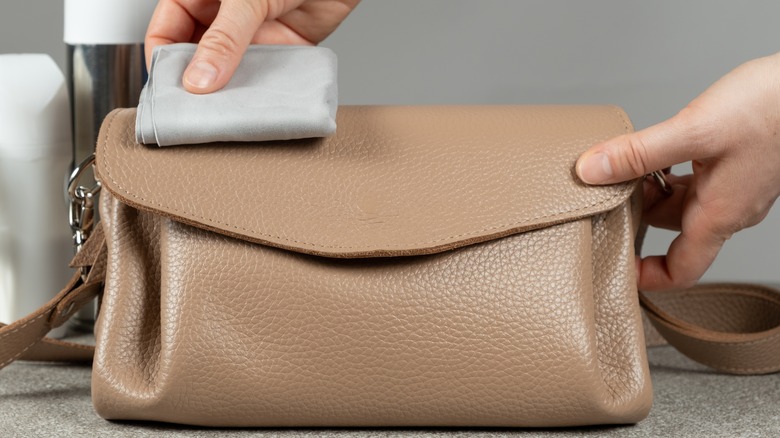
Sometimes, even if an old handbag wasn't released through a well-known fashion house, it still could be quite valuable and even command a good resale price. For instance, you might buy a handcrafted bag made in Italy for a few hundred dollars. Depending on the material and distinct details of the handbag, you could pay $1,000 or more. That's because some handbags are carefully made by expert artisans who design a bag with specifications that help it to retain much of its value for years. Italian leather handbags, for instance, can resell for a lot of money because of the reputation of the area's long-time association with high-quality fashion items.
Still, unlike vintage handbags from blue chip fashion houses, confirming the value of a handbag made for a specific person through an unknown artisan presents its own unique challenges. The best way to ensure a vintage bag of this nature can hold most of its resale value is to maintain as much verifiable information as possible. Be sure to hold onto the original packaging, just as you would with an official Chanel or Gucci purse. Having the packaging as well as the proof of purchase will make it easier to confirm where it was created, its material composition, and the high-end level of care that went into making it.
If, for whatever reason, you lack the packaging and paperwork that the bag came with, there might still be hope. Try to get the item appraised through a reputable source who's knowledgeable enough to verify the high-end value of your custom vintage bag.
The bag is suddenly trendy again

Imagine, years ago, getting a Louis Vuitton Speedy bag that a family member purchased for a few hundred dollars. You decide to resell the bag and find out it's worth four to five times what that person previously paid. That's what happens when a luxury bag suddenly becomes very trendy and in demand, as was the case with the Speedy. This bag was previously reselling for between $300 and $500. You might be able to buy or resell this bag for $1,000 to $2,500, depending on the website, handbag type, and its overall condition.
The only potential downside here is that you can rarely predict when a luxury bag will become trendy again or how long a handbag will stay sought after. Some bags may be popular for years, be all but forgotten about for a generation or two, only to reemerge as a hot resale item decades after their public debut. The best option is to choose popular bags made of durable materials, such as leather, or with practical designs that will always look good. Some more daring or asymmetrical bags may work for the moment, but may eventually fall out of favor as people no longer like the look or feel of the item. Patterns can also be risky. Though the Louis Vuitton Monogram is instantly recognizable, its popularity may ebb and flow as fashionistas go back and forth between clamoring for patterned bags and staying away from them.
It can work as a long-term investment
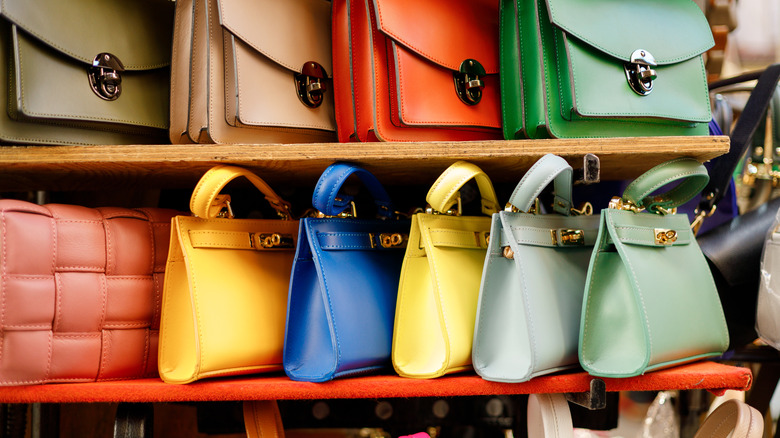
On the opposite end of the spectrum from vintage bags that go in and out of fashion are those which endure in both popularity and value. These are the heirloom-worthy bags, potentially passed down over multiple generations or simply kept in storage for a very long time. In either case, these bags make sense to purchase because they could be thought of as a long-term investment. According to Isabella de Souza, writing for MyArtBroker, there are a few key considerations to keep in mind when looking into investable handbags. For de Souza, brand reputation is especially important. Enduring fashion labels like Hermès or Chanel, because they have maintained their reputations for many decades, almost always mean that their bags will likewise be valued for a long time. She also recommends focusing on designs that are enduring in nature rather than one-off trends.
You may already have such bags in your possession, but find that they're slightly worn. In that case, it is typically a very good idea to get them repaired and restored. Unlike some other vintage items, restoring a luxury bag isn't going to hurt its resale value. A good rule of thumb for restoration is that if the cost of repair is less than 50% of the bag's current value, then it's a worthwhile choice. Any more than that, and you may, sadly, need to focus on replacing the item outright.
Overall, the ultimate goal is settling on vintage purses or handbags that will stand the test of time. The more factors you consider in favor of this goal, the more likely you will be able to find, maintain, and even sell bags worth $1,000 or more.