

The 13 Best Ways For Retirees To Lower Medicare Costs

According to the Centers for Medicare and Medicaid Services, nearly 70 million U.S. adults receive medical benefits through the federal program, highlighting its expansive coverage. Notably, 90.0% of enrollees are 65 and older, which underscores how much retirees rely on it to cover routine medical costs. Although Medicare provides essential assistance to tens of millions of seniors, retirees are still on the hook for considerable and often surprising costs. Even with coverage, the average person older than 60 spends more than $1,300, reports Kiplinger. And, Fidelity Investments estimates that an individual retiring at 65 will need to budget $172,500 on medical care for their golden years.
Contrary to popular belief, Medicare doesn't cover every medical-related cost in retirement. The federal program has many holes in coverage, including prescription drugs and vision or dental coverage. Furthermore, healthcare expenses that are included in the program still require recipients to cover some of the costs. Given the rising cost of healthcare in the U.S. and the lack of coverage, retirees often look for ways to lower their Medicare costs due to the program's hefty surcharges. The trick is getting ahead of these hidden costs ahead of time, so you can keep more of your nest egg from falling victim to unavoidable medical expenses.
Enroll on time to avoid penalties
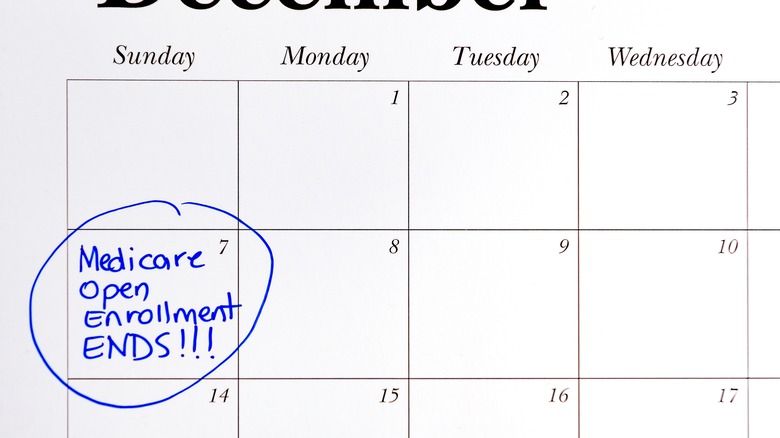
Perhaps the easiest way to lower Medicare costs is to enroll on time. Similar to private health insurance plans, Medicare sets a strict deadline for eligible beneficiaries to submit required information and choose a program. Missing this time limit opens you up to considerable out-of-pocket expenses if something should go wrong. Beyond this more obvious financial risk, retirees are subject to late-enrollment penalties for missing the Medicare deadline. What's worse, these fiscal punishments applied to monthly premiums don't go away even after successfully enrolling in a Medicare plan. Plus, the penalties rise the longer you fail to sign up.
The financial stakes are higher when you realize both Part A and Part B have their own late enrollment penalties, potentially subjecting retirees to two surcharges. Seniors late for Part A coverage may see their premiums spike by 10% — a punishment which could last double the amount of time enrollment was delayed. Signing up late for Part B could result in an additional 10% for every year delayed, according to the program's website. Premiums could also rise based on income levels. When you approach retirement age, it's vital to check for the most up-to-date enrollment timeline for Medicare to avoid these unnecessary expenses.
Stick with employer insurance

If you're still planning to make money after retirement, you may be able to delay Medicare enrollment without penalty. The program's usually strict timeline for signing up has a carveout for those seniors still covered by their employer's healthcare coverage. This exception prevents you from unnecessarily paying for Medicare, protecting your nest egg for potential future healthcare costs. Maintaining a few more years of income while saving on medical costs through employer-sponsored health insurance can reinforce your savings for your golden years.
With 11 million seniors in the job market, delaying Medicare coverage is becoming more common. In fact, the number of Americans 65 and older in the workforce has almost quadrupled since the 1980s, according to the Pew Research Center. Whether you or your spouse has coverage through a job-based group plan, you can delay coverage penalty-free. However, there are different considerations for each type of Medicare. If you contributed to Part A enough not to pay a premium, you can choose to enroll or wait until you exit the workforce without paying a fee. Since Part B comes with a premium, this is where the penalty comes into play. You can wait until you're done working and use the Special Enrollment Period (SEP) to obtain coverage.
Max out a health savings account (HSA)

Some of the effective ways for retirees to lower Medicare costs happen before enrolling in the program. Through a Health Savings Account (HSA), you can set aside tax-advantaged dollars throughout your professional career to help cover medical costs in retirement. Unlike retirement plans, which get hit with taxes at some point, an HSA offers trifold protection. You don't have to pay taxes on the money you invest, the growth of that investment, or the profits upon withdrawal. That means more padding in your nest egg. These healthcare-focused accounts come with considerable advantages, but there are some important restrictions to bear in mind.
Retirees can pull from HSAs to cover many types of Medicare expenses throughout retirement, but contributions aren't allowed after enrolling in the program. In other words, you can use existing funds in the account to pay for various medical expenses, yet adding more money is forbidden. The trick is to actively top up your HSA while in the workforce to maximize your healthcare savings. When you enter retirement, these funds can be used to cover a multitude of Medicare-related expenses, such as premiums, deductibles, coinsurance, and copays. Notably, retirees are barred from using HSA funds to cover Medigap payments, per Kiplinger.
Read your Plan Annual Notice of Change (ANOC)

Medicare is a mixed bag in terms of coverage. There are plenty of standard healthcare needs that the program provides for seniors. Still, Medicare won't cover some other medical costs. To make things more confusing, coverage changes year to year, requiring retirees to stay on top of their policies to ensure their plan meets their needs. Too much coverage means you're overpaying. Too little puts you at risk for surprise out-of-pocket costs. Either way, your nest egg is in a more precious position than necessary. Fortunately, Medicare simplifies the process by providing a Plan Annual Notice of Change (ANOC) letter.
This yearly document outlines any notable changes to your plans, costs, or coverage. You should receive the letter sometime in September, furnishing you with sufficient time to prepare. Instead of being sent by the government itself, your plan provider sends the ANOC. Be sure to contact your provider promptly if you don't receive the letter in time. When you get it, you should compare the coverage to your anticipated medical needs across the next year. This way, you won't overpay for what you don't need, and you'll be properly covered for what you do need.
Use Medicare-covered providers

Medicare shares many of the same parameters and features of private health insurance. As with standard medical coverage, Original Medicare coverage doesn't apply equally across all providers. The healthcare specialist you choose can determine how much you end up paying. Just as using an out-of-network doctor on a private plan opens you up to considerable cost, visiting a provider that doesn't take Medicare coverage in full or part could result in a surprise bill. Generally, providers fall into three main groups.
The first classification covers medical professional who accept Medicare assignment, meaning their charges won't exceed those set by the program. In the end, a retiree's out-of-pocket expenses are usually lower. The second group includes providers that only accept Medicare as a partial payment. These "non-participating" medical specialists make determinations on an individual basis, potentially requiring seniors to pay in full. Providers in the last category, where retirees face the steepest costs, are called "opt outs." These providers outrightly refuse to accept Medicare for anything, leaving the full cost of the service on the shoulders of the recipient. Before seeking medical coverage, make sure the doctor or specialist falls within Medicare coverage, so you don't end up paying out of pocket.
Use Medigap for heavy healthcare use and long-term care

As the name suggests, Medigap is designed to cover the gaps in Original Medicare coverage. This optional policy provides seniors with support for out-of-pocket expenses such as deductibles, coinsurance, and copayments from Part A and Part B. Furthermore, some Medigap options may offer coverage for foreign travel. Notably, Original Medicare doesn't place a cap on how much recipients can pay out of pocket, leaving some retirees with extreme medical costs. At the same time, Medigap is an extra monthly premium that's not essential for every person. To further reduce your Medicare costs in retirement, consider gauging how much healthcare you'll use throughout your golden years. The two instances where it might make financial sense to pay more for Medigap to offset potential future spikes in healthcare costs are chronic illness and long-term care.
The Centers for Disease Control and Prevention indicates that 75% of U.S. adults suffer from a chronic condition, and more than 50% have at least two of these long-term illnesses. Seniors who fall into this broad category may consider Medigap to counterbalance the extra costs associated with heavy use of medical services. The same may hold for those expecting long-term healthcare needs. Neither Part A nor Part B provides complete coverage for long-term medical care, among the most expensive health-related costs for retirees. According to Schwab, a staggering 70% of U.S. seniors 65 and older will require some type of long-term care for the remainder of their lives. The out-of-pocket costs for extended healthcare can be astronomical without proper coverage. In-home health aides can cost around $75,504, while nursing homes can reach $116,800. Under these circumstances, where retirees with many medical needs could face exorbitant out-of-pocket costs, Medigap coverage can help to lower their overall medical expenses.
Use preventive services

Generally speaking, a lot of healthcare savings can be secured before costs are even incurred. Put more plainly, the healthier you are, the less medical intervention is required. And, as a result, the lower your healthcare expenses. This isn't only a reality for the individual navigating the rising medical costs, either. This positive correlation between poor health and high medical costs exists on the governmental level, as well, encouraging leaders to push preventative care. A Deloitte study revealed that Medicare could cut its budget by $500 billion annually by reducing medical claim expenses.
To help the populace remain healthy and lower the program's financial burden, Medicare offers several wellness services to help retirees stay ahead of health problems. Typically, this preventive care comes in the form of screenings, lab tests, vaccinations, and general medical exams. For example, retirees can usually get colonoscopies, heart screenings, and various cancer tests without charge. Furthermore, routine shots against common illnesses, such as the flu, COVID-19, and Hepatitis B, are included, too. As long as you have Part B coverage and receive these preventive care services from a provider that accepts Medicare, you shouldn't pay a dime.
Apply for Part D Extra Help

On average, Americans spend $14,570 on healthcare per year. These eye-watering medical expenses, combined with Medicare's hefty premiums, put retirees in a financially strenuous position. Although far from generating the majority of healthcare expenses, prescription medication can take a significant chunk out of a senior's medical budget. According to the Centers for Disease Control and Prevention, more than 88% of U.S. adults 65 and older take prescription drugs. Despite this widespread need, this core component of medical care remains uncovered by Original Medicare, further elevating the already heightened cost of prescription drugs.
Fortunately, some Medicare recipients qualify for "Extra Help" — a federal program intended to help low-income recipients cover drug-related costs. Generally, seniors qualify for this financial assistance if they maintain income and resources below a set threshold. To be eligible, individuals must earn less than $23,475 and have resources worth under $17,600, per the program's website. Married couples have to make under $31,725 and have fewer than $35,130 worth of assets to qualify. If you're already enrolled in full Medicaid coverage or a Medicare Savings Program within your state, you might be automatically enrolled in "Extra Help," although it's smart to check to make sure.
Choose generic drugs

Original Medicare doesn't cover prescription drugs, leaving retirees in danger of footing the entire bill for their prescription expenses. That's where Part D enters the conversation. Medicare's drug coverage plan helps offset some of the costs of prescription medication. This optional coverage comes with its own late enrollment penalty, so retirees may want to consider enrolling preemptively. As previously discussed, the overwhelming majority of seniors are on some sort of prescription. You don't want to be surprised by a pricey medication without Part D coverage. When you're enrolled in Medicare's drug plan, you can still save money depending on the types of medications you choose. Part D can help pay for both generic and brand-name options.
National Geographic reports that non-proprietary prescriptions can save retirees 85% compared to their brand-name counterparts. Not only can seniors save on the overall cost of the drug, but their copayments are lower when opting for generic options. There's a popular misconception that brand-name medications are inherently better than their generic cousins. In reality, generalized versions include the most important ingredients that achieve the intended effect. The U.S. Food and Drug Administration indicates that generic drugs comprise 90% of completed prescriptions, highlighting their popularity. Again, it's vital to stay abreast of annual plan changes, as previously covered drugs may no longer be eligible, forcing more of the costs onto seniors.
Use Telehealth alternatives

Another way for retirees to reduce Medicare costs is to use telehealth options when possible. Medicare often applies the same cost-sharing structure to virtual and in-person appointments, but the principal cost is often lower for online sessions. Thus, seniors stand to save money. More specifically, telehealth services are covered under Part B. Although specifics vary based on the individual and the plan, retirees can qualify for Medicare coverage for virtual appointments with doctors, psychiatrists, and other specialists.
You'll find no shortage of professionals offering telehealth options, either. Harvard Medical School reports that the number of hospitals offering virtual appointments has more than doubled in the past decade, jumping from 35% to 76%. By taking advantage of Medicare's telehealth coverage, seniors can save on more than just copayments. The time and money you save having to drive back and forth from a doctor or specialist can add up quickly, especially if you live in one of the states with the highest gas prices. Of course, virtual alternatives should only be used for non-emergency situations that don't require immediate attention. It's always prudent to check with your healthcare provider beforehand to determine what telehealth options are covered.
Enroll in Medicare Savings Programs

Many seniors are surprised to find out that the government provides financial assistance to those struggling to cover essential medical expenses. Although the assistance is mainly federally funded, states are often tasked with administering those benefits. Through a Medicare Savings Program (MSP), qualifying seniors could receive support for copayments, coinsurance, and deductibles for both Part A and Part B. Similar to other forms of financial support, state governments want to see proof of income and resources below a set limit to ensure the funds go to those who truly need them.
MSPs come in four different forms. A Qualified Medicare Beneficiary (QMB) received the most support, with the entirety of Original Medicare potentially covered. A Specified Low-Income Medicare Beneficiary (SLMB) and Qualifying Individual (QI) can both get assistance with Part B premiums. A Qualified Disabled & Working Individual (QDWI) is a highly specific categorization that helps pay for Part A premiums. Each of these forms of MSP has its own unique requirements. It's recommended to check your availability far in advance of enrollment to secure your assistance.
Avoid IRMAA charges by monitoring income

The income-related monthly adjustment amount (IRMAA) is one of the most burdensome health care cost surprises that can sneak up on you in retirement. Some high-earning retirees may be subject to this premium tacked onto monthly Medicare payments. IRMAA is an income-adjusted surcharge designed to give the federal government more funding without raising Medicare's base costs. This additional surcharge only pertains to Part B and D. If you earn more than $109,000 individually or $218,000 filing jointly, these extra charges apply. In 2026, impacted recipients could see monthly costs reach up to $689 for Part B and $91 for Part D, according to Kiplinger.
There's no way to avoid IRMAA charges for high-earning retirees in the outlined income brackets. However, seniors can manage their income leading up to retirement to ensure they're not impacted by this additional cost. Medicare looks at federal income from the two years in the past. So, an enrollee's IRMAA status in 2026 will be determined by looking at their 2024 income. If you've already been hit with IRMAA premiums but have seen a considerable income decrease, you can file a reduction through a Form SSA-44 to have the government reconsider your status and the associated fees.
Double-check medical bills

Medicare is the second-largest federal program by expenditure, only falling behind the extraordinary cost of Social Security. In 2024, Medicare accounted for 3% of the federal budget, even ahead of defense spending, according to the Congressional Budget Office. Total costs reached $865 billion, and these expenses are expected to rise in the future. The sheer scale of the ambitious program makes it vulnerable to inaccuracies and outright scams. The National Council on Aging estimates that the program is subject to $60 billion worth of losses annually due to abuse and mistakes. While some of these irregularities hit the federal budget, seniors are also potential victims.
To avoid overpaying for medical bills, Medicare advises seniors to check their medical statements and bills carefully and to follow up regarding any discrepancies quickly. Unforeseen costs can be mitigated by double-checking what your plan does and doesn't cover. Furthermore, retirees are reminded that Medicare never reaches out to recipients via phone or in person. It's always prudent to keep your most sensitive Medicare-related information private, such as your Social Security number, Medicare number, or Medicare card, per the program's website. As with all medical costs, a little due diligence can help save you from considerable costs.