

The Most Expensive Sports Betting Scandals In Recent US History

The American sports landscape is filled with excitement and unpredictability. Almost no one can make the leaping catches that receivers like Calvin Johnson or Randy Moss could muster. Very few will ever match Aroldis Chapman's 105-miles-per-hour pitch, and an entire movie is dedicated to the insane skill of bending it like Beckham. Placing real life on the backburner for a while to witness these superhuman achievements or watch our favorite teams win championships has long been a human pastime, and placing wagers on the outcomes has been around for nearly as long.
Ancient Egyptians were betting on dice games upwards of 6,000 years ago, and the practice has only become more sophisticated since. In 2018, the longstanding ban on sports betting in America came to an end. With this change came a booming new industry that exploded far beyond gambling havens like Las Vegas. Sports betting influences the economy in a myriad of ways, which is no surprise considering people have made hundreds of billions of dollars in bets since it was legalized. Of course, with that much money involved, the darker side of sports betting has only gotten more prominent. There have been many instances of both teams and individual players feeling the pressure to cheat in the name of a quick buck — and not everyone gets away with it. These sports betting activities are infamous for their sophistication and financial value, often placing a black mark on otherwise incredible achievements.
The infamous Black Sox scandal of the 1919 World Series
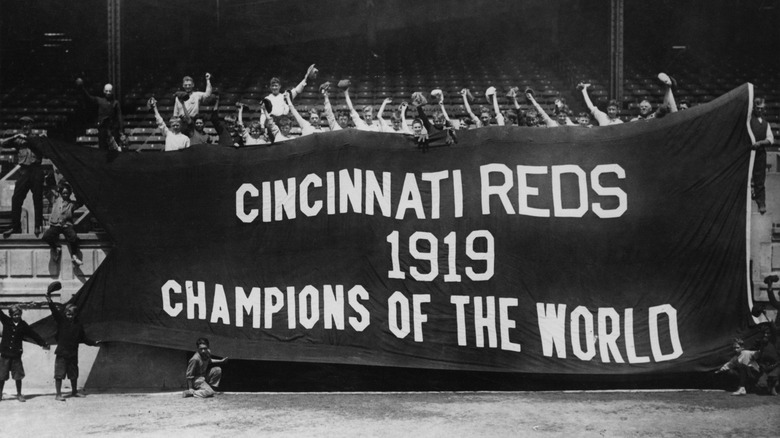
The 1919 World Series was famously fixed by eight players on the Chicago White Sox, resulting in the group being nicknamed the "Black Sox." Many believe that a prominent criminal personality, Arnold Rothstein, may have led the gambling syndicate that directed the actions of these players. Prominent among the group was the legendary "Shoeless" Joe Jackson, an outfielder who played for 13 seasons and batted .356 for his career. He amassed 62.2 wins above replacement, and had already made it as a World Series champ with the 1917 White Sox ahead of the Black Sox scandal. A total standout, he'd be a clear Hall of Famer had he not participated in throwing the 1919 Fall Classic.
At the time, players had virtually no bargaining power, and free agency was nonexistent. In this largely union-less era, players would be blackballed from the league if they refused a contract, so they were frequently underpaid. The White Sox of the day were immensely talented, but owned by a former player hated by his team. In this atmosphere, it's easy to see why a group of players representing the heavy favorite might defect for a healthy payday and stick it to their owner. Details of the scandal suggest that the eight men were promised, but not fully paid, $100,000 in total — roughly $1.5 million today. At least one person, Rothstein, made out big on his bet for the underdog Cincinnati Reds: It's believed he made roughly $270,000 — $5.2 million in today's dollars — in winnings.
Guardians pitchers were indicted for influencing prop bets
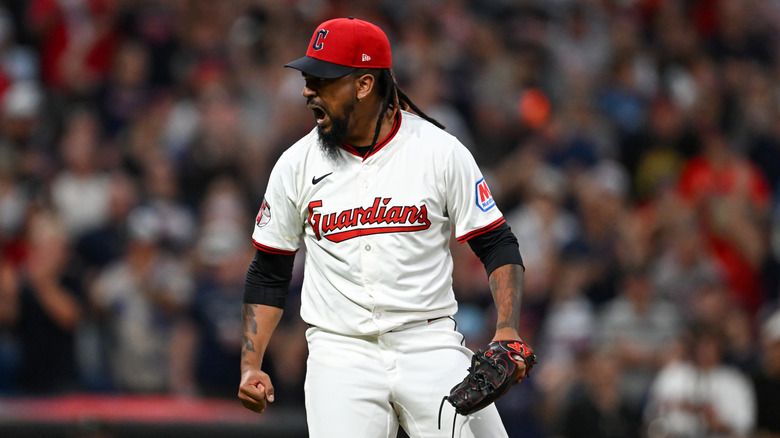
Just before the 2025 trade deadline midway through the season, two of the pitchers on the Cleveland Guardians were placed on administrative leave. Luis Ortiz, a member of the starting rotation, and Emmanuel Clase, an elite closer, were accused of intentionally throwing oddly selective pitches to influence prop and parlay bets.
Though many have an idea of how parlay bets work, the prop bet marketplace is relatively new to the American sporting landscape. These are bets involving specific occurrences within a game, as opposed to an overall outcome like the final score or winning team. After the 2025 season completed in early November, both players were indicted. Clase and Ortiz pleaded not guilty, with a trial date set for early May 2026. Over the course of roughly two years, Clase, in particular, was seemingly walking into games and spiking pitches to accommodate the bets of parties in the Dominican Republic; Ortiz allegedly got in on the action in 2025. They'd deliberately throw bad pitches so they'd be called balls instead of strikes. Their actions allegedly won their benefactors upwards of $500,000 in prop bets. The indictment reports each player was paid $12,000 for rigging games this way in 2025. If that was a standard rate, their compensation over the course of several years could have easily reached the hundreds of thousands.
2006's Operation Slapshot involved some high-profile bettors
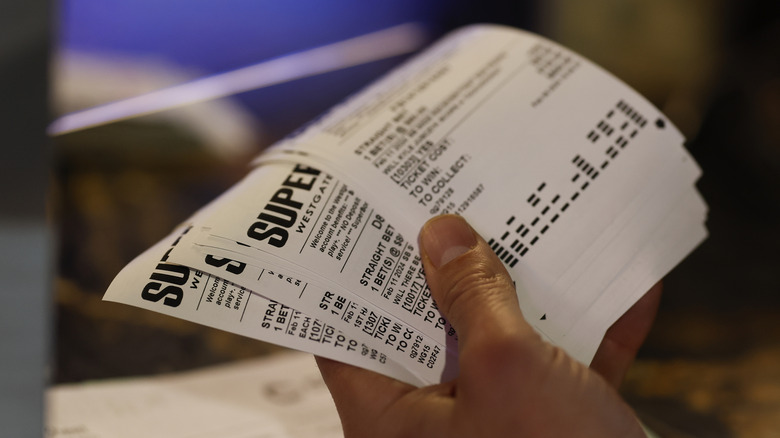
The New Jersey State Police busted a betting ring in 2006 in a sting dubbed "Operation Slapshot." The bust involved more than 1,000 bets made illegally and involved the likes of high-profile participants including actress Janet Jones — wife to hockey legend Wayne Gretzky — that was led by a New Jersey state trooper and NHL coach Rick Tocchet. Gretzky himself is alleged to have known about the ring, though he's not believed to have been directly involved. Several active NHL players at the time were implicated in the ring, which may have had ties to a Philadelphia crime family, but they all claimed to have avoided betting on hockey personally. In total, the proceeds of these illicit wagers amounted to at least $1.7 million.
The activity was illegal at the time, and with more than 1,000 bets reportedly placed over a 40-day period, the size of the operation was pretty staggering to authorities. James Harney, the affiliated police officer, resigned from his post, pled guilty, and was ultimately sentenced to five years in prison — the same amount of time he and Tocchet allegedly ran the ring together. Tocchet also pleaded guilty. Nearly 20 years after the fact, the result is a fairly underwhelming scandal when viewed through a more modern lens in which betting in America has become legal, widespread, and highly advertised.
Pete Rose's life on the edge cost him more than a reputation
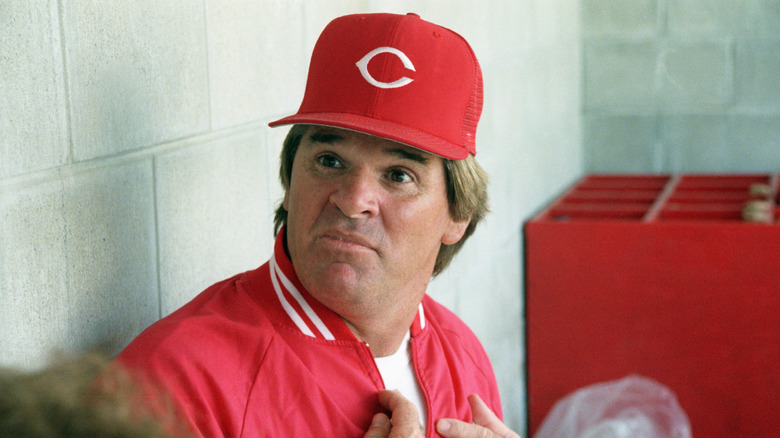
A personality that needs little introduction, Pete Rose lived his life in the fast lane. Famously nicknamed "Charlie Hustle," Rose got his start playing for the Cincinnati Reds. A local kid with a non-stop engine, the Topps 1963 split rookie card featuring Rose is a valuable collectible some may still have hiding in their closet. Rose is the undisputed hit king of major league baseball, and carried a .303 batting average through a lengthy 24-year professional career. He was an All-Star 17 times, and won the World Series on three occasions. His stats page is littered with league-leading figures and he even spent time as a player-manager at the tail end of his time in baseball.
That period in the sun came to a screeching halt, however. Rose died in 2024, and from the time he left the game until his death, he has advocated tirelessly for reinstatement after being barred from the sport completely for his betting addiction. Specifically, Rose was found to have bet on games he was managing. The lifetime ban he received in 1989, by his own estimation, cost him roughly $100 million in lost opportunities. At one time in his betting career, Rose is believed to have owed bookmakers around $750,000, per Rolling Stone. He's also been accused of sexual assault and numerous other appalling acts of poor conduct, further reinforcing many people's belief that, even though Rose was a generational talent on the diamond, he shouldn't be in the Hall.
Tim Donaghy spent years betting on games he rigged himself
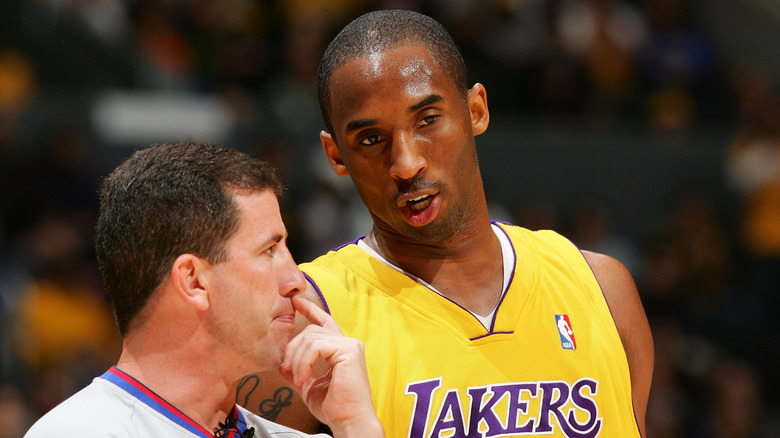
Tim Donaghy is a disgraced NBA referee who ultimately spent time behind bars for his efforts to fix games he was overseeing. He was paid as much as $5,000 per game he influenced, and made roughly $300,000 in total from gamblers acting on the knowledge of his involvement. Donaghy also bet on games he was refereeing, earning him as much as $100,000 in winnings. Working with James Battista, a friend he knew from childhood, Donaghy's picks were bet on heavily, with Battista putting down as much as $1 million on each game Donaghy signaled he was planning to influence.
His illicit behavior started in 2002, with bets placed on NFL games, but this quickly transformed into much more than just wagers. Before long, Donaghy decided to start manipulating NBA games that he himself was refereeing. Things escalated quickly, and court documents showed that, in 2003, he bet on just two or three games in which he was on the court. The next year, that figure rose to as many as 40. Soon, he was working his magic as a point-shaving menace as information on outcomes was relayed back to his co-conspirators. Donaghy was ultimately busted in 2007, and his actions are now the subject of a segment of the Netflix documentary series "Untold."
Gambling addiction landed Art Schlichter in prison
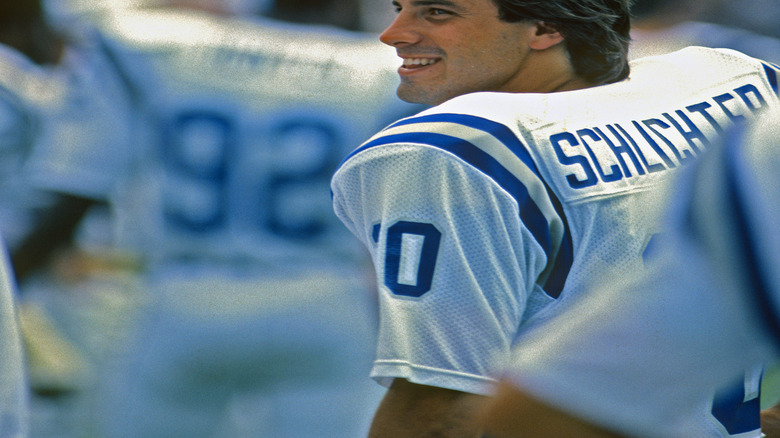
While chasing huge sports betting wins, NFL quarterback Art Schlichter has followed a destructive path for many years. In his first season as a player, Schlichter quickly began racking up significant gambling debts. He was a longstanding gambler at a time when the practice was largely illicit, and his addiction was frequently insatiable. Schlichter only spent three seasons in the league in the early 1980s, and was suspended during his sophomore campaign as a result of violating the league's gambling policy. Schlichter played in 13 total games, and his short career was cut even leaner by his penchant for gambling on games while a member of the league.
The addiction only grew more malignant over time, and roughly a decade after falling out of the NFL, he was jailed for stealing $500,000 to feed his addiction. He has also been found to have stolen $16,500 from his sister-in-law and has lost somewhere in the neighborhood of $2 million to his habit through 2020, according to Columbus Monthly. More recently, he was engaged in new fraud schemes to help support the habit and owes over $2.2 million to victims. In these efforts, he defrauded ticket buyers, including the widow of the former CEO of Wendy's, to the tune of over $1 million. Drug problems have also followed Schlichter in the past, and, in 2025, he was sentenced to probation after pleading guilty to felony drug possession charges.
Stevin Smith's point-shaving operation earned millions
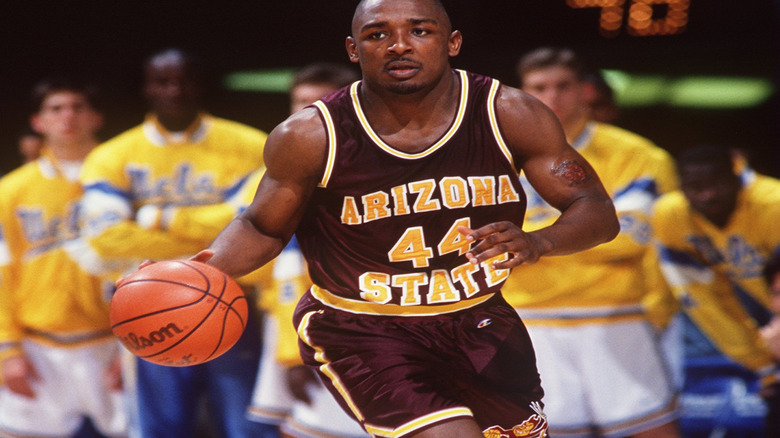
Many people engaging in sports betting might look for long odds and other small bets that can really pay off, but if you've got a man on the inside, it doesn't take much luck or knowledge of the game to make a quick buck. Arizona State University basketball player Stevin Smith was a gambler himself, and had accumulated a debt to a fellow student and bookmaker on campus of around $10,000 while playing for the school in the early 1990s. In 1994, Smith agreed to influence the final score of games he was playing in to help the bookmaker, Benny Silman, earn his money back.
Smith didn't throw games, but would instead pull up short for brief periods during games his team was winning in order to keep the score just close enough to impact the spread. Bets featuring a point spread aren't a binary win or loss decision. Instead, a team can lose but keep the score close enough for a bettor placing a wager on the group to come out a winner. In this way, Smith was helping his co-conspirator by keeping the game's final score to within the spread figure. In addition to erasing his debts, Smith was paid $20,000 per thrown game over the course of four games. In his book "No Grey Areas" about the scandal, co-conspirator Joseph Gagliano reported the scheme earned the parties involved around $2.5 million in profits (via Cronkite News).
Shohei Ohtani's interpreter stole almost $17 million
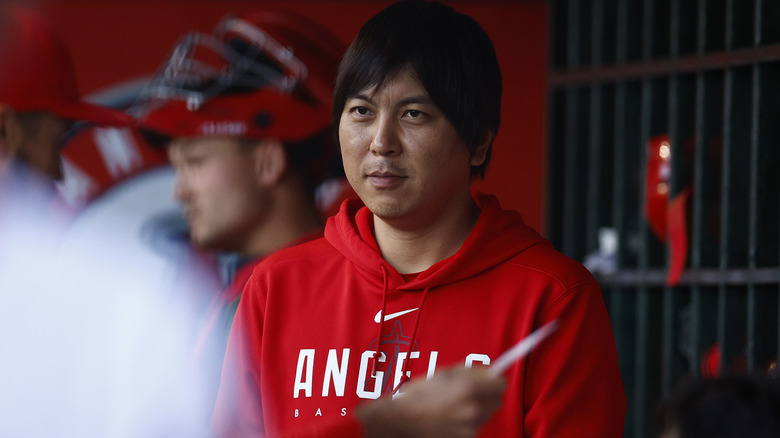
In early 2025, Ippei Mizuhara was sentenced to almost five years in prison for his illicit gambling activities and the related fraudulent acts that financed the habit. Mizuhara isn't likely a name that even avid baseball fans would have recognized until it was thrust into the spotlight before the 2024 season began. Shortly after perhaps the biggest star in professional baseball today, Shohei Ohtani, signed a record-breaking $700 million contract to leave the Los Angeles Angels and don some Dodgers blue instead, news broke that his longtime interpreter had been stealing money from him to fund a gambling addiction. Mizuhara had engaged in a raft of fraudulent activity to gain access to Ohtani's accounts, including impersonating the superstar on the phone to the bank.
The longtime confidant and friend of the MLB legend ultimately siphoned off close to $17 million from Ohtani's accounts. The scheme almost certainly would have continued if not for a federal sting against the illegal bookmaker that Mizuhara was working with to place his bets. Mathew Bowyer, the bookie, was also sentenced to a prison term in 2025, though his is only set to last a year. Early in the investigation, there were questions about how much the Japanese superstar knew about the activities, or even if Mizuhara was betting on his behalf. However, the court clearly found that wasn't the case when it sentenced Mizuhara to over four years' hard time in addition to requiring that he pay $18 million in restitution.
Over 180 tennis players participated in match-fixing

NPR reported in 2023 that a network of over 180 tennis players had been drawn into the net of a worldwide match-fixing ring operating between 2014 and 2018. Much like the conditions that led to the Black Sox scandal, a law student in Belgium uncovered that there's a community of professional tennis players making almost no money to compete. Specifically, NPR reported that players on the International Tennis Federation (ITF) tour earned as little as $2,000 for winning a tournament. For reference, the U.S. Open paid the winner $5 million in 2025. There's a sliding scale of earnings in any professional sport, but when betting opportunities collide with particularly paltry salaries and winnings, it can form a natural breeding ground for collusion.
With tens of thousands of matches happening throughout the year and prop bet opportunities built into tennis' betting architecture, lower-level players were enticed to throw specific points or sets rather than whole matches. Match-fixing operations appear to be a thriving sub-business in the tennis world. BBC reported in 2016 that gambling syndicates working with match fixers can make as much as £250,000 on each match, and even Serbia's Novak Djokovic, formerly the top-ranked tennis player in the world, reported he was once offered £110,000 to fix a match.
Phil Mickelson's gambling career allegedly broke 10 figures

One of the most prominent names in professional golf, Phil Mickelson is a well-known gambler with a penchant for extreme wagers. In his 2023 book "Gambler: Secrets from a Life at Risk," professional gambler Billy Walters alleged that Mickelson has wagered over $1 billion across 30 years of betting on football, basketball, and baseball games. In just a short span of time, Mickelson apparently placed nearly 1,000 individual bets of $220,000 and more than 1,100 bets at $110,000. Mickelson is sadly a man known to suffer from a pervasive gambling addiction, and his losses are estimated to be around $100 million (via ESPN).
Mickelson's extreme level of activity and huge dollar figures are enough to capture attention, but the most salacious event in his long history of wagering has to be the allegation that he tried to place a $400,000 bet on a Team USA victory at the 2012 Ryder Cup. Mickelson was actually competing in the tournament, and though Walters claims to have refused to place the bet for him, he's unsure if Mickelson was able to find another willing party to do it instead. Either way, the U.S. lost the Ryder Cup that year, and a massive bet in his team's favor would have undermined the sport and added significantly to Mickelson's gambling losses. In other Mickelson news, even though he has never faced legal troubles, he was linked to illegal gambling operations (and one mob-related outfit) in court documents from 2015 and 2007. More recently, Mickelson proudly says that he hasn't bet in years.