

Buying These Japanese Cars Could Cost You
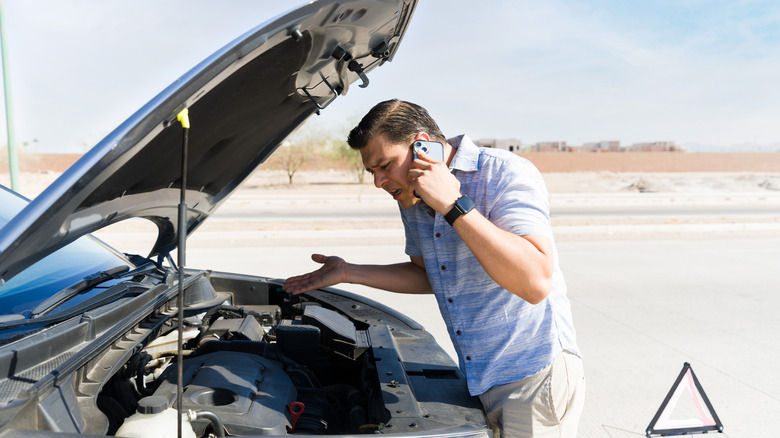
Japanese cars have a long-standing reputation for reliability, good engineering, and relatively low ownership costs. For many buyers, that reputation alone is enough reason to choose a Japanese badge over European or American alternatives. However, savvy buyers know that this reputation does not apply evenly to every model that leaves the factory floor. Japanese reliability does not always mean low ownership costs, and some models demand a larger financial commitment than buyers expect.
Long-term ownership data shows that certain Japanese cars are relatively more expensive to maintain and run than their reputation implies. The costs rack up because of issues such as poor fuel consumption, specialized maintenance, scarce parts, and or complex engineering. Buying one of the Japanese cars that fall into this category isn't necessarily a huge mistake, but buyers should be clear on how much of a financial commitment is involved.
A complete list of the Japanese cars to avoid isn't easily compiled, but a few models stand out. To make a list like this, we considered financial data, including info on cost-to-own, car insurance trends, and long-term maintenance figures. We referenced automotive databases and publications such as Edmunds, CarBuzz, Car and Driver, and RepairPal in our work — sources that rely on real-world ownership data and industry-standard testing. Using repair databases, buyers can also identify specific mechanical flaws that significantly drive up ownership costs. The cars highlighted in this list are not necessarily "bad," but those with specific engineering complexities or flaws that make them surprisingly expensive to maintain compared to the average Japanese commuter car.
Nissan GT-R
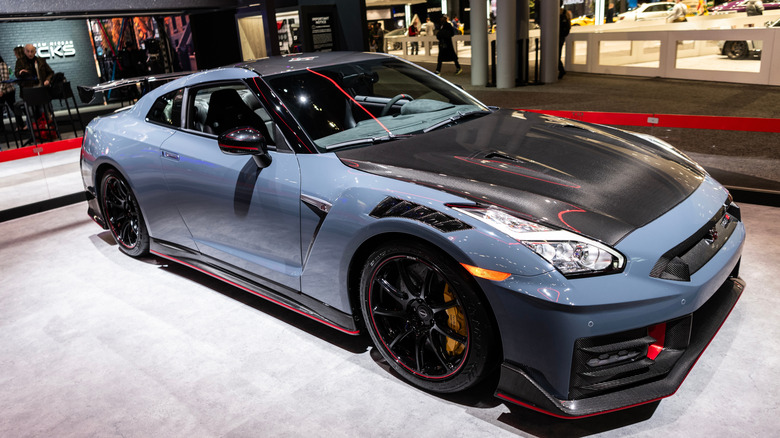
This car is often called a "supercar killer" because it offers performance that rivals supercars such as Porsche and Ferrari but for a fraction of the price. On paper, that makes the GT-R look like a steal. Looking specifically at 2018 models, the Nissan GT-R started at around $99,990, while rival cars such as the 2018 Porsche 911 Turbo and 2018 Audi R8 had starting prices of approximately $161,800 and $164,900, respectively. It's true that you might save nearly $65,000 on the initial purchase, but the reality after that is the same as maintaining a high-performance, exotic vehicle.
The running costs for the GT-R model are much higher than those of a regular Nissan. According to Edmunds data, the five-year ownership cost for a newer GT-R can easily go above $80,000 when you factor in value depreciation, insurance, and maintenance. In contrast, Edmunds rates a standard Nissan such as the 2021 Nissan Versa at under $35,000 over the same five-year period. This gap in cost comes from specialized needs. For example, transmission fluid changes can cost several thousand dollars due to the GT-R's specialized dual-clutch setup. Also, the tires and brakes wear out quickly under normal driving conditions, with a full set of tires ranging from $1,200 to $2,500. This is even more so if you intend on taking it to the track once in a while.
Insurance costs are similarly high and range anywhere from $1,500 to $3,000, as they factor in both the repair complexity and replacement value. While the GT-R wears a Nissan badge, it stands out because it does not share the brand's affordability.
Toyota Land Cruiser V8
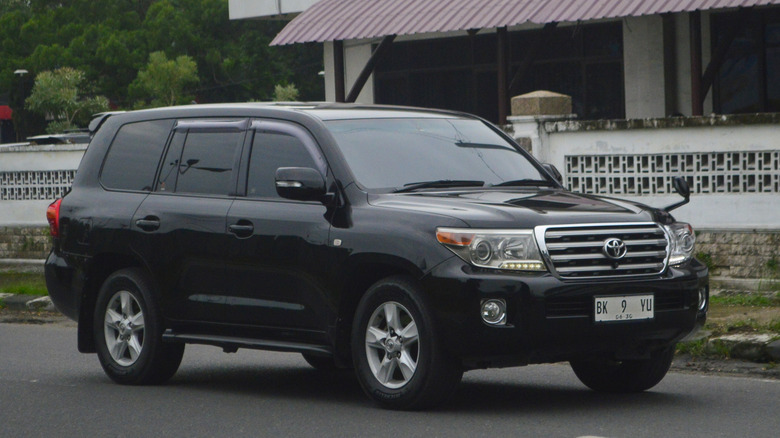
Often cited as one of the most reliable cars ever built, and for good reason, this car is known for running hundreds of thousands of miles, if properly maintained. But reliability does not mean low ownership costs, especially for the Land Cruiser's V8-powered variants. These models are large, heavy, and powered by engines designed more for durability than cost-effective operation.
Edmunds' cost-to-own estimates show that fuel expenses alone are well above average. Over a five-year ownership period, you can expect to spend over $17,000 on fuel. In comparison, a Toyota RAV4 uses about $8,000 in fuel over the same period. Considering a recent Toyota Corolla goes for about $21,500, the Land Cruiser's fuel expense alone is nearly the price of a second car.
Car and Driver also highlights the Land Cruiser's poor fuel economy, noting that it fell short of EPA expectations by returning about 21 mpg in combined highway and city testing instead of the 23 mpg it was rated for. Additionally, although the Cruiser's replacement parts are built to last, they carry price tags designed for the luxury market. RepairPal rates the Land Cruiser's average annual repair costs at $843, significantly higher than the $441 average for all Toyota models. Also, its V8 engine requires more oil at 8.5 quarts per service and heavy-duty components because of its large size, all of which increase service bills.
Mitsubishi Eclipse
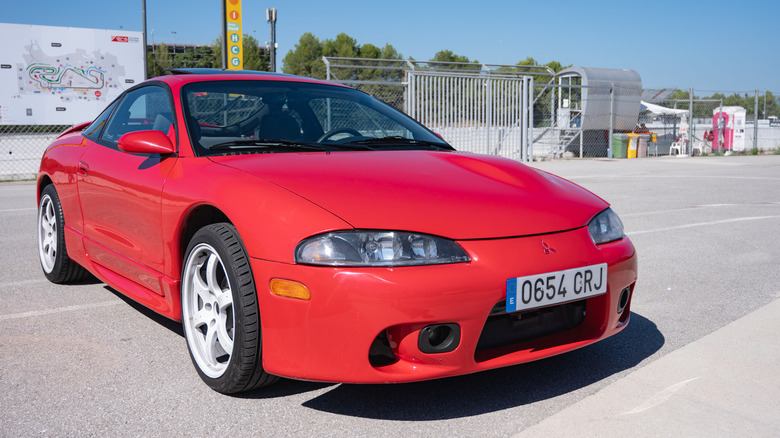
Discontinued in 2011, the Mitsubishi Eclipse is more appealing on the used market because it is relatively cheaper to buy today. However, its age brings with it complications. Edmunds notes you can get an Eclipse 2011 model for about $6,000 today, but that purchase would also mean dealing with parts scarcity, which drives up the cost to own. Mitsubishi's dealer network in the U.S. has shrunk significantly over the last decade. Because of this, finding OEM parts for a discontinued model means sourcing them from international suppliers or paying much more for what little stock you can find within the country.
Aside from parts scarcity, Mitsubishi Eclipse owners face issues such as sunroof failures and costly timing belt services for the V6 engines, particularly on the last released fourth-generation models. Timing belt replacement services can cost up to $900, depending on where you have it changed and the severity of the problem. Sunroof failure costs are also a common issue to fix. If the tracks and cables of the sunroof bind or break, repairs typically cost between $300 to $1,000.
The Mitsubishi Eclipse is one car that requires you to be a mechanic or have deep pockets for labor. Despite its initial budget-friendly image, a major repair on it could cost as much as 20% of its value.
Subaru WRX STI
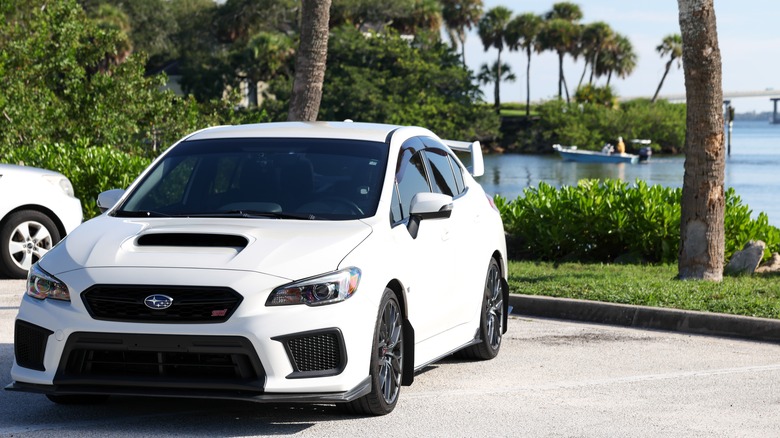
The Subaru WRX STI is a rally icon and has built a cult heritage following thanks to that. It's particularly loved for its turbocharged boxer engine and all-wheel drive. Unfortunately, that same engine has a reputation for a catastrophic issue known as "ringland failure," which occurs when the lands between the piston rings crack under pressure.
The turbocharged boxer engine is powerful but sensitive, especially when maintenance schedules are not strictly followed or when the car is driven hard. RepairPal also notes that spark plug misfires, a failed knock sensor, and even a full engine replacement are common, and that they could cost between $5,000 and $6,500. Similarly, CarEdge estimates that annual maintenance and repair costs for the WRX STI are higher than average for compact performance cars, so even preventive maintenance costs a lot in the long run.
The WRX STI model has also shown reliability concerns on older models, as the 2023 model saw a recall for a loose battery terminal that could cause power loss while driving. AutoNation estimates the average battery replacement cost at just over $309. Fuel economy is another concern. The STI's performance-focused setup results in an EPA-rated 16mpg in the city. By comparison, a standard Subaru Impreza achieves 28 mpg in the city, making the WRX STI look like a car that delivers excitement but demands careful and consistent spending to keep it healthy.
Mazda RX-8
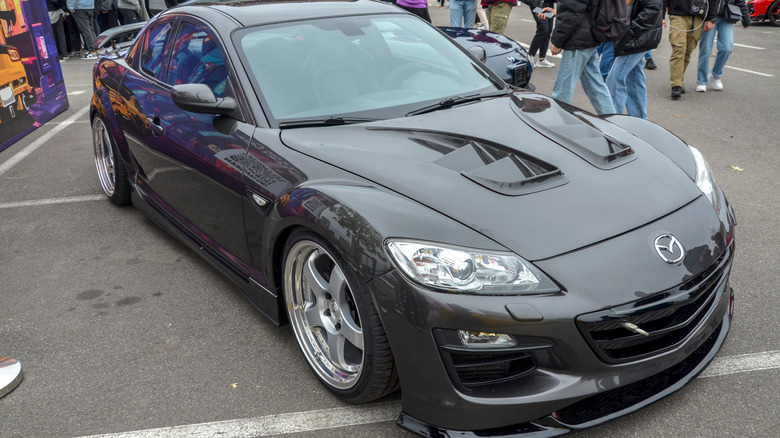
The Mazda RX-8 gives a good driving experience thanks to its renowned rotary engine, lightweight chassis, and balanced handling. However, that 1.3-liter Wankel Renesis rotary engine is what could make this Mazda expensive to own over time. Unlike a standard piston engine, the rotary engine is designed to consume oil as part of its daily operation, and inconsistent oil changes could lead to engine damage much faster than in a traditional vehicle.
While Mazda has some reliable cars, the same cannot be said for this car. MazdaProblems ranks it 11th out of 19 Mazda Models because of premature engine failure and power steering loss. Another cost burden of the RX-8 is fuel consumption. The 2010 RX-8 with a 6-speed manual gets just 16 mpg (city) and 22 mpg (highway). By comparison, the 2010 Volkswagen Golf R with a similar 6-speed manual delivers a far more efficient 29 mpg city and 39 mpg highway, making the RX-8 significantly more costly to drive. Specifically, you are paying V8 fuel prices for a 4-cylinder performance.
You can find an RX-8 for upwards of $8,000, depending on the model and year. While this low upfront cost seems cheap, other costs quickly stack up. Rebuilding an RX-8 engine, which is notably prone to seal failure and housing wear, can cost up to $6,000, depending on the condition of the rotors and their housing.