

The Home Depot Theft Ring That's Even Crazier Than It Sounds
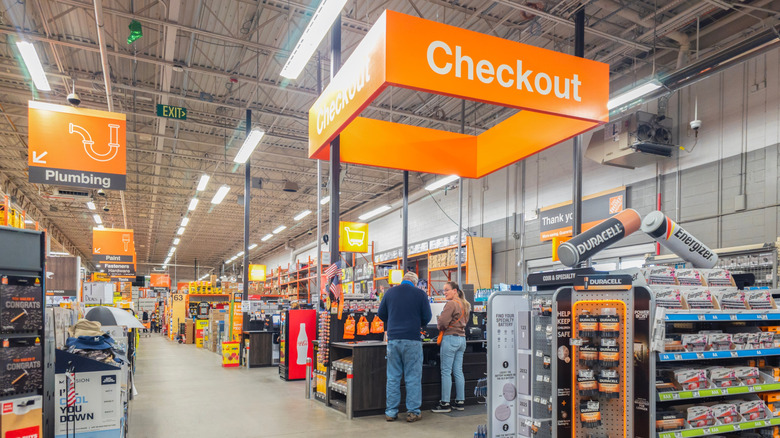
According to a report from Capital One Shopping, stores all over the nation are expected to lose $47.8 billion in retail theft in 2025. That would be more than $2 billion more than the $45 billion in theft reported in 2024. In addition, there's been a 93% increase in shoplifting events in 2023 compared to 2019.
And people in the retail industry expect things to get worse. Per a 2025 National Retail Federation (NRF) report on the impact of retail theft, 53% of retailers believe that shoplifting and merchandise theft will trend higher. In comparison, just 25% felt that flash-mob-theft-type incidents would go up.
So, perhaps the real crazy thing about the recent bust of a theft-ring that stole at least $2.2 million worth of goods from Home Depots in nine states was that the amount is just a drop in the bucket. What's also crazy is that there are a lot of groups who make a living stealing from stores out there. Retailers told the NRF in 2025 that organized retail crime (ORC) incidents, which involve multiple thieves working together, have gone up 52% in the past 12 months. Nevertheless, New York State Police Superintendent Steven G. James hopes that the case will send a message that "if you engage in retail theft, we will find you and hold you accountable to the full extent of the law," according to a press release from Queens County District Attorney's Office.
The alleged thieves met regularly and sometimes hit the same Home Depot store multiple times

According to a release from Queens District Attorney Melinda Katz, 13 defendants were charged with grand larceny, conspiracy, and criminal possession of stolen property. Per the statement, they took part in a criminal enterprise that stole items from Home Depots and then resold them via a Brooklyn black market storefront or Facebook Marketplace. The 319 documented thefts occurred over a 13-month period at 128 The Home Depot stores located in New York, New Jersey, Connecticut, Massachusetts, Rhode Island, New Hampshire, Pennsylvania, Maryland, and Delaware, Katz told reporters in a press conference (via New York Post).
Prosecutors said the Home Depot thieves would meet with the ring's alleged leader, Armando Diaz, in a parking lot in the East Elmhurst neighborhood of Queens early in the morning every day to figure out the day's "hits." Their method of operation was to send three or four thieves into a particular Home Depot, while Diaz, who waited in a van near store exists, provided instructions through their earbuds. Stolen items were then put into a 96-gallon garbage bin or a cart and wheeled out of the store. Crew members would also distract employees so the thieves could leave with the stolen goods without detection.
The alleged thieves, who ranged between 29 and 61 years of age, would take breaks for lunch and sometimes steal from the same Home Depot up to four times a day, prosecutors said.
An assortment of Home Depot items was stolen, though many items were recovered
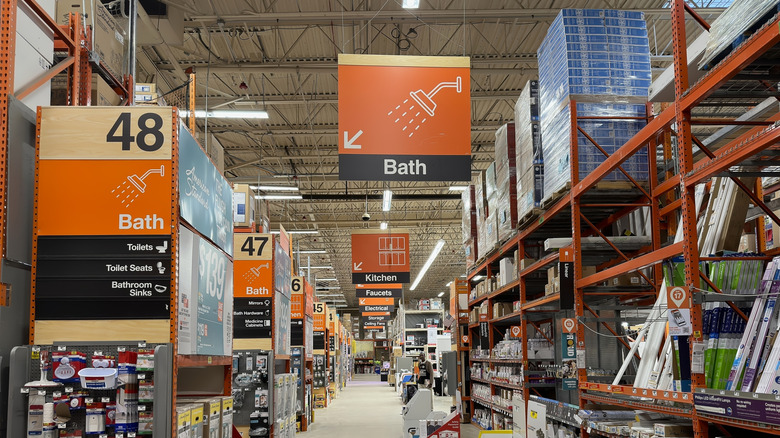
Unlike the man who allegedly bought $65,000 worth of alcohol with stolen credit cards and targeted expensive liquor brands, the Home Depot thieves swiped a wide variety of items. These included smoke alarms, air conditioners, lithium-ion batteries, copper wire, insulation, saws, heat guns, Bluetooth speakers, bolt cutters, handheld blowers, heavy duty tape, rechargeable flood lights, roof coating, bolt cutters, laundry detergent, and paper towels, prosecutors said.
About $1.5 million worth of those stolen items, though, were recovered through a court-ordered search of three homes, 14 storage units, and eight vehicles, the DA's release said. Scott Glenn, Home Depot's vice president of asset protection, expressed his appreciation. "For years, this prolific organized retail crime resulted in multimillion dollar losses for The Home Depot," Glenn said. "Though this crime ring was exclusively focused on The Home Depot, organized crime is a significant problem for large retailers and communities nationwide."
Indeed, New York Governor Kathy Hochul made it clear that theft rings are partly responsible for price jumps for essential household goods. "...The bottom line is, there are people spending every waking hour trying to figure out how to rip off other people, and the result is your prices are higher than they ever should have been," she said at a press conference.