

Retirees Should Avoid These Crypto Mistakes At All Costs

The cryptocurrency universe is an exciting and dynamic space. Sputtering to life in the early 2000s, Bitcoin spent years as a quirky financial alternative to fiat currency that cryptographically minded individuals toyed around with as a hobby. But in 2013, crypto went from a niche investment trend to something that might actually be worth collecting, hoarding, and trading. It was that year the Bitcoin's value first reached $100 per coin, and then $1,000. For context, it had only broken $1 per coin in 2011. Numerous other cryptocurrency assets have come along since, and many feature prominently in investors' total holdings. As of 2025, Security.org estimates as many as 28% of American adults own at least some cryptocurrency.
Now that the commodity's so commonplace, it's only natural that retirees would develop an interest in crypto, and maybe even invest in it themselves. And, to their credit, there's a lot to like about cryptocurrencies. For starters, the asset group's penchant for supercharged price surges is something that every investor is sure to love. But retirees are particularly susceptible to some of cryptocurrency's more menacing pitfalls, and falling victim to them can be uniquely damaging to older investors. So, avoiding these sticking points should be at the forefront of any retiree's mind if they're seriously considering the purchase of bitcoin or any other crypto asset.
Neglecting to add crypto to a tax-advantaged account

There are a wide range of tools available to investors seeking access to cryptocurrency today. This wasn't always the case, but modern traders can bring crypto assets into their portfolio with the help of many standard financial platforms that they already use. Robinhood has been a longtime source of trading access for individual investors, including those who buy and sell cryptocurrencies. You can also buy cryptocurrency through PayPal and many other mainstream resources. However, in most standard consumer interactions with these kinds of personal finance tools, cryptocurrency buyers won't be adding assets to their tax-advantaged retirement accounts. Whether you're someone seeking to add cryptocurrency to your retirement portfolio as a saver or a retiree seeking to diversify your assets, buying into the market via the right kind of account is critical.
Surprisingly, there are plenty of options available for investors looking to bring cryptocurrency into their IRA or 401(k) accounts. You might also consider using a self-directed IRA to accomplish this task. If you fail to add cryptocurrency to the correct account type, you're setting yourself up for expanded tax liabilities. If you are successful in ballooning the value of your investment, failing to use something like a Roth IRA or 401(k) will see you paying extreme tax additions when you decide to sell or draw on the proceeds.
Buying into the crypto craze without doing your research

Research is important for any kind of investment, but when it comes to cryptocurrency, a significantly larger volume of research is frequently required of newcomers. Cryptocurrency is a completely different kettle of fish from even its closest comparable asset in the forex market. As such, no investor can be completely confident in their ability to trade the tool without doing the research necessary to understand it on at least a basic level. Because this asset class is built upon relatively new technology and remains an exceedingly young financial product, many retirees will find themselves at a marked disadvantage when it comes to their knowledge base.
But the problem in the research department goes deeper. Cryptocurrency is a relatively new asset, and it's famously complicated. Someone might be able to give you a quick rundown about why a certain company's doing well enough to back, and the elevator pitch for investing in something like gold or bonds might be pretty straightforward. However, it can be a lot more challenging to build a fundamental understanding of crypto. It's a dynamic asset that requires extreme attention to detail. If you aren't totally knowledgeable about the way a tool like cryptocurrency behaves, buying into it could leave you particularly vulnerable. If you can't take your and really educate yourself about your potential investment, your money might be safer going toward something else.
Not fully understanding your access requirements

While certainly not a definite setback for all older investors, studies suggest that older Americans are more likely to have trouble when working with newer technologies and digital tools. Many seniors are highly tech savvy, but plenty are more likely to run into problems like getting locked out of online accounts, unlocking their phones or laptops, and other general troubleshooting issues when compared to younger investors.
This kind of hangup acts as a minor setback when it comes to routine stock trading accounts or banking information. While many investment forms offer the ability to call your service provider or go about alternative means of regaining access to your accounts, cryptocurrency tends to have far fewer redundancies built into the experience. Losing access to your account might mean a permanent loss of the assets contained within the portfolio. Getting back in might not be as simple as clicking "Forgot password" on a home page, and even if it is, two-factor authentication isn't exactly intuitive for older users, either. This consequence of extreme permanence can befall any cryptocurrency user, but with an existing bias trending against older users as a result of its technological roots, getting into this part of the investment marketplace poses an additional risk for retired savers that can't be ignored.
Trading too often can result in diminishing returns
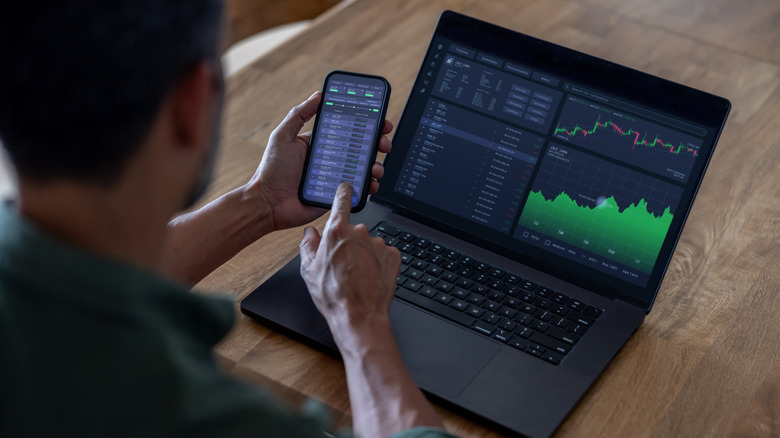
In the contemporary stock market environment, there is essentially zero reason to invest in ways that would incur transaction fees. Widely accessible platforms like Robinhood made trading stocks so commonplace that fees and commissions have largely gone extinct in conventional markets. And while you do often have to pay a small fee for investing in ETFs and index funds, cryptocurrency holdings can come with a whole new range of expenses attached. Additional costs like transaction fees and spread pricing come built into the crypto-trading marketplace, leading buyers and sellers alike to pay more for investing in cryptocurrency than they would for many other asset types.
Active traders will want to be careful about spread pricing, in particular. This won't be an issue for those who buy and hold, but if you are trading asset pairs on a regular basis, you'll encounter this discrepancy in the buy rate versus sell rate for each individual token or coin you move in and out of your portfolio. Many retirees are likely familiar with strategies to minimize the fees they pay to maintain their portfolio, but getting into the cryptocurrency market can come with an entirely different sort of fee structure that can cause them to incur major unexpected expenses if they're not careful.
Chasing the highs of strong returns too aggressively
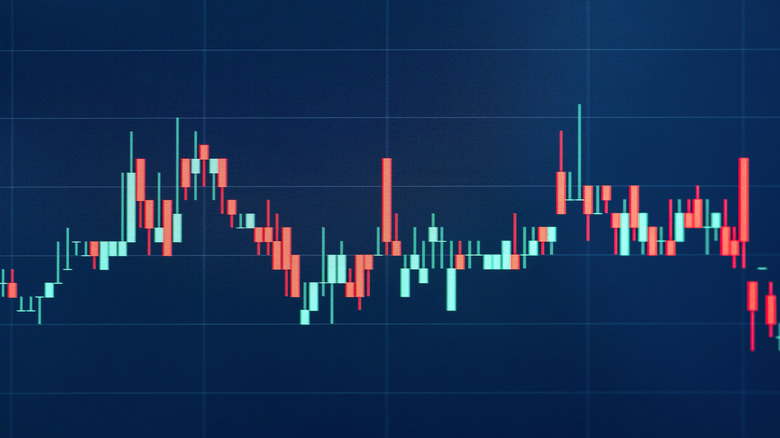
Retirees who invest in cryptocurrency may get into the market seeking to bulk up their portfolio in a hurry. Investors are looking for returns that specifically mesh with their personal priorities. Penny stock investors, for instance, are willing to accept increased risk for the potential reward of a massive percentage swing in value. Even though a penny stock may not gain significant dollar figures per share during a price surge, with enough capital invested in assets of this kind, a small change can create a huge ripple of increased wealth. The same goes for cryptocurrencies: These assets see wild price swings that can make sizable investments explode in value when timed advantageously. All it takes is one massive upswing in price to get hooked on this feeling of tremendous growth.
Between early April 2025 and mid-May, Bitcoin surged from around $76,000 per coin to $111,000. Now, that one enormous price spike could have changed the narrative of a retiree's investment profile in one fell swoop, but Bitcoin spent the rest of 2025 in a pretty volatile state that never even came close to recreating that surge. Going out on a limb with your capital to try to capture some of this lightning in a bottle can place older investors in a particularly vulnerable spot.
Failing to account for how often the crypto world changes

Technological breakthroughs, consumer sentiment, and government regulation can all fundamentally change cryptocurrency as a financial tool and investment asset overnight. The decentralized financial product exists in such a quirky state of limbo that it lacks any semblance of a tether to a value producer beyond what might best be described as simply "vibes." The real-time evolution of crypto makes this asset class uniquely vulnerable to sudden shocks. Unlike movements in the stock market or elsewhere, where changes can happen quickly, the pace with which fundamental market alteration can impact cryptocurrency is truly staggering. In May 2021, the Chinese government banned institutional use of cryptocurrency for payments, and made the conversions between Yuan and cryptocurrencies illegal as well. Just days after these regulations were put in place, Bitcoin lost around half its value.
In addition to a natural increase in risk aversion among older individuals, retirees may also be more likely to seek out investments that don't require a high level of maintenance. Because things can change so rapidly in the cryptocurrency marketplace, and there are so many forces around the globe that could potentially influence it, investors in this market need to stay abreast of a huge range of potential changemakers on a rolling basis. This may not be a task that retirees are ready to shoulder, but it's essentially a must for anyone getting serious about investing in crypto.
Selling in a down market

Collapses in pricing happen frequently with cryptocurrencies. Numerous downturns in the market have taken place, and they can come as a result of so many different pressure points at such varying paces that it's very possible to lose a fortune before you even know what caused the drop. And when the value of one of these assets does fall, it can stay down for a very long time.
Retirees don't generally have the luxury of patience when it comes to managing their investment portfolio. The name of the game here is principal defense and balanced drawdown stability. The savvy retired investor will not have poured all their assets into the cryptocurrency market, in most instances. Therefore, a market downturn won't immediately impact their drawdown strategy if they've already planned for portfolio diversification and correction in anticipation of bear market behaviors. However, a prolonged shrinking in asset value may spur some retirees to sell while assets are still depreciated. Cryptocurrency often collapses in value when market pressures come into the picture, and those relying on it too heavily may end up being forced to sell at a punishing discount.
Buying crypto without fully assessing risk tolerance

Retired savers are particularly vulnerable when it comes to the risk profile of cryptocurrency assets. There are simply more consequences to getting things wrong in this department as you get older. Young workers have many years to recover from an ill-timed investment or a bad stock market pick. As a result, younger people have a naturally higher risk tolerance when considering market movements and their options. With risk remaining a chief facet of the cryptocurrency marketplace, there's a lot more to consider for an older investor thinking about dipping their toes into this tool.
Cryptocurrency experiences wild price swings and builds its value upon a foundation that is fundamentally theoretical in ways that fiat currencies don't. The tool therefore delivers plenty of upside, but comes with a significant risk of collapse. A retiree seeking something new in their portfolio or considering enhanced risk in an effort to potentially grow a portion of their holdings might consider cryptocurrency as a viable solution. However, no one should invest more than they can reasonably lose in this or similar asset classes, particularly not older people who actively subsist on the financial value of their retirement portfolio.
Overlooking the estate planning cryptocurrency requires

Estate planning is a central component to many long-term financial goals that retirees have for themselves and their portfolio. Unless you are moving through life genuinely untethered to other individuals, there comes a time where you need a will, or some form of a plan for what happens to your cash and other assets in the event you die or become incapacitated. Dying without a will complicates everything the people you leave behind will have to contend with in finalizing your affairs and taking possession of your assets. And even with the proper documentation, this process becomes vastly more complex when cryptocurrency is involved.
Cryptocurrency is currently considered property, rather than a currency asset like Euros or dollars. So, it can incur additional tax liabilities that exist outside the realm of typical financial bequeathments to loved ones. It's important to understand what kind of tax bill you'll be leaving your loved ones by keeping a portion of your retirement portfolio in cryptocurrency. Speaking with a tax professional with specific expertise in this area is your best bet because rules and regulations can change quickly and there are many storage vehicles available that can help make this process clearer and easier.
No matter how you organize your cryptocurrency holdings, however, spelling out access credentials or instructions for cold storage solutions is an absolute necessity. You might leave huge wealth to loved ones in cryptocurrency holdings, but if you don't tell them how to access the funds, they may be lost forever.
Forgetting that cryptocurrency is often fraud-adjacent

The Federal Bureau of Investigation estimates that fraud involving cryptocurrency cost Americans over $5.6 billion in 2023, illustrating just how large of an avenue cryptocurrency creates for nefarious action by thieves and fraudsters. This doesn't necessarily mean that cryptocurrency itself is a fraudulent investment opportunity or that high-profile players in the cryptocurrency market are always going to be mired in conspiracies. However, because cryptocurrency exists in a world of limited transparency, it's easier to execute a scam and get away with it while using digital assets rather than fiat currencies. It has therefore become a tool of choice for many criminals. It's also worth noting that cryptocurrency scams don't just involve people utilizing the financial asset: Tokens and exchanges themselves can also be scams. So, any investor dabbling in cryptocurrency needs to be particularly careful when engaging with others — especially strangers online — with regards to their digital assets or the platforms they use for crypto trading.
Unfortunately, retirees have more to worry about in this regard than the typical investor. Seniors receive a double dose of vulnerability here because they are frequently prime targets that criminals prey upon. Fraudsters often see retirees as less likely to notice or report a scam, and more likely to part with a greater volume of money when a theft is successful. Retirees invested in cryptocurrencies may be more likely to entertain approaches from fraudsters involving language surrounding digital assets, whereas an investor who has not bought into the marketplace can more easily dismiss calls to action about transferring Bitcoin or other crypto tokens.