

10 Reasons A Retiree Regrets Buying A Luxury Car

Many people envision cruising into their golden years with a dream vehicle. Following decades of hard work and meticulous saving, buying a luxury vehicle finally feels like a reward. At the same time, it can seem like the most financially responsible time to make such a large purchase. After all, you deserve to splurge a little bit, right? Well, the full costs associated with owning and maintaining a luxury car often exceed initial calculations. Interestingly, many seniors see the risks and disadvantages of this popular retirement fantasy as they approach retirement.
In 2023, Transamerica surveyed 10,000 American adults earning anywhere from $50,000 to $199,999 about their biggest retirement goals. Tellingly, buying a luxury car — or a vehicle of any kind, for that matter — didn't make the cut. According to its report, "The Retirement Outlook of the American Middle Class," retirees primarily have relationship and experiential goals in their golden years, including volunteering, enjoying hobbies, and traveling. Beyond activities, retirees overwhelmingly show a desire to optimize time spent with friends, family, and grandchildren. Put another way, retirees were focused more on filling their time and spending their money on how they live and who they spend time with, rather than what they own.
The specter of spending a significant chunk of retirement money on an expensive vehicle looks too much like an avoidable expense and opportunity cost for seniors. Let's explore some of the reasons retirees regret buying a luxury car so you can avoid the same fate.
Significant depreciation

Cars are depreciating assets, meaning they lose value over time. On the other hand, appreciating assets, such as stocks, tend to increase in value, offering investors a return on their initial purchase. This is a crucial distinction to consider when allocating a decent chunk of your nest egg. Yet, the depreciation of luxury vehicles is even more pronounced than that of lower-cost options. In other words, retirees lose their hard-earned money more quickly when they invest it in an expensive model. While virtually every vehicle sees its resale value diminish over time due to waning demand, increased mileage, and sheer age, luxury vehicles have additional characteristics and elements that speed up this loss of value.
The expensive technology, premium parts, and even brand-name that elevate an expensive car's initial price tag face shifting trends, high-cost maintenance, and ever-changing tech upgrades. Ultimately, what made the vehicle a hot commodity in the first place weighs on its resale value and a retiree's investment. Motozite estimates that the average vehicle depreciates by 15% in the first year after purchase and 10% every subsequent year it's driven. In stark contrast, a luxury model sees 50% of its initial value disappear within three years of purchase. Instead, retirees might want to stick to cars with the best resale value.
Steep upfront costs

It's not ground-breaking news that luxury vehicles tend to cost more than standard models. However, the real sticker shock comes from hidden upfront costs that don't show up on the price tag. Many retirees only find out the total cost of driving away with a premium car when looking under the hood.
, the main expense types people incur when buying a car are sales tax, dealership fees, and registration costs. Often, sales tax accounts for the majority of these concealed costs. Specific rates vary by state, but
pegs the national average at around 5%. Retirees in the states that don't levy a sales tax escape this cost, but still get hit with the other hidden fees of buying a luxury car.
Dealer add-ons span a range of fees, including registration, documentation, and reconditioning fees. Some of these, such as the registration fees, are determined by the government. Others, including the documentation and warranty fees, are negotiable. Overall, Lending Tree advises that people budget an additional 8% to 10% on top of a vehicle's sticker price, owing to these hidden fees. When looking at the average cost of a luxury car at $62,000, retirees could be looking at an extra $4,960 to $6,200. For reference, the average middle-class retiree spends around $8,000 annually for healthcare.
Higher insurance premiums

Many fixed-income retirees are reeling from the staggering rise in auto insurance rates. If these premiums are already weighing on your finances, buying a luxury car would only exacerbate the issue. There's a direct, positive correlation between the value of a vehicle and how much a policyholder pays for car insurance. Every aspect that makes a high-end model more expensive increases the risk an insurance company assumes when providing coverage. Whether covering minor repairs or major replacements, an insurance company is going to pay more on a policy for a luxury vehicle. Thus, retirees with expensive cars pay more monthly, putting a higher strain on their monthly spending. Furthermore, these models tend to heighten the probability of at-fault incidents, where insurance would be required to pay more, due to their overpowered engines.
Bankrate's breakdown of 2025 car insurance costs places this reality in concrete terms. Full coverage costs $2,697 annually, up a wallet-pinching 12% from the prior year. Premium variability is a mixed bag in retirement as monthly payments decrease from your 50s to your 60s, but tick up again by a few hundred dollars in your 70s. However, the real savings — or losses — to be found lie in the type of car you drive. For example, the Nissan Altima, a relatively standard sedan, costs around $2,934 yearly to insure. Opting for a much more luxurious and expensive BMW 330i would spike this annual cost to $3,309. Even a hundred-dollar difference in annual premiums adds up throughout retirement, especially when adding another driver to the policy.
Lower fuel economy
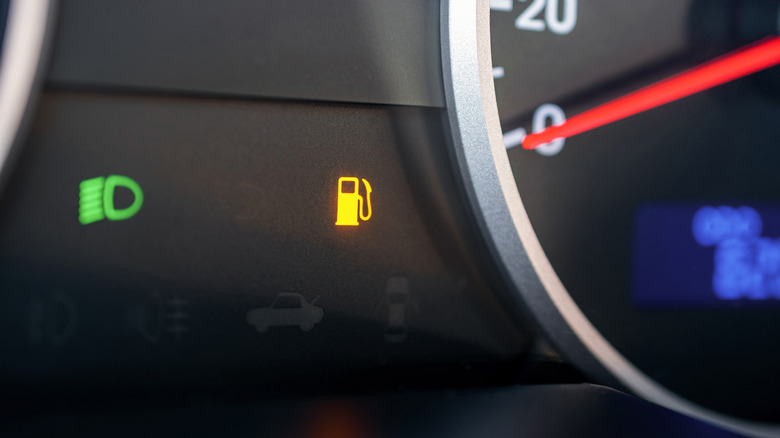
Fuel expenses are another hidden cost of owning a luxury model, and a common regret among retirees who splurge on more expensive models. Even if you master all the tricks to save money when you're buying gas, you'll still blow more money when filling up a premium-grade car. Generally speaking, luxury cars have worse gas mileage than more economical options, costing drastically more in lifetime fuel costs. Instead of optimizing for routine expenses, these high-end models often include features that make for a more riveting driving experience and an elevated gas bill. For example, larger engine size, more horsepower, faster acceleration, and vehicle weight all contribute to more fuel expenditure. That's a blast when you're on the road, but a serious financial setback at the pump.
Retirees driving luxury cars are also slapped with more expensive fuel, spiking their energy costs even higher. Many luxury models are recommended to take premium gasoline, as opposed to regular or midgrade options. The primary distinction between these fuel grades, other than price, is the octane levels. The more octane within an engine, the lower the chances of harmful engine knocking, which occurs when fuel is used unevenly. The Environmental Protection Agency reports that the average gallon of premium fuel costs around $0.85 more than regular gas. Assuming a vehicle has a standard gas tank of around 16 gallons, filling up a luxury car with premium-grade fuel would cost about $13 per fill.
Expensive maintenance costs
The upfront costs for a luxury vehicle can be shocking, but the long-term expenses can eclipse the initial financial pain. Often, pricier cars are equipped with more expensive components, which come with pricier maintenance fees than standard parts. Everything from a vehicle's electronics and engine to brakes and tires can be pricier on a luxury model. In addition, premium vehicles often burn through their components at a faster rate than standard models, meaning owners are suffering more expensive repairs at a more frequent pace.
Based on data from CarEdge, SoFi estimates that the average person spends around $13,000 over the course of a decade for maintaining a luxury vehicle. That means retirees would need to set aside more than $1,000 monthly merely to keep their premium car running properly. Many high-end brand names exceed this average cost. For instance, Insure on the Spot estimates the 10-year maintenance cost of a Porsche is $14,000 and $19,000 for a Land Rover. In fact, there are only a handful of luxury car brands with maintenance costs below $8,000 over this time frame. Beyond more expensive components, retirees also spend more on specialists capable of servicing luxury vehicles. Of course, this knowledge comes at a premium, further elevating how much seniors end up putting toward routine upkeep.
High loan payments and interest

Whether buying new or used, many people opt to take out a loan rather than pay for a vehicle outright. Experian reports that 35% of people finance when buying used. That number more than doubles to 80% when purchasing a new car. Seniors taking out a loan to purchase a luxury vehicle face not only steep monthly fees based on the vehicle's higher-than-average price tag. These financing schemes also often put retirees on the hook for extortionate interest rates, eroding their retirement income at a faster rate than anticipated. According to Bankrate's analysis of Experian data, the average car loan interest rate is 11.5% for used vehicles and 7% for new vehicles.
However, these rates can spike to more than 14% and 9%, respectively, for retirees with an average credit score. If you're able to secure similar rates for a luxury vehicle, you're still looking at above-average loan payments due to the higher price tag. Experian estimates that the average American owes $532 for used vehicles and $748 for new models in monthly loan payments. Again, taking out a loan on a luxury car would spike these monthly costs even higher.
Lost investment income

Among the more hidden expenses of buying a luxury vehicle in retirement is the missed return of investing the money in a yielding asset. As mentioned before, the value of a premium vehicle drops precipitously following its purchase. When considering the full fiscal scope of this purchase, retirees shouldn't only focus on their realized losses, but also their unrealized gains. Seniors face a steep opportunity cost when buying a costly car, as the funds could have been invested, returning a decent yield and padding their retirement income, instead of detracting from it. Let's run a quick calculation to make this comparison of losses versus savings more tangible.
Car Gurus places the average cost of a luxury car at $62,000. Per the earlier estimate of luxury vehicles losing half of their value in the first three years, this initial investment would be worth $31,000. If that same amount of money had been invested in the S&P 500, assuming an average return of 10%, it would be worth $80,600. Of course, this doesn't take into account market volatility or potential downturns, but the contrast demonstrates how a luxury vehicle not only costs money but also robs retirees of potential returns. A luxury vehicle is certainly not an unusual asset that could increase your net worth.
Less discretionary income

Even if you have enough money to retire rich, you'll still divide up your nest egg between essential and discretionary income. The former is reserved for unavoidable monthly expenses, such as utilities, mortgage payments, and health insurance, in addition to emergency savings. The latter group of expenses is free to be spent however you please. Regardless of whether the purchase is financially manageable, many retirees regret buying a luxury vehicle because of how far it eats into their discretionary income. As we've already discussed, the initial price tag is only the beginning of high annual costs for elevated insurance premiums, expensive repairs, and costly fuel. These funds are diverted away from other desired activities, such as taking the family out for dinner or going on vacation.
NerdWallet recommends keeping car expenses, including loan payments, upkeep, and all recurring costs, below 10% of your income. According to an analysis by AAA, U.S. adults pay $11,577 on average annually to manage a new car. That comes out to roughly $964 per month. Given that retirees tend to bring in only around $50,290 yearly, managing a new vehicle far exceeds the 10% rule, stretching to over 20%. Keep in mind these calculations are for standard models. The costs and comparative burden on a retiree's finances would be even higher for luxury vehicles.
Extended warranty costs

Retirees looking to minimize the elevated costs of repairing a luxury vehicle might consider an extended warranty. These service contracts are designed to provide coverage beyond the standard timeframe offered by the manufacturer. Kelley Blue Book suggests the average vehicle warranty offers three years or 36,000 miles worth of coverage. That's considerably shy of a vehicle's true lifespan, with the average car expected to last for around 200,000 miles, according to The Zebra. Given the relatively short coverage offered by a manufacturer, it seems reasonable to purchase an extended warranty when purchasing a luxury vehicle. However, these plans come with some important caveats.
As the Consumer Financial Protection Bureau points out, extended warranties are limited in scope, often overlooking standard maintenance, such as tire rotation or oil changes. Thus, retirees would still be paying out of pocket for these routine costs. Moreover, extended warranty costs tend to increase with the value of a vehicle, meaning luxury cars often have the costliest service contracts. Makes & Models estimates that a solid extended warranty coverage for a luxury model could cost anywhere between $2,000 and $4,000. When compared with the sky-high repair fees often associated with premium cars, this additional service might be justified in context. However, it's yet another serious expense that can put unnecessary financial stress on retirees.
Underutilization and lack of practicality

One of the more practical reasons retirees often regret buying a luxury car is a lack of use. Whether you're picking up the grandkids from school, volunteering at a local charity, or moving some of your belongings, you'll likely opt to use another vehicle the majority of the time. Given the higher fuel costs and more expensive repairs of premium cars, it makes financial sense to save your luxury model for special occasions. Yet, it's not only a matter of using your high-end car less than other types. You're going to be spending less time on the road overall in retirement, undermining the entire point of splurging on a nice car.
The U.S. Department of Transportation's Federal Highway Administration estimates that the average American drives about 13,476 miles per year, but these miles aren't spread evenly among different ages. U.S. adults 65 and older only drive around 7,646 miles annually, only behind 16 to 19-year-olds. Between the primary working age of 35 to 54 and retirement, the average person halves how much they drive. Generally, people tend to drive 30% fewer miles every year after retiring. When you factor a retiree's tendency to drive less in with the overall cost of owning a luxury car, the math is unforgiving. What should be an enjoyable retirement reward quickly turns into a hefty financial burden.