

'Cool' Car Mods That Actually Jeopardize Resale Value
For many people, purchasing a car is only the first step toward truly possessing it. The new owners enjoy finding ways to modify it to make it one-of-a-kind. The hobby can be enjoyable and even fulfilling, but it does come at a literal cost. Some of the mods could be damaging the vehicle's resale value. Many of the most harmful mods may be surprising since they're so common.
But experts, at car dealerships and elsewhere are on record stating the financial harm these changes can have when it's time to sell. They know because they're often the buyer with no choice other than to offer the owners less than they would have received if they had left their vehicles in stock condition. The mods listed below are likely to jeapardize a car's resale value and should be at least toned down before selling or trading the car in. Fortunately, in most cases, there are possible workaround solutions that would still allow for self-expression while continuing to protect the car's value.
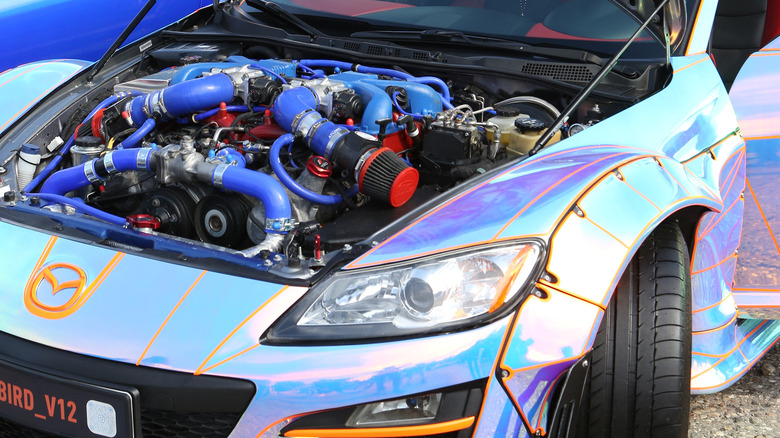
Engine modification

One of the first mods many new drivers consider is anything that will help the engine produce more horsepower. Usually, this involves a system that manipulates the air entering the engine. Controlling a targeted stream of air enables the engine to mix the air with fuel more efficiently, producing more power. The top choices for air induction methods are turbochargers, superchargers, and nitrous oxide systems. However, potential buyers may shy away from the challenge of trying to return the vehicle to stock form after all the alterations the car has received.
For example, the nitrous oxide system requires the installation of a nitrous oxide tank, which mechanics often place in the trunk. Holes have to be drilled in the floor of the trunk to accommodate the plumbing that transports the nitrous oxide to the engine's intake. Also, control mechanisms, such as toggles, have to be installed somewhere in the cabin within easy reach of the driver because the nitrous oxide system doesn't continuously feed the engine but operates only at the driver's discretion.
The resale market for a car with a forced air induction add-on system is going to be small. Defensive Driving warns that you're unlikely to recover your costs, and may have no choice but to return the vehicle to stock in order to sell it. Hiring a mechanic to remove evidence of customization can be costly. According to AAA, the average hourly rate for an automobile mechanic is typically over $200 in every state.
Lift kits
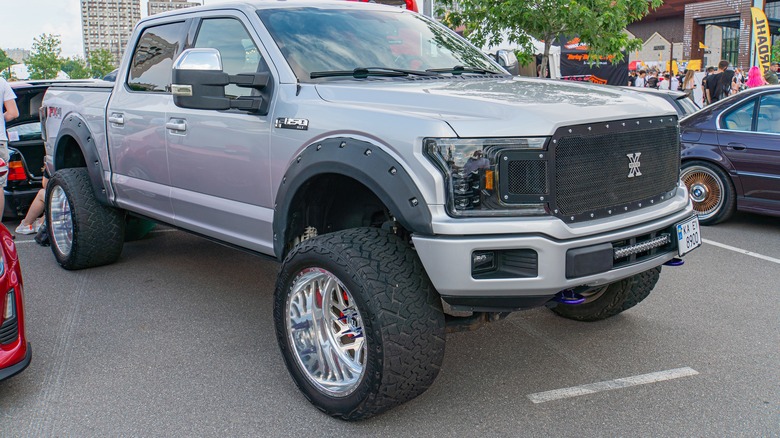
Lifts are typically seen only on trucks and, to a lesser extent, on SUVs. Sometimes they can even be spotted on cars. There are two main types of lift kits. There are those that lift the body and those that raise the suspension. Owners have various reasons for installing them. For instance, the extra clearance could come in handy on farms and ranches where unpaved surfaces could put an ordinary vehicle axle-deep in water or mud. Other owners may not have a utilitarian need for lifts. They simply like the way they look.
Lift kits are available for as low as $400, starting with entry-level DIY body lift kits. On the other end of the spectrum, top-of-the-line suspension lift jobs can cost $20,000. If you sell your truck to another person who also needs the additional height, you might not suffer a huge loss in the deal. However, your potential market will be small. And if you can't locate the right person, you might have to settle for a pittance of what you've invested. Your experience may be similar to that of the YouTuber Pjtruckin, who posts videos of himself modifying trucks. He wanted to get $15,000 for his lifted truck, so he had to find an enthusiast and complete a private sale. Initially, he attempted to sell it to CarMax, but, according to his video, the company offered him only $6,500.
High-end audio
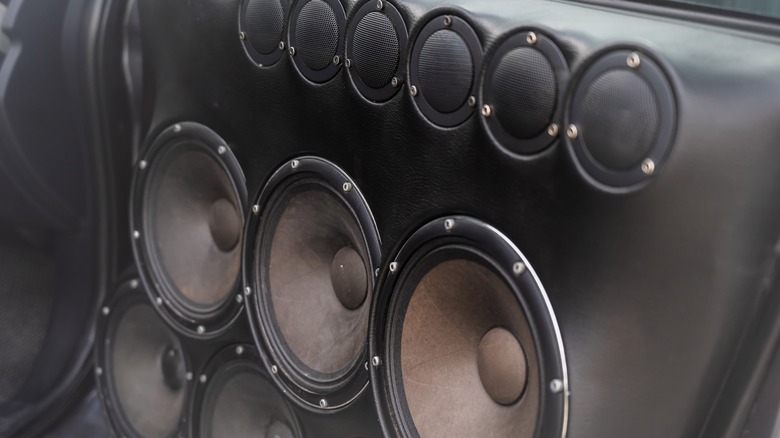
If you love music, there's a good chance you're not in love with the factory sound system that came with your car. Only luxury cars come with audio equipment that gets the admiration of audiophiles. Everything else feels replaceable. A basic upgrade to better speakers might cost up to $500. Installing an entirely new off-the-shelf system could run past $1,000. On the extreme end, a fully-customized system could cost over $5,000. The problem is that the people who want to purchase your vehicle may not care about high-end audio and place no value on all the upgrades you've made. So, don't expect to recoup your money.
If you want to appeal to those people, you could offer the option of the expensive equipment or the factory parts, notes PartsMax. Naturally, it's important for you to keep the original parts safe and in good condition. You may also have to perform the reinstallation yourself or pay for a technician to do it before you can finalize the sale. If the buyer chooses the original parts, and you still need to recover at least part of your expenses, you could try selling your expensive audio equipment separately.
Window tinting
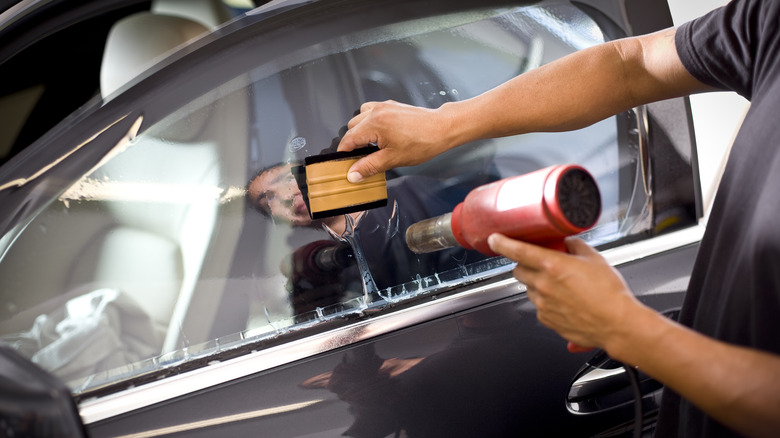
Window tinting can look cool, giving your vehicle and by extension, you and your passengers, an air of mystery and a bit of privacy. It can also protect your interior from UV rays, helping to preserve the life of your dashboard and upholstery. Window tinting is such a standard customization that it's permitted in all 50 states. However, the laws differ on the amount of tinting windows can have, which can confuse anyone buying a used car.
Some states also differentiate the degree of tinting allowed on the front, side, and rear windows. So, selling your car on the national market can present potential buyers with problems. They've got to research their state laws and then compare them with your vehicle's tinting. The laws vary so widely that there's a good chance your windows won't be in full compliance with the guidelines of another state, leaving buyers to worry about facing costly fines for overly tinted windows. Additionally, some buyers don't like window tint at all. If you try to sell your car to a dealership rather than an individual, Umbra Window Tinting says dealers may discount your vehicle by $400 to offset the cost of removing the tint.
Custom paint and wraps
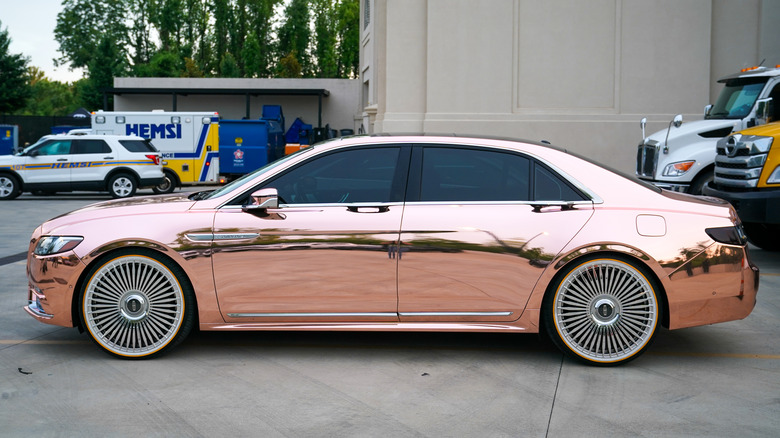
If you think the cars at a dealership don't vary much in color, it's not your imagination. CNBC reported that in 2019, 39% of the world's cars were painted white, while another 39% were either black, gray, or silver. Blue cars accounted for 9% and red for 7%. Those colors still predominate today. CNBC noted that dealers want to stick with the most popular colors to attract the most customers. And customers purchase the top colors partly because they don't want to be stuck with an unusually-colored car that they can't resell. So, a custom paint job could shrink your pool of buyers severely.
A car wrap allows you to have fun driving a car in a color different from the paint job. But car wraps aren't permanent. By the time you want to sell the car, the wrap could be in need of replacement or removal. Edmunds says even if the wrap comes off easily, the removal cost is between $500 and $1,000. If the wrap has lacked proper care and comes off with difficulty, expect to pay around $2,000 to $2,500. You may want to think twice about wrapping your car when you calculate how much it will cost you just to prepare it for resale.
Fake air scoops and vents
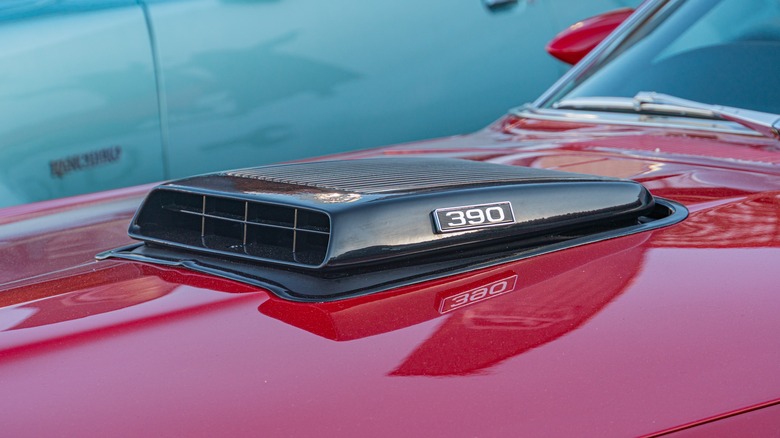
Modifications that genuinely improve performance may help increase resale value, but unnecessary mods could have a negative effect. Fake air scoops and vents fall into the latter category. They also impact depreciation. First Federal Bank says that while depreciation is part of the natural life of an automobile, the process can be rapidly sped up by the addition of unneeded modifications.
Working air scoops would enable the engine to breathe easier, increasing efficiency. But the fakes have no openings to allow air to enter. Similarly, fake air vents in the hood have no openings and can't perform like the real thing, which would lower engine temperatures and increase handling by reducing aerodynamic lift.
Older versions of these mods may be attached by bolts or epoxy, while more recent models are self-adhesive. In either case, to prevent a dip in resale value, they may have to be removed prior to selling. Sometimes removing them can damage the paint, necessitating a trip to the paint shop. The cost of minor paint repair generally runs $150 to $300, while medium damage repair falls between $400 and $800. You may want to consider whether possible paint damage is worth risking for the sake of fake air scoops and vents
Debadging
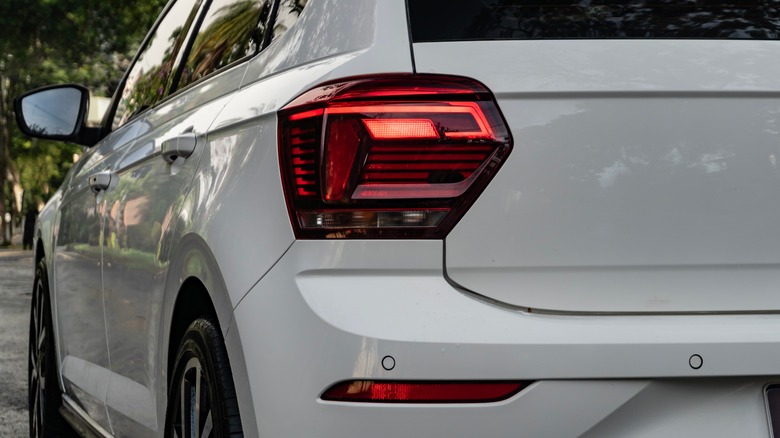
Debadged cars can look cool. They have an air of mystery because only aficionados may be able to recognize the make and model. Aesthetes appreciate the undisturbed lines and curves. But some people may associate missing badges with body damage, which is not a good thing if they're looking to buy your debadged car.
Fortunately, debadging is a relatively minor mod. It's typically a DIY job, according to Capital One, if you're willing to use the right tools and be careful. Re-badging the car is also simple in concept, but it will take you longer. It's something you're probably going to have to do if you want to sell your vehicle, so always keep the badges stored safely. Re-application will eliminate endless questions suspicious buyers will have about whether the badges were removed when the car underwent bodywork following an accident.
Regarding bodywork, if removing the badges results in dents. scratches, or paint chips, your debadging mod could suddenly cost you hundreds of dollars in repair. If you've misplaced the badges or simply don't want to go to the trouble of reapplying them before selling, you'll probably stand a better chance with a private sale. If you sell to a dealer, the dealership will lower the amount it's willing to offer you so it can cover the parts and labor costs of adding new badges.
Aftermarket exhausts
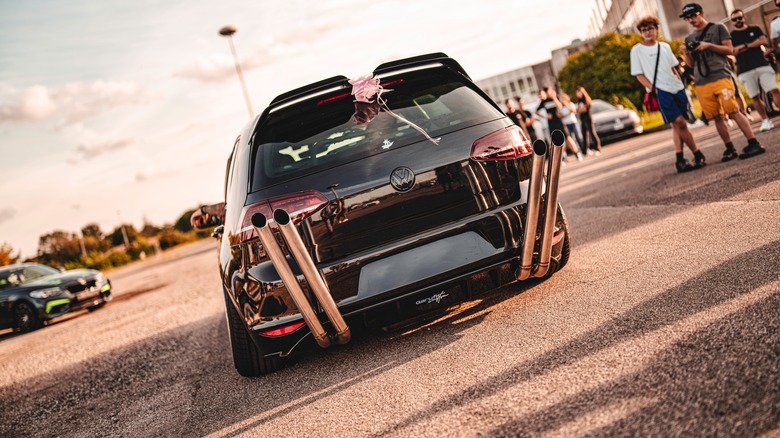
Not all aftermarket exhausts behave identically. Some try to mimic the growl of more expensive vehicles. Others specialize in sheer volume. Changing the factory exhaust to any aftermarket product threatens to reduce the number of people who would be interested in purchasing your automobile. This is especially true for extraordinarily loud exhausts. If your vehicle is modified mainly for display purposes at car shows and neighborhood meet-ups, you might find a kindred spirit when you post it for sale. On the other hand, if your car is a daily driver, there aren't many people willing to drive a loud car to work and to pick up their kids from school.
To find out how much a mod could hurt your asking price, Jalopnik compared the resale of similar one-owner 2003 BMW M2 convertibles. One had an expensive Dinan aftermarket exhaust, but the other had only the factory-installed exhaust. The BMW with the mod had 10,000 miles to the stock version's 54,000 miles. Both were six-speed manual cars. Despite its seeming advantages, the modified car sold for $4,000 less than its non-modified rival.
Removing the catalytic converter
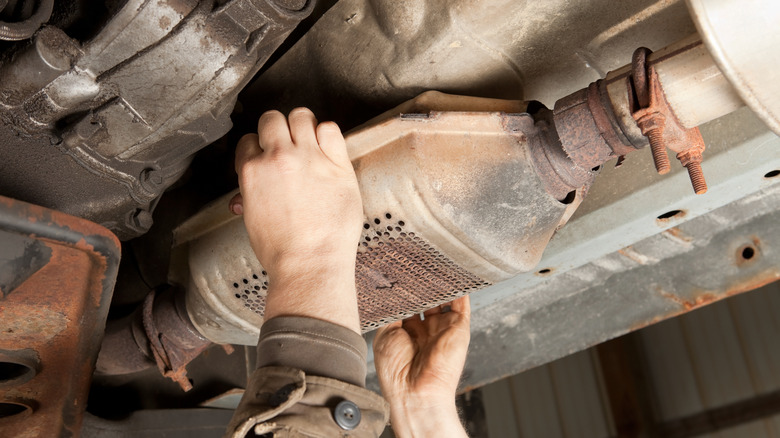
If you want to boost your engine's performance and you like the sound your exhaust creates without a catalytic converter, you may be tempted to eliminate it. Even though removing the catalytic converter may give you more horsepower, it will also give your tailpipe more harmful gases to expel. That's why removing it is illegal. Catalytic converters became mandatory in the U.S. as a means of combating harmful emissions. Dealership cars must include them, and cars can only pass an emissions test if they have them.
The legal requirements surrounding catalytic converters means buyers on the private secondary market are going to favor vehicles that have their catalytic converters intact. Otherwise, they'd risk fines in addition to having to pay for the installation of a new one. If you do manage to sell a car without a catalytic converter, be prepared to discount the buyer by an amount comparable to what it will cost to bring the vehicle into compliance. Autozone said there's a wide range of prices for replacement parts, but a universal-fit replacement should cost $200 to $300, and a direct-fit replacement should be $300 to $2,500. Don't forget to factor in labor costs.
Spoilers
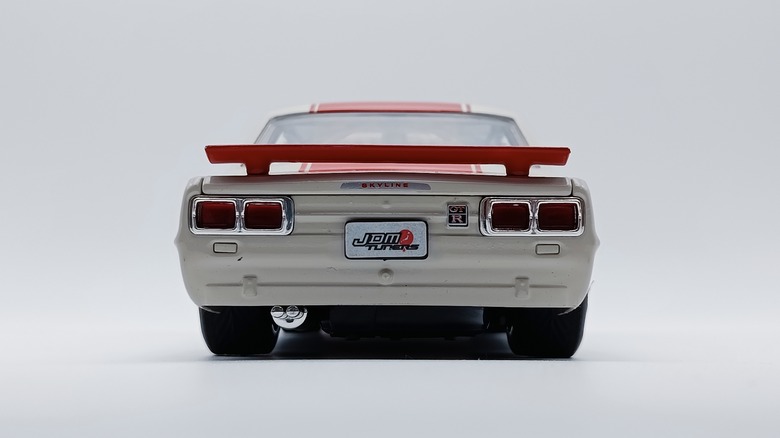
To understand why aftermarket spoilers can turn some people away, it's necessary to understand the basic intention of a spoiler. Today's sports cars have such aerodynamic shapes that their speed can work against them. The cars can cut through the air so well at high speed that they can threaten to go airborne with the vehicle's rear end lifting off the ground. Spoilers can prevent that from happening by disrupting or spoiling the air current flowing over the car. The result is that the rear tires can remain in full contact with the road surface during high speeds.
Spoilers aren't needed on standard cars and SUVs. Those vehicles aren't aerodynamically built the same way as sports cars. So, adding them unnecessarily tends to make the car look odd to many people. Shun Auto cautions that potential buyers might lose interest when they see the spoiler and assume that you've driven the car aggressively. Shun Auto added that original factory-designed spoilers do better on the resale market than aftermarket spoilers, which often raise questions about quality.
Unusual upholstery
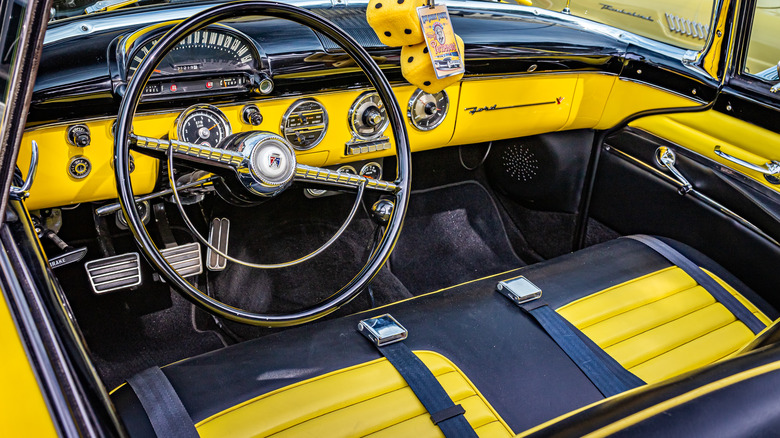
Updating your car's interior can boost its resale value if done correctly. But if the customization polarizes your intended market, you could see your resale efforts suffer. One of the primary considerations is the color scheme. The farther you drift away from what the market wants, the more difficult it becomes to find a seller at your asking price. Zen and Chill notes that the most popular colors for auto interiors in North America are black, gray, and beige, because North Americans associate those colors with sophistication. That explains why those colors, especially black, are often the choice of luxury brands.
Those colors may not resonate with your personality. But before you replace them with highly personalized upholstery fabrics that you prefer, you should think about your future customers. If you simply can't tolerate the subdued tones of modern cars, there's a practical way to customize the interior and yet not alienate potential buyers. Use removable seat covers. Reversible modifications appeal more to people who like their vehicles in stock condition.
Oversized wheels and tires

Rapid Auto Shipping lists oversized wheels and tires as one of the modifications that's most likely to take a bite out of your vehicle's resale value. Interestingly, it's also one of the most common mods. Car owners often prefer the bolder look a car has with larger wheels and tires. But in some cases, the additions can help with handling, putting more rubber in touch with the road.
However, that additional traction means your tires may not last as long. And that leads to purchasing replacements, which are predictably more expensive than the standard tires. Your fuel costs are likely to rise as well since it takes more force to move a vehicle with larger, heavier tires. Potential buyers may run away from all these likely expenditures. They may also suspect that you equipped the car with oversized tires for off-roading, which can make them wonder if it harbors undisclosed damage. The bottom line is that unless you have a like-minded buyer ready to purchase, you should try to return your vehicle to stock to entice as many shoppers as possible.
Decorative LEDs
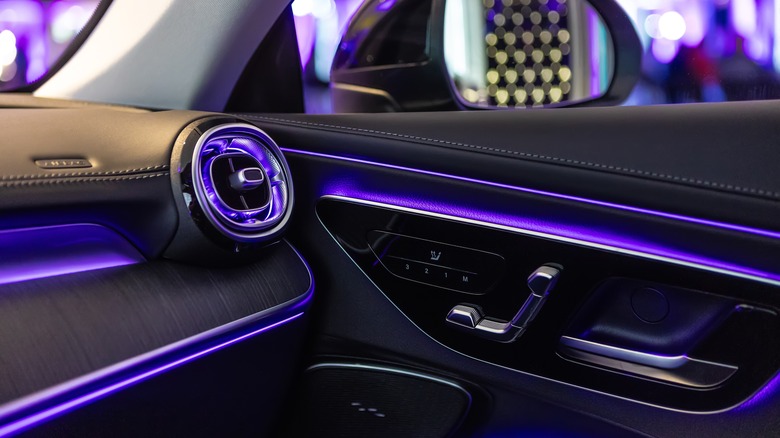
LED lighting is inescapable at car shows. Detailers use it liberally to draw attention to their handiwork throughout the vehicle, from underneath the automobile to inside the wheel wells. However, Dal Motors cites excessive LED lighting as a mod that turns off buyers on the resale market. While the company applauds LED headlights and taillights that enhance safety, it frowns on vehicles that use LEDs where they're not needed, such as the engine bay.
The dealership explains that from the buyer's point of view, the LEDs aren't an enticement. On the contrary, buyers lower their offers to compensate for the cost of having a mechanic remove all the unwanted lighting. Additionally, the dealership says sometimes the wiring isn't top quality and can drain the car's battery. Another issue is shoddy installation that can damage other wiring. If you decide to use decorative LEDs, install them carefully and in a manner that allows for easy removal so you can return the interior to stock condition before showing it to buyers.
Scissor doors

Scissor doors or Lambo doors garner immediate attention. That's the reason some car owners install aftermarket versions on their vehicles. It's hard to resist the allure of a car with doors hinged so that the doors don't open outward but upward, just like those of a Lamborghini. However, there's a practical reason why Lamborghini chose those doors. Lamborghinis, beginning with the Countach, have designs that keep the driver from seeing clearly what's happening behind him. That's not the best situation when trying to back a luxury sports car into tiny Italian parking spaces. The scissor doors allow the driver to lean out farther than he could with conventional doors to get a better view.
Fortunately, most other cars don't have severe visibility issues. The addition of scissor doors is purely for looks. Potential buyers may not want to deal with the problem of trying to open the doors in low-ceiling parking decks and carports. They also may be frightened away by one very important flaw of scissor doors. Their design, says Car Buzz, makes it more difficult for rescue workers to free you in the event of a accident, and this benefits your auto insurance bill.