

5 Bold Market Predictions For 2026 We're Paying Close Attention To
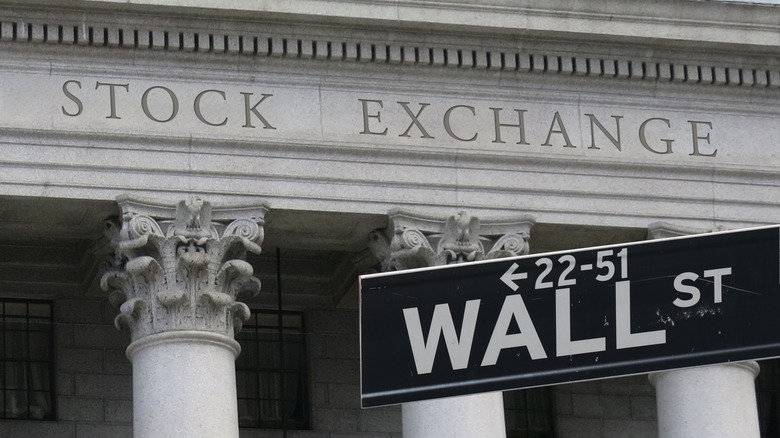
Home equity growth has slowed in 2025, and the prices of goods and services nationwide are increasing. But for many, these losses are being offset by asset gains, leading to a generally positive outlook amongst those who hold assets. While the market saw a shaky start to 2025, caused in part by Donald Trump's tariffs, NASDAQ is up by over 21% this year. The market's resilience has influenced outlooks for 2026, particularly amongst major banks and investment firms. This said, there are several trends and predictions we are keeping a close eye on, as they could indicate different market outcomes in 2026.
As 2025 comes to an end, major banks, including Wells Fargo, Bank of America, and J.P. Morgan, have published their predictions for the coming year. Importantly, some of these institutions are heavily investment-driven. Also, market predictions, even from Wall Street experts, have an abysmal track record. According to a recent study by CXO Advisory Group, such forecasts generally have an accuracy of less than 50%. This said, there is a level of consensus on Wall Street that the market as a whole is highly variable in 2026, and that it could go to multiple extremes. This comes in the form of key predicted trends, including the growth of the AI industry, the spending power of younger generations and the working class, the potential growth of the S&P 500, possible issues in the private credit sector, and the changing housing market environment. Below, we take a deeper look at each of these forecasts.
2026 could see massive S&P 500 and market growth

The most optimistic predictions for the 2026 market see significant gains in the S&P 500, Wall Street's primary health index that houses the top 500 publicly traded stocks. The Deutsche Bank published an article in 2025 setting its conservative benchmark for the index at 7,500 points. This growth is highly dependent on the value of big tech, with the "Magnificent Seven" accounting for a large share of the index's value prediction in 2026. In its 2026 Investment Outlook, J.P. Morgan identified the seven index giants — Apple, Tesla, Microsoft, Google, Nvidia, Meta, and Amazon — as accounting for nearly 70% of predicted growth in the coming year.
Because of this, the success of the index as a whole, and by association of the market, hinges on these companies' performance. Notably, several issues face companies like Amazon and Nvidia that could slow their valuation growth. Firstly, Amazon has reached a settlement of nearly $2.5 billion in a Federal Trade Commission(FTC) lawsuit, leaving many Americans eligible for compensation. Additionally, the company is facing further antitrust lawsuits from the FTC, which could compel the online retail giant to break up, lowering the value of its stock. Further, Nvidia has been accused of falsely generating demand for its products, acting as an early warning sign of a potential AI bubble.
The AI bubble may pop in 2026, leading to a rapid market downturn

The most significant contributor to experts' concerns about the market in 2026 is the potential for an AI bubble, akin to the dot-com bubble in the early 2000s. Almost every financial analysis of the 2026 market, such as J.P. Morgan's investment outlook, mentions this possibility. An economic bubble forms when something new catches the market's attention, gains rapid, unprecedented value, reinforces investors' confidence, and attracts more buyers. As wary (or profit-chasing) investors sell their positions, confidence wanes, prices plunge, and the selloff intensifies until the bubble collapses.
For now, J.P. Morgan and Bank of America rule out the possibility of an AI bubble or its potential collapse in 2026. In a market briefs article published by Bank of America, Theadora Lamprecht, investment strategist for the Chief Investment Office (CIO), Merrill and Bank of America Private Bank, said, "strong corporate earnings, easier monetary policy, the benefit of seasonality, and the beginning of a massive digital infrastructure buildout provide a solid foundation for potential growth." She added that "compared with the dot-com run-up in the late 1990s, we're in a healthier environment fueled by fundamentals rather than speculation."
That said, AI leader NVIDIA's widely reported circular financing deals, such as its $100 billion deal with OpenAI (via NVIDIA press release), hint that the manufacturer is fabricating demand for its chips in exchange for investment. "The idea is I'm Nvidia and I want OpenAI to buy more of my chips, so I give them money to do it ... it's unusual to see it in the tens and hundreds of billions of dollars," Paul Kedrosky, a venture capitalist and research fellow at MIT's Institute for the Digital Economy, told NPR. According to Kedrosky, a similar pattern was seen before the dot-com bubble burst.
Reckless private lending could lead to mass defaults

The private credit system lies outside of the classic market and involves lending by non-bank financial institution. As a result, many banks failed to include the private credit sector in their analysis of the 2026 market. This said, economists are worried about the future of this booming, highly unregulated credit-lending ecosystem. Unlike banks, private lenders are often arms of larger investment funds, making up a slice of a much larger cake. These firms' lending practices are exempt from much of the scrutiny and obligations exacted on banks, adding to what some analysts say is a ballooned valuation.
According to the Value Creation Innovation Institute, private lending firms now serve as a prominent backstop for the growing AI industry (which could be in a bubble of its own). They also lend to other companies, large and small. Alarmingly, several recent bankruptcies of companies that took loans from private lenders have revealed shaky lending practices and the failure to properly screen borrowers. The potential for widespread defaults by under-vetted borrowers who lack the capital to repay their loans could trigger losses across the market. This is because many banks and investment funds hold stock in such credit firms, particularly after the recent presidential Executive Order incentivizing 401(K) investment in private credit.
In an interview with NPR, Natasha Sarin, Yale Law School professor and president of Yale Budget Lab, said, "I'm pretty nervous that if you have a bunch of financial activity that's ultimately happening in the shadows ... once we get a downturn and when invariably the economy worsens, you're going to be in a situation where ... losses on the financial markets and losses by these financial credit firms are ultimately going to fall to regular people."
The housing market could experience major growth in 2026

While there are several scenarios in which the market sees a downturn in 2026, if the projected growth and optimism presented by J.P. Morgan come to fruition, an environment may present itself for a more dynamic housing market. It is this optimism that spurred professionals like Lawrence Yun, chief economist at the National Association of Realtors, to predict a 14% increase in home sales in 2026, while speaking at the 2025 Residential Economic Issues & Trends Forum. "Next year is really the year that we will see a measurable increase in sales," Yun said at the forum.
This prediction is strengthened by the expectation that interest rates will continue to decline in 2026. The current mortgage rate is above 6%, according to the Federal Reserve Bank of St. Louis, and it's the longest period the rate has been above this mark since 2008. While this trend is dependent on multiple factors, policy implications will be a major factor in bringing down rates. Reuters reports that a new chair of the Federal Reserve Commission, who may align more with the Trump administration's economic policy of dramatically cutting rates, may be announced early in 2026. A potential drop in rates, along with the possibility of portable mortgages, could make the market more free-moving, while notably driving inflation and further increasing home prices.
The middle class may erode, leading to a bear market

Ultimately, the economic and market strength in 2026 depends on the well-being and spending power of both the middle class and those just entering the workforce. In its investment outlook, J.P. Morgan says these individuals make up a majority of the labor force, along with the spending that goes into profits. But recent trends in the distribution of wealth indicate potential problems. Data from the Federal Reserve is showing further stratification of wealth among the top 1% of Americans, with the bottom 50% of households holding a disproportionately small share of both wealth and assets. This trend is characterized as a K-shaped economy, where the top-earners' wealth increases, while the wealth of non-asset holders or the working class declines. The K-shaped economy is made worse by rising inflation.
"A K-shaped economy led by wealth effect means a bear market could trigger an economic downturn," Wells Fargo's Ohsung Kwon predicted in a 2025 internal memo (via yahoo!finance). Both Wells Fargo and other firms credit inflation, fueled by tariffs, as a significant aspect of this divergence. Additionally, the unemployment rate among those under the age of 24 is currently 10%, according to the Federal Reserve Bank of St. Louis. Meanwhile, J.P. Morgan is predicting the potential for a continued job market drought in 2026 in its investment outlook. Firms have tied these trends to the worsening K-shaped economy and the possible formation of a bear market.