

Amazon Cracked The Code On Retail Theft That Plagues Walmart And Target
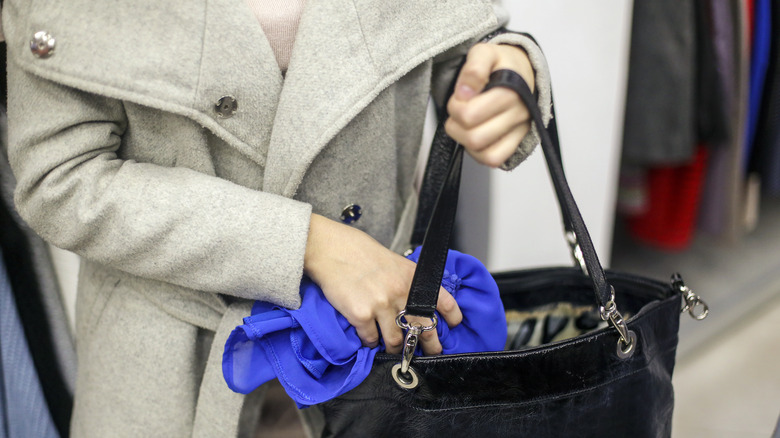
Theft in the retail industry is nothing new, but according to the National Retail Foundation, shoplifting incidents increased 93% between 2019 and 2023. This unbelievable increase in theft resulted in a 90% rise in retail dollars lost due to shoplifting over the same time period. While shoplifting affects a range of retail establishments both large and small, widespread losses at large companies like Walmart and Target — which are also both dealing with the impacts of tariffs – can lead to significant consequences. Most notably, when big box retailers see revenue losses, they tend to close stores altogether – which can affect the stability and availability of goods and groceries across entire communities.
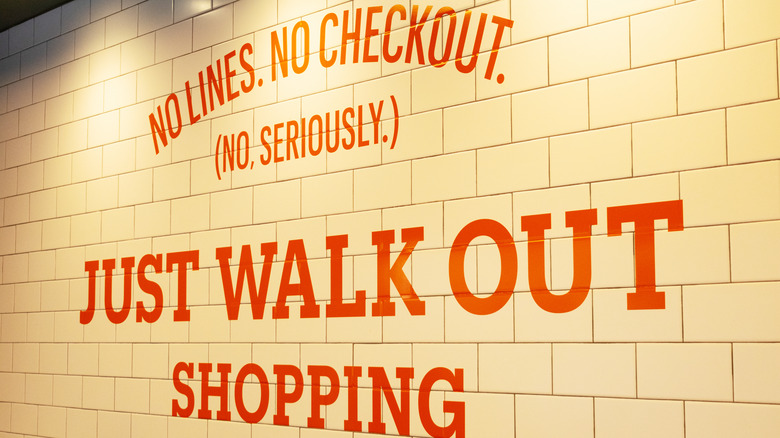
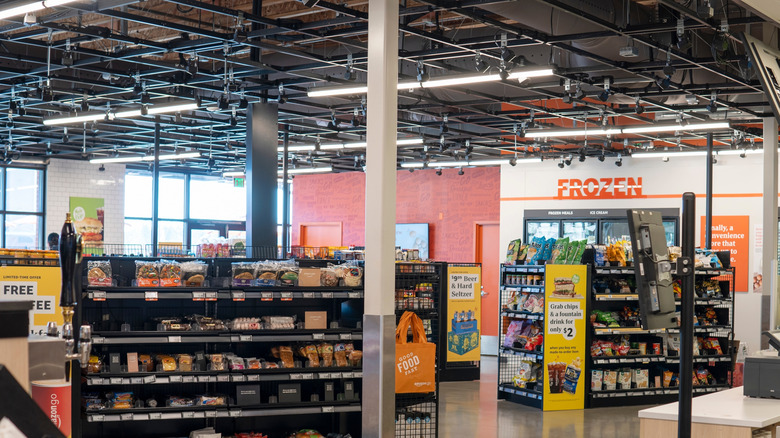
However, Amazon might have cracked the code when it comes to retail theft. If you've recently been to the airport or even a big sporting event, you may have seen or used one of Amazon's Just Walk Out stores. These small retail venues offer consumers an alternative way to shop using advanced Amazon technology. In a Just Walk Out store, customers use a payment method — such as a credit card or Amazon account through a phone app — to enter the store. Then, using cameras and sensors, the items the consumer takes from the store are tracked and charged to the card or account that was used to enter. This means no standing in line, no scanning each item at checkout, and no ability to shoplift.
Amazon's technology could be the answer for Walmart and Target
The recent anti-theft measures put in place at big-box retailers like Walmart and Target include locking items in clear cases, and having employees check receipts as customers leave the store. However, these attempts to curb shoplifting have caused their own problems. Some customers don't want to wait for an employee's help to retrieve an item that's put under lock and key. This not only negatively impacts the customer's shopping experience but the likelihood a customer will shop elsewhere also contributes to lost revenue for retailers that are already losing an estimated $47.8 billion to theft alone in 2025, according to Capital One Shopping Research. With Amazon's new technology for a Just Walk Out experience in place, retailers could reduce theft without having to take any the measures currently alienating customers.
As of late 2025, Amazon reported that 145 third-party retailers were using the Just Walk Out technology across the U.S., Canada, the U.K., France, and Australia. These stores have benefitted from more space for merchandise and an improvement in shopper loyalty. Of course, for now at least, the technology is best suited to smaller retail establishments. However, Amazon's Dash Carts — technologically advanced shopping carts — could be a potential solution for larger retailers.
Challenges of Amazon's Just Walk Out technology
While Walmart, Target, and other large retailers can certainly benefit from Amazon's Just Walk Out technology, there are challenges to consider. For starters, there would be significant upfront costs to implementing this kind of camera and sensor technology in stores with such massive square footage — especially across hundreds or even thousands of locations. In fact, according to TrackIn, the cost of running this technology in a single 1,000-square-foot store for one year would be around $159,000. This doesn't include initial setup costs, or the expense of purchasing the cameras and sensors needed for the system to run. All told, the costs associated with implementing this technology could leave retailers hesitant — even if the technology would eliminate most of the estimated $55 billion in theft losses projected for retailers in 2028.
Target is planning a $1 billion investment to improve its shopping experience for customers, but the money is mostly going toward the online arm of the retail giant. This is largely because online sales were the only revenue streams with growth during Q3 of 2025, per Target. With this in mind, it could be even more difficult for larger retailers to justify large in-store expenses when online sales look more promising — even if there are certain items you should only buy in a store.