

5 Tech Celebs That Claim AI Will Take Over Jobs (And What That Means For Your Future)

AI is seemingly all that anyone in the tech sphere wants to talk about these days. AI tools have become increasingly proficient at mimicking human capabilities, and billions of dollars are being poured into companies and projects at the bleeding edge of the technology. This has led many to see this pursuit as a historic AI bubble destined for collapse.
Those in the industry and adjacent to it frequently make their opinions known, and listening to their proclamations about the technology and its potential future outcomes may be instructive. For one, Nick Litchenberg at Fortune reported on McKinsey research (hilariously and ironically, with AI "help[ing] with an initial draft") that found AI to already be capable of automating 57% of U.S. work hours, suggesting that the technology can augment tasks instead of replacing humans outright. Some of the industry's leading voices, like Mustafa Suleyman, Jensen Huang, Mark Cuban, Elon Musk, and Sam Altman, offer illuminating takes on how they see AI taking over workplace roles in the coming years. They largely expect AI to take over task-based roles, relegating us to management or oversight responsibilities (with the exception of Musk, who made an unsurprising departure from this common theme). However, each goes about this line of thinking in a unique way. These five predictions can help make greater sense of what growing capabilities in AI technology could mean for your future in the workplace.
Mustafa Suleyman: AI is 'fundamentally labor replacing'
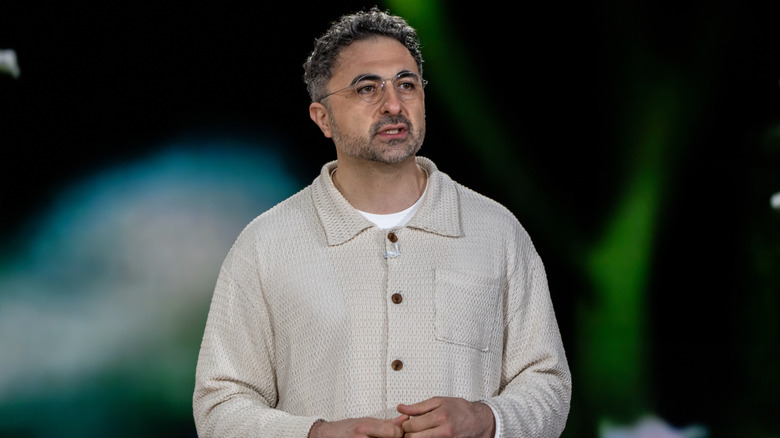
Microsoft AI CEO Mustafa Suleyman wrote in his 2023 book "The Coming Wave" (via CNBC) that AI tools "will make us smarter and more efficient for a time and will unlock enormous amounts of economic growth, but they are fundamentally labor replacing." He added to this idea while talking to CNBC (via YouTube) at the World Economic Forum in Davos the next year, saying: "We have to think very hard about how we integrate these tools," because of their capacity to replace human labor if implemented without adequate oversight. He noted that AI systems make business processes more efficient, allowing companies to replace humans who were once necessary. But they also create opportunities and capabilities, leading to the creation of new roles within the workforce.
Suleyman's words signal a crunch for humans. Working to bring about the advent of increasingly capable AI systems could ultimately lead to widespread loss of employment for humans. His words feel ominous, but he's actually fairly positive about the shift on the whole. "The Coming Wave" book and its supporting website suggest that AI "will make this next decade the most productive in history. It represents nothing less than a step change in human capability and human society." However, in a 2025 interview with Silicon Valley Girl (via YouTube), Suleyman noted: "In 25 years' time ... a large portion of the population are going to struggle to compete in the workplace with AI." So, Suleyman's thoughts on the matter are something of a mixed bag. He shows a lot of optimism about improvements to the workplace experience, but he is equally tethered to the notion that AI will ultimately replace human workers.
Jensen Huang: Humans will manage AI tasks instead of taking on the jobs directly
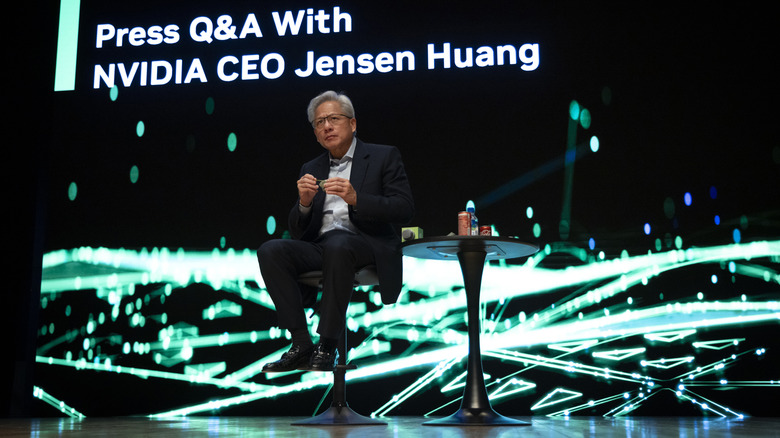
Jensen Huang, the CEO of Nvidia, has said that AI isn't going to fully replace people in the workforce, largely because there's still a need to program these tools and direct their efforts. Instead, he's confident that the career marketplace will carve out a new segment, in which skilled AI operators take up newly tech-infused roles that others once held. At the Milken Institute's 2025 Global Conference, Huang said (via YouTube) that "every job will be affected, and immediately, it is unquestionable, you're not going to lose your job to AI; you will lose your job to someone who uses AI." He also noted that AI will create an explosion of new jobs. "Every single layer of the tooling of it... creates tons of jobs at the next layer," he noted of the programming and management tasks involved in leveraging these systems. Instead of picking fruit, building cars, teaching classrooms, or writing legal briefs, people will direct AI systems to engage in these activities. As a result, a growing portion of the workforce will become AI managers that oversee the systems performing these duties instead of doing them directly.
The CEO of Nvidia perhaps knows a thing or two about where AI's future is headed. He leads one of the most aggressive companies engaged in the current AI "arms race." Nvidia is one of the most prominent options for traders seeking to add AI investments to their portfolio. The gigantic company has pledged to invest $100 billion into OpenAI, among numerous other spending commitments and contracts in the AI market. Some even believe Nvidia to be the world's most important stock, considering its prominent position in the hardware that makes AI tick.
Mark Cuban: AI competency will be essential for staying employed
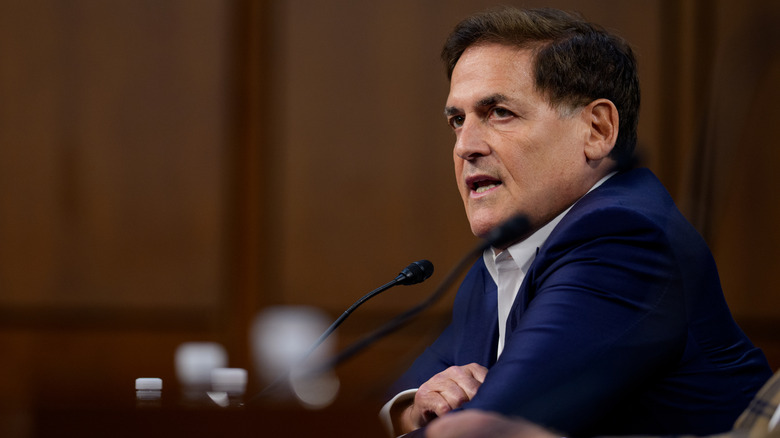
Mark Cuban is an outspoken finance celebrity most prominently seen on "Shark Tank" today. He got his big break in 1999, selling Broadcast.com to Yahoo for $5.7 billion (after selling his first tech company, MicroSolutions, a few years earlier). On The Dumbest Guy in the Room Podcast (via YouTube), he said, "there's going to be two types of companies in this country ... those who are great at AI and those who used to be in business." In his estimation, there's a gap in the market that astute AI-knowledgeable individuals can exploit for their own gain. Learn to use AI in a range of unique ways, and Cuban envisions a bright future in which countless businesses across industry come seeking your services to help them compete in a world potentially saturated with the technology. Fail to adapt, and you're out.
However, for those looking to put their AI skills to work, Cuban suggests looking for employment in a smaller company rather than applying for jobs at larger enterprises in the AI-dominated work world. Among the largest companies around, individual AI skills are "somewhat extraneous," he told CNBC Make It, suggesting at the same time that "small- to medium-size companies don't have that depth" when it comes to AI capabilities and user knowledge.
This is an interesting take because it perhaps signals a shift away from the accumulation that has taken place over many decades. Companies are becoming larger and incorporating an ever-increasing scope in order to remain competitive. But if workers instead seek entrepreneurial pursuits or prioritize smaller businesses in their job search in large numbers, it could set off a new trend of decentralization.
Elon Musk: No work, all play

Elon Musk said at the U.S.-Saudi Investment Forum (via YouTube) in November 2025 that "work will be optional. It'll be like playing sports or a video game or something like that." He went on to say that in futuristic works of fiction, "... money doesn't exist. It's kind of interesting. And my guess is, if you go out long enough, assuming there's a continued improvement in AI and robotics ... money will stop being relevant."
Those are big claims, and he's perhaps a little too on the nose with this take. Indeed, if AI is able to unleash its full potential as a time-saving resource that allows humanity to stop working as a primary daily pursuit, there wouldn't be any real need for capital. If we don't have to do anything productive to keep the world turning, there be enough of everything to go around for everyone. That's a utopian vision, to be sure, and it feels like a mirage. Numerous works of fiction have taken on this theme, with movies like "The Matrix" suggesting that it's not possible (or perhaps not desirable) to create or live in a world without want or suffering.
There's also a significant caveat to note: Elon Musk has a longstanding habit of 'predicting' things that absolutely don't come true. He has predicted fully autonomous driving capabilities going live in Tesla models in a few months or years well over a dozen times throughout the last decade. Similarly, the Hyperloop project he aggressively championed allegedly became a ruse to derail another, legitimate public transportation project in California (via Disconnect).
Sam Altman: AI will become a major creator of economic value
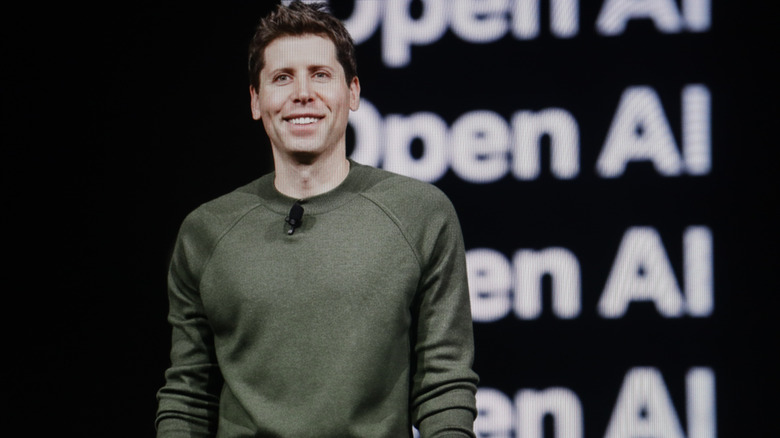
At Sequoia Capital's AI Ascent (via YouTube), Sam Altman, the OpenAI CEO marveled at the way users have become increasingly sophisticated in their interactions with ChatGPT. He laments that it remains inadequate as a model when it comes to producing code that can execute functions, though. The tool can produce text and image responses, but it isn't a problem solver in the way that humans can reason, adapt, and innovate. This is really the crux of the AI-human divide, but it's something that Altman apparently sees ChatGPT bridging as early as next year. He said, "next year is a year where I would expect ... AIs discovering new stuff, and maybe we have AIs make some very large scientific discoveries — or assist humans in doing that."
In the interview, Altman's body language suggests that the "assist" comment may have been something of an afterthought. This is underpinned by what he said next: "I am kind of a believer in most of the real sustainable economic growth in human history comes from ... better scientific knowledge and implementing that for the world." He anticipates robots going from "curiosity to a serious creator of economic value" in 2027.
Altman's comments suggest that he expects AI tools to ultimately take over the mantle of economic productivity. He doesn't add any specific context to explore where humans might fit into this picture, but the mental image he builds can shed some light here. Leveraging whatever the prevailing technology might be is at the core of human ingenuity for Altman. As a result, it seems that he envisions AI tools as the primary drivers of new 'stuff,' with humans taking a backseat and directing these priorities.