

Here's Who Will Gain The Most From Trump's $12 Billion Aid Plan
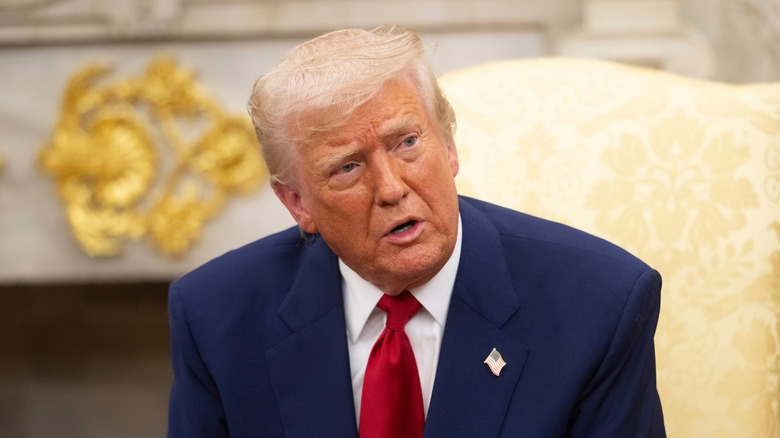
On December, 8, 2025, the Trump Administration announced it would be providing $12 billion in aid for American farmers. This aid is meant to make up for lacking market conditions and to help offset higher agricultural production costs. This comes in addition to a big tax break that American farmers can expect from the IRS. The majority of the payments, $11 billion, will be going to the Farmer Bridge Assistance (FBA) program, which is designed to aid row crop farmers of foods like soybeans, oats, rice, sesame, and peas. The remaining $1 billion will go to farmers the FBA doesn't assist, such as those who produce sugar or specialty crops like fruits and vegetables.
While the average income of farmers in 2025 is pretty surprising, many throughout the country have expressed that the assistance is greatly needed in the industry. Soybean farmers, in particular, need the boost due to the fact that, up until 2025, China was one of the most consistent buyers of U.S. soybeans. However, since President Donald Trump began levying import taxes on Chinese goods, the country has started sourcing its soybeans elsewhere.
The hope seems to be that this aid money will also ripple out to benefit American consumers, with Trump saying in a press conference, via Youtube, "Maximizing domestic farm production is a big part of how we will make America affordable again and bring down grocery prices for American families." Even so, much like those awaiting information on tariff dividend checks, questions remains over whether the plan will work — and whether $12 billion will be enough.
What the Trump administration hopes this $12 billion will accomplish
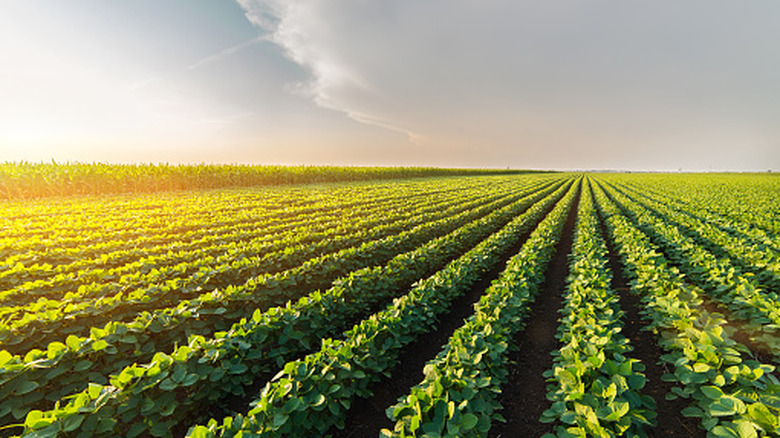
When discussing the point of these bridge payments, Trump and his contemporaries have repeatedly cited stagnation — as a direct result of Joe Biden's administration, they claim — and shrinking margins in the agricultural industry. As Secretary of Agriculture Brooke Rollins said in the Department of Agriculture's announcement of the funds, "The lack of new trade deals under the last Administration turned a trade surplus under Trump into a $50 billion trade deficit, causing our farmers to lose markets and feel acute pain from lower commodity prices." However, others contest that Trump's tariffs actually bear responsibility for the current state of the industry. In addition to hindering soybean sales, the effects of tariffs are also showing up in the form of higher agricultural costs for farming equipment and fertilizer, leaving many farmers in the red.
That's not to say that those struggling aren't grateful, but there's still a long way to go. The Trump Administration even acknowledged as much in its announcement of the funds, noting that these payments are only meant to tide farmers over until October 2026 — when the administration plans to enact changes laid out in the One Big Beautiful Bill Act that they hope will further stimulate the agricultural market. That said, farmers have made comments to the media expressing that they would much prefer having customers to sell to rather than receiving lump sum payments. With so much ambiguity surrounding U.S. agriculture's place in the global economy, farmers' futures remain uncertain despite this cash influx.