

12 Things Frequent Travelers Always Refuse To Buy

It's more than miles that separates frequent travelers from the casual vacationer. Despite being on the road all the time, they're not spending as much money as you think. Rather, they're saving far more than you could imagine. Regular travelers have learned from experience which items aren't worth the money, and they avoid them. However, these are some of the items the less well-traveled person is most likely to spend money on.
Learning from frequent travelers could save you during each stage of your journey. First of all, frequent travelers choose to cut costs by arranging as much of their trip as possible themselves. Then, at the airport, they know how to get better seats aboard the plane without spending a fortune. On the ground, you won't catch them at certain popular shops because they know better deals are available elsewhere. When it comes to hotels, frequent travelers know where to stay, and more importantly, where not to stay. While visiting other countries, they make detours around street marketers targeting bargain-hunting tourists. And they don't even think about purchasing food and plant items that they may not be allowed to take back home. So, if you want to save money while seeing the world, try implementing the following tips from frequent travelers.
Travel agency vacation packages

Travel agencies are useful when you need help planning a difficult trip. But if your travel itinerary is modest, spending money on a travel agency is probably unnecessary. Complicated travel might involve several forms of transportation that have to be carefully coordinated, such as landing at the airport in time to be whisked by car to the seaport to catch the ferry's only trip each day to a remote island. Typically, frequent travelers don't need this sort of help and know how to navigate successfully regardless of the circumstances.
Experienced travelers also tend to prefer more flexibility. For example, a travel agency may have excellent contacts at a major hotel chain and can arrange VIP service. However, a real traveler might prefer reviewing several locally owned hotels before deciding where to stay. The travel agency is likely unaware of the small hotel's offerings.
Frequent travelers may also not appreciate a tight itinerary. The dinner reservation at the tourist restaurant the travel agency arranged weeks or months in advance may feel less enticing once the designated night arrives. After a full day of exploring, a traveler may prefer grabbing a bite at a neighborhood bistro.
Flight upgrades
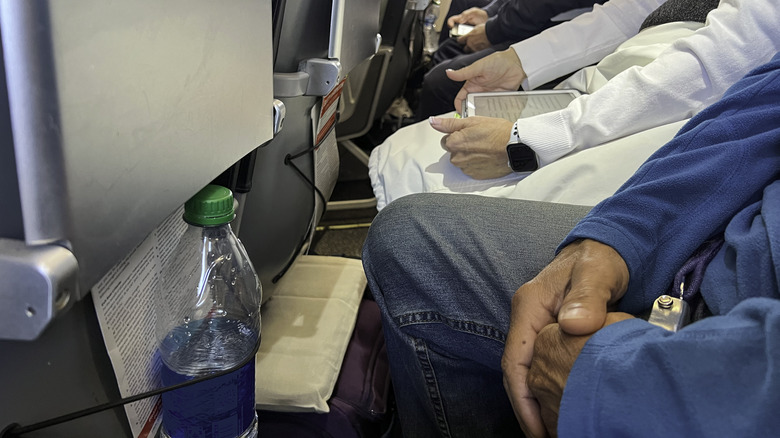
Will a few inches of extra legroom make much difference for your comfort? If not, don't reach for your wallet because you'll probably be overcharged for the upgrade. However, if you do need extra space, consider canceling your ticket and then rebooking the flight. Thrifty Traveler discovered that it's cheaper to rebook than to upgrade. It can even be significantly cheaper. Thrifty Traveler tested upgrading versus rebooking on more than 20 flights flown by American Airlines, Delta Air Lines, and United Airlines. Only one flight didn't charge more for the upgrade.
Instead, typical was the discrepancy between an upgrade and a rebooking found on a Delta flight from Boise to Chicago. A round-trip flight costs $365. If you wanted to change your seating and fly first class, the airline was willing to give you an upgrade for $1,129, boosting the price of the fare to $1,494. But it was less expensive to cancel the flight then rebook for a first-class ticket for only $1,114. Remember, the upgrade fee alone was $1,129. So, that means on your own you could book your plane ticket for first-class for less than the fee the airline would charge you for making the upgrade.
Rental cars
Driving an expensive car on vacation won't make you look like James Bond. It'll make you look like the unfortunate person who has to pay for gas and drive around the block three times to find a place to park. Business Insider mentions another problem with renting a car. It can increase your stress. Trying to familiarize yourself with a vehicle different from your personal one while driving through unfamiliar neighborhoods and confusing intersections isn't most people's idea of a relaxing vacation.
There's also the hassle of booking the rental, picking it up, and dropping it off if those services aren't handled for you. Booking the car also locks up a percentage of your normally available credit. And don't forget insurance. The car you want may require additional insurance, or your credit card's basic rental insurance may not be enough.
One of the benefits of travel is getting away from the headaches of day-to-day life. Frequent travelers tend to leave the driving to professionals. Those on a tight budget make good use of city buses and subways. Travelers with fatter wallets or business expense accounts might opt for taxis or rideshares.
Data roaming fees

It's great to be able to use your phone when traveling overseas. But staying in contact with people back home is more expensive than you think if you don't have an international plan. You don't want to be like the Florida man who appeared in a Tampa Bay 28 ABC Action News story. He returned home from a vacation to Switzerland to discover he owed T-Mobile more than $143,000 in data roaming fees. You're probably wondering what in the world he did on his phone to rack up that kind of bill. Sadly, he didn't do anything unusual. It doesn't take much activity for data roaming charges to reach five and six figures. Phone service providers routinely charge more than $2.00 per megabyte. If you streamed a one-hour video, you'd probably use one gigabyte of data, making the cost of the video over $2,000.
Frequent travelers avoid data roaming fees by making sure their phones aren't set to automatically roam when outside their provider's coverage area. If they want the convenience of using their phones, they purchase local SIM cards. More recent phones may contain an eSIM, which allows you to download an eSIM plan suited for your destination. The phones let you save multiple eSIM plans if you're traveling to several countries that require different SIM profiles.
Currency exchange services at the airport
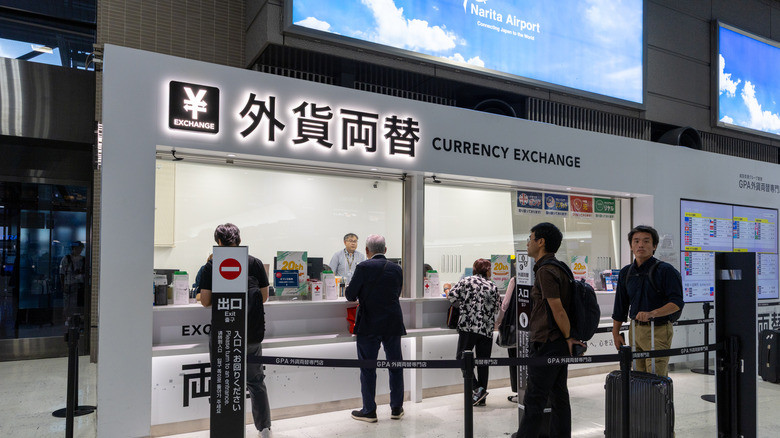
Frequent travelers don't waste their money getting currency at the airport rates. Those airport exchange counters are for people who don't think ahead. Passengers land in a foreign country, and suddenly it dawns on them that they should swap those U.S. dollars for British pounds or Japanese yen. However, you always pay for convenience. According to Cambridge Currencies, airports can charge you from 10% to 15% more than a bank through their use of bad rates and hidden fees. Cambridge Currencies warns to look out for those who try to lure you with promises of being commission-free or without fees. Instead, they simply make their additional profit by tilting the exchange rate even more in their favor.
If frequent travelers expect to need a different currency, they either get it from their neighborhood bank back home or visit an ATM in their destination city. But if a considerable amount of cash isn't needed, frequent travelers prefer not to be seen with a wad of banknotes. Instead, they choose to rely on credit cards. If they're stolen, frequent travelers know they have a better chance of recovering financially than if the thieves had taken cash. Frequent travelers are also careful to make sure they use a credit card that doesn't charge exorbitant fees for international use.
All-inclusive resort packages

Frequent travelers are often adventurous seekers of the unusual. But all-inclusive resorts tend to be properties divorced from the world around them. They're designed that way. They're not there to serve as strong introductions to the local culture. They exist to insulate vacationers from the sense of alienation that comes with travel to unfamiliar regions. For example, they're ideal for family vacation groups that like the idea of being in a tropical setting without experiencing the challenges that come with navigating new terrain, bridging language gaps, and trying to figure out whether to tip or not.
But frequent travelers often enjoy the very things that annoy less-savvy travelers. Frequent travelers are more likely to explore the local area and take a deep dive into the culture. To the occasional tourist the local language in unintelligible but to the ears of the frequent traveler it's music.
There's also money to be saved. All-inclusive resorts may tack on various fees that would increase the cost of your stay. For instance, according to Travel Pulse, you might have to pay more for certain alcoholic beverages and better cuts of meat. Frequent travelers may prefer to pick and choose their restaurants and meals to save money versus settling for the resort's offerings.
Luxury hotel rooms

Luxury hotels are for people who spend a great deal of time taking advantage of the amenities. If you're going to be busy with sightseeing or business meetings, you probably won't have time to justify the tab. That's why frequent travelers might skip the five-star hotel in favor of more modest accommodations. For example, they know from personal experience that they're unlikely to make use of the hotel's top-of-the-line fitness facility. The same could be said of the pool and spa.
Frequent travelers put more emphasis on the quality of the hotel's customer service, the cleanliness of the rooms, and the convenience of the hotel's location. Such features aren't limited to five-star establishments but can be found in well-reviewed hotels costing much less.
A modest estimation of how much time will be spent in the hotel can end up saving the frequent traveler a significant amount of money. Luxurimag reported that a luxury travel agency network's hotels were charging an average of over $1,500 per night in 2024. Meanwhile, even more exclusive destinations are asking for more than $4,000.
Duty-free merchandise
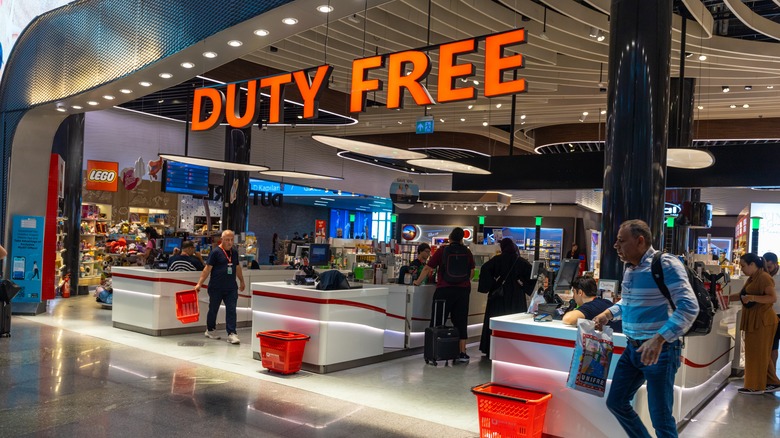
Fortune Business Insights says the value of the 2024 duty-free retail market worldwide was more than $80 billion. It's difficult to ignore the appeal of duty-free shops when you travel internationally. The possibility of snagging a deal on a famous brand can be too enticing for some people to ignore. Frequent travelers, however, know that just because an item is in the duty-free shop, that doesn't mean that it's a bargain. Also, the same item can differ in price from airport to airport.
Liquor can be a good deal if you're careful. But you're probably wasting money on sunglasses and beauty products. The Points Guy conducted a survey among duty-free shops in 12 international airports. The survey found Brut Champagne in the Stockholm airport selling for $16 less than in the grocery store. Stockholm's airport consistently outperformed other airports on alcohol prices.
But the same survey found that perusing duty-free shops for deals on sunglasses and beauty is usually a waste of time. Most of the time, the prices are nearly identical to what you'd find elsewhere. Sunglasses may be even more expensive than expected. The survey discovered elevated prices at the airports in Dubai and Mexico City,
Culturally sensitive items

That antique that the guy in the back alley is trying to sell you may be a bit too nice. Some countries have strict laws about what culturally relevant items can be taken out of the country. A good example is Egypt. For generations, the country was the target of grave robbers, plundering ancient sites for antiquities to sell to wealthy collectors or the world's largest museums. In time, the country has been able to severely reduce the amount of illegal antiquities trafficking that takes place. Any item of cultural significance requires the written permission of the government before leaving the country.
So, frequent travelers to nations with ancient histories like Egypt know to avoid purchasing suspicious items of dubious provenance. Either the item is a worthless fake, or it's a genuine but restricted item subject to seizure by customs agents. Stealing a cultural item in Egypt can cost you approximately $1,000 to $2,000. Exporting the item comes with a fine of about $2,000 to $20,000. And if you're found guilty of trafficking in antiquities, you could face a prison sentence of one to seven years.
Non-packaged foods and native plants
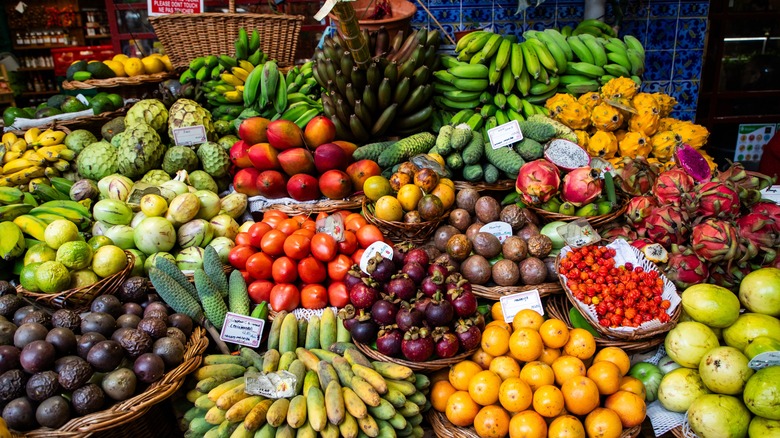
One of the pleasures of traveling is sampling unfamiliar foods and learning about intriguing native plants. Authorities may appreciate the fact that you like their cuisine, but don't expect them to let you board a plane with items from the local farmer's market. They take a similar stance regarding local plant life. But even if you sneak items past authorities on one end of your trip, you could be in for a surprise when you try to re-enter your home country. Federal agencies insist on closely examining any foreign foods and plants originating from elsewhere. U.S. Customs and Border Patrol explains that it confiscates some agricultural items because they may contain diseases that could attack U.S. livestock. Other items may be taken because they're known to host pests that threaten crops.
Frequent travelers never waste money on questionable items that they aren't likely to get past security. They enjoy the items in their native setting and walk away with memories only, or perhaps a photo. But they don't risk being questioned by federal agents, which could lead to being the target of criminal and civil cases.
Street vendor luxury knock-offs

Who cares if Rolex is spelled Roletts? Customs agents or local authorities will care, meaning you've wasted your money on that street vendor's deal of a century. Frequent travelers are well familiar with the polished charm of hawkers of pirated merchandise. They know that it's not worth even stopping to browse. The items have to be low-quality to justify their price. And, even if the build quality were excellent, you'll still be supporting a criminal network by purchasing from their dealers. Becoming a customer of one marketer can make you the target of others who flag you as an easy target. Frequent travelers also know that reaching into their pockets for cash while standing on the street can make them vulnerable to pickpockets and muggers.
Some vacationers think that shopping on the street is all part of the fun of being a tourist. But authorities don't think so. For example, in 2023, the Spanish municipality of Torrevieja made news by imposing a fine of 200 euros ($232) for tourists caught buying street goods from unlicensed sellers. Murcia Today reported that the problem was so bad that authorities felt they had to do more than just go after the vendors. Frequent travelers don't want authorities coming after them, and neither should you.
Items available on the internet
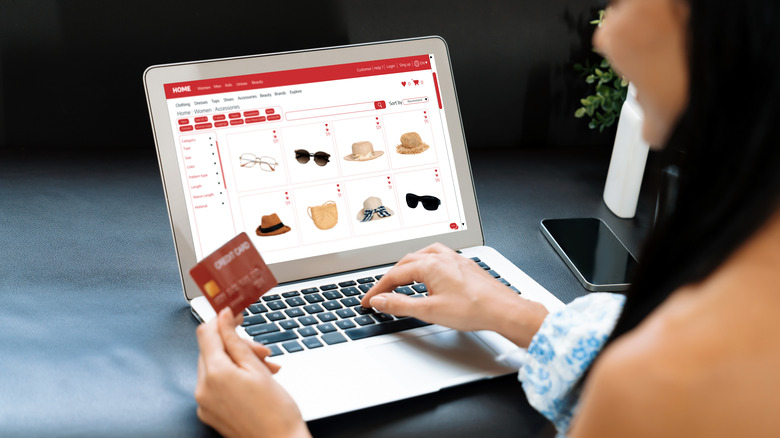
Frequent travelers know that the so-called unique item they spotted in that storefront in Venice, Italy might also be sold in Venice, California, and readily available on the internet. Popular tourist items, such as cheap t-shirts, sunglasses, snow globes, and other trinkets, often come from the same sources that make them available to a large number of vendors around the world. Some of those sellers are likely to list their items online. Because they don't have to pay for storefront rental or stand all day on the street in the hot sun, they can afford to offer those items at lower prices. Fortunately, a phone with either a local SIM or the correct eSIM profile will allow you to immediately compare the store price with the online price.
Frequent travelers also prefer shopping online when possible because it makes packing much easier. Inexperienced vacationers tend to overshop. Then, they have to purchase additional luggage to get items back home. And with the new luggage could come airline baggage fees. In other words, that little Eiffel Tower keyring could turn out to be more expensive than you thought.