

This Popular Shark Tank Alum Was Just Bought By Anheuser-Busch
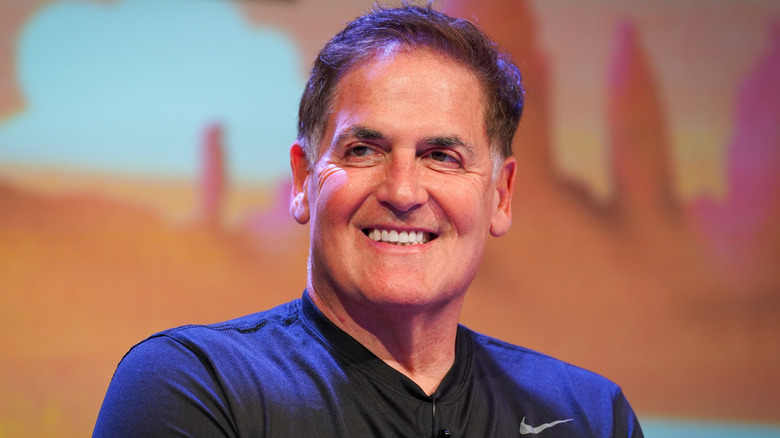
One of the biggest deals ever made on Shark Tank involved a mixed wine box product that started as an MBA project by three students from the University of Texas. Called BeatBox, this project ended up getting a $1-million investment from venture capitalist and Shark Tank co-host Mark Cuban, in exchange for 33% of the company. Now BeatBox is about to become part of the Anheuser-Busch fiefdom.
On December 5, 2025, Anheuser-Busch announced in a press release that it has an agreement to buy an 85% stake of BeatBox for $490 million. The deal, which includes a path for Anheuser-Busch to acquire 100% of BeatBox in five years, is expected to close in the first quarter of 2026. When it does, BeatBox will join Anheuser-Busch's assortment of mostly alcoholic beverages that consists of beer brands like Budweiser, Stella Artois, Busch Light, Landshark, Presidente, and Michelob Ultra, along with ready-to-drink brands such as Cutwater Spirts and Nütrl Vodka Seltzer.
The pending deal was acknowledged by Cuban, who posted "Congrats @Beatbox" on X along with a TikTok clip of the moment he outbid the offers of fellow Shark Tankers Kevin O'Leary and Barbara Corcoran for a piece of BeatBox.
BeatBox faced a long road to success after first appearing on Shark Tank
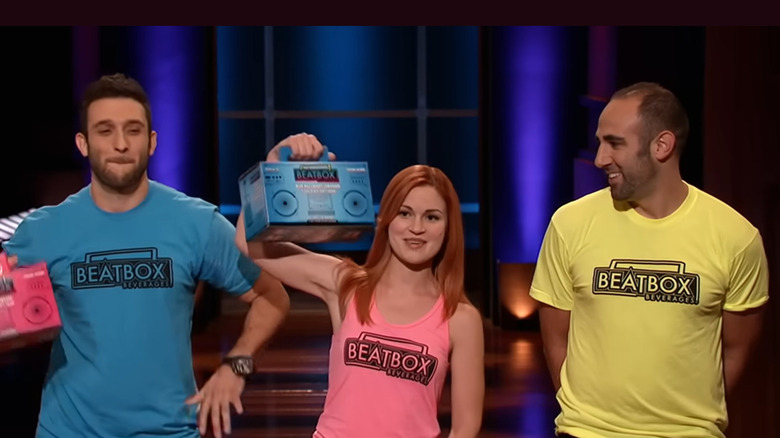
Founded in 2011 by Brad Schultz, Aimy Steadman, and Justin Fenchel, BeatBox Beverages originally produced 5-liter boxes of bagged wine (equivalent to seven bottles of wine) mixed with flavors such as cranberry limeade and blue raspberry lemonade. The packaging was modeled after beat box radios. When its team appeared on Season 6, Episode 6 of ABC's Shark Tank, which aired on October 2014, Austin-based BeatBox was doing $235,000 in sales, co-founder and CEO Justin Fenchel told CNBC Ambition (via YouTube). Those sales were made with the three founders distributing the product themselves, per fan site Shark Tank Recap.
In the first year after closing the deal with Cuban (who has a series of tips and tricks for managing your money), BeatBox sales ballooned to $750,000. "Then over the next two years, sales sort of flatlined," Fenchel said. That's when the company's leadership realized that a 5-liter bag-in-box was a "huge serving size, and to ask consumers to spend $20 is a big challenge."
So, BeatBox created 16.9-ounce single-serve packs with a wide selection of flavors. By doing this, the company lowered the price of their product to under $5. As a result, in 2019, the sales doubled from $1 million to $2 million and then doubled again to $4 million. "Since appearing on Shark Tank, we have done over $57 million in sales," Fenchel said.
Smaller packaging improved BeatBox's reach
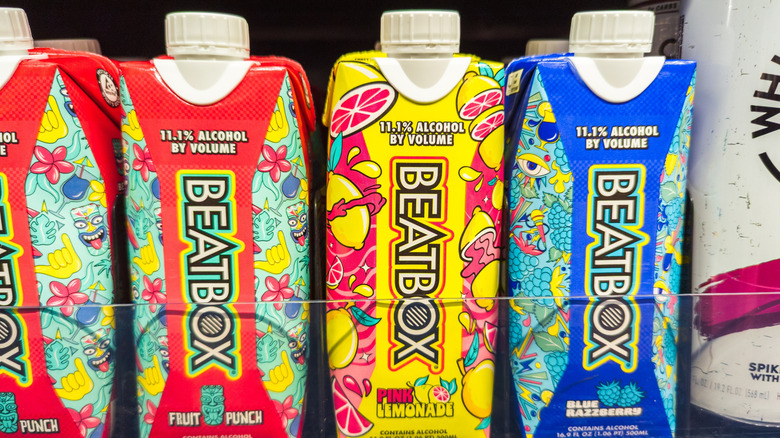
Shrinking the products' size also enabled BeatBox to expand its reach, co-founder Brad Schultz added while speaking with CNBC Ambition. "The single serve really saved the business. It allowed us to be in a lot more stores where the bag-in-box couldn't really be sold."
And those sales swelled in recent years, placing BeatBox alongside other profitable Shark Tank products. In the 52 weeks ending on November 23, 2025, BeatBox recorded $340 million in sales, which amounted to a growth rate of at least 50% year-over-year, per Anheuser-Busch. "We could not be more excited to welcome BeatBox, one of the fastest-growing RTD brands in the industry, to our portfolio," CEO Brendan Whitworth said in the company's press release.
BeatBox's acquisition is part of a larger Beyond Beer strategy by Anheuser-Busch InBev, a Belgian conglomerate that formed after InBev absorbed the 165-year-old St. Louis, Missouri-based Anheuser-Busch in a 2008 $52 billion merger deal. Its goal is to keep up with changing tastes across the globe by acquiring or producing beverages like Mike's Hard Lemonade, Cutwater Tiki Rum Mai Tai, and Brutal Fruit Spritzer. As of April 2024, the company's Beyond Beer portfolio was valued at $1.5 billion, according to AB InBev.