

10 Things Millennials Always Refuse To Buy
We may receive a commission on purchases made from links.
Millennials have always been a highly scrutinized demographic, with much said in the media about their particular shopping habits. While it's normal for brands and the media to pay attention to what people are buying, with Millennials, there was also considerable concern about what they weren't putting in their carts. As Millennial shoppers grew into adulthood and matured, they were frequently blamed for declining sales of certain products.
It's important to remember that Millennials, who are recognized as adults born between 1981 and 1996, are the last group of adults to have honestly remembered what life was like before the rise of the internet and smartphones. This demographic has likewise experienced multiple severe financial crises throughout their lives.
These things not only shaped the point of view of Millennial-aged Americans, but also impacted how they shop and why. Because of this, it's not too surprising that items that seemed like mainstays to older generations no longer have the same hold on Millennials. Here are 10 items that Millennials famously refuse to buy.
Breakfast cereal

Breakfast cereal sales have been in decline for decades, a trend that followed the emergence of Millennials into adulthood. Powerhouses like Kellogg's and General Mills are feeling the impact of the ongoing drop in cereal sales. The Associated Press reports that Kellogg's itself is in the midst of a potential acquisition by Ferrero Group. Meanwhile, plans were made to convert a former Cheerios flour plant into a $16 million office complex.
Although Millennials were likely the last generation to enjoy their sugary breakfast cereal during Saturday morning cartoons, it did not translate into a desire to keep adding boxes of once-beloved brands to their shopping carts. As for why this became the case, there are different theories. CBC News and the New York Times took a more hostile approach in 2016, accusing Millennials of being too lazy to take the effort to make a traditional breakfast or clean up afterward. These claims put off actual Millennials, who via Reddit pointed out that the CBC News article was based on a Mintel survey showing that 40% of Millennial-age respondents found cereal inconvenient to consume, with no further explanation offered. As such, many felt it was unfair to jump to such negative conclusions about an entire generation based on so little information.
Preferences aside, pricing combined with shrinkflation could be a factor. For instance, a person shared in the Subreddit community r/shrinkflation that they encountered boxes of Reese's Puffs for sale in 2024 that were both smaller and more expensive than what they had bought nearly 10 years earlier. Being asked to pay more for breakfast cereal than their parents while getting less might not make their decision to refuse to buy these grocery items all that strange.
Single-use plastics

It's true that Millennials are opting out of single-use plastic products at a notable rate, with some citing a decisive concern about their environmental impact. A Deloitte survey found that 63% of Millennials are willing to pay more for products and services that are environmentally sustainable. While the Millennial generation is often linked with Gen-Z in terms of environmental-friendly shopping, other research suggests that Millennials may be more inclined to follow through with refusing to buy one-time use plastics or plastic packaging. That's due to their tendency to perform extensive research on products and brands before purchases as well as a need to shop strategically due to feelings of financial wariness and instability unique to their generational experiences.
For many Millennials, plastic straws aren't only a form of pollution but also make less economic sense than glass or steel straws from Amazon, which can be purchased once and used over and over. They will likewise trade single-use plastic cups for reusable drink containers by Hydro Flask, Stanley, and Owala. While some older Americans might grumble about an anti-plastic point of view, for Millennials, the decision to avoid single-use plastics isn't just about environmental sustainability, it's also about doing what makes financial sense as a shopper.
Landline phones
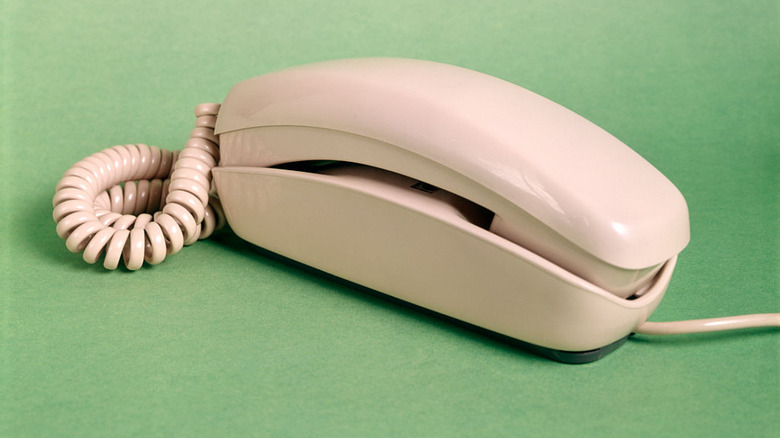
Though Millennials are old enough to remember what a dial tone is, they are also the age demographic many blame for the downfall of traditional landline technology. In 2001, as many Millennials were finishing high school, data shows that 1 in 10 people worldwide owned cellphones. Within 10 years, that number jumped to 6 in 10 people. This was before smartphones as we know them today became widely prevalent.
For Millennials, landline phones are just far less convenient than more modern alternatives. This age group wanted communication technology that they could take practically anywhere. While smartphones are often the devices, there are other digital options, such as FaceTime and Google Voice, that can even make traditional phone service unnecessary at times. Landline service can also be more expensive, with long-distance connections costing more than cellular or digital alternatives. Millennials also may not be fans of the limited features for landline usage, as well as being vulnerable to power outages that make communication impossible. It doesn't make sense for Millennials to continue to spend money on landline phones as this technology becomes increasingly obsolete.
Stock

Millennials were said to be the key to the Occupy Wall Street protests of the early 2000s, so it's no surprise that this generation isn't necessarily as keen to buy stock as generations past. Some frame Millennial opposition to Wall Street as a matter of personal values and as a reflection of massive wealth inequality among Americans. However, it might also be due to having lived through multiple recessions and viewing stock investing as a risk not worth taking.
In her 2021 Syracuse University paper titled "Why Millennials Fear the Stock Market," Kathryn Elliot argued that Millennials were likely risk-averse when it came to buying stock because they saw the consequences of both the dot-com bubble burst and two economic recessions firsthand. While it's true that this group accounts for around 30% of consumer debt, having witnessed the devastation that can be caused when stock investments are wiped out, Elliot argues that Millennials lack confidence that investing will translate into long-term financial stability.
Another interesting point Elliot noted is that Millennials overall lack the financial knowledge of older generations; this could mean that their distrust of buying stock could change if they were more informed. For now, many Millennials are refusing to purchase any stock.
Cigarettes

Millennials were perhaps the first generation to show a strong, conscientious, and health-based aversion to cigarette smoking. This was likely due to greater exposure to the severe and harmful effects of first- and secondhand smoke. There were dozens of successful landmark lawsuits and key FDA regulations that forced cigarette companies to be more transparent about ingredients, such as the addictive nature of nicotine and how excessive smoking had been linked to forms of cancer.
These changes helped to lay the groundwork for a shift in public perception of cigarettes as Millennials came of age, one that removed any expectation or social pressure to develop smoking as a lifelong habit. Yet some will point to the truth campaign as a significant influence, thanks to its decision to spend money advertising at the national and local levels, reaching millions of Millennial Americans during their formative years and directly increasing their knowledge of the harmful side effects of cigarettes.
As a result of efforts on multiple fronts, a sharp decline in American smokers began during the early 2000s and continues today, as only 11% of U.S. adults admit to smoking recently, according to a Gallup poll. By comparison, about 45% of Americans smoked in the 1950s. Although Millennials may refuse traditional cigarettes, some research suggests they are more inclined to vape, potentially due to a misconception that it's a safer means of tobacco consumption.
Cruises

Millennials may refuse to spend money on a cruise package for a few reasons, but one of the biggest reasons this group pay pass on this travel option is how long it takes to get to their preferred destination. Being on a boat for several days may not be appealing to those who would prefer instead to spend between a few hours and a little over a day on an airplane.
Because so many Americans can rarely afford to take time off of work, every minute of free time counts when traveling. Because cruises represent a slow pace and meandering leisure, many see it as a preferred vacation option for retirees, people who no longer have to worry about hustle and bustle and are free to relax for much longer than your average working Millennial. As such, some Millennials have come to see cruises as for seniors rather than vacationers their own age.
While Boomers had "The Love Boat" and the romance of the open sea, Millennials might not feel the same way. The 2020 COVID cruise ship quarantines and revealing documentaries about cruise disasters have also done little to convince Americans in this age group that a cruise is worth enduring potential health risks.
Fabric softener
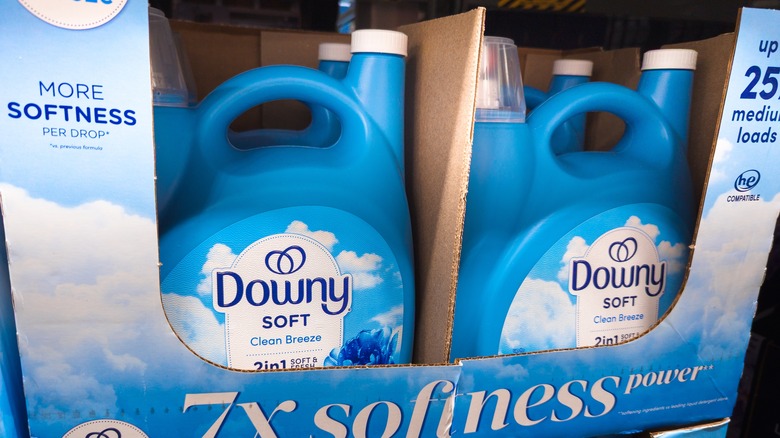
While fabric softeners have been around for decades, these products experienced a notable sales decline during the 2010s. It was so noticeable that the Wall Street Journal released an article pinning the downward trend on Millennials specifically. Conglomerate Procter & Gamble's communication director, Damon Jones, expressed the company's concern to FoxBusiness.com, stating that Millennials "didn't grow up spending lots of time doing household chores or possibly didn't see the product used at home with the frequency which prior generations experienced." P&G's President of Global Fabric Care, Shailesh Jejurikar, likewise told investors that Millennial shoppers do not know the product or understand what it is for.
If Procter & Gamble and others in the laundry detergent space were hoping that these observations would somehow get Millennial customers on board with buying fabric softener, they greatly miscalculated. The opinions went viral on Tumblr, where outraged users instead chose to share recipes for making one's own fabric softener. While P&G leadership assumed Millennials didn't use their product due to ignorance, at least one person refused to add the substance to their wash because they claimed it made it harder, not easier, to clean their clothes; they claimed to see an immediate improvement when they stopped using softener. It's also possible that Millennials have come to prefer to buy products that combine laundry detergent and fabric softener. These types of detergent, which go for as low as $9.98 on Amazon, ultimately saves both time and money.
Cars
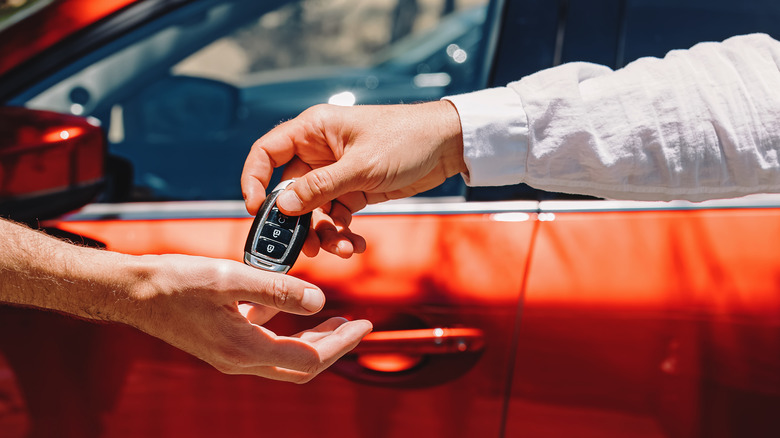
The average price of new cars in America reached $50,000, a historic first. While one might immediately pivot towards buying used cars as alternatives, even these vehicles have gotten noticeably more expensive in recent years, with some reportedly going for more than $30,000. Overall, the price of car ownership is reaching a point where Millennials may be less likely to own a car than previous generations.
Though it's possible to make the case that cars are essential transportation for many Americans, you can also argue that Millennials exist at a time when there are other methods of getting around that make outright vehicle ownership unnecessary. For instance, Uber and Lyft serve millions of Americans every month, with the former even expanding into dozens of countries. Aside from using ride services to get from one place to the other, Americans use delivery services like Grubhub and DoorDash to get fast food and groceries delivered right to their doorstep. Meanwhile, Walmart allows customers to order groceries for home delivery directly through its app or website.
As for work, nearly half of all Millennials prefer to work remotely, more than any other age group. Because fewer Millennials solely rely on cars to get to work, it would make sense that this generation isn't interested in making a major purchase of this kind, especially as some automobiles can depreciate in value relatively quickly.
Soap bars
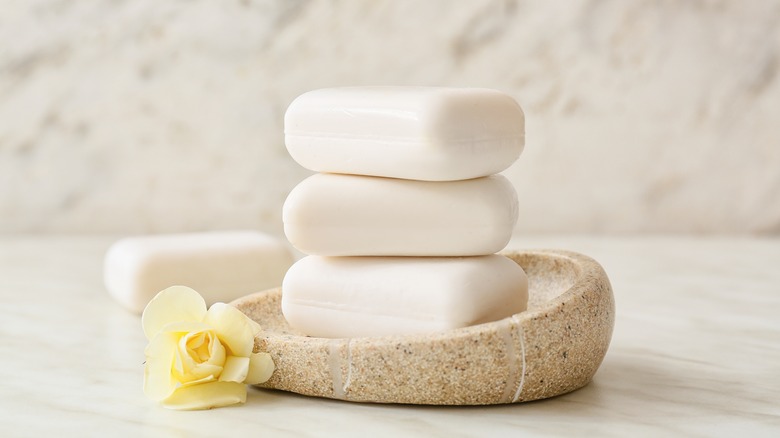
Millennials were directly blamed for the drop in soap bar sales following a Mintel study, which found that this form of soap suffers from negative perceptions that deter some customers from buying it. Millennial-age shoppers allegedly find soap bars gross and unsanitary, with some reportedly worried that the bars could harbor germs, a fear that seemed to stem from fears that it would be an inadequate way to protect against COVID-19. Some have gone on the defensive for bars of soap, writing articles that attempt to assure Millennials that they are effective at getting rid of germs and helping you get clean. That said, there are other reasons for Millennials to refuse to buy them.
Soap bars can be famously hard to hold onto during a bath, slipping out of your hand, and depending on where you're standing in the shower, it may even be possible to experience an injury. Such issues may be why Millennials increasingly prefer liquid soaps, with a variety of specialized options meant to clean the face, hands, and body. At the very least, it doesn't seem to be a pricing issue. For instance, You can find soap bars and liquid soap starting at around $1.50 and $1.25 respectively at Walmart. It might just be that Millennials are far more interested in what's efficient and convenient, and for whatever reason, soap bars are not seen in this light.
Diamonds (traditonally mined)

Although diamonds were once said to be a girl's best friend, Millennials have become increasingly estranged with the shiny gem, though there's no known specific reason for this. Some theorize that because marriage rates are lower among Millennials than previous generations, they are less likely to fixate on diamond engagement ring purchases. Even if Millennials push forward with getting their own diamond ring, they are inclined to steer clear of purchasing blood diamonds, whose unethical cultivation and trade have contributed to war and economic instability across portions of Africa. Likewise, some take issue with the value of many diamonds being driven by false scarcity.
It may also be that Millennials are still very much interested in buying diamonds, however, they refuse to buy traditionally mined gems. Instead, many are turning to lab-grown diamonds. Some claim that Millennials are at the forefront of making lab-grown diamonds socially acceptable, as these gemstones are ethically produced and very affordable. As these things have proven to be very important to this age demographic, it's likely they'll continue to focus on sensible and sustainable jewelry options and leave traditional diamonds alone.