

This Discount Supermarket Chain Combines The Best Features Of T.J. Maxx And Aldi
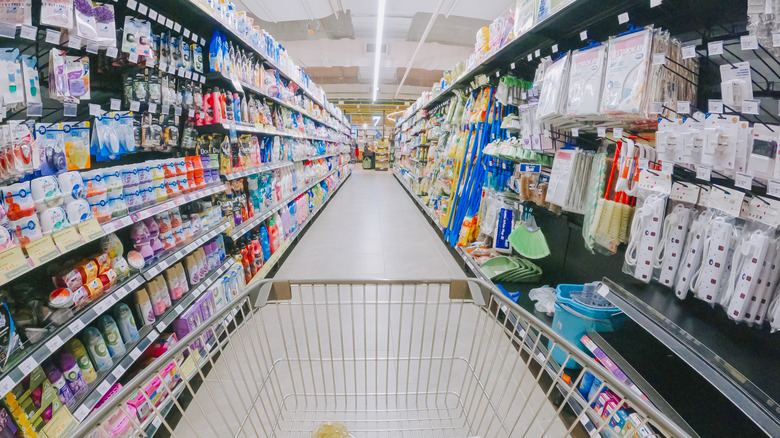
Walk into a Grocery Outlet store for the first time and you're likely to feel like you've been there before. That's because of the company's hybrid retail strategy that blends the spatial simplicity and low-cost ethos of money-saving grocery retailers like Aldi with the surplus-inventory approach of retailers like T.J. Maxx. Striving to provide budget prices, while maintaining a familiar in-store experience, is core to Grocery Outlet's business model. For shoppers, the value offered by this combo method is substantial: pricing that was 40% to 70% lower than what traditional supermarkets charge, according to a 2023 Grocery Outlet investor report.
These savings are largely due to the company's opportunistic sourcing model. Rather than relying solely on private-label goods and streamlined SKUs, like many discount grocers, the chain's buyers specialize in acquiring surplus inventory from sellers. In many cases this means picking up items that were originally bound for other retailers but never made it for one reason or another. This includes items like discontinued stock, mislabeled or dented bulk packages, or products the original purchaser returned or couldn't sell.
Behind the rise of Grocery Outlet

Grocery Outlet first started in June 1946, when James Read launched the company in San Francisco under the name Cannery Sales and specialized in government-surplus canned goods. Over the years, the business evolved to acquire surplus and close-out inventory while expanding into independent stores before eventually adopting the "Grocery Outlet" name in the late 1980s.
Nowadays, Grocery Outlet typically operates in small-format stores of roughly 15,000 to 20,000 square feet, according to the company's annual filing. By comparison, Aldi stores are around 22,000 square feet. That means less space to have to purchase, maintain, stock, and staff — allowing Grocery Outlet to pass those savings directly on to the consumer. Customers can also shop online for store pickup or use services like Instacart to have their order delivered to them.
Grocery Outlet operates more than 536 locations across the United States, according to data site ScrapeHero. Originally concentrated in the western U.S., the chain has expanded its footprint nationally — a move that has resonated with shoppers facing rapidly increasing prices on groceries. For cost-conscious (and time-short) shoppers, Grocery Outlet offers a compelling alternative to both traditional supermarkets, and basic discount grocers that generally cut short the user experience.