

What Trump's Australian-Style Retirement Program Would Look Like In The US
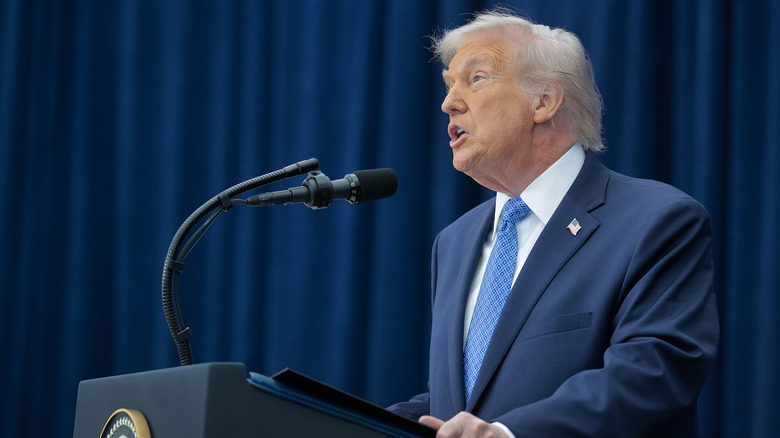
Although pensions have largely disappeared thanks to tax code changes in the 1970s, today individuals have more options than ever to save for retirement with a variety of IRA and employer-sponsored plans to choose from. But Americans may soon have another account option for to retirement savings. In early December, CNN reported that President Donald Trump's administration is considering implementing an Australian-style retirement program in the U.S.
Put simply, an Australian-type retirement program comprises an employer-sponsored retirement plan, which in Australia is commonly known as a "superannuation plan" or a "super." In Australia, these savings vehicles are mandatory for all employers, who are required to contribute 12% of an employee's income into the super funds to grow with the market. The contribution is made on top of the employee's regular income, not deducted from it.
While there are specific tax structures that would likely not be copied in an American version of a superannuation plan, if implemented, the system would revive a retirement program with guaranteed income for seniors. It would also increase the number of individuals with retirement savings by making contributions mandatory for employers. Guaranteed income plans have been shown to greatly benefit retirees, while employers with auto-enrollment for their employer-sponsored plans have seen more individuals participate. If implemented in the U.S., superannuation plans and subsequent changes could make retirement look like its 1970s glory days.
How superannuation compares against 401(k) plans

Australian-style superannuation plans differ from American 401(k) plans because they're mandatory for employers and offer a limited number of investment funds where individuals can park their money for growth. 401(k)s, by comparison, are voluntary plans. This means that individuals must opt in, select their contribution levels, and self-manage if and how their money is invested in the market. And while more employers are now offering 401(k) plans and incentives like contribution-matching, these plans' voluntary nature means that millions of working-age Americans are not setting money aside for retirement.
If legislated in the United States, Australian-style superannuation plans would likely not eliminate 401(k)s but rather complement them, much like mandatory state-level retirement plans do in states that have them. Supers could provide a base level of retirement savings for all working individuals, who would also be able to use 401(k)s to supplement their savings for a more cushioned retirement. In the meantime, 401(k) plans remain the most popular ways to save for retirement in the U.S. (but check out our explainer if you need help figuring out if a Roth IRA or 401(k) is right for you).