

America's Biggest Beef Import Isn't Steak
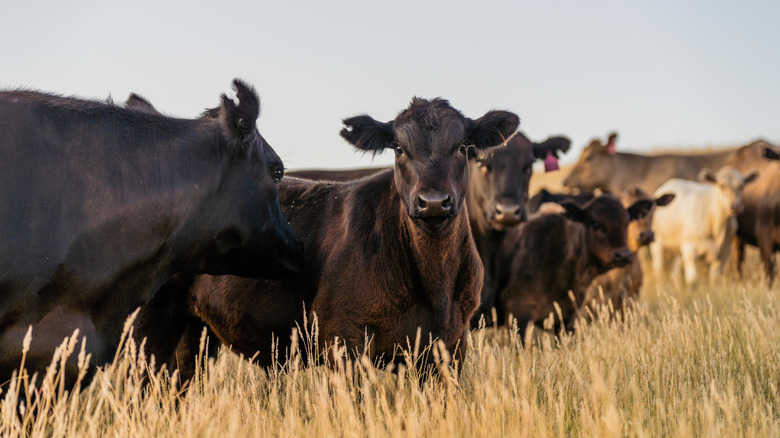
In May 2025, the United States Department of Agriculture (USDA) published a memo proving that Australia, Canada, and Brazil were the top three biggest suppliers of beef to the U.S. in 2024. The trio jointly accounted for 61% of America's total beef imports. Now, you may imagine these imports take the form of trucks full of steak, but in reality, most of that meat was lean beef and trimmings. In fact, that's largely the reason Australia makes sense as one of the highest import sources: The pasture-based Australian cattle industry produces naturally lean, grass-fed beef that's ideal for blending into the ground beef mixes Americans buy far more often than steak. The demand is so high that some companies, like Westland/Hallmark Meat Co., have historically produced ground beef in questionable ways, which then led to one of the largest ground beef recalls in recent history.
However, import and consumption are not exactly the same thing. The U.S. still remains the largest producer of beef in the world. Most of the steak and premium cuts Americans eat are domestically raised, while imports mainly fill the gap for lean processing beef, as opposed to the country's own high-value beef production. So much local production also means that tariffs aren't the only reason why steak and other beef products are at all-time high prices in 2025.
Believe it or not, imports keep U.S. beef prices lower
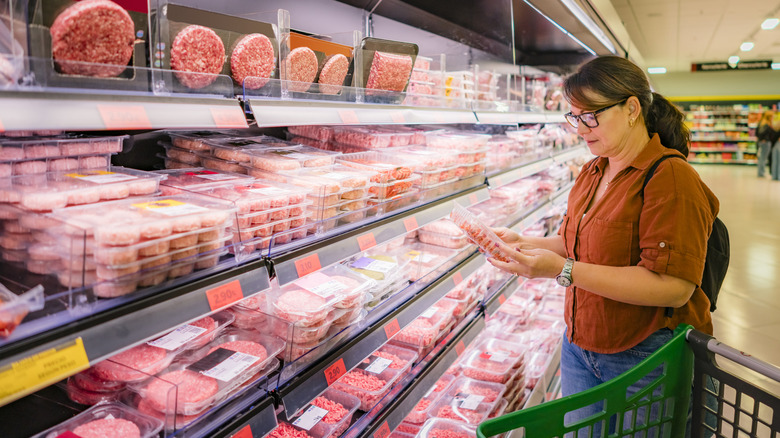
Research from the University of Arkansas shows that ground beef constitutes between 40% and 45% of the total beef consumption. However, since the U.S. beef export economy is based on high-fat, grain-fed meat, the local cattle don't typically produce enough lean trimmings to serve American homes, businesses, and the giant burger industry. Additionally, domestic production for lean beef trimmings is in decline, requiring external support to keep the industry going.
Hence, the imports. But it's worth noting that these imports usually form only a small fraction of the total U.S. beef supply: According to the American Farm Bureau Federation, roughly 10% of beef consumed by Americans in 2025 was imported as of late October. That means, at a very basic level, imports are simply topping up the demand for lean trim for ground beef and not replacing U.S. steaks. Essentially, these lean trim supplies play an important role in balancing U.S. beef production and help keep prices stable. If the imports were to reduce or stop altogether, the price of lean trimmings would likely rise due to high demand and low supply, which would then yield shelf prices so high that even budget-conscious ground beef shopping at Aldi would only slightly mitigate them.