

Major Credit Score Milestones That Could Change Your Life Forever

Millions of Americans cross over major life thresholds every year. Roughly 4 million young people graduated high school in 2025, and countless workers of all ages make a career move daily. Shifting from one company's payroll to another is a big enough deal for the typical worker, but around half of all Americans are considering an even larger change of pace, with a shift across industries rather than a simple corporate logo alteration on their business card. Your workplace and other facets of your educational background factor heavily into your financial wellbeing, yet the paycheck you take home isn't the only thing worth keeping an eye on. It's a good idea to make some basic net worth calculations on a routine basis, and checking your credit report a few times every year is equally valuable.
Your credit history is one financial tool that is often vastly under-utilized. Many Americans have a handle on their basic credit data through free tool inclusions baked into their credit card accounts. However, there's a lot more to explore when it comes to credit monitoring and maintenance. A few important milestones stand out as uniquely telling when considering new phases of life and the needs that come with them. These major milestones can help set you up for new levels of success as you progress through your working years, and are essential to keep in the back of your mind as you work toward each successive step toward your envisioned future.
Applying for a secured credit card

A secured card is one of the first credit products that many young people will be able to access. Unlike a standard credit card account, a secured card operates like a reloadable prepaid account. A typical credit card might feature a $1,000 credit limit that allows you to borrow up to that amount and then repay the lender based on your spending. With a secured card, you would instead deposit $1,000 with the lender and then spend against that value. You'll repay the lender based on spending as you would with a regular card, but the added skin in the game helps people with limited or nonexistent credit get their foot in the door. This is also a tool that's useful for those trying to rebuild credit after something like a bankruptcy or other detrimental changes.
Because the secured credit card is among the first tools available, this can act as a quality milestone for someone trying to get their foot in the door and build credit for the future. While it might seem like a bum deal to essentially utilize your own money in a credit lending arrangement, having skin in the game helps crystallize the stakes for those who may be vulnerable to credit misuse. This tool can help you learn to finance with strong fundamentals rather than throwing you to the wolves and letting you figure it all out on your own.
Going to college

Going to college is something that millions of Americans do on an annual basis. In 2024, there were 19.28 million undergrads enrolled in programs across the country (via Education Data Initiative). 70% of bachelor's degree seekers will have educational debt by the time they graduate, according to Urban Institute. The collegiate experience itself isn't exactly a part of your credit journey, but it's intertwined with conversations surrounding borrowing and debt. If you are funding it with any type of student loan, this enrollment is one of the first tastes of responsible credit management you will get. Some college students already have a credit card but plenty will establish their credit history based on lending products designed to pay for the experience.
Managing your student loans isn't likely something you'll be actively thinking about while in school. But regardless of the type of loan you take out to pay for your degree, the bill will soon come due, and focusing on the requirements for repayment will become a critical financial commitment that accompanies your next transition, bringing you into the workforce. As you start to earn solid money in a full-time position after school, making debt repayment (or at least student loan management) a priority will set you up for success in other ways. If you skimp on your commitment to repaying this lending product, you may ultimately find it difficult to secure financing for other needs like a new car or struggle to rent an apartment on your own.
Learning from jointly assigned interests

Plenty of young adults will share their living space with a friend at some point in their life. Whether you go into the arrangement as a joint venture or become entangled with someone else through sheer happenstance, commingling in any format brings about an important learning opportunity that you can't ignore. There is an obvious social component to sharing your living space with someone else. Keeping the place clean and being mindful of the needs of others are important points of personal growth. But there's a financial aspect to jointly assigned interests, and specifically one in the credit scoring realm. While your utility bills and other financial obligations aren't going to directly help generate and improve your credit score (beyond their use in newer programs like the Experian Boost tool that may or may not be available in your specific circumstances), they can negatively impact you.
Any financial obligation with your name on it is something that becomes a burden in the future. If your roommate's name is also on the lease you signed, anything that one does can impact the other. If your roommate suddenly moves out and stops paying rent, you are technically on the hook to cover their portion, and your landlord may insist on passing this responsibility to you. The same can be said for utility bills like your electricity and internet services. If your roommate is responsible for covering one of these bills but your name is on the account, too, your credit can be impacted by non-payment. Knowing this can help avoid credit consequences, but many will learn this lesson the hard way.
Hitting the '500' figure
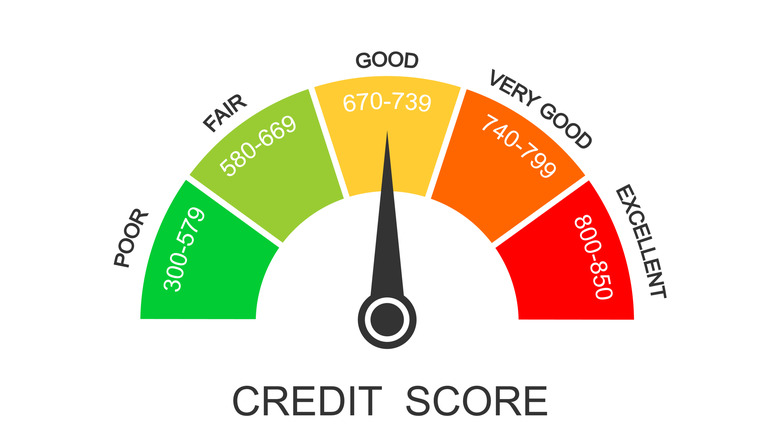
It's difficult to predict what your credit score might look like in your first months and years with access to lending products. However, it's likely that you will land somewhere lower down the scale as you first step into the world of borrowing. If your score is particularly low when you first begin your credit journey, a credit score of 500 can be a great first milestone in climbing this ladder. A score of 500 is within the poor band, and so it is not going to be anywhere near the final destination you see for yourself. However, a "500" credit score unlocks at least one important capability that is off limits to anyone below this figure. While a higher score is required for traditional mortgage lending, and it can be a tough road for those trying to buy a home at lower thresholds, 500 is the credit score that forms a hard floor for mortgage borrowing through the FHA loan program.
At this score, you will have the ability to buy a home if the opportunity presents itself, and that's a big deal. With this in your back pocket, some people might start saving in order to get out of the rental market as quickly as possible. Admittedly, there is still an uphill battle to fight when trying to purchase a home with a score this low. FHA loans require additional checks and if your credit is down near this lower threshold your monthly repayments are likely to be augmented with additional costs. However, the possibility remains for diligent savers who are still building toward a brighter future. In no uncertain terms, that's a big milestone, even if you don't ever choose to fall back on the tools it provides.
Rising to '620' and unlocking traditional mortgage lending tools

Another scoring milestone that borrowers should keep focused on is a 620 figure. 620 is the floor for traditional mortgages. Among buyers considering an FHA loan, a score around this mark provides better terms and access to lower down payment requirements, too. 620 remains in the poor or fair category, and so it is not an area you'll want to remain in long-term.
But financial mobility is all about choices and opportunities. The more range you have at your disposal when making financial choices the better your position will become. Achieving a 620 credit score places you in a position to access a wider range of credit cards and other personal lending tools, and it makes traditional mortgages an option when perusing the real estate market. Naturally, the higher your score rises, the better your lending terms will become. Therefore, reaching for a score of 670 should be your next target. This pushes you up into the good category, creating another expansion to your available options pool.
Getting back on track after hardships

Another important milestone that will hit home for many Americans involves righting the ship after some kind of hardship has been experienced. 12.4% of credit card accounts in the U.S. are more than 90 days behind on payments, according to data published by Yahoo! Finance. This is the highest level this figure has reached since 2011, signaling that Americans are increasingly dealing with tough financial choices. Most won't elect to stop paying their credit card bill unless there's an extreme need to prioritize other financial commitments. Regardless of the trauma your credit history has taken, it's not just important to get back on track, it's essential. Not only will hardships that impact your credit score make it harder to secure financing for things you may need in the future, this also frequently creates extreme stress that can ultimately manifest in physical ways.
Money worries can impact your sleep, and the constant mental drain of thinking about how you'll deal with past due balances or hefty repayment obligations can eventually spur on both mental and physical health issues. Starting small to turn the tide on a credit score in decline can generate real and powerful change. Seeing your score start to tick back up, even at a gradual pace, shows that you're moving in the right direction. Other approaches like going through bankruptcy may be useful in particularly draining circumstances. No matter how you handle it, returning to a state of "normalcy" after financial hardship is crucially important and serves as a key milestone for many on their credit journey.
Securing financial products without cosigners

If your score isn't where you want it to be or your credit history is still fairly young, you may need a cosigner for a range of financial products and other needs. Everything from utility accounts to personal loans require credit vetting, and for many in the young adult phase, this means asking for help from parents or other trusted loved ones. A cosigner can unlock a range of important financial and lifestyle tools that would otherwise remain off-limits to a person in this transitional phase. Yet, getting the power turned on in your new apartment or moving your phone number off your parents' service plan frequently factor into the priorities of those seeking greater levels of independence as they age into adulthood.
Your first years out of the nest can be challenging in many ways, and the need to lean on parents for signup support in this way is just one reminder that the world isn't perhaps ready to accept you for the fully autonomous individual you're trying to become. But, eventually that linkage subsides, and you'll no longer need a cosigner to open new accounts or transfer information to new providers. Requiring a cosigner for basic lifestyle tasks may not feel like it's a big deal, but having to ask someone to help secure a personal loan to support your educational needs is a far larger request. If you fail to pay your debts, that person is on the hook to pick up the slack, or risk their own credit being tanked, too. Therefore, the larger the need the more precarious the ask. Shedding that requirement can bee freeing in more ways than one.
Reducing utilization rates and consistently remaining below critical thresholds

Utilization rates are a key component in calculating your credit score. Your utilization rate is the amount of credit you've used relative to the total available dollar figure you have been granted. If you've spent $100 on a card with a $1,000 limit, your utilization rate is 10%. Common wisdom suggests keeping your utilization below 30% to be considered a responsible borrower. If you're able to retain 70% of your total available credit, you signal to lenders that you have your personal finances under control, and your credit score will likely continue to rise over time. Your utilization rate accounts for as much as 30% of your credit score's calculation, making this a critically important factor to always keep front and center as you plan your financial maneuvers. Another facet of this calculation involves your credit limit. By way of simple mathematics, boosting your credit limit reduces your utilization.
For those already exhibiting strong financial habits in this regard, a different target should come into focus. Instead of aiming to use less than 30%, keeping this figure below 10% is a more substantial goal that experts tend to set for those seeking the greatest positive impact. Getting your utilization rate down into the single digits signals that you're aggressive about repaying debts and can handle much more responsibility. As a side effect, it also keeps a potentially large amount of spending power in reserve for genuine emergencies that might require you to whip out your credit card.
Chasing the mythical 800+ credit score
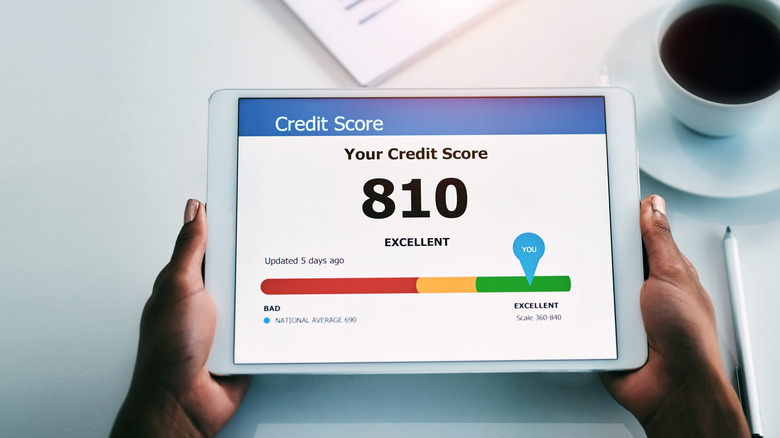
'800' is a score that's classified as exceptional or excellent by all major models. It's very near the maximum you can achieve (usually 850). This is a threshold that delivers serious financial flexibility. There's a feeling of achievement that comes from attaining this sky-high credit score, certainly, but you'll get access to some major benefits by hitting this number, too.
The best lending options available come to those with the highest credit scores. That should come as no surprise to anyone. According to Experian, as of January 2025 the typical owner of an 800 FICO score can expect a 30-year mortgage with an interest rate of 7.07% versus a 620 score holder's 7.89% rate. That translates into a monthly payment reduction of $157, or $1,884 in annual savings. That's enough to plan an extra vacation each year, engage in some essential upgrades or repairs around the house, or make a big dent in the mortgage by choosing to overpay and save even more on interest. Achieving an excellent credit score delivers financial resources and freedoms that provide huge decision making power that goes well beyond what the typical borrower can leverage.
Sticking with your age cohort

Even if you never achieve the absolute pinnacle of the credit scoring world, it doesn't mean you're destined to a lifetime of poor financial opportunities. The highest average FICO score by age cohort of 752 (among those 60 and older), according to Ally. This means that the average consumer will never reach the 800-plus summit. People at different stages of the journey have vastly different needs, and credit scores tend to rise over the course of the typical consumer's life alongside those changes.
Understanding how other people in your age bracket tend to stack up can help set you on a path to financial success. Keeping pace with your age cohort allows you to take advantage of the "typical" lifestyle needs and desires that frequently coincide with different age ranges. For example, Axios notes the average American gets married at 29.7. People at this age have an average FICO score of 680. Since many wedding ceremonies require lending products to finance the big day, knowing how you stack up against others at the same point in life can help you make smarter choices as you approach financial options surrounding this event. The same can be said for first time home buyers, a group that is now 40, per Business Insider. Between 40 and 49, the average FICO score is 704, placing most in this group into the good range and unlocking decent lending options. Everyone is unique in their savings strategies, credit management, and overall goals. But, if your score is reflective of the wider trend for your age group you can count yourself as generally on track in at least this one financial metric.