

15 Countries With The Largest And Richest Oil Reserves
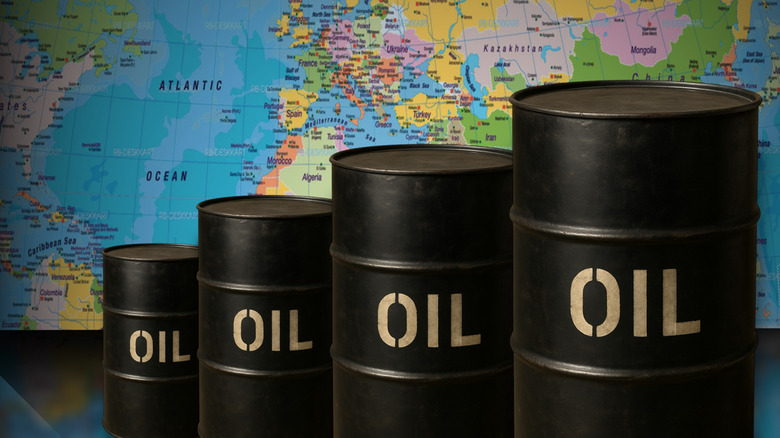
Oil is the cornerstone of the modern global economy. Despite attempts to divert away from fossil fuels and embrace green energy alternatives, the world marked its highest annual oil consumption in 2024, using around 103.75 million barrels per day, according to Statista. The same report suggests 2025 will chart another record, predicting a spike to over 105 million barrels per day. The Stanford Doerr School of Sustainability reports that oil fuels 90% of the world's transportation demands in terms of energy expenditure, making it the most widely utilized resource. According to Secretary General of the Organization of the Petroleum Exporting Countries (OPEC) Haitham Al-Ghais, the oil industry employs around 70 million people across the globe.
Although oil consumption permeates every facet of daily life in nearly all corners of the planet, this fundamental energy source is highly concentrated in its raw form. Per the Encyclopedia Britannica assessment of U.S. Department of Energy data, around three-fourths of total oil production is concentrated in roughly 15 countries, representing only around 7% of the world. The same fraction of countries is home to 93% of the planet's known reserves. Even among this tiny slice of the world, oil reserves are further divided in terms of total amount and quality. Looking at the 15 countries with the largest and richest oil reserves can help you better comprehend the lifeblood of the world market.
Brazil
-
Total Proven Reserves: 15.9 billion barrels
-
Extraction Cost: $48.8 per barrel
-
Dominant Crude Grade: Medium & Sweet
-
Final Weighted Score: 5.80/10
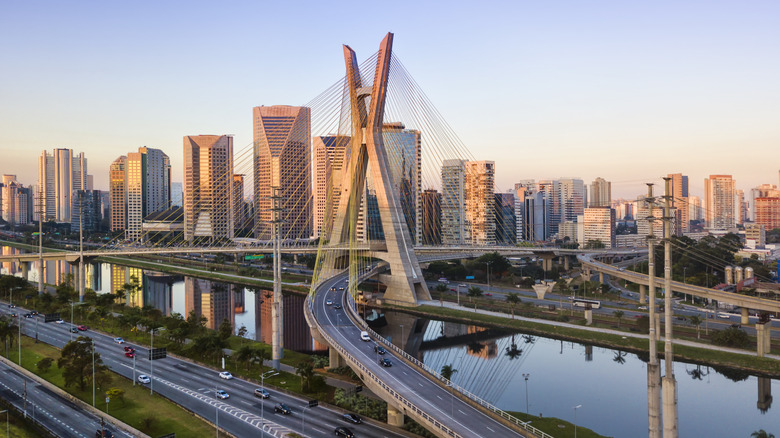
Brazil might come in last this list, but it still enjoys a wealth of oil, both in terms of natural reserves and economic results. In South America, Brazil actually has one of the largest oil stockpiles in the nation, totaling nearly 15.9 billion barrels. That's not too surprising, given the country's monstrous size, compared to neighboring nations. The high cost of producing oil in Brazil drags down its overall ranking. In total, every barrel costs about $48.80 to extract. $17.30 of every barrel goes to capital costs, and the other $31.50 accounts for operational costs. Only the U.K. exceeds Brazil when it comes to exorbitant processing costs. Similar to many other countries in the region, a solid chunk of Brazil's oil reserves is classified as medium and sweet. More specifically, 46% of the nation's supplies fall into this category, meaning the density and sulfur content are mild.
Norway

-
Total Proven Reserves: 6.9 billion barrels
-
Extraction Cost: $36.1 per barrel
-
Dominant Crude Grade: Light & Sweet
-
Final Weighted Score: 6.78/10
Norway is part of the European region that's the most expensive to visit, according to Rick Steves. The Scandinavian nation's rich oil reserves help promote a high standard of living, which translates to higher travel costs. At 6.9 billion barrels, the country's oil supply is the largest on the continent, yet it pales in comparison to other nations on this list. It's also relatively expensive to produce oil in Norway, with every barrel costing around $36.10. That's roughly $24 for the capital side of the equation, and $12.10 for the operational aspects. Overall, it's the fifth most expensive country on this list for oil production. Norway's crude oil quality is the most attractive feature of the country's reserves. 52.7% of the supply is light and sweet, which is among the most desirable classifications due to its low sulfur content.
China

-
Total Proven Reserves: 28.2 billion barrels
-
Extraction Cost: $29.9 per barrel
-
Dominant Crude Grade: Medium & Sweet
-
Final Weighted Score: 6.93/10
As the third-largest country in the world, accounting for over 6% of the planet's land mass, and the largest by population, China has a treasure trove of natural resources. Among these valuable raw materials is the country's roughly 28.2 billion barrels of crude oil, which places the Asian nation in the middle of the pack when measuring raw supplies. However, the country's elevated per-barrel extraction costs lower its overall position. China pays $29.90 for every barrel it produces, with $14.30 coming from operational expenses and the other $15.60 derived from capital investments. The country's oil reserves are of mixed quality. The largest percentage falls under the medium and sweet label, accounting for roughly 36.8% of total stockpiles. This crude oil quality classification is considered moderately desirable, requiring some refining.
Venezuela
-
Total Proven Reserves: 303.2 billion barrels
-
Extraction Cost: $23.5 per barrel
-
Dominant Crude Grade: Heavy & Sour
-
Final Weighted Score: 6.98/10
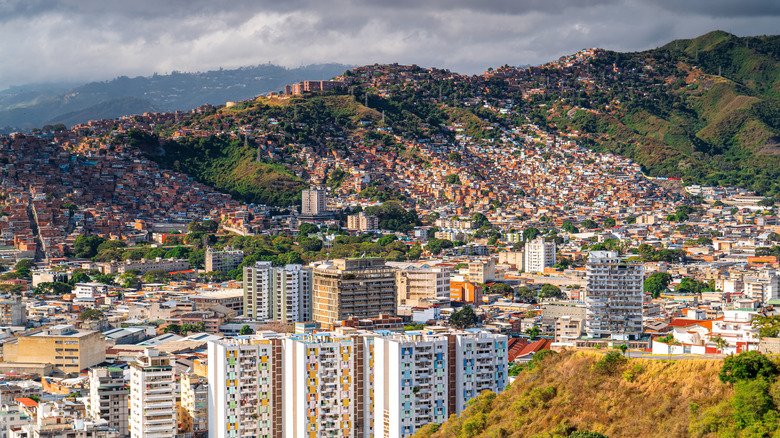
Venezuela contains the world's largest oil reserves by far, amounting to a remarkable 303.2 billion barrels. That's more than six times the stockpiles of the U.S. So, why does Venezuela fall so far down on the list of the countries with the largest and richest oil reserves? Well, the South American nation's position suffers greatly under its high cost of extraction and low crude oil quality. Every barrel of oil costs $23.50 to produce. Operational expenses eat up $13.90 of that amount, and capital expenditures reach $9.60. For perspective, Venezuela has to spend nearly three times what Kuwait does to transform its oil into something usable. Part of these high extraction costs is caused by the poor quality of the country's oil reserves. 61.3% of the supplies are labeled heavy and sour, the worst condition due to high sulfur content and high cost of refining.
United States

-
Total Proven Reserves: 45 billion barrels
-
Extraction Cost: $36.2 per barrel
-
Dominant Crude Grade: Light & Sweet
-
Final Weighted Score: 7.53/10
If you've ever wondered what actually controls the price of gas in the U.S., you might have thought about America's own oil reserves. It's well known that the country prefers to import foreign oil while preserving domestic reserves, leaving these stockpiles littered with question marks. To the surprise of many, the U.S. is home to some of the largest and richest oil reserves in the world. America boasts an impressive just over 45 billion barrels of oil. This wealth of fossil fuels is hampered by a high per-barrel extraction cost. Every barrel of oil in the U.S. costs $36.20 to process. That's $14.80 for operational expenses and $21.50 for capital expenses. Overall, it's among the most expensive places to extract oil in the world. A saving grace for America's oil reserves is that 65.7% are considered light and sweet, meaning they're relatively easy to process into high-end fossil fuel products.
Russia

-
Total Proven Reserves: 80 billion barrels
-
Extraction Cost: $17.2 per barrel
-
Dominant Crude Grade: Medium & Sour
-
Final Weighted Score: 7.53/10
Russia is notorious for its black market profits as one of the world's biggest arms dealers and as a powerhouse in the oil market. The world's largest country by land area unsurprisingly also boasts a considerable supply of crude oil, reaching 80 billion barrels. It's by no means the largest reserve on the planet, but it outcompetes most countries in Europe and Asia, the two continents it straddles. The financial burden of extracting crude oil in Russia is moderate compared to other nations on the list, costing $17.20 per barrel. The country spends nearly an equal amount on operational and capital costs. Estimates suggest that 83% of Russian crude oil stockpiles are medium and sour in quality, meaning the refining process is reasonable. Overall, these characteristics place Russia in the top 10 countries with the largest and richest oil reserves.
Kazakhstan
-
Total Proven Reserves: 30 billion barrels
-
Extraction Cost: $27.8 per barrel
-
Dominant Crude Grade: Light & Medium Sour
-
Final Weighted Score: 7.60/10
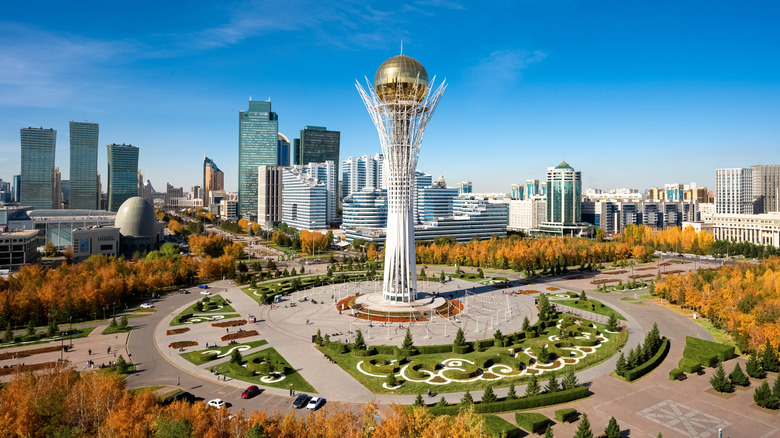
Kazakhstan isn't usually discussed among other oil-dominant nations on this list, despite having one of the world's largest and richest reserves, with total proven deposits reaching 30 billion barrels. The Central Asian nation is heavily dependent upon its fossil fuel reserves, experiencing most of its economic growth on the back of these sales. For example, Forbes reports that more than 75% of the nation's exports and over 30% of its GDP come from oil and gas revenue. The cost of producing oil in Kazakhstan is moderate, with the price per barrel sitting at $27.80. $11.55 of that figure comes from operational expenses, and the other $16.30 comes from capital costs. Impressively, 86.5% of the country's vast reserves are labeled light and medium sour, which have low sulfur content. Interestingly, this is one of the countries where retiring will put you at risk of never receiving Social Security benefits.
Nigeria
-
Total Proven Reserves: 37.3 billion barrels
-
Extraction Cost: $31.6 per barrel
-
Dominant Crude Grade: Light & Sweet
-
Final Weighted Score: 7.68/10
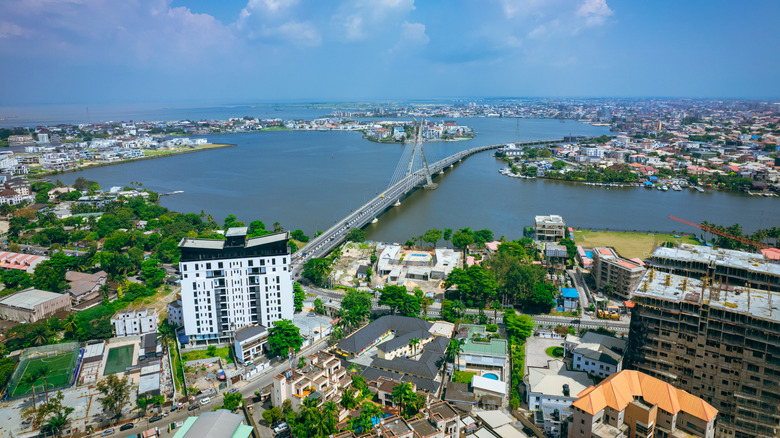
Nigeria sits on the second-largest oil reserves in Africa, falling only behind Libya. The country possesses a staggering nearly 37.3 billion barrels, and that has contributed significantly to the domestic economy. Statista shows that the fossil fuel industry routinely accounts for more than 5% of the country's gross domestic product (GDP). However, Nigeria also falls behind its Northern African neighbor in production affordability. The nation has to spend $31.60 for every barrel it produces. This total bill is roughly split evenly between operational costs at $15.30 and capital costs at $16.20. Nigeria's oil stockpiles are of high crude quality, similar to that of Algeria, with 78.3% of its reserves considered light and sweet, among the easiest for refiners due to the low sulfur content.
Algeria
-
Total Proven Reserves: 12.2 billion barrels
-
Extraction Cost: $20.4 per barrel
-
Dominant Crude Grade: Light & Sweet
-
Final Weighted Score: 7.90/10
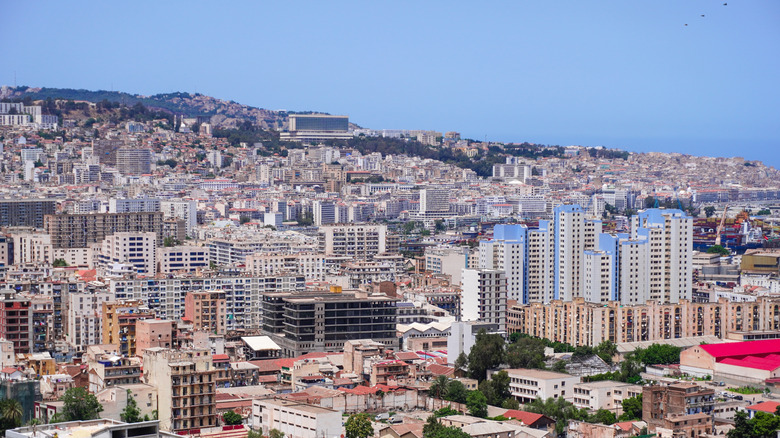
Algeria is another relatively unknown nation with abundant oil reserves. The North African nation is the second largest on the continent, which partially goes to explain its seemingly boundless natural resources. Global Finance reports that a breathtaking 90% of Algeria's exports and about 40% of the country's revenue are attributed to oil and gas alone. In total, the country accounts for 12.2 billion barrels. It also experiences fairly cost-effective production, with each barrel costing around $20.40. Revealingly, capital expenses are nearly double that of operational costs. The former stands at $13.20, while the latter is $7.20. Similar to other oil-rich countries in the region, Algeria's reserves are of exceptional quality. 68.4% of what it produces is considered light and sweet, one of the purest quality descriptions for fossil fuels.
Kuwait
-
Total Proven Reserves: 101.5 billion barrels
-
Extraction Cost: $8.5 per barrel
-
Dominant Crude Grade: Medium & Sour
-
Final Weighted Score: 8.05/10
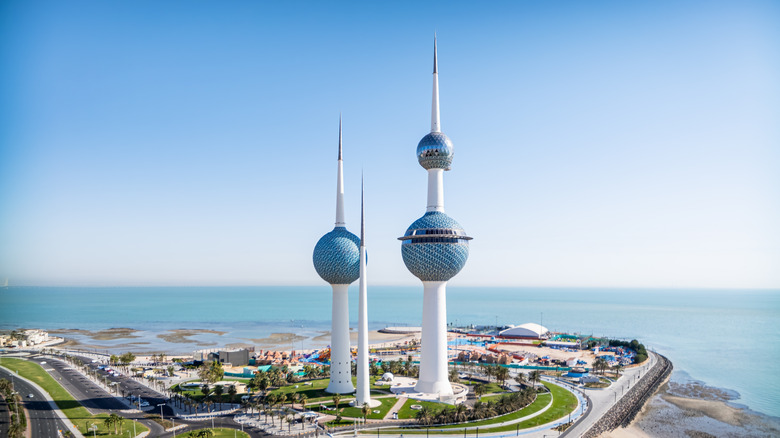
Recently, the Kuwaiti dinar became the most valuable currency in the world, trading higher on foreign exchanges than usual heavyweights such as the British Pound or Swiss Franc. The opulent nation's powerful oil reserves were part of the robust economic equation, helping to propel its obscure currency into the international spotlight. With 101.5 billion barrels of proven crude oil, Kuwait is another example of the natural wealth of fossil fuels gracing the Middle Eastern region. It only costs the country $8.50 to extract a barrel of oil, making it the most cost-effective on the list. Operational costs are pegged at $4.80 per barrel, while the capital costs stand around $3.70 per barrel. A staggering 97.9% of the nation's crude oil is labeled as medium and sour, contributing to the country's cheap cost of extraction.
Iraq
-
Total Proven Reserves: 145 billion barrels
-
Extraction Cost: $10.7 per barrel
-
Dominant Crude Grade: Medium & Sour
-
Final Weighted Score: 8.08/10
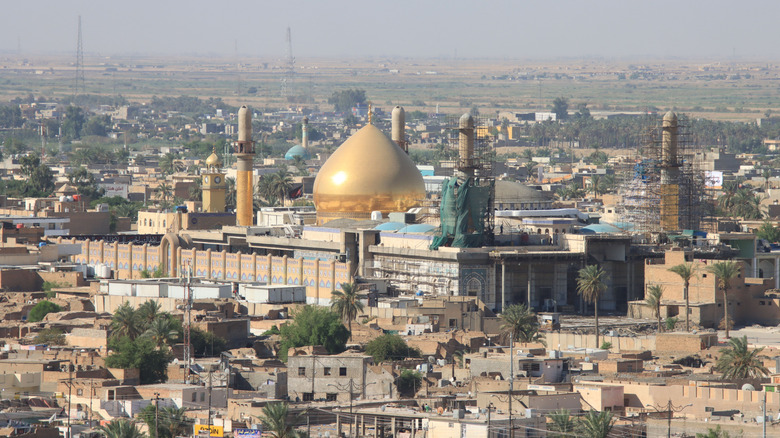
Unfortunately, most Americans associate Iraq with one of the embarrassing times the U.S. wasted tons of money. The often misunderstood Middle Eastern nation actually plays a significant role on the world stage as a steward of roughly 145 billion barrels of oil, among the largest and richest in the region. Speaking of superlatives, the World Bank describes Iraq as "one of the most oil‑dependent countries in the world," underscoring the financial windfall of the country's enormous reserves. The group further points out that oil and gas have provided 42% of the nation's GDP, 85% of its government's spending power, and 99% of its exports. Strikingly, the nation is highly effective at producing oil, only spending $10.70 per barrel. For context, that's more than one-third cheaper than the refining costs in the U.S. Like Iran, most of Iraq's oil is medium and sour, with 70.9% of reserves achieving this classification.
Iran
-
Total Proven Reserves: 208.6 billion barrels
-
Extraction Cost: $12.6 per barrel
-
Dominant Crude Grade: Medium & Sour
-
Final Weighted Score: 8.15/10
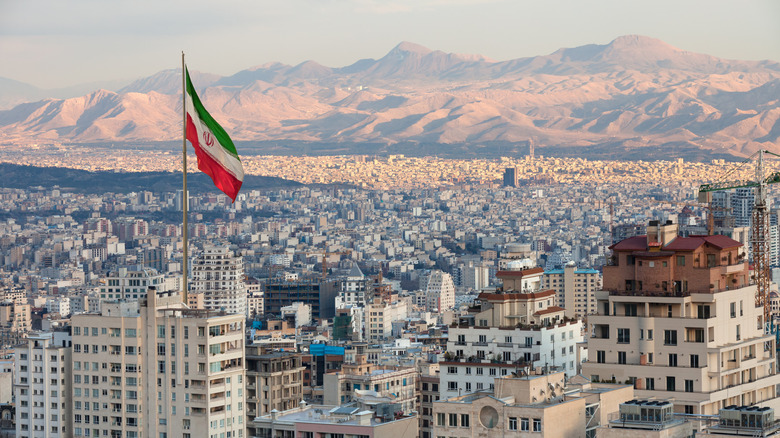
Iran's economy is propped up by its wealth of fossil fuel reserves. The country's oil and gas industry alone accounts for 60% of its financial inflows and 90% of its export income, according to ScienceDirect. Those stats aren't too surprising when you realize this Middle Eastern nation has a stunning 208.6 billion barrels of oil. Better yet, it only costs the country $12.60 per barrel to produce the oil, making it the fifth most cost-effective manufacturer on this list. $5.70 of the total bill goes toward operational expenses, and the remaining $6.90 is for capital costs. The dominant crude quality of Iran's reserves is considered medium and sour, as 93.3% of the stockpiles meet this definition. This means the oil has moderate density and a decent amount of sulfur, raising the cost and difficulty of production.
Libya
-
Total Proven Reserves: 48.36 billion barrels
-
Extraction Cost: $23.8 per barrel
-
Dominant Crude Grade: Light & Sweet
-
Final Weighted Score: 8.23/10
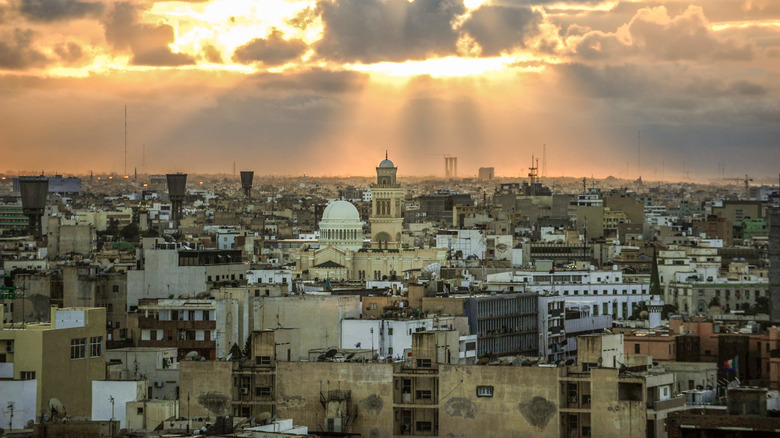
Libya has the largest total proven oil reserves in Africa, which isn't an easy achievement, given it's the second-largest continent on the planet. Many other nations in North Africa have made the list of the countries with the largest and richest oil reserves in the world, but Libya blows the competition out of the water on several fronts. First and foremost, it hosts monstrous oil reserves, totaling 48.36 billion barrels. Furthermore, the nation produces oil at a relatively streamlined pace. Every barrel costs the country around $23.80, which places it within the top 10 most cost-effective oil-producing nations. This total cost is split between $16.60 worth of capital expenses and $7.20 of operational costs, underlining the country's production efficiency. What really justifies Libya's third spot on this list is the refined condition of its reserves. Just shy of 90% of the country's oil is considered light and sweet, a treasured quality level among refiners.
Saudi Arabia
-
Total Proven Reserves: 267.2 billion barrels
-
Extraction Cost: $9.9 per barrel
-
Dominant Crude Grade: Medium & Sour
-
Final Weighted Score: 8.38/10
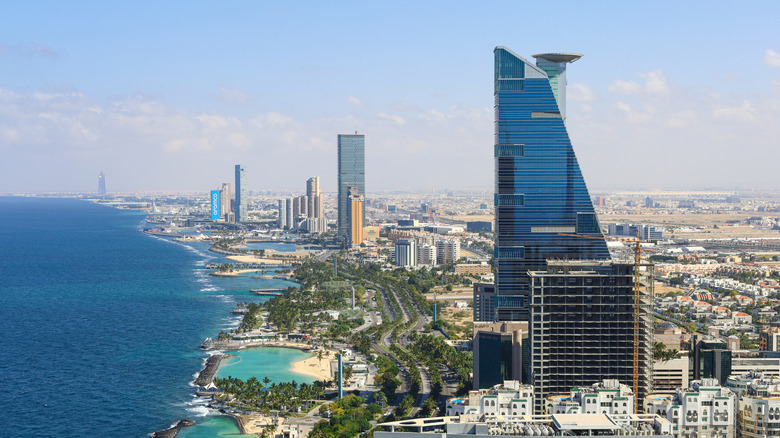
The cheapest day of the week to buy gas might be a mystery, but the key to Saudi Arabia's mind-boggling wealth is no secret. The kingdom's strong economy rests squarely on its expansive oil reserves, which add up to 267.2 billion barrels, the largest in the region. The country's economic extraction costs of a mere $9.90 per barrel further support its runner-up position. With capital costs of $4.50 per barrel and operational expenses totaling $5.40 per barrel, Saudi Arabia is only behind Kuwait in the profitability of its extraction operations. Estimates place the country's reserves at 84.2% medium and sour, meaning they're slightly more costly to process than lighter classifications, but not the worst by any means. Together, these highly sought-after descriptions place Saudi Arabia's oil reserves as the second largest and richest in the world.
United Arab Emirates

-
Total Proven Reserves: 113 billion barrels
-
Extraction Cost: $12.3 per barrel
-
Dominant Crude Grade: Light & Medium Sour
-
Final Weighted Score: 8.90/10
The United Arab Emirates tops the list of countries with the largest and richest oil reserves, due to a valuable combination of rich reserves, relatively affordable extraction costs, and high-quality crude oil. The Middle Eastern nation boasts 113 billion barrels of proven reserves — not the highest in the region, but significant considering the nation is roughly the size of Maine. The UAE's operational and capital expenditures required for oil production are similar, sitting around $5.70 and $6.60 per barrel, respectively. That brings the overall per-barrel costs of extraction to $12.30, which is moderately affordable. Where the small oil-rich nation truly excels is in its crude classification. Nearly half of the country's crude oil is labeled light and medium sour, contributing to easier and more cost-effective conversion into end-use products. With these world-class reserves, it's no wonder the average net worth of people who live in Dubai — the nation's most populous city — is so high.
Methodology
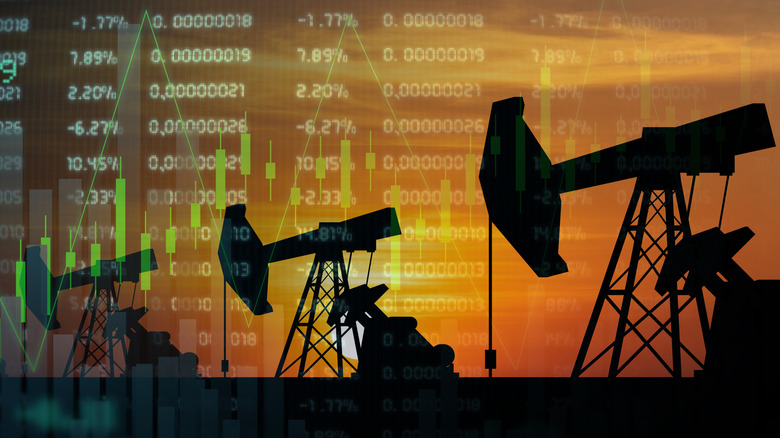
Understanding which countries have the highest concentrations of oil is more complicated than it might seem. Total reserves don't translate directly to things like usability or market value, no matter what a quick Google search might indicate. Oil comes in a spectrum of quality that impacts its end-use and selling price. This is further complicated how much work it takes getting it out of the ground. To arrive at a more precise estimate, we took three different criteria into account.
Firstly, we examined the proven reserves of each country in billions of barrels. Next, we considered crude oil quality as measured by the industry standard Crude Oil Classification System, which looks at the weight and sweetness of crude oil. API gravity, a measurement concocted by the American Petroleum Institute, classifies weight based on crude oil's ease of conversion into consumable outputs. Heavier oil tends to require more processing and yields lower-value products. Conversely, lighter oil converts more smoothly into more valuable items. The sweetness of crude oil refers to how much sulfur it contains. With less sulfur, oil is easier to process, and the final product tends to be more valuable. The final metric we assessed was the cost of extraction, or how many dollars per barrel a country needs to spend to transform raw reserves into sellable products.
We constructed a weighted ranking system that provides a 1-10 score based on these metrics: reserve size, crude quality, and extraction costs. The variables are weighted — 50%, 25%, and 25%, respectively — to determine the 15 countries with the largest and richest oil reserves.