

9 Reason Retirees Regret Moving To Virginia

Retirement probably isn't the first thing that comes to mind when people think of Virginia, as the state is primarily known as a hub for federal employees and accounts for 7.4% of the government workforce, according to the U.S. Office of Personnel Management. Yet, the state has quietly become a popular retirement destination over the years. In fact, nearly a quarter of Virginia's population is 60 and older. Per the United Nations demographic assessment, the state is considered an "aging society," as reported by the University of Virginia's Weldon Cooper Center for Public Service. Virginia actually far exceeds the standard definition, which requires 10% of a population to fall within this upper age demographic. Currently, over one out of every five Virginians is considered an older adult.
Of course, the concentration of 60+ Virginians isn't evenly spread throughout the state. Southwest and Eastern portions of the state have the highest percentage of the aging population at 30.4% and 36.8%, respectively. The Northern section of Virginia, closest to Washington, D.C. and other nearby state capitals, has the lowest ratio at only 18.2% of the population. When looking at these age distributions clearly favoring older individuals, you might conclude that Virginia is a ripe opportunity for retirees. After all, a state with such a high concentration of seniors must have the appropriate infrastructure to accommodate aging individuals, right? Unfortunately, there are plenty of economic and social reasons retirees regret moving to Virginia. Although the specific causes may vary greatly, they all boil down to financial considerations. Learning about the different motivations retirees have for moving away from Virginia can help you determine if it's a worthwhile consideration in your search for a new home in your golden years.
Housing costs
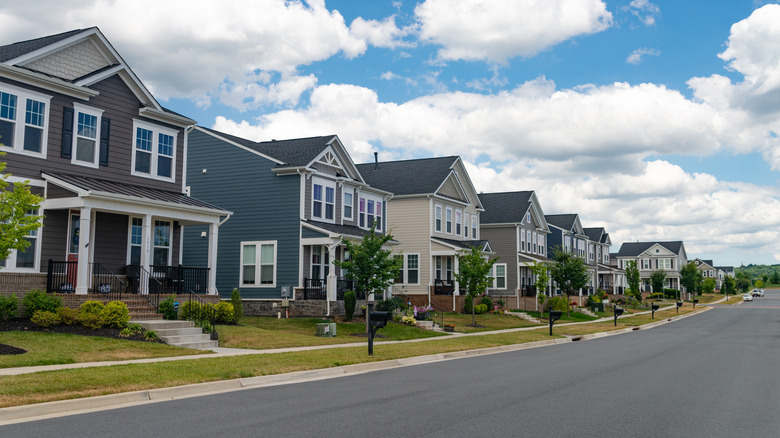
Virginia is a mixed bag when it comes to housing costs. Many people flock to the state based on the promise of affordable housing, only to find that the places they want to live are more expensive than a standard American home. Zillow reports that the average home in Virginia is worth an eye-watering $403,170 in 2025. That's up 1.7% from the year prior, indicating that prices aren't easing. In contrast, the average home in the U.S. is valued at $360,727, up only 0.1% from the prior year, according to Zillow. Not only is the typical home in Virginia more than $40,000 more expensive than the national norm, but the state's real estate market is getting more expensive at a faster rate than the rest of the country.
These above-average property prices are a financial boon to retirees who have owned property in the state for decades, but act as an economic impediment to seniors trying to make the move today. Consider that the average retirement income for a single person is only $50,290. That means a normal American aged 65 and older would need to commit around 80% of an entire year's income to cover the difference between the cost of a home in Virginia and the national average. Keep in mind, this is likely the first financial hurdle a retiree faces when trying to move. Zillow places the average rent in Virginia at $2,000, which is in line with the national average, but not an ideal living situation for retirees looking for financial stability and long-term investments.
Expensive public transit

The average person's mental map of Virginia might lead some to believe the state has decent public transit options. Richmond is close to other major cities, such as Baltimore and Washington, D.C., which are further connected to other major Northeastern cities like Philadelphia and New York City. While residents in Virginia's capital enjoy a reliable connection to other parts of the region, Virginia is a large state, and most residents live outside of Richmond. According to the World Population Review, about 235,338 people live in Richmond, with 1.3 million in the metro area, compared to the state's total population of 8,887,700. In other words, only a small percentage of the general population has routine access to the capital's public transportation network, leaving everyone else at the mercy of regional options. And the results aren't ideal.
The Virginia Department of Rail and Public Transportation (DRPT) has acknowledged the lack of robust public transit infrastructure in regional areas by implementing pilot programs for micro-transit — an on-demand approach to public transportation. Retirees in the few places where these local options are available still face limited operating hours and no weekend service. Additionally, the implementation of these micro-transit options has been hindered by rising challenges, including increased per-passenger costs, extensive geographic areas, and limited availability of drivers. With the lack of a robust, convenient, and reliable statewide public transportation network, Virginians rely almost exclusively on personal vehicles to get around. Overall, only about 2.5% of commuters throughout the state use public transit, per reports by the DRPT.
Driving expenses

The transportation variable doesn't get any more appealing for retirees when considering the financial burden and hassle involved with getting around by car. Virginia's insufficient public transit system has contributed to a severely car-centric state. A whopping 68.4% of commuters drive to work solo, and another 8.6% carpool, according to the DRPT. With the overwhelming majority of commuters forced onto local roads, state highways, and city centers, traffic has become a huge problem in the state. I-95, the highway running from Richmond to the nation's capital, is widely cited as one of the worst areas of congestion in the entire country. Beyond wasting time and burning gas, this idling in traffic also accounts for the lion's share of transportation-related emissions in the state, according to the Chesapeake Climate Action Network.
Looking at Virginia's gas prices might lead some retirees to believe fuel affordability is the saving grace of the state's underperforming transportation infrastructure. To be sure, AAA reports a state per-gallon average of $2.86 for regular gas, against a $3.00 national average. The Old Dominion state's mid-grade and premium fuels are reasonably priced at $3.334 and $3.717 per gallon, respectively. Yet, retirees might notice a serious discrepancy between this sticker price and their final bill at the gas pump due to Virginia's high fuel tax. The Tax Foundation lists the state's gas premium as the 9th highest in the nation. For every gallon of gas you buy, the government charges an additional $0.416. This above-average tax pushes Virginia's effective gas price above the national average.
HOA fees

Homeowners associations (HOAs) are a hit and miss with retirees. Some seniors appreciate the uniformity and cohesion these organizations create within a living community — all important considerations when picking a place to spend your golden years. More skeptical retirees see these groups as another unjustified bureaucracy siphoning hard-earned money in exchange for rules and bylaws at a time in your life when you should be free to do as you please. Whether you're for or against these entities, there's no question their fees need to be factored into a retiree's monthly spending. Perhaps another reason some pensioners become disillusioned with Virginia is the state's high HOA fees.
This Old House places the average monthly HOA payment at $325 in the state, which comes out to an annual expense of $3,895. In stark contrast, the average American household pays about $259 monthly and $3,108 yearly, according to the National Association of Realtors. Virginia retirees end up paying nearly $787 over the nationwide norm in HOA fees. That's a heavy lift for retirees on a fixed budget. This doesn't seem to be a problem that will abate, either. The state has more than 800,000 units under HOA control, about 35% of the housing stock, and that number is expected to grow in the future. At the same time, the monthly fees are likely to continue moving higher, too, putting increased financial pressure on retirees. This is one of the major examples of how the increase in HOAs affects homebuyers.
Tax on retirement income

Seniors should always be considering strategies for minimizing their tax liability in retirement. After working hard and saving diligently for decades, you want to hold on to as much of your wealth as possible. The state where you retire can play a large role in this process, as many Virginians have come to learn. Unlike Wyoming, Washington, Texas, Tennessee, South Dakota, New Hampshire, Nevada, Florida, and Alaska, the Old Dominion State levies an income tax on residents. Seniors often assume they're not vulnerable to this surcharge, thinking only those in the workforce are eligible. In reality, Virginia taxes all kinds of income, including some made in retirement.
Social Security benefits are exempted, but other forms of income, such as distributions from retirement plans or pensions, are included. Virginians 65 or older are eligible for a tax deduction for 401(k)s, IRAs, and other retirement plans. The exemption caps out at $12,000 and is subject to adjusted gross income limitations. Every dollar made past $50,000 for individuals or $75,000 for couples who file jointly is taxed at the state's normal rate. Higher-earning retirees are especially susceptible to this surprise tax. Compared with other states without income taxes, or even those with retirement-specific carveouts, Virginia doesn't look as appealing as a place to spend your golden years.
High sales tax

Taxes on retirement income aren't the only way the state government could deteriorate a Virginian's nest egg. The state also implements a sales tax on most purchases. Virtually all goods and services bought within the state come with a 4.3% surcharge. Alone, this base rate sales tax isn't egregious compared to other states with notoriously high levels, such as Mississippi or Rhode Island, which have a sales tax of 7%. However, counties and cities throughout Virginia implement their own sales tax on top of the state's base rate, driving up the amount residents pay on every purchase.
With these local taxes included, the effective tax rate in Virginia is more like 5.3% to 7%, among the highest in the country. That extra few percentage points might not seem like too much on a single purchase, but they add up dramatically over time, becoming a hidden retirement expense. For example, a $100 worth of food at the store — not an uncommon amount for a single trip, given the rising cost of groceries — may result in a bill of $107. Unfortunately, some of the most convenient and well-connected places to live have the highest sales tax in Virginia.
Rising home insurance costs

Rising house prices aren't the only real-estate-associated surprise for retirees in Virginia. The steep costs of home insurance in some areas of the state can also put a dent in even the most carefully managed nest egg. Overall, Virginia's home insurance premiums are quite reasonable. The average homeowner pays $142 monthly and $1,706 annually, according to Bankrate. On average, Virginians save $718 yearly compared to the national average cost for home insurance. These savings can be misleading for retirees, since they're not evenly distributed across the state. In other words, some areas have insurance premiums significantly lower than the rest of the country, while other locations are far above. For example, more rural areas such as Linville and Timber have an average home insurance premium 25% below the countrywide norm. On the other hand, Virginia Beach and New Point, extremely popular areas of the state, have premiums 85% and 65% above the national average, respectively. Virginia Beach, which is confusingly considered one of the 10 best cities for retirees in Virginia, according to Retirable, sees home insurance premiums of $3,153 yearly.
Areas with home insurance costs below the national average might lose their affordability appeal as rates rise across the state. RightAway Insurance attributes the steady climb in home insurance plans to the increase in natural disasters. Extreme weather events are becoming more frequent and more dangerous, causing more damage and costing insurance companies more money. The state's unique mix of coastline and mountainous regions makes it susceptible to various natural disasters, including strong storms, floods, and hurricanes. Retirees might also see their home insurance rates go up due to the Old Dominion's rising population and the increasing cost of construction.
Cost of living

Inflation is often considered the hidden factor that could tank a retirement fund, and a state's rising cost of living is where it hurts the most. Many retirees may be surprised to realize how much it costs to live in the Old Dominion state that many assume is considerably more affordable than its Northeastern neighbors, such as New York or Washington, D.C. In reality, retirees in Virginia are feeling the pinch of a decrease in buying power, too. SoFi research ranks the state 29th in the nation for living expenses, estimating the average person spends $55,776 per year. According to the Actuarial Life Table of the Social Security Administration, the average U.S. adult who is 65 years old will live for nearly two more decades. More specifically, the typical man will enjoy another 17.48 years and 20.12 years for the average woman.
That would mean a normal 65-year-old would be looking at a total retirement cost of $974,964.48 if they're male and $1,122,213.12 if they're female. The numbers aren't much more palatable broken down by category, either. SoFi estimates the average Virginian is set to pay $10,281 for accommodation and utilities, $8,434 for medical care, $4,389 for groceries, and $1,404 for fuel. On top of these itemized must-haves, SoFi suggests retirees also face an average of $31,267 in other personal expenses. Naturally, there are pockets of affordability throughout the state, but the concentrations of higher-than-normal prices are where most retirees tend to live. Edelman Financial Engines highlights Northern Virginia as among the costliest in the state, due to its proximity to the U.S. capital. Although retirees can catch a break on the cost of living along the coast and in the suburbs, expenses still sit above the national standard in these popular areas.
Expensive for children

There are many warning signs you're not financially ready to retire, but an unforeseen dependent is among the more glaring red flags. While the conventional retirement plan involves a senior couple entering their golden years without financial concerns, several modern-day economic and social obstacles can derail those plans. An analysis by the Kaiser Family Foundation (KFF) found that an increasing number of retirees find themselves living with a child relative, ranging in age between five and 18. Nationally, an impressive 3.3 million people 65 and older share a home with a dependent. Unfortunately, this is more common among minorities. Retirees across the country are becoming more likely to live with a child relative, but the issue is more acute in Virginia. Around 7% of seniors in the state live with school-aged children, compared to the national average of 6%.
What makes this a potential regret of retirees for living in Virginia is the state's extraordinarily high cost of raising a child. Virginia ranks in the top 20 of the least affordable states in this area. SmartAsset estimates the total annual cost of raising children in Virginia is $28,330, up from $27,293 in 2024. Those seniors finding themselves living with dependents could see these higher-than-average expenses creep into their nest eggs. An assessment of Bureau of Labor Statistics data from CNBC found that the number of seniors in the workforce has expanded by 33% from 2015 to 2024.