

11 Reasons Retirees Regret Moving To Las Vegas

Las Vegas is conventionally known as the gambling capital of the world, complete with all the entertainment you could imagine for a single strip. While that might not be everyone's idea of a retirement haven, Sin City has undergone a brand change over the past few years and now appeals to a broader audience. For retirees, the appeal of this desert oasis is clear: warm weather year-round, a relatively low cost of living, stunning nature in every direction, and no state income tax.
According to a SmartAsset analysis of the U.S. Census Bureau's migration-flow data, approximately 24,800 U.S. adults aged 60 or older migrated to the Silver State in 2024, bringing Nevada's total senior population to 730,781. Overall, 23% of the population is 60 or older. A 2023 SmartAsset report on similar migration data indicates that North Las Vegas alone welcomed 1,420 seasoned individuals, stressing the city's gravitational pull on the retirement migration. While this may sound promising for the city's retired population, these figures risk concealing a hidden outflow of retirees who regret moving to the area.
In 2023, a whopping 16,254 retirees fled Nevada. The number of escapees jumped to 18,709 in 2024, representing a rising trend of departures. Whether this is due to Las Vegas' original charm wearing off or people simply not enjoying the area, understanding the various reasons retirees regret moving to Las Vegas can help you determine whether this popular hub is the right place for your golden years.
Housing is no longer affordable

Las Vegas isn't one of the U.S. cities with the fastest-growing home prices, but retirees interested in moving to Sin City aren't exactly catching a break either. Zillow places the average home price in the area at $425,260, a 1.2% drop from 2024. For reference, Zillow places the country's average house price at $360,727. That's a roughly $65,000 gap, which could mean a lot for pensioners on a fixed income. According to Rice Real Estate, Las Vegas' elevated real estate prices are the result of various factors, including a steady uptick in population, the lack of newly built houses, and long-term homeowners limiting the available properties. The city's limited housing stock has also fallen victim to a rapid influx of big-money investors that flock to hot real estate markets — a problem seen across the country.
These cash-rich buyers with deep pockets easily outbid retirees and place upward pressure on the entire city's housing market. Although these institutional buyers aren't as active as in the past, their current breadth of investments has locked Las Vegas' housing prices above the national standard. Retirees who bought real estate in the area before the housing boom have made off nicely, while more recent transplants face exorbitant home expenses. Even if some pensioners have deep enough pockets to compete with larger investors, retirees have to weigh the long-term financial risks.
Surprise homeowner's association fees

Homeowner's associations (HOAs) are a contentious topic among retirees due to their prevalence in neighborhoods and assisted-living communities where pensioners often reside. Supporters argue that oversight and management are essential for maintaining a comfortable and organized living space. On the flip side, detractors complain about the heavy-handed control and costly fees. According to a 2-10 survey, 70% of U.S. adults would choose to live in a neighborhood without an HOA, with some of the most common complaints being difficult communication, capricious rules, and — you guessed it — the costs. Las Vegas is rampant with HOAs, to the point that retirees who might not mind them at first may turn fully against the concept after they move to the area.
Realtor.com reports that 77% of the homes for sale in Las Vegas and the neighboring towns of Henderson and Paradise were under HOA jurisdiction. When measuring median costs, these homeowners pay $118 monthly to these groups, which could drastically increase a retiree's average monthly spending. The additional $1,416 annual housing expense is a significant consideration for the many retirees with limited budgets. See Vegas Homes indicates that HOA prices can rise dramatically in fancier neighborhoods in the area, with some monthly dues reaching $300. For these opulent communities, homeowners face an annual expense of $3,600. Unless you want to find out what actually happens if you don't pay your HOA fees, these monthly expenses will add up considerably over time.
Higher utility expenses

Many households' electrical bills might be going up for a sneaky reason, but the cause is fairly obvious in Las Vegas. The state's excessive heat, especially in the summer, can drive up energy costs as homeowners blast their air conditioners for a good portion of the year to stay comfortable. During the city's hottest months, temperatures routinely hit 95 degrees Fahrenheit, and days well over 100 degrees Fahrenheit aren't unheard of. Reports suggest the Las Vegas area's average temperature is rising more quickly than any other city in the country. There's a growing body of scientists insisting that Southern Nevada won't be livable within a few generations due to the excessive heat. Thus far in 2025, Clark County, where Las Vegas is located, has seen a staggering 279 heat-related deaths. The severe nature of these temperature increases highlights the necessity of keeping air conditioners running to protect against the negative health effects of sweltering heat. However, this doesn't come without a high financial cost.
Payscale estimates that utilities in Las Vegas cost retirees 9% more than the national average — a considerable expense increase for fixed-income couples. The average retiree in the capital can expect to see a monthly electrical bill of roughly $160, according to Jackery. However, running an air conditioner to beat the summer heat can spike that monthly cost to $300. That means some pensioners could be forced to pay $3,600 annually on their electrical bills alone just to stay comfortable and healthy. With predictions of rising temperatures in the foreseeable future, it stands to reason that these electrical bills would continue rising steadily, putting consistent financial pressure on retirees.
Elevated grocery expenses

American retirees have been hit hard by the cost-of-living crisis, especially at the grocery store. Beyond the sneaky ways grocery stores trick you into spending more money, grocery bills have been hiked steadily in recent years due to a combination of inflation and trade disruptions, among other contributing factors. Despite Federal Reserve rate cuts designed to alleviate prices, many consumers still anticipate worsening conditions. In fact, a Pew Research Center survey indicates that 65% of Americans remain "very concerned" regarding the food costs. Following so many years of rampant price hikes, it's tough to blame anyone for their skepticism.
According to the U.S. Department of Agriculture (USDA), food prices — as measured by the all-food Consumer Price Index (CPI) — jumped by nearly 24% between 2020 and 2024 and outpaced inflation. This trend has continued more recently, as recent USDA data shows food costs rising 3.2% between August 2024 and August 2025. Retirees in Las Vegas are experiencing the brunt of this spiking food inflation, with groceries costing 4% more than the national average, according to Payscale. Retirees who have their hearts set on Las Vegas will want to implement some grocery shopping strategies to save money in an effort to preserve as much of their nest egg as possible — and even that might not be enough for some to comfortably afford food.
Above-average sales tax

Nevada is one of the few states with no income tax. The Silver State allows residents to keep all of their income, such as wages or salaries, as well as retirement-based income, including pensions, Social Security benefits, and more. That's been a serious incentive for retirees looking to preserve their nest eggs, making the state appear as a financially ideal place to settle.
Unfortunately, the allure of no state-level income taxes leads many retirees to overlook the snowballing costs of high sales tax. As is the case with many states that don't charge an income tax, the Nevada government makes up for its lack of tax revenue by raising taxes in another area: The sales tax in many areas of the Silver State is higher than in other places.
Nevada places a statewide 4.6% surcharge on the sale of most goods and services. Clark County has a 3.78% sales tax of its own on top of the state's premium. Therefore, residents are effectively paying an 8.38% tax on their purchases. So, if you grab $100 worth of goods at the store, the final bill at checkout will be $108.38. These small fees might not seem too bad for a single purchase, but they add up quickly over time.
High cost of driving

Between Las Vegas' extreme heat and its lackluster transportation system, retirees are stuck driving much of the time. Unfortunately, gas prices and car insurance coverage are higher than the national average in Las Vegas, making it unnecessarily costly for pensioners to get around. The Silver State has the fifth most expensive gas prices in the nation, standing at an average of around $3.80 per gallon, according to AAA, with mid-grade and premium gas prices reaching even higher. For reference, Oklahoma currently offers the cheapest gas at less than $2.50. Using Edmunds' estimate that the average gas tank of a standard car holds between 12 and 16 gallons, retirees in Las Vegas can expect to spend between $45.60 and $60.80 to fill up their vehicles.
Above-average gas prices would be enough to deter some pensioners, but Nevada also has pricey car insurance. MoneyGeek ranks the Silver State as one of the least affordable in the country for both minimum and complete vehicle insurance. The company indicates car coverage can cost residents between $961 and $5,008 annually. Las Vegas is home to various factors that drive up premiums outside of a retiree's control. The densely populated city contributes to more traffic, leading to a higher rate of accidents. The resulting increase in claim frequency leads to higher insurance costs. Furthermore, the state suffers from a significant percentage of uninsured motorists, putting increased pressure on those paying for coverage.
Rising long-term healthcare costs

Healthcare is one of the most important expenses to account for when planning for retirement. Regrettably, many pensioners in Nevada are experiencing the state's expensive medical costs firsthand, without any opportunity to reconsider. Healthcare costs have skyrocketed recently, and most public and private plans are fairly limited in what they offer. Yet, the situation appears to be more dire in Nevada, where medical expenses are rising even faster than the national average. More specifically, long-term care costs — a crucial focal point for retirees — are escalating rapidly in the Silver State.
For example, a study by Genworth and CareScout shows that the cost of Nevada's assisted living communities rose 22% since 2023, compared to a 10% leap nationally. In 2024, residents paid $73,320 on average for a single-bedroom in one of these homes. The annual cost for a full-time at-home care surged by 27% over the same time, while the country-wide cost only ticked up 3%. APSI Taxes suggests that a standard retired couple in Las Vegas could face an annual healthcare bill of $315,000 due to a lack of adequate providers and varied hospital quality. These exceptional healthcare costs should weigh heavily into the decisions of where to move for your golden years, as a single, unforeseen bill can be enough to derail decades of careful retirement planning.
Rising property insurance premiums

While there are several surprising reasons your property insurance rates rise, moving to Las Vegas should be an obvious cause. In addition to an expensive real estate market, Nevada's appeal among retirees is marred by rising property insurance premiums. From 2019 to 2024, Nevadans saw home insurance rates surge by nearly 24%, according to LendingTree's analysis of S&P Global Data. This spike in property coverage has brought the average annual cost to $1,626. Retirees are staring down an accelerating problem as these price hikes become exponential. It is worth noting that, despite these spikes, Nevadans are paying less for property insurance than the national average. Yet, the overarching trend is a reduction in affordability, and a low cost of living is one of the main reasons retirees flock to Las Vegas in the first place.
These substantial price leaps have been spurred by a number of complicated factors, including heightened risk, market forces, and legislative implications. Over the years, a heightened frequency of inclement weather such as flash floods, heatwaves, and wildfires has created more risk for insurance companies, resulting in higher premiums. Some providers are pulling out of the state altogether due to rising operational costs and increasing risk, allowing those remaining to charge essentially whatever they want. Furthermore, spiking costs in the construction industry, resulting from labor shortfalls and supply chain pressures, lead to higher rebuilding and repair costs.
Entertainment creep on monthly expenses

Unsurprisingly, Nevadans tend to spend more than the average American on entertainment. However, the margin is more considerable than you might guess, and this overall entertainment bill may be higher than most expect. According to a national study by RSS.com, the average Nevadan spends $10,921 annually on entertainment, significantly higher than the national average of $8,258. This level of expenditure makes Nevadans the third-most prolific entertainment spenders in the country, only behind Ohioans and New Hampshirites. Broken down further, residents of the Silver State spend around $1,958 on special occasions, $3,669 on virtual entertainment, and $5,294 on in-person events. With more time on their hands and potentially more discretionary income than at other points in their lives, pensioners are ripe contenders for overspending in this area.
These figures are backed up by the Federal Reserve Bank of St. Louis' Personal Consumption Expenditures metric for the state, which shows a steady uptick since 2020. This gauge shows how much Nevadans spend on goods and services that are consumed on the spot, rather than purchased for later use. Restaurants, hotels, and other entertainment-based services are factored into this measurement, though services like healthcare and legal aid also play a role. Regardless, Nevadans have gone from spending an average of over $82.9 billion in 2020 to $122.1 billion in 2024 on these expenses. While higher-than-average splurging and general inflation can contribute to this rising trend, it's a cornerstone financial concern for retirees who regret moving to Las Vegas.
Gambling losses

An unfortunate outgrowth of the elevated entertainment spending in Las Vegas is gambling losses. For retirees with rising healthcare expenses and a fixed income, the specter of gambling siphoning any amount of money is a scary prospect. Casinos are designed to turn a profit, which necessitates that the odds are stacked against players and in favor of the owners. According to the Office of Problem Gambling and Prevention in the City of Springfield, Massachusetts, the winning potential on slot machines, a crowd favorite, is somewhere between one in 5,000 and one in 34 million. Even Blackjack, often considered the most even-handed card game at casinos, gives the house around a 2% edge over players, according to Riverwind Casino — and that's if the gambler is knowledgeable about the game. Those unbalanced odds lead to significant gains for casinos and considerable losses for gamblers.
According to the Nevada Gaming Abstract 2024 published by the Nevada Gaming Control Board, casinos on the Las Vegas strip alone raked in $21.8 billion, more than a quarter of which came in the form of patrons' losses. Predictably, Las Vegas is the epicenter of the country's gambling addiction. A Wallet Hub study gives the Silver State the No. 1 spot for having the friendliest gambling scene and the worst gambling problem. It also has the most casinos, gaming machines, and gambling-associated arrests per capita in the country. There are plenty of sneaky ways casinos trick you into spending money, and senior citizens certainly aren't immune to them.
Hidden heat tax
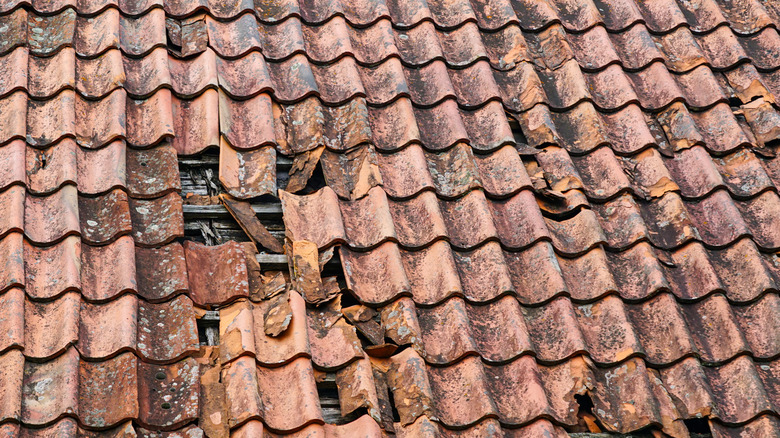
Nevada's intense summer heat and relentless sun exposure don't only contribute to higher electrical bills. This extreme weather can also deliver other hidden costs for retirees, reducing the lifespan of air conditioning units and roofs. An air conditioner in Las Vegas will often last a little over a decade, while a typical unit can function for upwards of twice that time in other areas. Experts warn that hotter and more humid environments take a harder toll on this equipment compared to milder areas of the country. Furthermore, units can fall into disrepair quickly due to air contaminants, such as dust, which is abundant in Las Vegas.
Roofs also see significantly more wear and tear in Nevada than in other states. The summer brings unforgiving temperatures and harsh ultraviolet rays, and the wet part of the year ushers in torrential rainfall. This volatile weather can cut the lifespan of a roof in half, adding another wildcard expense to retirees in Las Vegas. This Old House estimates that new air conditioners run from $5,000 to $28,509. Meanwhile, NerdWallet places the cost of a new roof between $5,800 to $46,000. Needless to say, the potential for these costly replacements is too high a risk for many pensioners. Ensuring you have enough money in your emergency fund is crucial for retirement, but surprise expenses this costly could easily wipe out a respectable savings account.