

The Most Expensive Ford Recalls In Recent History
Ford builds F-150s, Mustangs, Transits, and other models that keep millions moving across the planet. But every now and then, even a big name face-plants. For instance, Apple had its iPhone 4 "Antennagate" moment, where holding the phone the "wrong" way killed the signal. Microsoft, on its side, shipped the much-maligned Windows Vista; and Tesla, one of the worst cars for retirees has been busy recalling more than 2 million cars to tame Autopilot after a federal safety probe. So, yes, mistakes happen. The question with Ford is why so many for so long? Numbers don't lie. An analysis of NHTSA data by Craft Law Firm finds Ford has clocked up 3,086 unique recalls in the U.S., nearly 1,000 more than Chevrolet, making it the most recalled make on record.
Visual Capitalist's breakdown of safety campaigns shows Ford leading the American pack since 2010, with powertrain, fuel, braking, and electrical faults doing most of the damage. 2025 has been particularly rough. By mid-July, Ford had already issued 89 safety calls — more than any carmaker had ever managed in a full year, overtaking GM's 77-recall ignition switch scandal back in 2014, according to Kelley Blue Book. For owners, that means each brown envelope, email, or WhatsApp message from Ford could be another "please visit your dealer" notice or a polite request to park outside because of a fire risk. This article doesn't list every Ford recall. But it does walk you through 13 of its most expensive, high-impact campaigns in recent history along with how much each is estimated to have cost the company.
Exploding Pinto fuel tanks, 1978: $20-$45 million
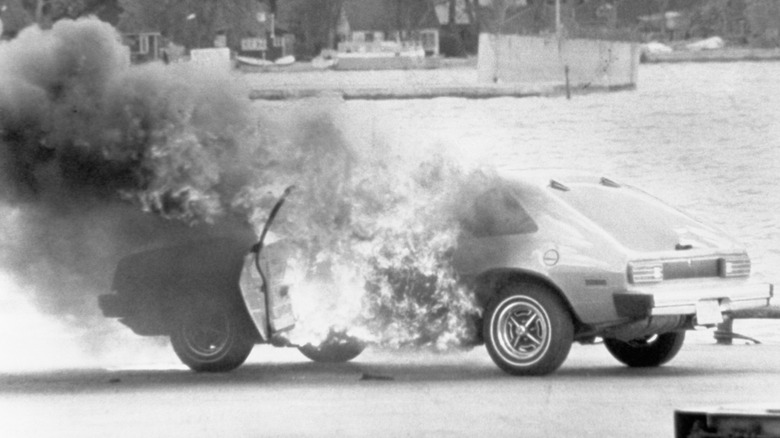
The Ford Pinto became infamous for bursting into flames if its thin-skinned fuel tank was damaged, even in minor rear-end shunts. Here were two deadly incidents involving a Pinto. On May 28, 1972, Lily Gray was driving her Pinto on a California freeway with her 13-year-old neighbor Richard Grimshaw. Their car stalled and was rear-ended at around 28 mph, causing the Pinto's fuel tank to rupture and immediately catch fire. Motor Trend reported that Gray suffered fatal burn injuries and died, while Grimshaw sustained disfiguring burns over 90% of his body. This tragedy led the families to sue Ford.
During the trial, evidence revealed that Ford knew about the defect but didn't fix it. After years of lawsuits and the 1977 publication of an investigative article, a jury awarded the Gray family compensatory damages and gave Grimshaw $2.5 million in 1978. It triggered the recall of 1.5 million Pintos, as per The Washington Post. Following the Gray trial, another tragic incident occurred on August 10, 1978. Three girls from Indiana, Judy (18), Lynn (16), and Donna Ulrich (18), stopped on the side of U.S. Highway 33 when a speeding Chevrolet van struck their car from the rear. The Pinto erupted in flames, killing Donna and Lynn instantly; Judy died later from severe burn injuries, according to History.com.
Park-to-reverse transmission problem, 1980/1981: over $1 billion
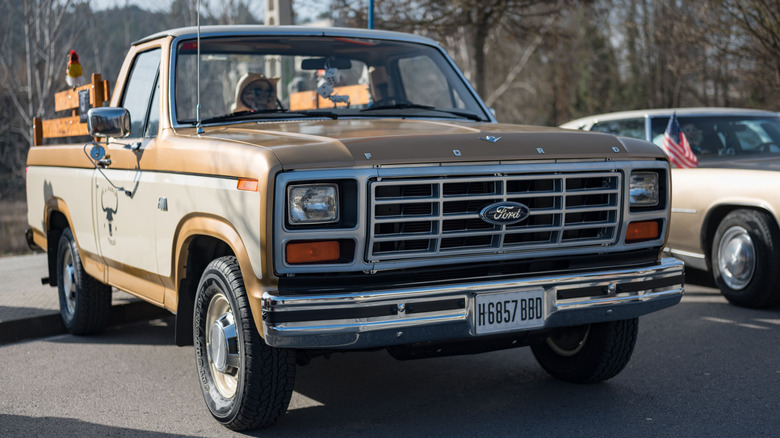
In 1980, Ford faced allegations that millions of its automatic-transmission vehicles could slip from Park (P) into Reverse (R) without warning. According to The Washington Post's report on December 31, 1980, the flaw caused unattended cars to roll across driveways and supermarket parking lots, resulting in more than 130 deaths. Under pressure from regulators and lawsuits, the NHTSA demanded Ford recall around 21 million vehicles built between 1966 and 1980, one of the largest automotive recall campaigns in history. But "technically" the recall didn't happen, even though the NHTSA recorded it for documentation purposes.
Ford fixed nothing. This was after the then-Secretary of Transportation, ignoring his own experts, reached a controversial settlement with the carmaker. Instead of calling the cars back to dealers, Ford simply mailed warning stickers to owners of the affected vehicles — a reminder to be placed on the dashboard — urging them to ensure the shift was fully in Park. A "band-aid fix," so to speak. The sticker warned: "Unexpected and possible sudden vehicle movement may occur if the car is not properly parked." Estimates suggest the issue ultimately cost Ford over $1 billion, largely associated with legal battles, since, mechanically speaking, Ford spent almost nothing.
Steering-column ignition switch fires, 1996: $300 million (potentially in the billions)
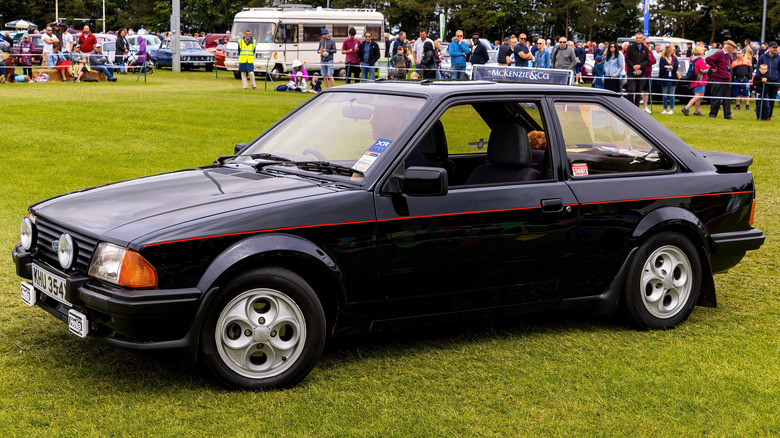
Fast-forward to the 1990s, and Ford had another literal fire on its hands. This time, in the steering column. In 1996, the LA Times reported that the company recalled around 8.7 million vehicles in the U.S. and Canada to replace ignition switches that could overheat, short, and start fires, sometimes even when the vehicle was parked. Ford's key supplier, United Technologies Automotive (UTA), built the switches and soon found itself in a nasty dispute, as Crain's Detroit Business reported that Ford wanted UTA to shoulder about half of an estimated $300 million recall bill. But this figure covered only the formal recall. The potential exposure was much larger.
A CBS News investigation into ignition-related cases cited court filings in which Ford itself considered that a full national fix of the defective ignition modules would cost around $150 per vehicle. Up to $3 billion if every impacted car received the repair. Many of the affected models, including the Taurus, Escort, and Ranger, had also been exported to Latin America, Europe, and the Middle East, with local service actions mirroring the North American recall. By the late 1990s, when something caught fire that shouldn't, there was a high chance it wore Ford's iconic blue oval badge on the grille.
Cruise-control switch fires, 1999/2009: estimated in hundreds of millions
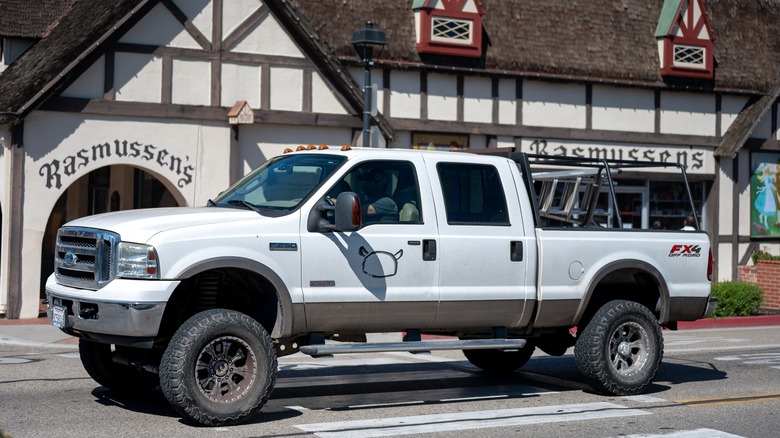
As the ignition-switch saga cooled, a fresh electrical firestorm lit up Ford's warranty budget. Just shy of the new millennium, in 1999, Ford began recalling vehicles equipped with a Texas Instruments-built speed control deactivation switch (SCDS) used in its cruise control systems. The New York Times reported that the switch itself, wired "hot" at all times, could leak brake fluid, short out, and start an under-hood fire. Again, as in the 1996 case, even with the car parked and the engine off. Over the next decade, Ford issued wave after wave of recalls, ultimately covering around 14.9 million vehicles across F-Series pickups, SUVs, and vans.
Another broken record in automotive history. And not in a good way. Although Ford never publicly put an exact price on the fix, it's estimated that the millions of switches and wiring harnesses replaced at dealer labor rates pushed the total cost into the hundreds of millions. What made this saga particularly damaging was the sense of déjà vu, since consumers still remembered the ignition-switch and Pinto fires. Now there was a third "Ford catches fire in the driveway" storyline.
Firestone tires & Explorer rollovers, 2000/2001: ~$3 billion
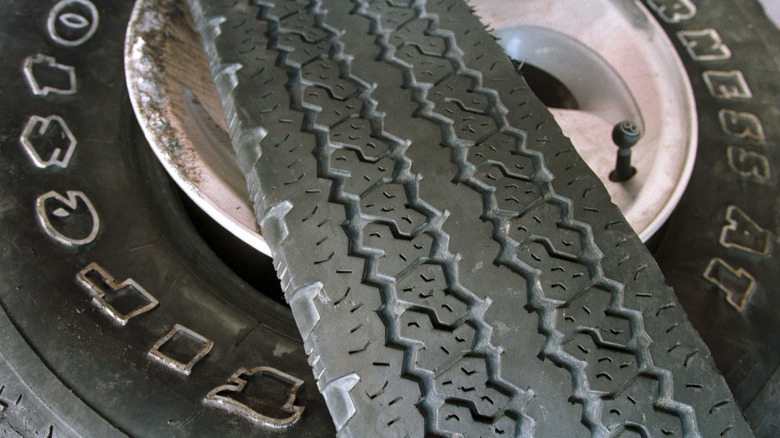
One of the largest tire recalls in recent history was also a crisis as reports of tread separations and rollover crashes involving Ford Explorers and certain Firestone tires emerged in the late 1990s. The human toll was horrific. Based on federal crash data and lawsuits linked, at least 271 deaths and over 800 injuries were reported, according to the Los Angeles Times. Above all, this happened in hot-climate markets such as the U.S. South, the Middle East, and Latin America. In 2000, following pressure from NHTSA investigations, Firestone recalled about 6.5 million tires, as per ABC News, but the scandal didn't stop.
One year later, Ford unilaterally announced it would replace a further 13 million Firestone tires on 3.5 million vehicles worldwide at its own expense. This effectively ended an almost century-long partnership with the tire maker. Ford set aside around $3 billion to cover the cost of sourcing new tires, paying dealers, and managing the campaign — among the most expensive actions ever undertaken by a single automaker. While Firestone took the fatal bullet, Ford didn't come out clean. Critics argued that Ford's recommended tire pressures and the Explorer's high center of gravity contributed to instability.
Popping door latches, 2014/2016: $640 million

Spanning 2014 to 2016, Ford recalled millions of cars and SUVs — including the Fiesta, Focus, Escape, and Mustang — for faulty side-door latches, with owners reporting doors bouncing back open after being closed and even flinging open over bumps, according to the Wall Street Journal. Because of this and other factors, Ford ranks last in consumers' top 10 favorite car brands, according to Consumer Reports. Regulators in the United States, Canada, and other markets flagged the obvious safety risk. Initial campaigns covered around 1.1 million vehicles, but in 2016, Ford doubled the scope, adding another 1.5 million and bringing the total to roughly 2.6 million.
To pay for the blunder, Ford took a $640 million pre-tax charge in the third quarter of 2016, explicitly tied to the expanded door-latch recall, as reported by the Associated Press on September 8, 2016. Ford still hasn't grasped the lesson that a tiny, cheap piece of plastic or metal can trigger millions in losses. The logical fix seems almost embarrassingly simple: use higher-quality components, even in the smallest corners of the vehicle. Again, the company's biggest headaches have come from the tiniest parts. Why not build everything worthy of the badge?
Engine fire risk and more latches, 2017: $295 million
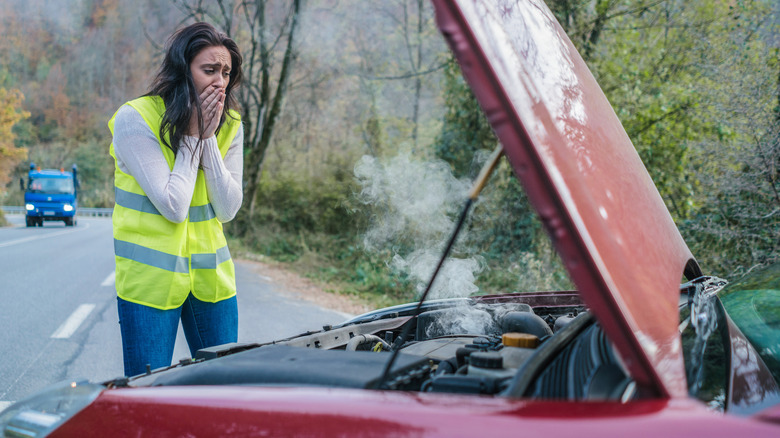
After the $600 million-plus fumble, Ford announced two new recalls in March 2017 affecting around 440,000 vehicles, per Reuters. The first round included certain 2014 Escapes, 2014-2015 Fiesta STs, 2013-2014 Fusions, and 2013-2015 Transit Connects, all with an engine-fire risk. Lack of coolant circulation might cause the turbocharged engines to overheat and crack the cylinder head, potentially causing oil leaks and under-hood fires. Ford advised owners to park outside and watch for loss of cooling fluid. At least this time, Ford didn't send a sticker — unlike the park-to-reverse fiasco of 1981.
The second round was an expansion of the dodgy door-latch campaign of 2016. For Ford, one door-latch drama wasn't enough. In total, Ford told investors it expected to spend about $295 million fixing the issues, taking a one-off charge to cover parts, labor, and associated costs, as reported by Reuters. Vehicles in North America and Europe were affected since the 1.6-liter EcoBoost and related latches were used in global products like the Kuga and Fiesta. Definitely, Ford had a structural quality problem, and every new model seemed to bring fresh recall charges alongside its marketing campaign.
Takata Airbags, 2018/2021: ~$900 million

No modern recall list is complete without the Takata disaster, the airbag supplier whose inflators could explode and send shrapnel into the cabin. As of September 2024, the NHTSA has reported 28 deaths linked to Takata's defective equipment since 2009, according to Reuters. What's the connection to Ford? It was one of many carmakers using those airbags in the United States, Europe, Asia, Australia, and Latin America. In 2018, Ford agreed to pay almost $300 million to settle economic-loss class actions brought by around six million owners who argued that simply having a Takata airbag — even if it hadn't yet failed — reduced the value of their vehicles.
Then, in January 2021, Ford lost a dispute with U.S. safety regulators and was ordered to recall 3 million cars fitted with certain Takata inflators, at an estimated cost of $610 million, Reuters reported. Add both figures together, and Ford's Takata bill easily clears $900 million. And that's before internal engineering costs, dealer overheads, or any foreign-market campaigns. Isn't it ironic? Airbags, the epitome of modern safety, became one of the biggest quality liabilities in Ford's records and part of the largest car recall campaigns in recent history that cost a ton of money.
Rollaway risk from shifter cable bushings, 2022: likely hundreds of millions
As reported by Reuters on June 16, 2022, Ford recalled more than 3.3 million vehicles in North America, all because a small plastic bushing linking the gearshift cable to the transmission might degrade or detach, leaving the actual gearbox in a different gear from what the lever indicated. Drivers thought they'd shifted into Park, removed the key, and moved off, while the car was still effectively in Neutral. Similar to the park-to-reverse problem of 1981, if drivers hadn't set the parking brake, the car could roll away.
On June 15, 2022, Consumer Reports noted that the recall covered a long list of everyday models, including the Escape, C-Max, Fusion, Transit Connect, and Edge, built between 2013 and 2019. According to NHTSA bulletins and Ford's own website, dealers were instructed to replace the shifter-cable bushing and install a protective cap, with mobile repair options and towing support available for cars stuck in Park. Ford never publicly revealed a specific dollar figure for this recall, but the scale alone is telling. For 3.3 million vehicles, even a modest per-car cost easily pushes the total into the high hundreds of millions.
Backup camera replacement, 2023: $270 million
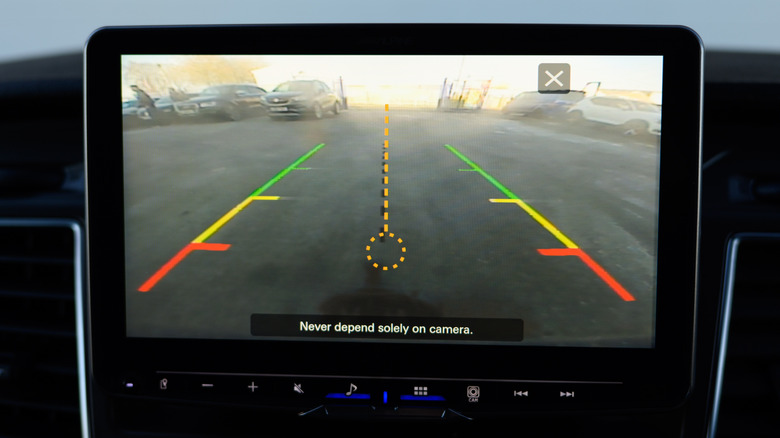
The whole point of reversing cameras is to reduce risk. But Ford managed to turn them into yet another nine-figure headache. In 2023, the carmaker recalled around 169,000 vehicles in the U.S., Canada, and other countries because software and hardware faults could leave drivers with a blank, frozen image just when they needed visibility most, according to Reuters. The problem with issues like this is that there's no way to get your money back when a product is recalled. At best, the fault is "fixed." You get nothing more. CNBC revealed that this backup-camera recall, affecting specific 2020-2023 Ford and Lincoln models, came with an expected bill of about $270 million.
That's a great deal of money for a feature that is now legally mandated in many markets and sold as a basic convenience. Combined with other camera recalls on Explorers and Mustangs, this incident made clear how vulnerable modern infotainment-driven safety features can be. Also, how expensive it is when the software layer misbehaves. At the same time, it opened the door for an even bigger fight with regulators over how quickly Ford moved to fix rear-camera issues — a fight that would, within a year, trigger one of the largest safety penalties in NHTSA's history.
Rear-view cameras and near-record NHTSA fine, 2020/2024: $165 million
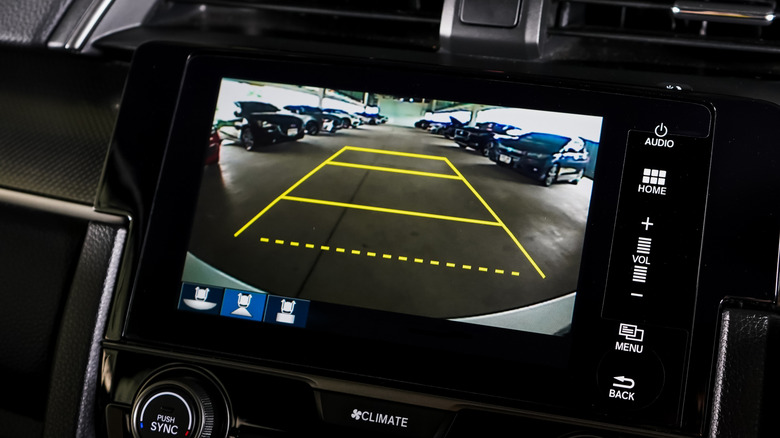
It took a camera — yes, a camera — to finally exhaust the U.S. government's patience. On November 14, 2024, Reuters reported that the NHTSA and Ford had agreed to a civil penalty of up to $165 million for moving too slowly on recalls of vehicles with faulty rearview cameras and for failing to provide complete and timely information about the defect. Under the consent order, Ford must pay $65 million in cash, invest $45 million in safety-data analytics and a new testing facility, and face another $55 million fine if it fails to comply with the agreement. It became the second-largest civil penalty NHTSA has ever imposed — the largest of all was against Takata Corporation.
The underlying recall, initiated in 2020, covered more than 600,000 vehicles, including F-150s, Mustangs, Escapes, Rangers, and several Lincoln models, whose rear cameras could show blank or distorted images. What makes this episode "expensive" isn't only the $165 million penalty but what regulators essentially meant: "We don't trust your recall processes, and we're going to make you spend tens of millions building systems to prove you're taking safety seriously." And all of it because the view on the little screen sometimes went fuzzy.
Fuel-injector fire risk, 2025: $570 million

By mid-2025, Ford's recall problems had gone from chronic to surreal. One of the biggest hits came from a global recall of nearly 700,000 compact SUVs to repair fuel injectors that might crack and leak, increasing the risk of engine-bay fires, per Car and Driver. This included the 2021-2024 Bronco Sport, 2020-2022 Escape, and 2019-2024 Kuga models (the Escape's European twin). Ford said the campaign would cost about $570 million, booked as a special item in its second-quarter 2025 results. The fix involved updating engine-control software to detect pressure drops, fitting a drain tube to divert fuel away from hot surfaces, and replacing damaged injectors. Reports link at least eight under-hood fires to the defect so far, though no injuries have been reported. Context is what makes this recall particularly embarrassing.
Ford has spent the last few years loudly promising a quality reset under CEO Jim Farley, who told a Wolfe Research Global Auto Conference admitted that chronic recall and safety issues needed more attention than they received. Yet, here are SUVs with an old-fashioned defect, leaky fuel, and fire risks (like in 1996, 2009, and 2017), generating a half-billion-dollar bill. For owners, the message is depressingly familiar. Watch for warning lights, park outside, and please come back, again, so we can fit another fix. For Ford, it's more evidence that its global powertrain and supplier strategies aren't as bulletproof as they need to be.
Software glitches, rear cameras, and a record recall year, 2025: $600 million
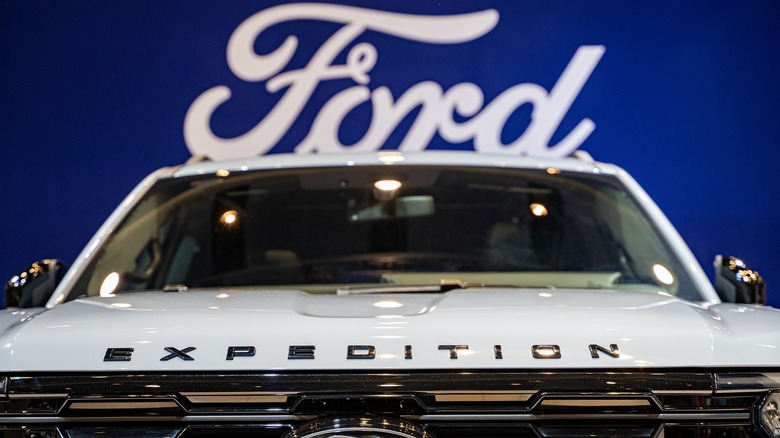
What started decades ago as only mechanical has now gone fully digital. In May 2025, Reuters broke the news that Ford had issued a fresh recall of more than 1 million vehicles in the U.S. alone, including Broncos, F-Series trucks, Escapes, Mach-Es, Rangers, Mustangs, Expeditions, and various Lincoln models. The reason? A software error in the accessory protocol interface module (APIM) could delay, freeze (as in the 2023 case), or completely blank the rearview camera image. Ford told regulators it would fix the problem with an over-the-air (OTA) update or dealer reprogramming. Of course, this is cheaper than physical parts, but hardly free. This recall landed in what Kelley Blue Book described as a "nightmare" recall year.
By mid-July 2025, Ford had already issued 89 U.S. safety recalls, more than any automaker has ever recorded in a full year, and more than the next five carmakers combined. Financially, coverage of Ford's second-quarter 2025 results noted that the company took a $600 million special charge related to recall and quality actions, including the SUV fuel-injector fix and other campaigns. Remember, all this is happening after Ford agreed in 2024 to the $165 million rear-camera penalty and a multi-layer standards-improvement plan with NHTSA. It appears that Ford continues to be among the least reliable brands in 2025.