

Affordable Alternatives To Save You Money On Pest Control

We may receive a commission on purchases made from links.
Your home may be well-designed to keep out uninvited human visitors, but you still have to deal with relentless crawling, flying, and stinging intruders who want to make your home their home. Unfortunately, unlike the free help you can get when you call 911 for human trespassers, professional assistance to thwart an insect or animal takeover can cost you dearly. One visit from an exterminator can total hundreds of dollars. A particularly challenging situation could leave you with a bill in the thousands.
If you'd prefer to spend your money on fruit rather than the elimination of fruit flies, or on a new wooden deck rather than termites, there are some practical steps you can take to make your home an off-limits area to pests. The precautions are simple tasks requiring very little do-it-yourself experience. Any supplies, materials, or products suggested are low-cost and readily available at nearby stores or online. So, protect your household budget and the resale value of your home with the following tips for dealing with various pests.
Flies

You could be dealing with more than one type of fly simultaneously. Fruit flies can enter your home hitchhiking on the fresh produce. Meanwhile, drain flies seem to pop up from nowhere. Actually, they're emerging from your sinks. They live and breed in your pipes, surviving on the edible gunk that collects there. And then there's the irritating housefly. It looks for easy access to trash.
Professional pest control prices will vary throughout the U.S., but an estimate by Home Guide places the average bill for eliminating fruit flies between $150 and $300. The good news is you can do much on your own to tackle your fly problem while saving money. For example, clean up any likely breeding grounds around the home, both inside and out. Make sure all garbage is bagged and secured. Wash your produce thoroughly before preparing it. If possible, after washing it, leave it in the refrigerator for at least a full day. The cold is enough to kill any remaining larvae before they hatch. And flush your sinks with enough force to carry away food and other sediment collecting in the pipes. You can easily assemble a homemade trap to capture flies. But less than $3 will get you enough fly paper to catch a Biblical plague of insects.
Ants
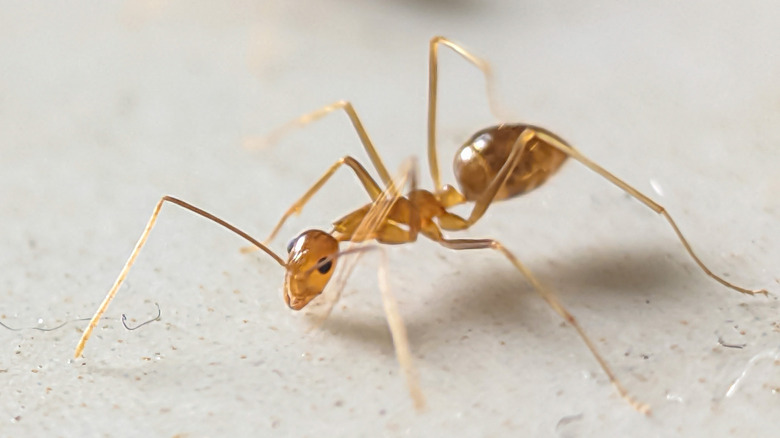
Ants can colonize your kitchen overnight. But there's no sense in panicking and calling an exterminator. If you did, according to Get Rich Slowly, you'd have to pay from $200 to $300. Instead, a few basic steps can discourage future ant invasions.
First, protect your foodstuffs. Keep sugary items, such as cookies, in an airtight jar. Don't forget to refrigerate opened containers of condiments, like peanut butter, maple syrup, and ketchup. There are also things you can do to make it difficult for ants to enter your home. Often, a foundation has settled enough to create small openings that need sealing near the baseboard or floor. Ants are resourceful and can easily make use of any gaps around your electrical outlets, gas pipes, or electrical conduits. Check the top, bottom, and edges of your kitchen door. If time has worn away the wood or the rubber door sweep, it's time to replace them with thin layers of wood putty or a new door bottom seal.
After you've sealed your kitchen well, it's time to turn to safe, effective, and even pleasant-smelling chemical warfare. Ants communicate through chemical signals, so disrupting their transmissions can upset their plans for invasion. Low-cost essential oils, like peppermint, will do the job. Spray the oil mixed with water or a carrier oil where you noticed previous ant trails and at likely entrance points. You can obtain a set of essential oils for less than $10.
Roaches
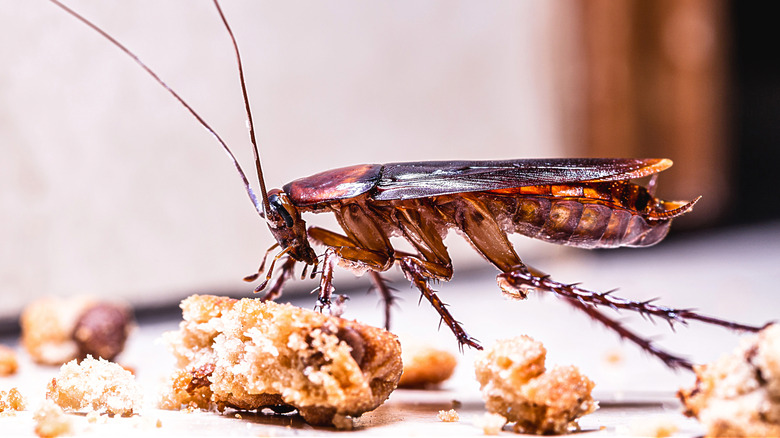
No insect makes the typical homeowner reach for the phone to call the exterminator faster than roaches. That's understandable since roaches can cause ongoing issues if you live where there's a steady supply of water, humidity, and heat. Plus, the pipes and wires connecting your rooms are conveniently hidden superhighways, facilitating quick trips for roaches to your cupboard. However, you can save money on extermination by taking some practical first steps, such as removing opportunistic places for them to live and breed, like old stacks of cardboard boxes and discarded broken appliances.
You must seal as many possible entrances as you can find. Don't make the mistake of thinking an opening around a pipe or electrical outlet is too small to worry about. Roaches can easily scamper through a hole as small as 1/16 inch in diameter, according to How Stuff Works. But invasive insects like roaches can be blocked by good caulking. Basic all-purpose caulking will set you back only about $3.
Always clean thoroughly where you suspect roaches have crawled. Roaches defecate as they travel to mark their course. This practice is more than disgusting. It's also a health danger. After you disinfect the area, you can make it even less likely they will be able to sense another roach's trail by sprinkling the area with a few bay leaves.
Mosquitoes
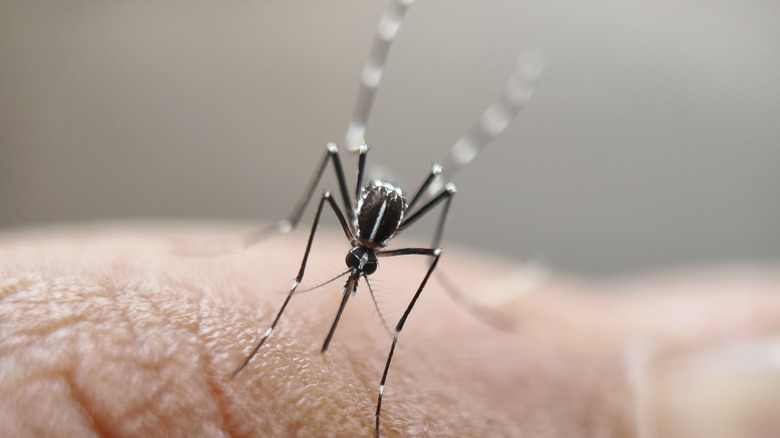
Nothing ruins a summer brunch on the patio like an attack by mosquitoes. Some people will pay large amounts of money to ward off their presence. For example, there are CO2 mosquito traps. They trick mosquitoes by imitating human breath. When the mosquitoes sense carbon dioxide, they investigate and then get trapped inside the machine. One typical example of a CO2 mosquito trap claims to serve one acre using a 20-pound propane tank that lasts for up to three weeks. Expect to pay more than $400.
A less expensive approach involves getting rid of any items in the yard that can hold at least a half-inch of rainwater. That includes the saucer or drip tray beneath your flower pots. They're also prime opportunistic mosquito breeding grounds. Once you've done that, use an ordinary fan to create a steady breeze across your outdoor dining area. The airflow accomplishes two things. One, it disperses the carbon dioxide you and your family exhale. Remember, this is one of the primary markers mosquitoes use to identify humans. Second, the constant wind makes it difficult for mosquitoes to land. But if any escape the strong headwinds, there's one more trick you can use. Cover yourself with inexpensive essential oils added to your favorite skincare product. A study from the National Library of Medicine found several natural oils to be effective. The most powerful was Ligusticum sinense extract, which is available for approximately $9 per ounce. A few of the more common oils that also tested well include pine, peppermint, and lavender.
Ticks
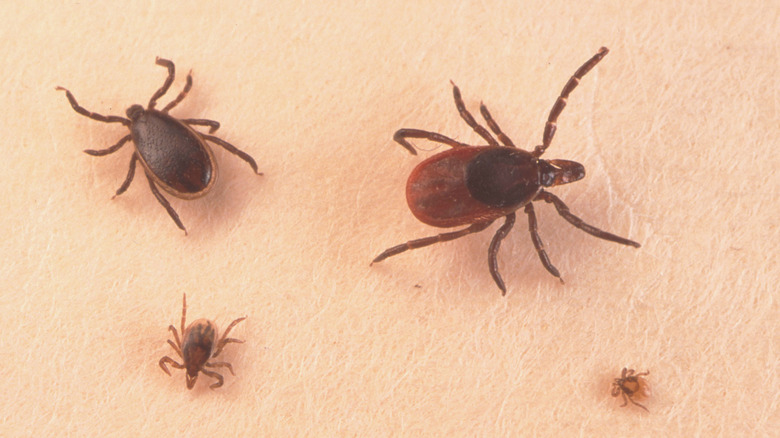
Fixr says the average cost of a one-time tick extermination in the U.S. is between $50 and $150, with the majority of customers paying $125. Generally, you're going to pay from $0.08 to $0.15 per square foot of interior space. Outside, the cost is calculated according to acreage. The average cost is $100 to $300 per acre. You can reduce the expense by signing a yearly contract for extermination, but that still means paying an average of $550 to $700.
You can save additional money by making a few changes around your home and yard. Ticks protect themselves by hiding in tall grass. If you keep your lawn mowed short, they'll bypass your property and look for more agreeable places to live. If there's a nearby wooded area, clear a few feet of perimeter between your yard and the woods. The cleared area will make it less likely that ticks will cross over into your yard because, once again, they prefer taller grass. If you can afford it, you can strengthen your perimeter by covering it in gravel. Hello Gravel says you can get an entire ton of gravel, minus the delivery fee, for $30 to $60.
Fleas
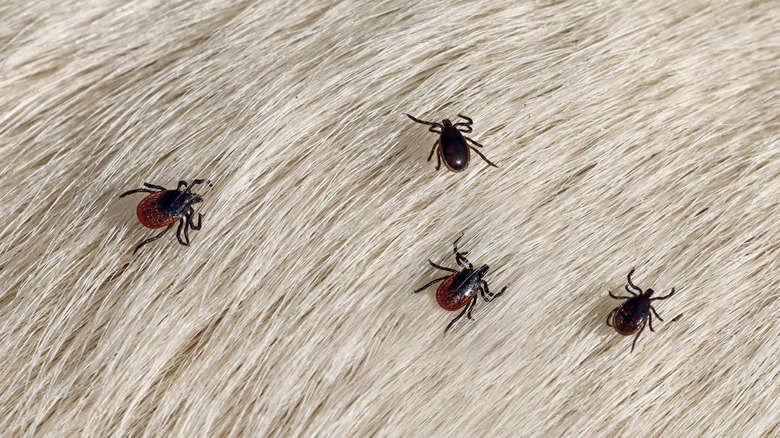
If you see one flea in your home or yard, you need to act quickly because fleas multiply rapidly. A female can lay 25 to 50 eggs in a day. Those eggs need only one to 10 days to hatch. From that point, it will take a few weeks for the larvae to reach adulthood. Then, the females will rapidly begin consuming blood, mating, and laying eggs. Hartz says that in just one month, 10 female fleas can be responsible for bringing more than 250,000 fleas into existence.
Fleas depend on animals for transport. So, if you can keep flea-carrying animals out of your house and yard, your battle is won. Otherwise, according to Home Advisor, you could find yourself paying an exterminator $75 to $400 for a one-time visit to take care of the problem. In contrast, a six-month supply of oral flea treatments for your dog will only cost $60 to $100.
After you've taken care of your animal, you want to turn your attention to wild animals, such as mice, raccoons, and deer. Remove anything that wild animals are likely to adopt as shelter, such as piles of tree trimmings or cut wood piles. If you have bird feeders, take efforts to make them inaccessible to any creatures besides birds.
Ladybugs
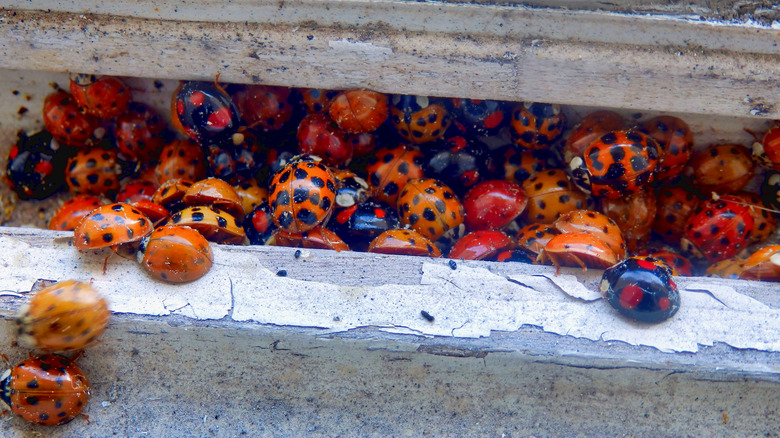
In cold weather, when ladybugs enter your home, they're simply looking for a cozy place to pass the winter. To a ladybug, your house is a giant rock — with central heating. While you may appreciate their hard work in your flower and vegetable gardens during the growing seasons, you probably aren't too keen about spending winter with a couple of hundred of them in your living room. Happily, ladybugs are easy to capture and relocate outside where, in spring and summer, they can once again feast on aphids, which can harm and even kill your plants. Simply sweep them up gently. You could place them near large rocks or fallen trees where they could more quickly find alternate winter shelter.
There's a way that you can ward off future infestations without harming these helpful little beetles. Ladybugs shy away from areas treated with certain essential oils, like lemon and lavender. Combine an essential oil with oil or water, then apply it where the ladybugs entered. Usually, it's on the windowsill. This method will save you the $171 Home Advisor says exterminators charge on average for exterminating generally non-destructive insect invaders, such as ladybugs.
Moths
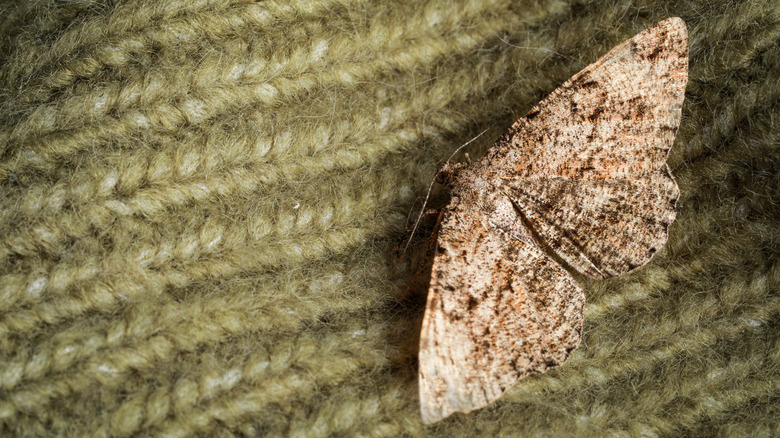
Often, you don't realize you have a moth problem until they've munched their way through your favorite sweater. The adult females have already laid their eggs on your garments, and it's their larvae that are using your sweater for baby food. Adult moths often hitchhike their way into your home. So carefully inspect any items you bring into your house, especially if you purchased them secondhand, like clothes. You also want to store all your dry goods in sealed containers. They're available in sets for less than $10.
Taking the time to examine your garments and store dry goods can help you avoid exterminator services. Angi says the average is $150, but it can cost as much as $200 to $370. If you don't tackle the problem, you could be looking at making expensive repairs to your clothing items. For example, Top Stitch mending charges $18.75 to $25 to mend one small moth hole. And that's only if the damaged area consists of only one solid color that's not hard to match.
Termites
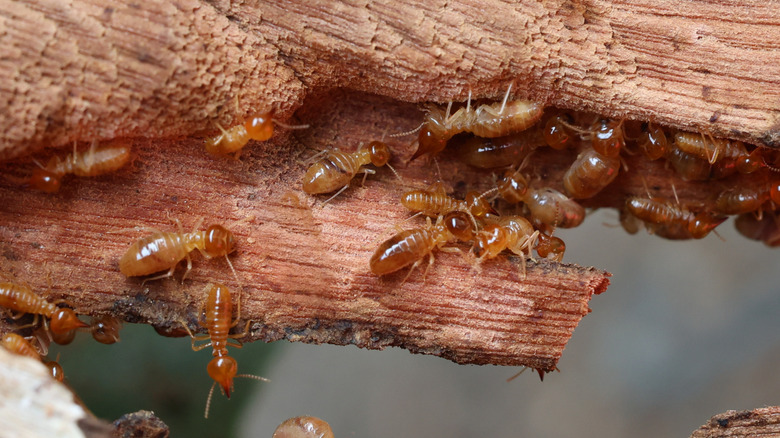
Termites eat more than wood. They also eat your wallet. Home Advisor says the average cost of a termite exterminator visit is $621, but costs can reach four figures if the infestation is severe.
However, you can lower the odds of needing extermination by making your home less inviting to termites. Termites need constant moisture, so eliminate places where water can collect. To facilitate the proper flow of rainwater, the ground should be a little higher at the base of the foundation and slope slightly downward away from your house. Also, make sure your gutters, downspouts, and splash blocks work correctly, directing water away from your foundation. Splash blocks are available for under $10.
Don't make it easy for termites to access wood. Prevent direct contact between wood and the earth. Any wooden posts, like those supporting a carport, should have concrete or similar non-wooden bases. Even pressure-treated wood is susceptible to termite damage if it comes into direct contact with the ground.
Bees and Wasps
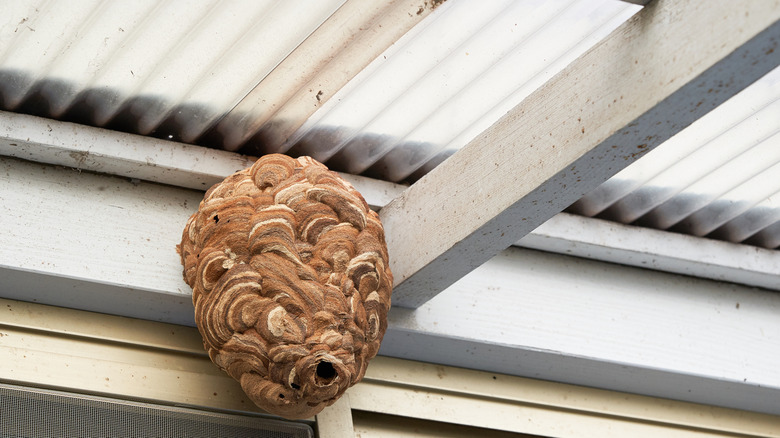
If bees and other stinging insects are entering your home, it's probably time to repair your window screens. Fortunately, you can pick up a window screen repair kit for less than $20. A good application of caulk around the windows can also eliminate inviting entrances. Caulk will cost you about $5.
If you want to get rid of bees that are too close to your home, but are mindful of the importance of bees to the ecosystem, don't worry. Hives can be safely relocated. Of course, this is something best done by a professional. Exterminators typically charge $250 to $500 to kill bees and $200 to $750 to remove them without harming them, according to Fixr. If you have no qualms about exterminating bees, you can buy sprays for less than $10 that will allow you to stand over 20 feet from the hive. Wasps, hornets, and yellowjackets are usually more aggressive than bees and therefore more dangerous, so exterminators charge more for removing them. Forbes says the cost can sometimes reach $1,300.
Mice

Mice may be cute, but they're not innocent. They can do significant damage to your property if you delay basic repairs. They have sharp little teeth that can riddle your walls with holes. Begin by closing any gaps on the outside of your home that allow initial entry. As a house ages and settles, it's not uncommon for small openings to appear in the foundation. You can get a large bag of mortar mix for less than $10 to repair any cracks.
Inside your home, you should caulk mouse holes in a similar way to how you treat insect entrances. However, mice will chew through caulking, so you need to fill the hole with steel wool before caulking. You can purchase enough steel wool to last a lifetime for $5.
They can also easily chew through electrical wires. These wires may be in the walls, making access for electricians difficult. As a result, the electrician will have to cut through your drywall to make the repairs. Then the drywall will need to be repaired, increasing your repair cost significantly. Electricians are likely to charge $50 to $100 per hour for electrical repair, according to Angi. Then there's probably another $50 to $75 per square for the repair of the drywall. If you opt for professional extermination, expect to pay somewhere between $150 and $550.
Birds

Gutters filled with leaves and sticks make excellent nesting spots, so it's important to keep them clean. A jet spray from an ordinary garden hose will often get the job done. You can also clean your gutters without climbing a ladder by using an extension wand, available for around $25.
You want to remove nesting material before the birds lay eggs. If there is an active bird nest, meaning it includes either eggs or chicks, don't try to move it. It could be dangerous as even the smallest mother bird will attack to defend its home and offspring. But, also, you could be found in violation of the law. Violation of the law includes preventing the adult birds from taking normal care of their young. Once the birds abandon the nest, you can remove it or discard it. If you prefer an exterminator service to do it, the company will likely charge you $350 to $650, according to Fixr.
Squirrels
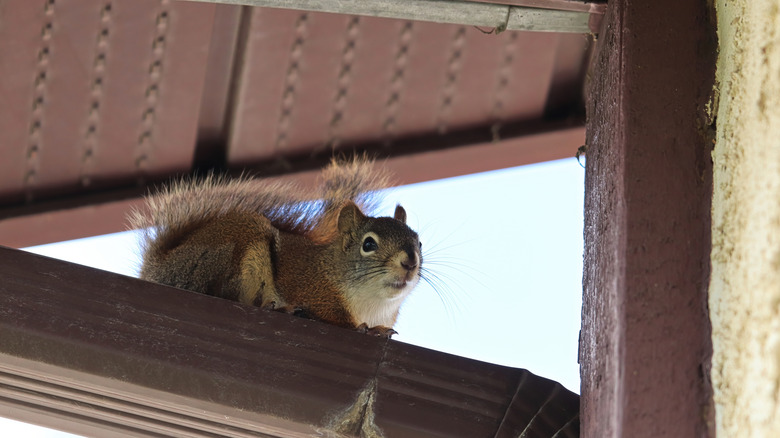
The average price for an exterminator to take care of your squirrel problem is $300 to $600. However, you can save that money by making a few inexpensive changes around your home. Squirrels in your backyard are usually in search of food. If you have a nut tree on your property, you can expect these furry little visitors. Try to pick up any nuts soon after they hit the ground. This won't prevent all squirrels because they can easily eat the nuts still hanging from the trees. However, it will reduce their activity and any resultant damage they would normally cause in your yard.
Your bird feeders are also prime dinner destinations. To stop raids on your bird food, opt for squirrel-proof bird feeders, which are available for less than $35. Many of them work by differentiating between tiny birds and the much heavier squirrels. When squirrels land on the feeder, they can trigger a barrier to slide into place, blocking access to the food. If squirrels are trying to get into your house, it's because they're looking for a safe place to pass the winter. Your basement and attic crawl spaces are prime squirrel real estate. Replace missing or damaged exterior vent covers leading to your crawl spaces. Prices start at less than $20.
Bats
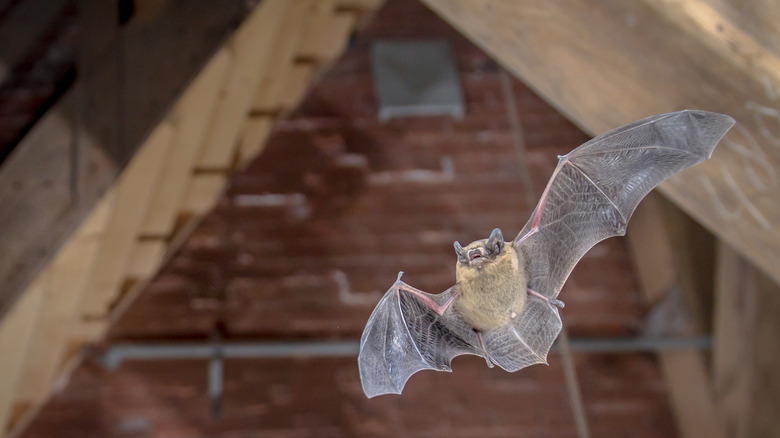
You don't need a belfry to have bat problems. A chimney will do. Unused chimneys look like caves to bats. Cover yours with chimney guards for only $60 to $100. Besides chimneys, bats like eaves, the underneath portion of your roof that extends past the exterior walls. Those areas offer protection from the weather, making them ideal for bats. They become even more inviting if they develop cracks due to aging materials. A small gap could appear to the bat as a hole in a hollow tree. So, make regular inspections and don't put off repairs.
The average cost for an exterminator to get rid of bats is $250 to $650. If you wait and allow bats to establish a roost, removal becomes much more difficult and expensive because bats can be messy, with their droppings damaging the exterior of your home. There's also the possibility of being exposed to diseases in their droppings, which can produce a strong odor.