

9 Reasons Retirees Regret Moving To The Suburbs

The suburbs can be a warm and inviting place to call home. Suburban living is dominated by leisurely time spent in the yard, and a big, welcoming home that can be shared with friends and loved ones during holidays and events. The suburbs are frequently a place that younger people flock to, especially when seeking schools and activity groups for their children. But retirees have a different set of needs that often sees them moving out of the suburbs in favor of a city-centric lifestyle. Many retirees even consider moving to a new state to take advantage of tax breaks on Social Security income and other financial resources.
Some retirees do swap their known environment for a fresh start in the suburbs. However, many come to regret this decision. Suburban living has a lot going for it, but in the retirement years, some of this environment's advantages actually become a hinderance on your lifestyle. Many of these points of friction are social, but numerous potential problems arise as financial burdens that city living doesn't foist upon a retiree. There are many potential problems that retirees face by choosing to move into a suburban home, and they deliver their pain points through a complex network of hardships and complications, including attacking the budget in unique and meaningful ways. These are some of the most important reasons why the suburbs might not be right for a retiree. Of course, everyone has their own unique circumstances to consider, but these challenges to retirement are trending conditions that aren't exactly conducive to the typical retiree's needs.
Suburban homes are often large and expensive
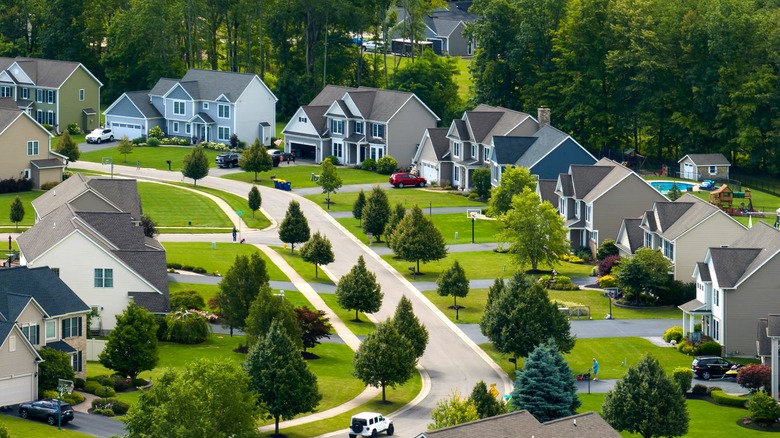
Right off the bat, it can't be overlooked that in 53% of urban metro areas across the country, the suburban homes surrounding the area's urban core are more expensive than its city dwellings (via Planetizen). Even so, it's entirely possible to experience a lower cost of living in the suburbs; yet this is certainly not a given, with Business Insider noting in 2019 that suburban life can easily surpass the costs of metropolitan existence.
Regardless of your specific location or daily needs and habits, there's a balancing act that must be undertaken in considering any move. However, this attempt at balancing varying expenses doesn't take into consideration the reality that retirees live with a different mix of bills and budgetary needs than younger people still in the workforce. Many retirees seek to extract capital from their home when they leave work behind. Moving is an opportunity to downsize not upscale into a larger, suburban neighborhood.
Buying a property that's more expensive achieves the opposite effect that many retirees will be looking for as they hang up their power suit and tools of the trade. Generally, retirees will want to explore less expensive, smaller properties that better suit their newly evolved lifestyle and bring them closer to their hobbies and sources of entertainment. All of these are things that a suburban property tends to miss the mark on.
Public transportation is frequently inadequate or even nonexistent
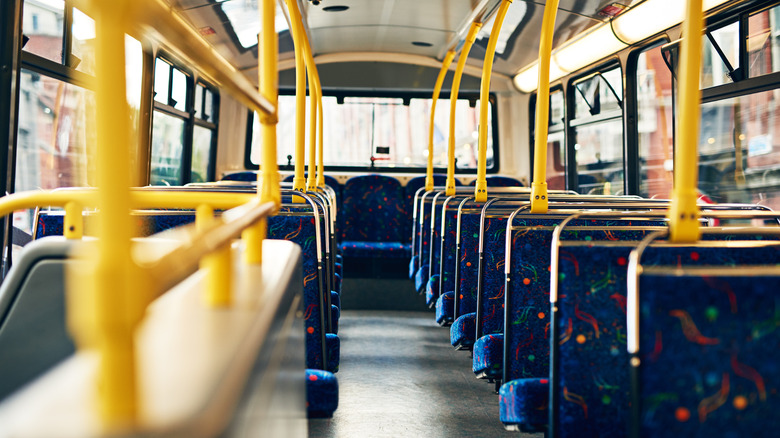
Across the United States, public transportation has long been an underwhelming resource. In both urban and suburban areas, light rail, trams, and bus options are frequently inadequate to support mobility requirements of the area's residents. This is a long-documented phenomenon, but it's also well established that suburban and rural areas see an even worse network of public transportation tools than the typical city landscape. Cities have more residents and a higher population density. And so, there's no getting around the need to alleviate the punishing presence of excessive road traffic. Cities simply must invest in public transportation networks while suburbs can sometimes skirt the need.
By living in a community that doesn't provide the transportation options you require, you are creating the conditions that demand you keep your car. Driving provides a sense of freedom that many people are reluctant to give up. However, owning a vehicle costs drivers an average of $965 per month in maintenance charges, insurance, and fill-ups at the pump, according to Nerd Wallet. That amounts to nearly $12,000 a year to keep a mobility asset that you're likely to progressively utilize less frequently. Harvard Business Review found in 2021 that the average worker drives roughly 16 miles each way during their work commute. Cutting this out of your weekly schedule can create a reduction of over 8,000 miles per year. Even if you don't get behind the wheel very often, without access to metro lines or a quality bus network, keeping your vehicle to go grocery shopping or to visit the doctor becomes an essential expense that can drastically shift your budget in a negative way.
Health care access may be harder to come by

Health services tend to be more abundant in and around urban cores across the country. The farther away from a city you move, the looser your health service density becomes. This effect can be seen in all aspects of the health care industry, from urgent care centers to dentists and even alternative medicine practitioners like chiropractors. This isn't to say services become unavailable to those in suburban settings. Generally speaking, retirees will be able to find the health care services they need, regardless of the place they call home. However, it's likely that you'll have to travel farther to keep appointments or perhaps even settle for a doctor you don't like as much as an alternative provider due to distance limitations or insurance network boundaries relating to your home address.
Additionally, numerous studies' findings routinely center on a travel-related phenomenon. The distance you must travel to get the care you need is often one of the main factors dictating the standard of care you can expect. This gives cities a particular, definitive edge when it comes to the range of health service options available to residents. Another important thing to consider is that less access in all walks of the consumer marketplace tends to translate into a greater expense level. Naturally, the farther you have to travel to see your provider the more you'll spend in both time and money. However, with a lighter density of options in your immediate vicinity you may also see a higher price tag that frequently accompanies diminished competition.
Entertainment opportunities are far greater in many city environments

Cities tend to provide a wide swath of entertainment opportunities. Whether it's live professional sporting events or music venues and theaters that pique your interest, you'll rarely find a great variety in suburban and other non-city environments. Metropolitan hubs are where these scenes exist and thrive. Comedy clubs, art exhibitions, and professional sports can all be found in great abundance within the tapestry of a city landscape. That's not to say you won't find stadiums and other entertainment resources beyond the city limits, but rather that fewer choices exist outside metropolitan hubs that throng with activity.
With increased time available, many retirees will want to engage in more visits to their favorite sources of entertainment. Instead of watching the game on TV, attending in person can be an enriching experience that adds major value to your lifestyle (this is even one of the few splurges that Jim Cramer, a famously frugal investor, allows himself). However, if you've relocated to the suburbs, you'll have reduced access to these amenities. Planning a trip into the city to see a game or show can easily mean adding a hotel reservation into the mix. Coupled with hours on the road or even a flight to connect you to the city, these extras can all add to the expense and hassle of this desire.
Loneliness can be a severe enemy in the suburbs

FIndings from the National Library of Medicine uncovered that one of the most concerning consistencies in retirement is a trend toward depression that accompanies this exit from the workforce. Researchers are somewhat mixed on the causes of this phenomenon, but some suggest that it may be due to a radical change in activity levels and interactions with other people. Workers spend their days conversing with like-minded individuals and flexing their mental muscle to solve problems and collaborate. A retiree could theoretically go days at a time without speaking to anyone or interacting very minimally with a spouse or other friends or loved ones. Many of the things that challenge people mentally exist within the confines of the working life. Once you retire a lot of this mental demand subsides. That can create relaxing conditions, but it can also lead to stagnation.
An increase in depression and other similar mental health concerns leads to an uptick in the volume of health care services you'll rely on. This can be a natural part of the aging process, but it's also been shown that city living can push back on this tendency to develop depression and suffer from loneliness. Suburban areas don't have the same kind of walkability that breeds random encounters and new experiences. As a result, an existing problem known amongst the retired community can become magnified by choosing to live in a suburban area. This is a condition that can be expensive to manage and requires immediate attention. Medicare covers annual depression screenings for free, but if you're suffering from this sort of mental health set back the bill is likely to add up quickly.
Finding part time work may also be more difficult

With less hustle and bustle surrounding life in a suburban environment, many retirees find it more difficult to engage in part time work than they would while living in a city environment. Many Americans struggle to generate the savings they envision for themselves through their years of employment. Finding budget space to set aside enough money to fund a luxurious retirement is extremely difficult, and it gets harder with each year that passes. Social Security checks can replace as much as 40% of your pre-retirement income, but they aren't enough to support the average American seeking to maintain their lifestyle without extra income sources. An alternative is to continue earning a paycheck while working part time or in a contract arrangement. You might do this with a sort of change of position within your existing workplace, or you might opt for a totally new environment with a part-time job. Many retirees choose to work at supermarkets or other, similar environments to reduce their responsibility burden down to a bare minimum. You may not need to earn a heap of money every month, and so a steady trickle of dollars flowing into your bank account can make a big difference.
There are opportunities in just about any community you'll find across the United States. However, city environments feature a plethora of job options that simply don't exist in more residential areas. The farther away from the city you move the harder it will be to secure a new part-time job, as a general trend. With less business activity existing in these communities than in metropolitan environments, there are just fewer options on the table.
Maintenance tasks (and costs) can often be more demanding

Many people who live in city communities don't have a yard to take care of or other home maintenance tasks that require lots of attention. Moving to the suburbs introduces this and many other demands. People living in apartment buildings often get to lean on a building super for standard property care tasks like waste removal and even things like pest control. As a homeowner in the suburbs, every home maintenance task falls to you, and you alone.
One option that might alleviate some of this pressure is to rent a suburban home, but this doesn't remove the burden of mowing the lawn or bringing the trash cans to the street on a weekly basis. Basic maintenance tasks are more demanding in suburban landscapes because there is more home to handle in many instances, and because there is less support built naturally into your living situation. These tasks can take up more time than you are willing to dedicate to them. If this is the case, hiring someone to do your pool cleaning, lawn care, and other property maintenance tasks is an option that's on the table. But these will run you a pretty penny, creating a tax on either your time or wallet to handle new jobs that weren't a part of your city lifestyle and yet are unavoidable in this new environment.
Suburbs deliver options for convenience, but those aren't things that retirees may need
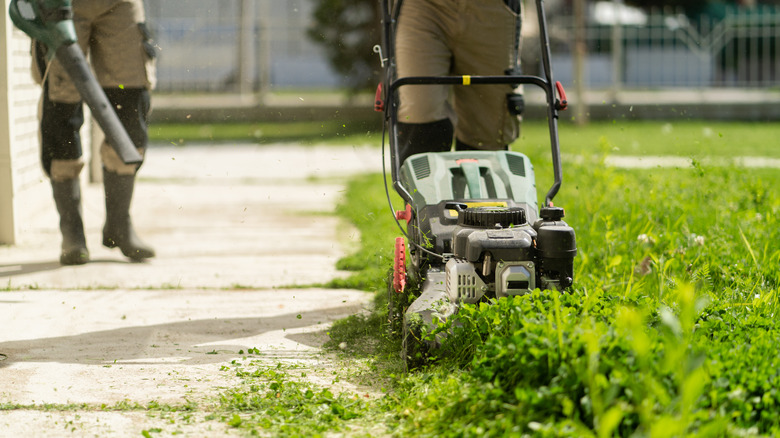
There are lots of services that can deliver convenience in suburbs. Maintenance services, for instance, exist to take the pressure off of your home care demands. Many other services can be found in great abundance throughout suburban living. However, these are often geared toward reducing the pressure to perform a range of responsibilities that your working life would otherwise interfere with.
Suburbanites have food delivery options and other standard services available to them, but numerous things you'll pay for in this environment are things that retirees just don't need. This layout of convenience can also be found in the way that buildings and businesses are constructed and arranged, too. You'll often find numerous stores that you rely on located in the same shopping center or very close to one another. This is ideal for making a single trip out to get the things you require for the week, but it will rely on owning a car and sitting in traffic in order to access these outlets. Life in the suburbs often involves a series of trades. Unfortunately, many of the things you can get back from your time commitment or financial outlay don't help support the lifestyle at a retiree seeking relaxation and leisure will need or want.
Urban environments add lots of culinary flavors into the conversation

As a retiree, you'll almost certainly have more time at your disposal, and probably have additional free cash available to support your lifestyle, too. Of course, the life you lead in retirement is largely based on the financial decisions you make. Investing in too many little luxuries can sink your retirement budget in a hurry, just as it would a balance sheet for a working adult. However, retirees might choose to invest more of their free capital in things like restaurant experiences. Instead of specifically buying convenience by eating at a restaurant, retirees might choose to seek out new and interesting culinary experiences in their newly free flowing environments for sheer enjoyment's sake.
As is the case with many other lifestyle amenities you'll come across, the city is a more abundant place when looking for great restaurants. With more bodies packed into metropolitan environments and a higher density of businesses, comes an increase in the number of restaurants you'll encounter. Moreover, you'll often be more likely to run across mom-and-pop shops in the city. Risk-averse, financially viable chain restaurants abound in the suburbs. The restaurant business isn't a particularly lucrative one for many owners and without the addition of foot traffic, suburban environments are particularly harsh for restauranteurs. As a result, if you are a foodie who enjoys getting out and about for dinner, a move to the suburbs will often find you paying more while choosing largely from basic chain options.