

Rick Steves' Favorite Time To Visit Italy Has Higher Prices And More Crowds

No matter when you go, a vacation to Italy is sure to be magical. Whether you're biking through the Tuscan countryside, sipping limoncello on the Amalfi Coast, or savoring handmade pasta in one of Rome's renowned restaurants, Italy rarely disappoints. There are certain months of the year — in late spring and early fall — when the weather is just right, making a visit even more enchanting. As such, those are also the months everyone else wants to go. According to travel guru Rick Steves, that means bigger crowds and higher prices. If you can afford it and don't mind longer waits, it's worth it. If, however, you're looking for a vacation destination to travel to on a budget, you may want to consider a different time of year.
On his website, Steves writes, "Italy's best travel months are May, June, September, and October." However, he says, "they're also the busiest and most expensive time to visit (with the north remaining just as busy throughout midsummer)." But the higher costs and crowds aren't a deterrent for Steves. "Crowds aside, these months combine the convenience of peak season with pleasant weather." This makes for comfortable walking, which is why so many tourists flock to Italy during that time of year. Another plus: While these months draw large crowds, it's not quite as packed as it is in July and August.
How much more it is to visit Italy in peak months
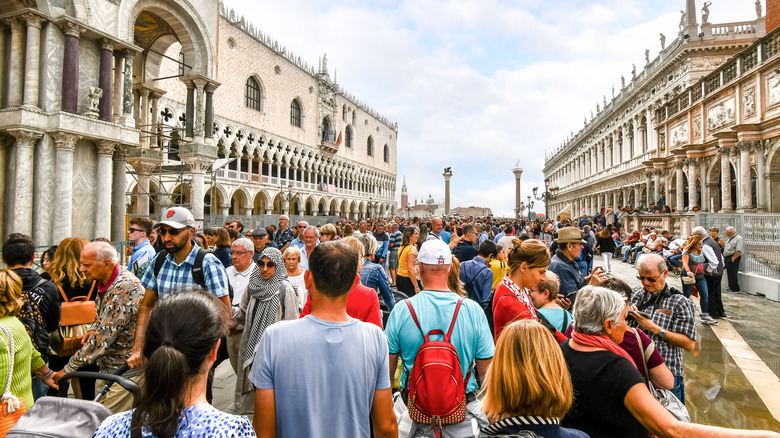
Another reason Steves says late July and August aren't the best time to go is because the weather can be oppressively hot — and some accommodations may not have air conditioning. Venice, in particular, which Steves believes is a 'tourist trap' worth paying money for, can be a challenge, as the heat can cause the algae in the canals to give off an unpleasant smell. While winter can be good for those who don't want to contend with large crowds, the weather isn't ideal — ranging from chilly in spring and fall to quite cold in the winter. "In the middle of winter, it often drops to the 40s in Milan and the 50s in Rome, and beach towns are nearly shut down and battered by waves," Steves says.
Despite the nicer weather in May, June, September, and October, going then means higher costs on everything from flights and accommodations to food and activities. According to TravelThru, flights from the U.S. during the high season can be double off-season prices, while hotel prices may also be significantly higher. In tourist-heavy areas, you're also likely to pay more for restaurants and activities, which can be as high as 25% and 40% more, respectively, per Radical Storage. If you are planning to travel to Italy during these months, be sure you set a realistic budget and avoid making unnecessary travel purchases to help keep your costs down.