

How Much It Costs To Clone A Dog (And Can You Finance It?)
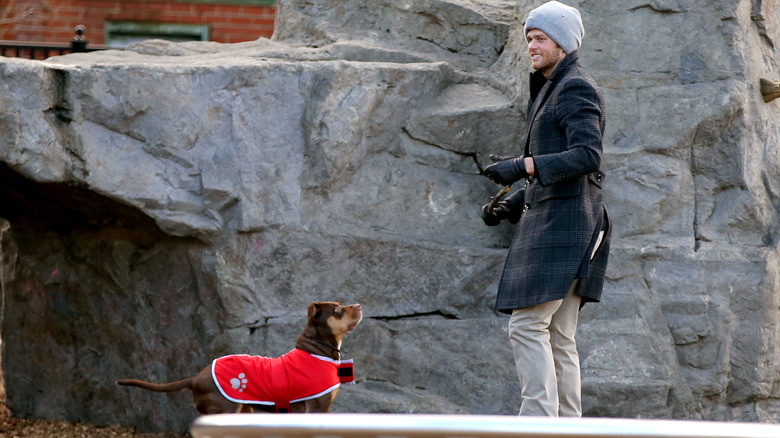
Tom Brady created a clone from his dead dog, thanks to an affiliate of a company that successfully resurrected extinct dire wolves. This isn't a weird piece of fan faction about the former quarterback-turned-Fox sportscaster. A pit bull mix named Junie was cloned using a blood sample taken from Brady's dog Lua before she died in 2023, per an announcement sent to various media outlets from Brady and Colossal Biosciences. "In a few short months, Colossal gave my family a second chance with a clone of our beloved dog," Brady said in the release (via Today). "I am excited how Colossal and Viagen's tech together can help both families losing their beloved pets while helping to save endangered species."
The company that cloned Junie, Viagen, was founded in 2002 in Austin, Texas and also cloned dogs for Barbra Streisand and Paris Hilton. Per a BusinessWire release, Viagen was acquired in November 2025 by Colossal Biosciences, a Dallas-based company that proclaimed it cloned a pair of dire wolves and aspires to bring back other extinct species.
So, how much does it cost to clone a pet? Well, Brady paid $50,000 to create a clone of Lua. And that's the standard fee Viagen, the only company to clone animals commercially, according to CBS, charges for dog cloning. Unfortunately, you cannot get financing for this service.
Cloning a dog is out of reach for most Americans
Paying $50,000 is a massive hit for the average American's savings account, which, as of 2022, had $62,410 in it, per the Federal Reserve. Cloning other animals is equally expensive. As of November 2025, Viagen charges $50,000 to clone a cat, whereas recreating a beloved horse will set you back $85,000. These figures don't include the sales tax.
Unless you have the money on hand, you're out of options. That's because pet cloning can't be financed like a car loan. Per ViagenPets.com, you'd have to pay the entire fee in two installments. On the plus side, by getting the fees out of the way quickly, you won't be hit with huge interest fees.
Still, you may want to hold off on forking over $25,000 to clone a beloved pet as a deposit if you aren't sure that there's enough money in your emergency fund. That said, if you have the retirement savings of a top net worth individual, cloning a treasured pet dog could well be worth it.
If you decide to clone your dog, there are a couple things to be aware of. For one, the cloning process doesn't always lead to a viable egg, and even dog pregnancies sometimes fail. Should that happen, Viagen promises a refund. The other is that the cloned dog won't necessarily have the same personality as the deceased one. So, it was probably good that the Brady family named the pup Junie instead of Lua II.