

Sneaky Factors That Can Hike Up The Cost Of Dental Implants
Before making a dental appointment for implants, it's important to consider some of the ways that the decision could end up costing you more than advertised. Your dentist might not be aware of just how much of the cost your insurance policy will cover — let alone what Medicare might or might not. For example, you could pay out-of-pocket for things like materials, anesthesia, extra consultation meetings, or ongoing follow-up visits.
Plus, your overall dental health can be a significant factor. Unless you have gums and jawbones that are ideal, additional procedures could be necessary to increase the odds of a successful implant. Then, even after receiving your implants, there could be additional costs associated with a failed implant. While these are not necessarily reasons to avoid getting dental implants altogether, it is important to prepare yourself, and your monthly budget, for sneaky factors that can ultimately hike up the cost.
The type of dentist can influence pricing
Just as you wouldn't be surprised to learn that a highly-experienced lawyer charges more per hour than a recent law school graduate, you shouldn't be shocked to learn that experienced dentists can, and do, charge higher prices for dental implant procedures than their newer colleagues. Often, you'll find dentists with a long track record working in spacious, attractive offices. With large offices come large staffs, which means the dentist must earn enough to cover a huge payroll. There's also the monthly rent or mortgage payment, along with the cost of modern dentistry equipment.
Dentistry also follows the overall pattern of the medical industry, with specialists routinely demanding more for their services than generalists. So, while you may gasp at the prices of a respected family dentist, those prices likely pale in comparison to those set by dental specialists, such as maxillofacial surgeons. After graduating from regular dental school, they generally have a medical residency of four to six years. Then, if they want to have a narrowly focused practice, like cosmetic surgery, they'll have to invest another two years. By the time they're ready to open a private practice and welcome you as a patient, they've amassed such a huge overhead that it isn't difficult to understand why they would charge more for your dental implants than most family dentists.
Your geographic location can affect procedure prices

Just as home prices and the cost of groceries vary throughout the U.S., so does the cost of medical care. Health insurance differs from state to state and also from urban to rural areas. Plus, the cost of health insurance is expected to rise as tax credits are drop at the beginning of 2026. The Century Foundation examined 32 states and found that patients living in rural areas are expected to pay an average of 107% more out-of-pocket, while the expected average increase for urban dwellers is 89%.
Also, if you live in an area with a high cost of living, don't be surprised to find your dental implants cost more than those offered by dentists in less-affluent areas. This is because the cost of real estate can influence the cost of dental work in the major cities, since these costs are typically passed along to customers.
You could need more office visits than you anticipate

The number of office visits required for implants is generally based on the complexity of your situation. If your dental needs are more than average, your number of office visits prior to surgery could climb. If the dentist is new to you, pre-surgery visits may be even more extensive. The dentist will likely want to become acquainted with your overall medical background to ensure there are no pre-existing conditions that could hinder the procedure, or recovery.
If smaller procedures are necessary before you can receive implants, the dentist will likely perform them progressively. It's important to allow enough time between each procedure for your mouth to heal fully. This allows your dentist to assess your recovery and advise you whether it's okay to proceed with implants safely. While a dentist's caution will likely pay dividends for you in the long run, it can contribute to the number of office visits necessary — and increase the total cost of your dental implants.
Your X-rays and 3D imaging may not be covered in full by insurance
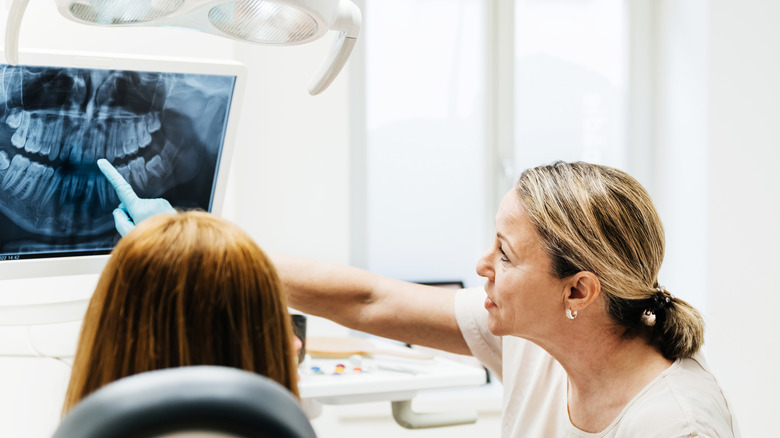
Even if you've had a set of X-rays with your regular dental checkup, more X-rays may be necessary for dental implants. Unfortunately, not all insurance policies fully cover X-rays. When talking with your insurer, you'll have to specify the type of images the dentist wants. Some policies may place a cap on how frequently you can have images made.
There's a good chance your dentist will insist on producing 3D images, which are a vast improvement over old-school X-rays, referred to as 2D images. X-rays give the dentist a good idea of the suitability of a proposed implant site, but there are potential obstacles that they don't detect well. According to an article published in Dental Clinics of North America, 3D images increase the likelihood of success by equipping the dentist with precise information about the height, width, and density of sensitive areas needing special attention. The accuracy of 3D images can reduce the chances of surgical complications and increase the odds of long-term success, but they might cost you.
You may need multiple implants instead of only one
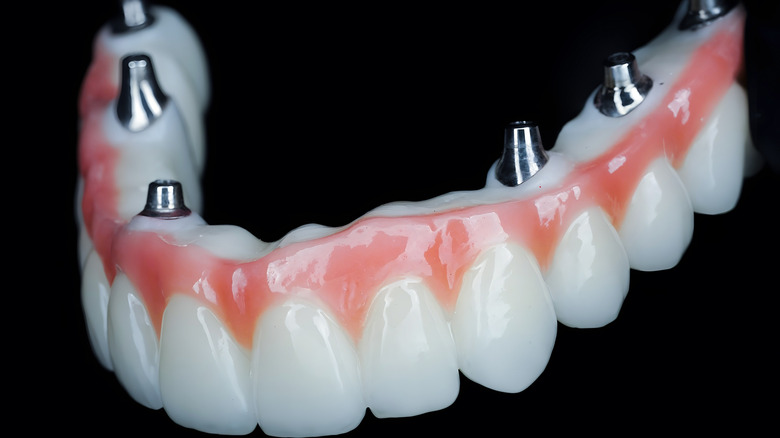
Oftentimes, a listed price for dental implants might only refer to replacing only one tooth, instead of multiple. This can drastically change your estimated price. Authority Dental estimates that the 2025 price of a single dental implant can be anywhere from $3,500 to $6,700. However, replacing all the teeth in either the upper or lower jaw can cost between $10,000 and $21,500.
This might leave you wondering why you would choose to have full-mouth implants when dentures are much cheaper. However, implants can give you a stronger bite than dentures, and can also offer greater reliability. Implants are also more convenient to clean since you can brush them as you would your natural teeth. These comparisons, and more, lead many people to choose dental implants over dentures. However, there's no escaping the higher cost for full implants.
You could be pressured into more implants than you need
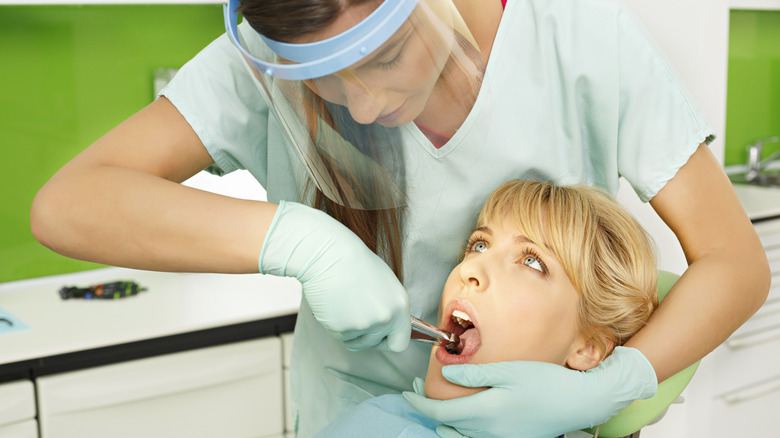
Preparing for dental implants can require other prerequisite procedures. For example, unhealthy teeth may need removal to make room for replacement teeth. However, you should verify that only teeth that can't be repaired are being targeted for removal. Sadly, some dental offices put profits ahead of dental health by suggesting that patients should have healthy teeth removed and replaced with implants.
CBS News and KFF Health News conducted a joint investigation in 2024 that highlighted the unfortunately common practice of overselling the value of implants. According to the report, potential patients were forced to meet with salespeople and sign finance agreements before being allowed to speak with the actual dentist who would perform the procedure. Plus, at several large clinics, dental implants were performed by general dentists who were not required by their states to have any special training in dental implants. Dental experts interviewed for the investigation repeatedly mentioned how shockingly bad some of the surgeries were performed. This left patients having to find more experienced dental professionals to perform corrective surgery.
You may need other procedures before the implants
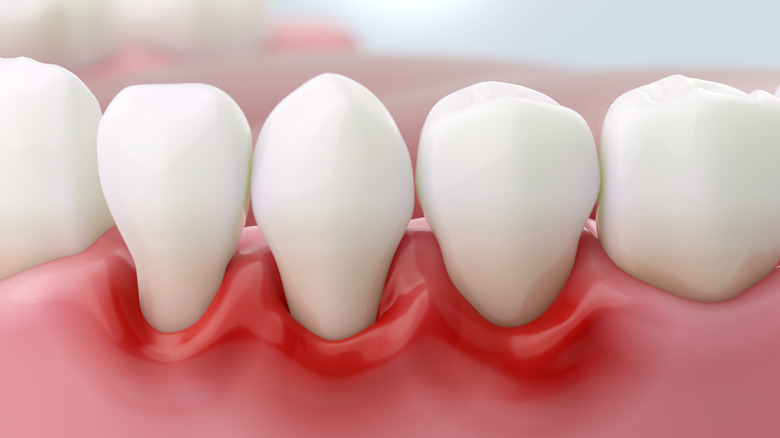
Before you can receive dental implants, you may be in legitimate need of other treatments. For example, you might suffer from gum disease, require bone grafts, or need a sinus lift. According to the National Library of Medicine, the gum disease periodontitis weakens the tissues of the gum that are most in contact with teeth which can destabilize teeth. If this disease goes untreated, research shows it can negatively impact implants.
Another thing to consider is whether you already have missing teeth. If you've lived with missing teeth for several years, you have likely experienced bone loss. As a result, the jaw in that area might not have the ability to support implants, requiring a bone graft. In other cases, the sinus cavity might be in the way, requiring a sinus lift where the cavity is raised to make room for the additional bone. These types of procedures, and their follow-up visits, will add to your overall implant costs.
Dental implant materials differ in cost
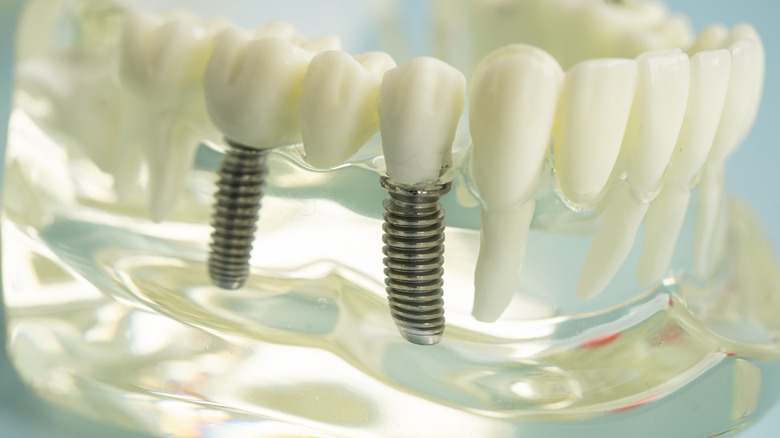
Zirconium, a type of ceramic, has become a popular material for implants due to its convenience. However, that innovation comes with a heavier price tag. On the other hand, titanium has long been the industry standard. Titanium is known as a biocompatible metal because it's easily accepted by the human body. In the case of implants, it means your procedure is more likely to be successful.
Zirconia implants offer less contrast with the gums and are therefore less noticeable. They look a little more like a tooth's natural root. Zirconium implants are also less prone to corrosion, and more resistant to plaque buildup, when compared to titanium. However, you should keep in mind that there's less long-term data on zirconium's performance than that of titanium since it has been in use for much longer. While zirconium will likely cost more, the material could be worth tapping into your health savings account.
An additional specialist like an anesthesiologist may be necessary

If your dental implant is a typical case then there is a good chance it will only require local anesthesia, allowing you to be conscious throughout the procedure. Dentists numb the area much like they would for cavity fillings and tooth extractions. However, if your implants require more extensive surgery, a dentist may need the assistance of an anesthesiologist to render you completely unconscious.
An anesthesiologist is a highly trained professional whose services command high hourly wages. Part of your cost also includes the advanced equipment that anesthesiologists uses — which your insurance might not entirely cover. According to Mira, the out-of-pocket cost of general anesthesia for surgery can fall anywhere from $2,500 to $15,000. In comparison, the average cost of local anesthesia is only between $700 and $1,500.
Something can go wrong and require corrective surgery

Naturally, you don't want to imagine anything going wrong with your implants, but it's only reasonable to consider the possibilities. If you do need to return to your medical provider for follow-up and corrective work, the cost of your dental implants can end up being be far more than you first expected. One potential after-surgery complication is peri-implantitis, a condition in which bacteria accumulates on the surface of an implant and begins to weaken the surrounding tissue. This can lead to loose implants. Another possible complication is osseointegration failure, which occurs when the bone isn't capable of accepting the implant post.
And yet another complication is due to a surgeon's error. The dentist may have made a wrong calculation regarding the location of the implant, or the chosen area may not be as healthy as expected. In time, it can becomes obvious that there's not enough reliable bone to keep the implant safely in place, meaning you must undergo another costly surgery — even if this means withdrawing from your emergency fund.